
易琳Ten
82 Posts

易琳Ten
耐心等风来,出手即收割。🐺📈
97 Following
18.4K+ Followers
5.8K+ Liked
Posts
All
Quotes
PINNED
PINNED
易琳Ten
·
--
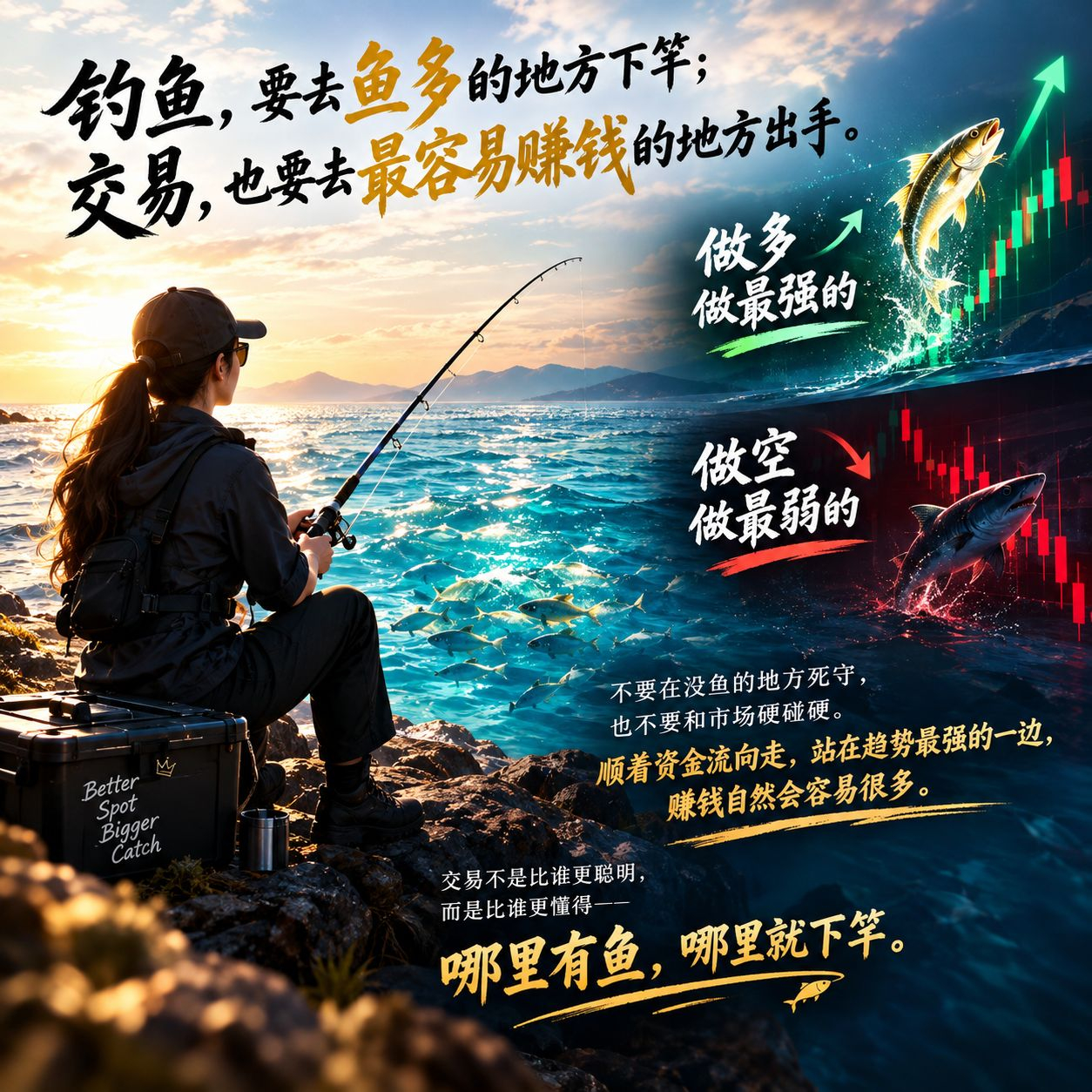
Fishing—go where the fish are; cast your line there.
Trading—go where it’s easiest to make money; execute your orders there.
Go long—only with the strongest.
Go short—only with the weakest.
Don’t stubbornly hold your ground where there’s no fish, and don’t clash head-on with the market.
Follow the flow of capital, stand on the side of the strongest trend—making money naturally becomes much easier.
Trading isn’t about who’s smarter,
it’s about who understands better—where there’s fish, that’s where you cast your line. 🎣📈
Trading—go where it’s easiest to make money; execute your orders there.
Go long—only with the strongest.
Go short—only with the weakest.
Don’t stubbornly hold your ground where there’s no fish, and don’t clash head-on with the market.
Follow the flow of capital, stand on the side of the strongest trend—making money naturally becomes much easier.
Trading isn’t about who’s smarter,
it’s about who understands better—where there’s fish, that’s where you cast your line. 🎣📈
易琳Ten
·
--
📈 In the early bull market, there’s no need to be afraid of missing out
Even if you’re currently in the early stage of a bull market, there’s no need to blindly chase the price just because you’re afraid of missing out.
You can refer to the price action in the early phase of the 2023 bull market:
1️⃣ Market rhythm
On the daily chart, prices keep chopping sideways and making new highs; after touching the upper band, upward momentum weakens, and the market first goes through a daily pullback;
after the pullback ends, it rebounds again to test the upper band once more, and then comes another pullback at the three-day-line level.
2️⃣ Current outlook
BTC will most likely continue to trade sideways in a back-and-forth manner, repeatedly probing new highs.
Watch the resistance around 85,000 in the short term—if it gets rejected, it may first pull back to around 77,000;
then, if it rebounds and reaches 88,000~89,000, another pullback at the three-day-line level may follow, and it could even revisit the 70,000 area.
So, missing out isn’t scary; chasing when the price is already high is.
There will still be opportunities to buy the dip later.
3️⃣ Why do I believe Bitcoin will definitely see a pullback?
First, to shake out the long side and digest profit-taking.
Second, the market needs time and space—it can’t rise in a straight line the whole way while letting everyone make money easily.
What the bull market lacks the least is opportunities; what truly tests people is patience.
Don’t chase strength, don’t panic—wait for the dip entry point that belongs to you.
Even if you’re currently in the early stage of a bull market, there’s no need to blindly chase the price just because you’re afraid of missing out.
You can refer to the price action in the early phase of the 2023 bull market:
1️⃣ Market rhythm
On the daily chart, prices keep chopping sideways and making new highs; after touching the upper band, upward momentum weakens, and the market first goes through a daily pullback;
after the pullback ends, it rebounds again to test the upper band once more, and then comes another pullback at the three-day-line level.
2️⃣ Current outlook
BTC will most likely continue to trade sideways in a back-and-forth manner, repeatedly probing new highs.
Watch the resistance around 85,000 in the short term—if it gets rejected, it may first pull back to around 77,000;
then, if it rebounds and reaches 88,000~89,000, another pullback at the three-day-line level may follow, and it could even revisit the 70,000 area.
So, missing out isn’t scary; chasing when the price is already high is.
There will still be opportunities to buy the dip later.
3️⃣ Why do I believe Bitcoin will definitely see a pullback?
First, to shake out the long side and digest profit-taking.
Second, the market needs time and space—it can’t rise in a straight line the whole way while letting everyone make money easily.
What the bull market lacks the least is opportunities; what truly tests people is patience.
Don’t chase strength, don’t panic—wait for the dip entry point that belongs to you.

易琳Ten
·
--
Fishing—go where the fish are; cast your line there.
Trading—go where it’s easiest to make money; execute your orders there.
Go long—only with the strongest.
Go short—only with the weakest.
Don’t stubbornly hold your ground where there’s no fish, and don’t clash head-on with the market.
Follow the flow of capital, stand on the side of the strongest trend—making money naturally becomes much easier.
Trading isn’t about who’s smarter,
it’s about who understands better—where there’s fish, that’s where you cast your line. 🎣📈
Trading—go where it’s easiest to make money; execute your orders there.
Go long—only with the strongest.
Go short—only with the weakest.
Don’t stubbornly hold your ground where there’s no fish, and don’t clash head-on with the market.
Follow the flow of capital, stand on the side of the strongest trend—making money naturally becomes much easier.
Trading isn’t about who’s smarter,
it’s about who understands better—where there’s fish, that’s where you cast your line. 🎣📈
易琳Ten
·
--
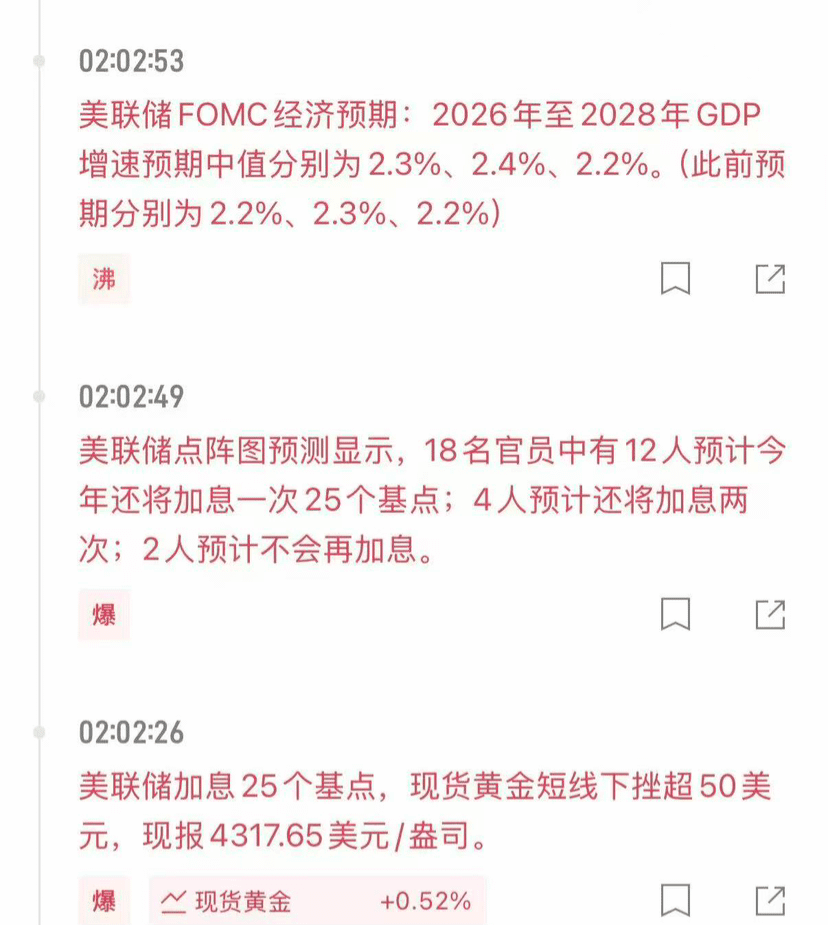
For the buy, I choose to go long on Ethereum. Even with bearish news, I still choose to go long—adding more on pullbacks.


楠楠nannan势不可挡
·
--
🧧🧧🧧🧧🧧🧧🧧🧧🧧🧧🧧
The market rises and falls, yet people’s hearts remain steady. It’s okay to go slower—long-term thinking, and time will deliver the answer. $BNB
The market rises and falls, yet people’s hearts remain steady. It’s okay to go slower—long-term thinking, and time will deliver the answer. $BNB


阿婧1688
·
--
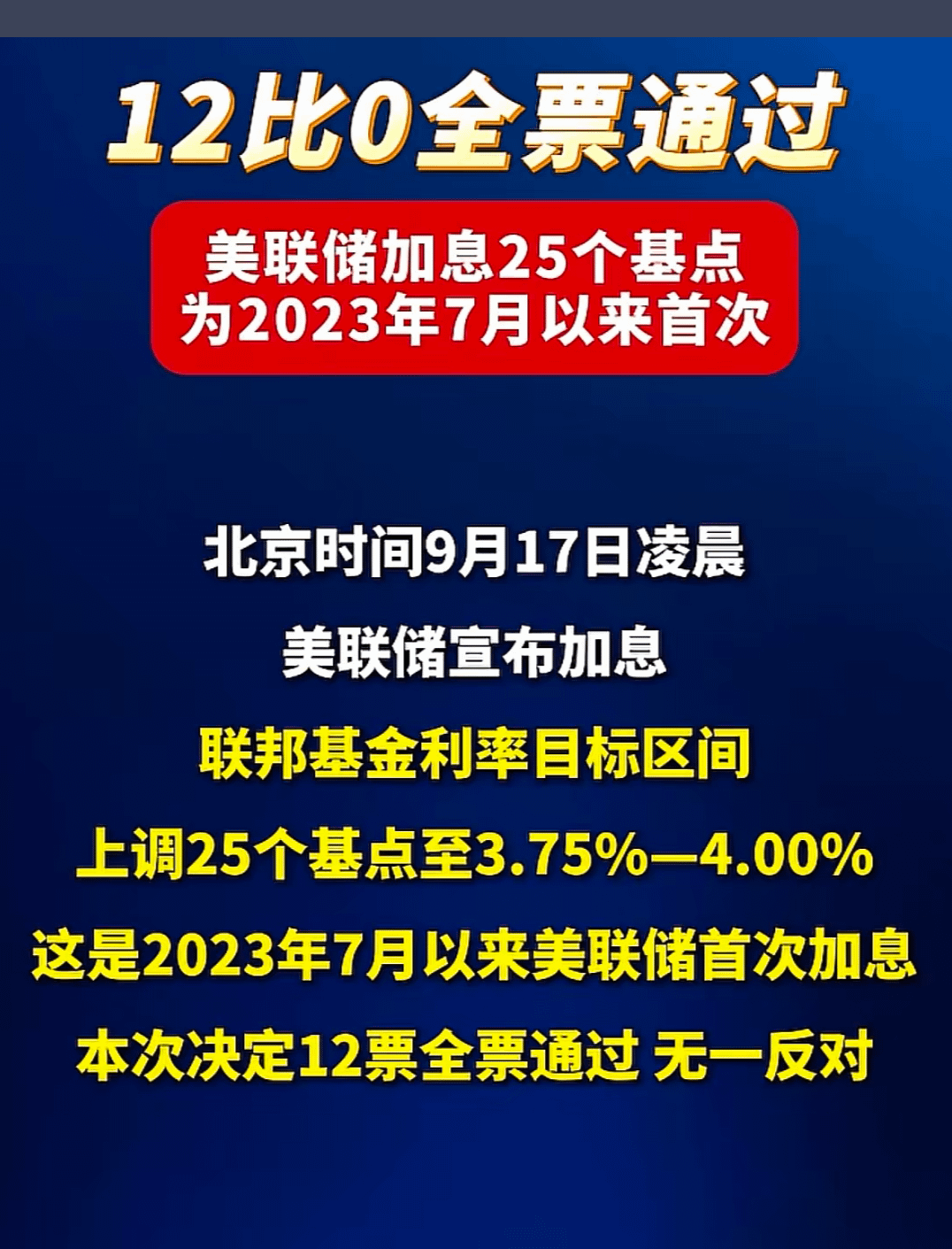
The interest rate has been raised. On 2026-09-16, the U.S. Federal Reserve announced a 25 basis point (0.25%) rate increase, raising the target range for the federal funds rate to 3.75%–4.00%. The resolution was approved 12:0. The official statement emphasized that inflation is still too high—this is the first rate hike since 2023. (federalreserve.gov)
For the crypto market, rate hikes typically put pressure on high-volatility risk assets through higher risk-free rates and expectations for the dollar and liquidity. However, the immediate market reaction also depends on whether the market had already fully priced in the move, as well as subsequent policy guidance and inflation data.
For the crypto market, rate hikes typically put pressure on high-volatility risk assets through higher risk-free rates and expectations for the dollar and liquidity. However, the immediate market reaction also depends on whether the market had already fully priced in the move, as well as subsequent policy guidance and inflation data.

圣克斯Lucky1688
·
--
🧧🎁🧧🎁🧧🎁
On September 17, the crypto industry saw multiple highly关注able sector updates and events. The core news mainly centered on regulatory roundtables, traditional financial giants entering the space, and industry summits, among other topics:
1. The U.S. SEC holds a 24-hour on-chain stock trading roundtable
On September 17, the U.S. Securities and Exchange Commission (SEC) hosted an important roundtable on “24-hour on-chain stock trading.” The meeting invited traditional financial giants such as BlackRock, Nasdaq, the New York Stock Exchange, and Robinhood, along with crypto industry participants and institutions.
Key agenda: The meeting aims to discuss the rule framework for enabling U.S. equities to settle on-chain 24/7.
Technology route competition: The market is currently focused on which blockchain—Ethereum or Solana—will take on the role of the primary underlying settlement infrastructure. Solana holds an advantage in terms of tokenized U.S. stock volume and low fees, while Ethereum is favored by traditional finance due to its deep institutional compliance foundation (such as BlackRock’s BUIDL fund).
2. The Fourth U.S. Crypto Banking, Compliance & Stablecoin Summit (CBC Summit USA) kicks off
The 4th annual CBC Summit USA was held on September 17 at the National Press Club in Washington, D.C.
Main focus: This summit brings together senior executives, regulators, and lawmakers across the industry. Key topics include crypto banking services, compliance frameworks, stablecoin development, and the deep integration of traditional finance with Web3.
3. Deeper cooperation between traditional industries and Web3 infrastructure
Hyundai explores the Avalanche ecosystem: After successfully completing a pilot project, Hyundai is considering further expanding its related business and applications on the Avalanche (Avalanche Protocol) blockchain.
Circle Arc mainnet goes live: Stablecoin issuer Circle’s Arc mainnet recently launched and has introduced support from payment giants such as Visa and Mastercard, injecting new momentum into the Web3 payments sector.
Overall, the Web3 industry updates on September 17 show that traditional financial regulators and Wall Street capital are accelerating the process of bringing assets on-chain and strengthening compliance.
Follow me—answer 1 will take away the $SOL red envelope.
🧧🎁🧧🎁🧧🎁
On September 17, the crypto industry saw multiple highly关注able sector updates and events. The core news mainly centered on regulatory roundtables, traditional financial giants entering the space, and industry summits, among other topics:
1. The U.S. SEC holds a 24-hour on-chain stock trading roundtable
On September 17, the U.S. Securities and Exchange Commission (SEC) hosted an important roundtable on “24-hour on-chain stock trading.” The meeting invited traditional financial giants such as BlackRock, Nasdaq, the New York Stock Exchange, and Robinhood, along with crypto industry participants and institutions.
Key agenda: The meeting aims to discuss the rule framework for enabling U.S. equities to settle on-chain 24/7.
Technology route competition: The market is currently focused on which blockchain—Ethereum or Solana—will take on the role of the primary underlying settlement infrastructure. Solana holds an advantage in terms of tokenized U.S. stock volume and low fees, while Ethereum is favored by traditional finance due to its deep institutional compliance foundation (such as BlackRock’s BUIDL fund).
2. The Fourth U.S. Crypto Banking, Compliance & Stablecoin Summit (CBC Summit USA) kicks off
The 4th annual CBC Summit USA was held on September 17 at the National Press Club in Washington, D.C.
Main focus: This summit brings together senior executives, regulators, and lawmakers across the industry. Key topics include crypto banking services, compliance frameworks, stablecoin development, and the deep integration of traditional finance with Web3.
3. Deeper cooperation between traditional industries and Web3 infrastructure
Hyundai explores the Avalanche ecosystem: After successfully completing a pilot project, Hyundai is considering further expanding its related business and applications on the Avalanche (Avalanche Protocol) blockchain.
Circle Arc mainnet goes live: Stablecoin issuer Circle’s Arc mainnet recently launched and has introduced support from payment giants such as Visa and Mastercard, injecting new momentum into the Web3 payments sector.
Overall, the Web3 industry updates on September 17 show that traditional financial regulators and Wall Street capital are accelerating the process of bringing assets on-chain and strengthening compliance.
Follow me—answer 1 will take away the $SOL red envelope.
🧧🎁🧧🎁🧧🎁


奕泽YIZZE
·
--
🧧🎁Understanding the Dao begins with clarity of the Way. Only when the heart is free of attachments can one truly enjoy lasting peace and joy.
Follow, like, and share🎁 #LUCIC
Follow, like, and share🧧
Follow, like, and share🎁 #LUCIC
Follow, like, and share🧧







Log in to explore more content