

After the rate hike, risk assets rebound. Isn’t the rate hike no longer a threat? Saying that might be a bit too early!
Key factor #美联储SEP预计2026利率4.1%
The rebound after the rate hike has been implemented aligns with the boot dropping off expectation. In addition, as early as last week, the probability of a September rate hike had already held steady above 90%. Once the probability exceeds 80%, the market starts pricing it in.
So once the rate hike is implemented, it means the September rate hike is already a thing of the past, and the market starts pricing in new future expectations—when will the next rate hike happen?
From the remarks made by the Fed this time, one can draw a conclusion: single-month data no longer becomes the core factor influencing a change in Fed policy. Instead, the importance of data trends has increased—meaning the September data will be crucial to driving further rate-hike expectations.
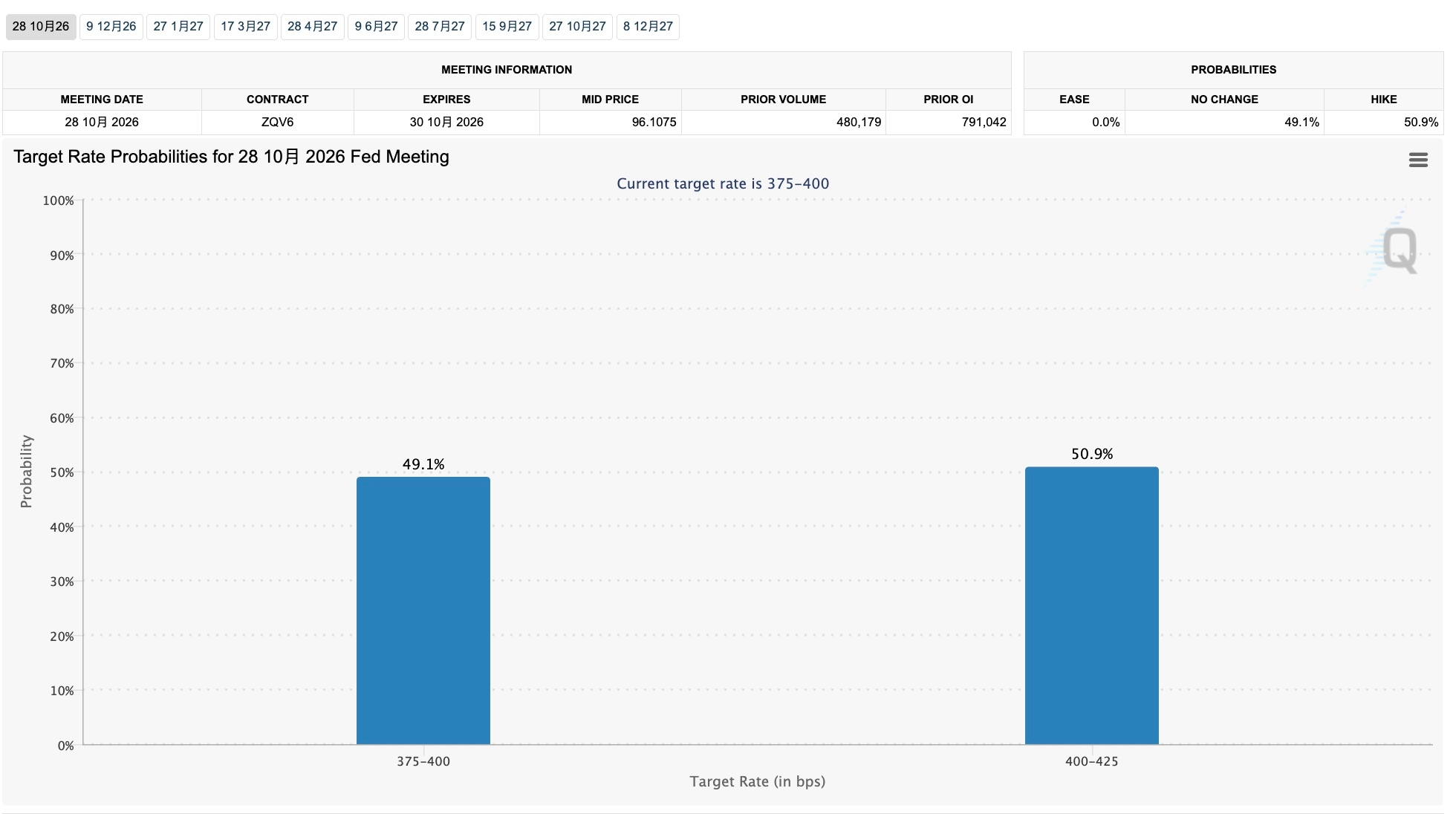
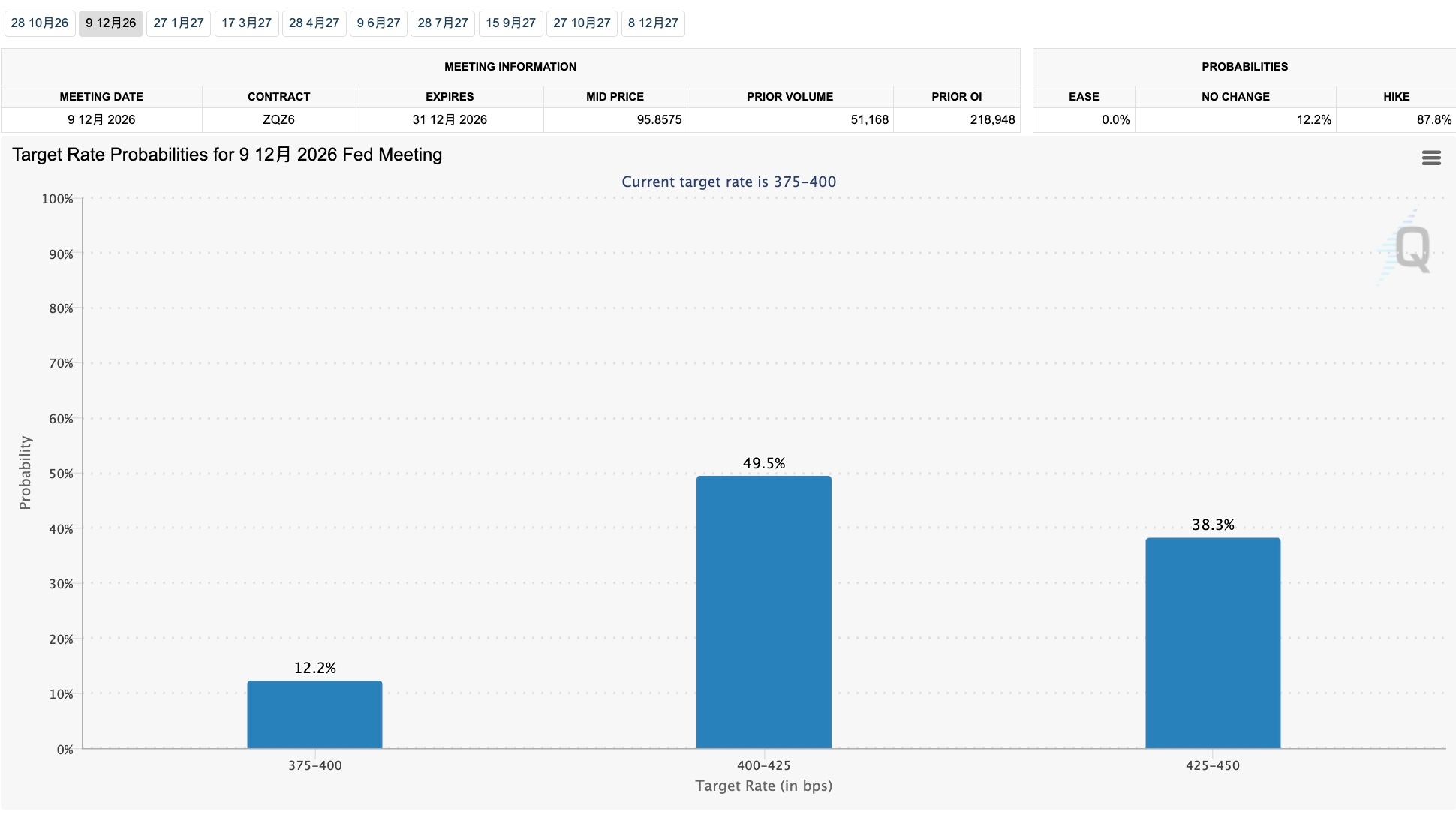
As of now, the probability of a rate hike in October is 50.9%, and in December 49.6%. Both probabilities are around 50%, meaning there isn’t sufficient evidence yet to determine whether there will be subsequent hikes. Naturally, the market isn’t as fearful about later hikes. However, once the September CPI, PEC, and related data show that inflation remains elevated or even rebounds, the probabilities for October and December rate hikes will rise again, and the market will still need to return to “rate-hike fear.”
Supporting factors
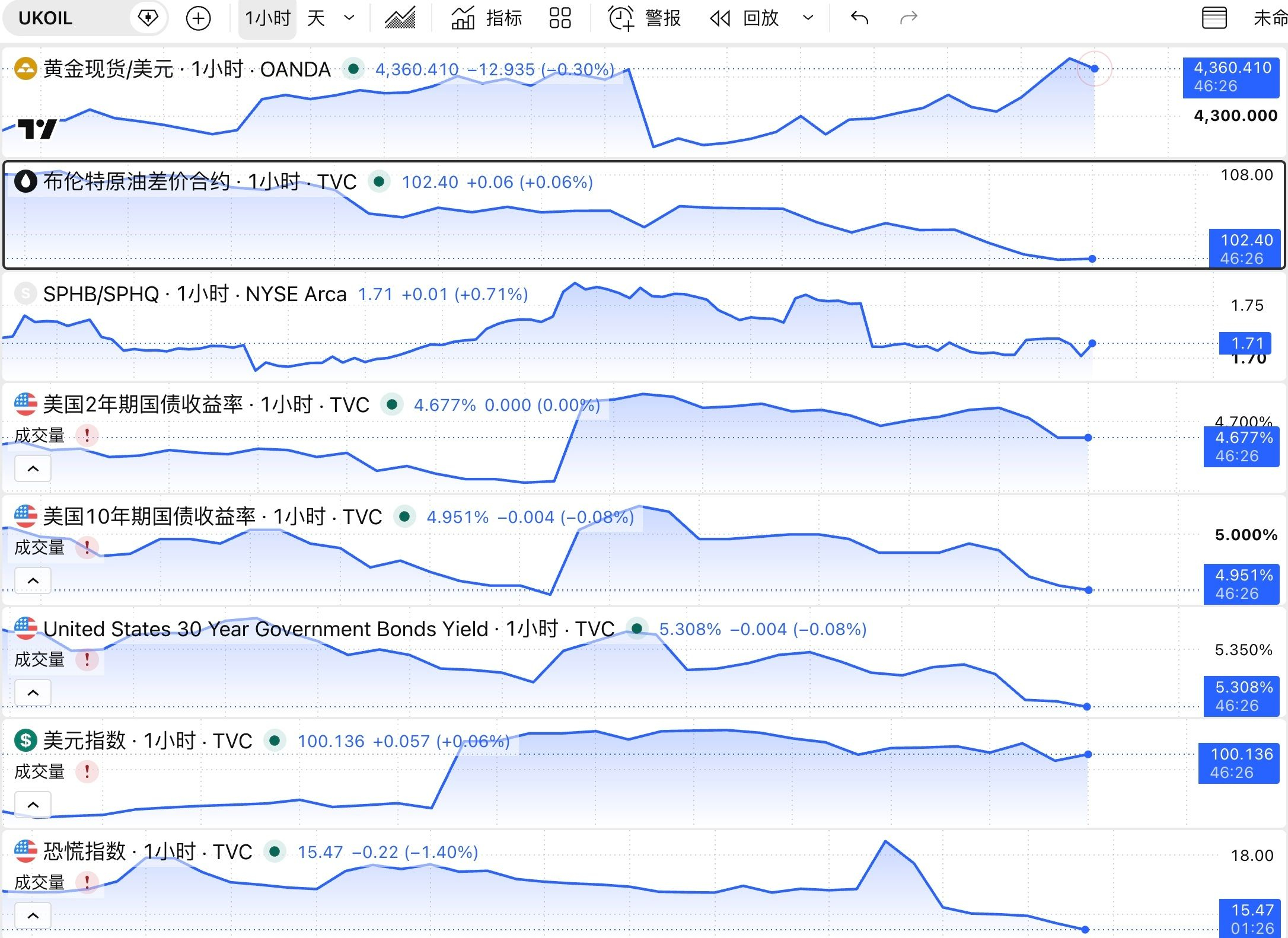
For the key to breaking the Fed’s rate-hike expectations plus the bond market’s high-yield situation, it all comes down to energy prices. During the day, Brent/WTI have pulled back temporarily as the Middle East situation eases, which has driven down long-end bond yields and helps decompress the market—supporting a rebound in risk assets.
As for risk assets, have they truly made it through the crisis?
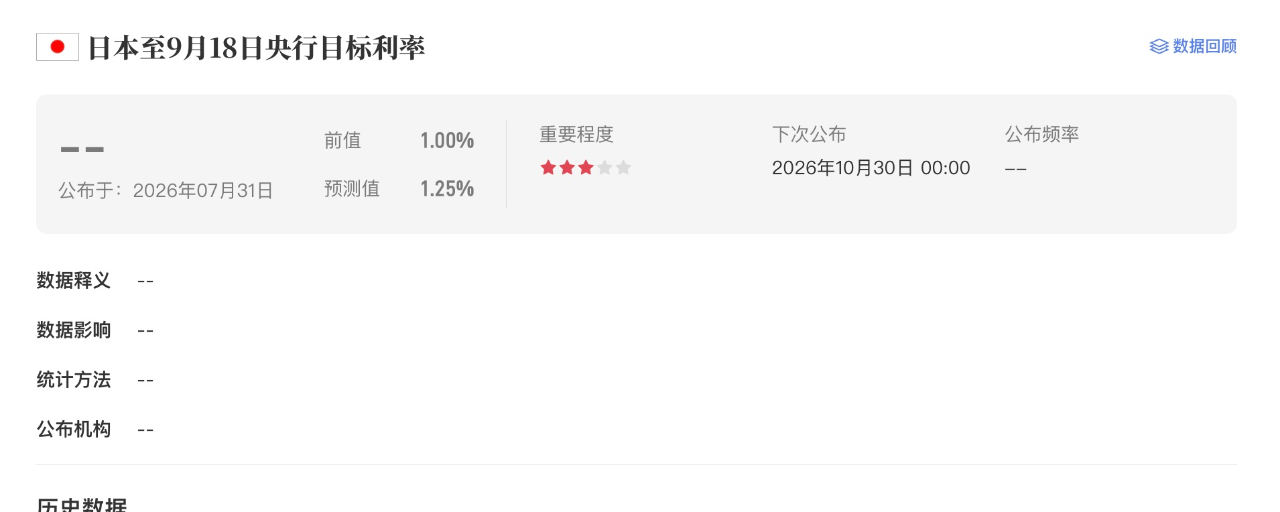
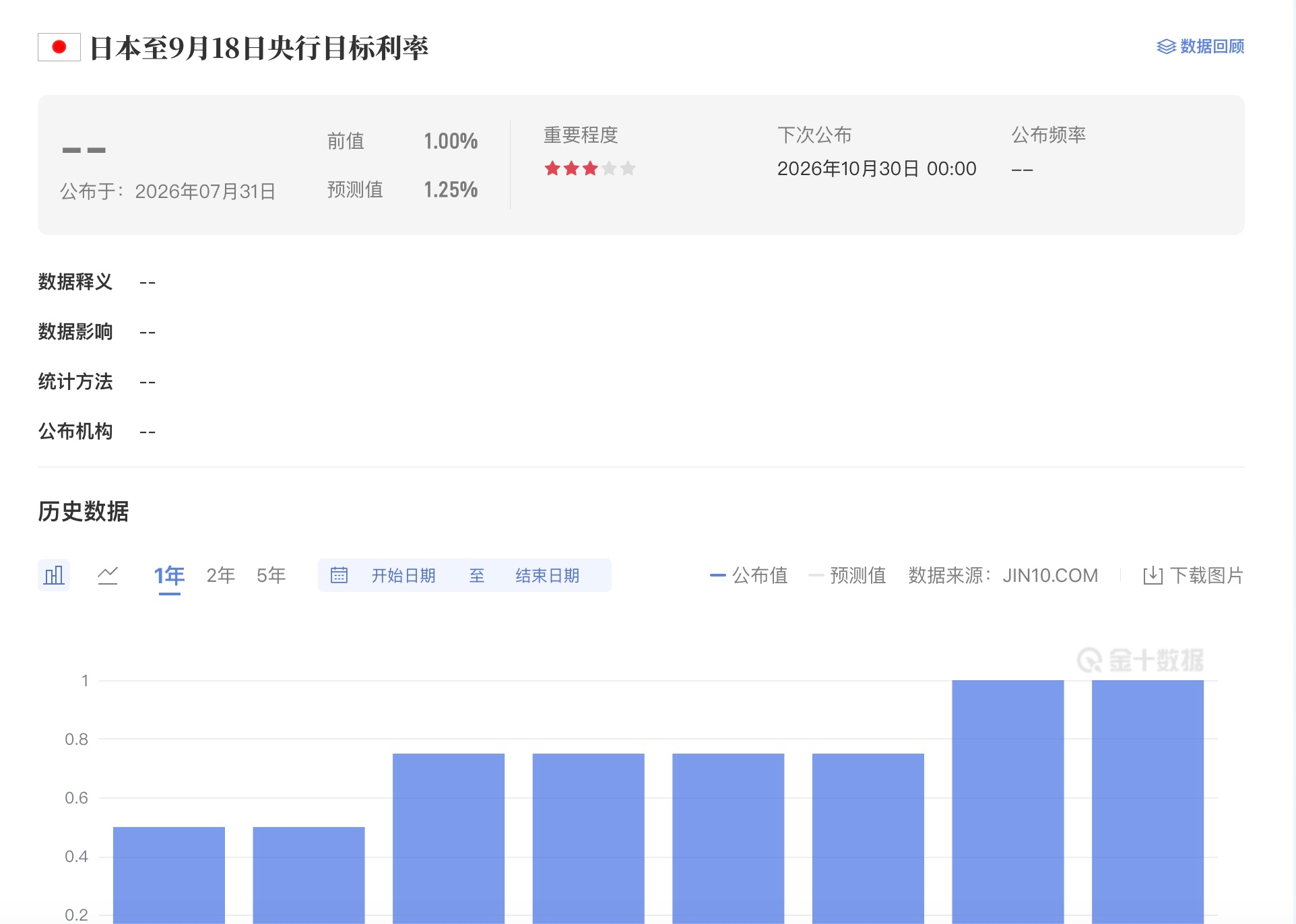
You can refer to my earlier viewpoint on this: there are still a few pitfalls we need to step on and test the depth and severity. The most straightforward is whether, after tomorrow’s yen interest-rate hike, the global market forms expectations for a rate-hike synchronization.
Under expectations of rate-hike synchronization, will risk-off funds choose to move from risk assets into risk-free interest-rate assets (bonds)? All of this needs to be watched.
The risk can be temporarily lifted at present because today the Bank of England announced it will keep interest rates unchanged, which puts the brakes on the effect of a global rate-hike synchronization. Second, the surge in the 2-year U.S. Treasury yield has created some room for the US–Japan rate differential, easing the closing of arbitrage positions; liquidity is not tightening further.
What’s the next rhythm?
Tomorrow, first focus on whether, after the yen interest-rate hike, the yen accelerates its appreciation. The 2-year JGB yield has surged rapidly; we need to first eliminate the liquidity shock caused by US–Japan interest rate arbitrage.
Next, we need to see whether, after the yen interest-rate hike, concerns about a global rate-hike synchronization (resonance) emerge. After temporarily ruling out these two factors, the direct risk for the short-term market has been reduced by half.
Next week, the Chinese leader will visit the U.S. This is a key point for diplomatic and trade relations between China and the U.S. The market may anticipate optimism in advance and rebound accordingly. So before the Sept 24 visit, the market may look somewhat optimistic. But after the visit ends, we’ll need to see whether there is substantive progress between both sides. If not, the market may shake again and fall back.
In addition, the risk stemming from the high yields in the bond market still exists long-term, looming over the market. If Brent cannot quickly return to a downward trend and instead remains in a prolonged range at high levels, then concerns about secondary inflation plus the bond market’s high yields will once again create some pressure for risk assets.
As for U.S. stocks: if there’s no risk on Friday, they will most likely rebound next week, continuing until the U.S. visit ends—then turning points will emerge again based on the actual situation. Take note.
For crypto, losing (the clear bill) as a short-term support is much weaker than for the U.S. stocks. Market confidence will be shaken and will likely take longer to stabilize and repair. In the short term, the rebound strength may not be as strong as for U.S. stocks—watch out.
For the subsequent rate-hike probabilities: before the end of September, ahead of the release of August PCE, as long as oil prices do not rise again, there’s no need to worry about the probability of subsequent rate hikes increasing in the short term. The market gets a breather for now!