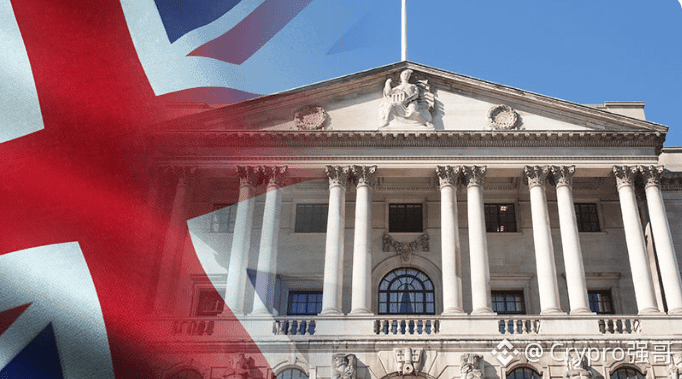
🚨 Bank of England suddenly hits the brakes: no more selling long-term government bonds — global liquidity enters a new phase?🇬🇧💰
This move by the Bank of England is quite interesting: it still has about £488 billion in government bonds, but going forward it will no longer actively sell long-term government bonds, and the current Quantitative Tightening (QT) sales schedule will be paused for a period. In simple terms, it used to be like “slowly dumping the bonds it holds into the market,” but now it finds pressure in the long-end bond market is getting a bit too high—so it turns down the faucet a little for now.
Put bluntly: when a central bank sells bonds, it’s essentially “siphoning water” out of the market. By selling less, it’s equivalent to **siphoning less water so the bond market can catch its breath.** The BoE’s plan will ultimately continue shrinking its asset portfolio, but the overall pace will slow from about £70 billion per year to an average of about £46 billion, while keeping around £120 billion in long-term government bonds to support the issuance of banknotes.📉💷
Why should crypto traders pay attention? Because **QT isn’t just the UK’s problem—it reflects the global funding environment.** If major central banks all slash balance sheets and sell bonds aggressively, liquidity in the market will get tighter and tighter. Conversely, if the pace of balance-sheet reduction starts to slow, funding pressure may not be as severe. For highly volatile assets like BTC and ETH, the liquidity environment is often crucial—like the “oxygen” they need to breathe.🌊➡️💰➡️₿
But don’t interpret it as: “Once the Bank of England stops selling bonds, crypto will immediately take off.” The policy direction, inflation, and energy prices in the United States and other major central banks still affect global funding costs. What’s really worth watching is this: **after the UK slows QT, will other central banks also start considering easing pressure on the bond market?** If global monetary policy gradually shifts from “siphoning as fast as possible” to “take it step by step and see,” the funding conditions for risk assets could change in a new way.👀
📌 One sentence: The Bank of England isn’t suddenly opening the taps—it’s realizing the market pressure can’t be carried on indefinitely, so it slows the pace of QT first. For crypto, what matters isn’t those £488 billion by themselves, but whether the global liquidity “water-siphoning speed” is starting to change.$AKE $LSK $FLNCB
This move by the Bank of England is quite interesting: it still has about £488 billion in government bonds, but going forward it will no longer actively sell long-term government bonds, and the current Quantitative Tightening (QT) sales schedule will be paused for a period. In simple terms, it used to be like “slowly dumping the bonds it holds into the market,” but now it finds pressure in the long-end bond market is getting a bit too high—so it turns down the faucet a little for now.
Put bluntly: when a central bank sells bonds, it’s essentially “siphoning water” out of the market. By selling less, it’s equivalent to **siphoning less water so the bond market can catch its breath.** The BoE’s plan will ultimately continue shrinking its asset portfolio, but the overall pace will slow from about £70 billion per year to an average of about £46 billion, while keeping around £120 billion in long-term government bonds to support the issuance of banknotes.📉💷
Why should crypto traders pay attention? Because **QT isn’t just the UK’s problem—it reflects the global funding environment.** If major central banks all slash balance sheets and sell bonds aggressively, liquidity in the market will get tighter and tighter. Conversely, if the pace of balance-sheet reduction starts to slow, funding pressure may not be as severe. For highly volatile assets like BTC and ETH, the liquidity environment is often crucial—like the “oxygen” they need to breathe.🌊➡️💰➡️₿
But don’t interpret it as: “Once the Bank of England stops selling bonds, crypto will immediately take off.” The policy direction, inflation, and energy prices in the United States and other major central banks still affect global funding costs. What’s really worth watching is this: **after the UK slows QT, will other central banks also start considering easing pressure on the bond market?** If global monetary policy gradually shifts from “siphoning as fast as possible” to “take it step by step and see,” the funding conditions for risk assets could change in a new way.👀
📌 One sentence: The Bank of England isn’t suddenly opening the taps—it’s realizing the market pressure can’t be carried on indefinitely, so it slows the pace of QT first. For crypto, what matters isn’t those £488 billion by themselves, but whether the global liquidity “water-siphoning speed” is starting to change.$AKE $LSK $FLNCB