
After the Federal Reserve raised rates unanimously, Wall Street changed its tune.
#点阵图预示2026年再加息一次
Goldman Sachs now expects another hike in October. Bank of America is even more aggressive,押ing for back-to-back hikes in October and December. Morgan Stanley also raised its forecast from two hikes to three. Earlier, Goldman had thought September would be the last one—but it’s completely flipped its stance.
Waller didn’t promise a hike next month, but he also didn’t say it’s over. He said the move was “removing a dose of accommodation”—translated, it means rates aren’t tight enough yet, and there’s still work to be done. The yield on two-year U.S. Treasuries jumped straight to the highest level in more than two years.
Energy shocks are no longer being treated as short-term noise. Waller listed geopolitics as one of the three major changes since July. Oil has returned to above $100, and diesel prices have risen even more sharply. BNP Paribas said officials have entered an “acceptance phase”—acknowledging there’s a mild but persistent inflation problem. Two more rate hikes this year “are likely just the down payment.”
What’s worse: rate hikes won’t fix oil prices, and AI investment isn’t very sensitive to borrowing costs. Ultimately, the pressure may transmit from asset prices—first weakening financial prices, and then hitting consumption.
Rate hikes were previously derailed by the stock market selloff at the end of 2018, and the collapse of Silicon Valley Bank in 2023 is another warning sign. But this time, Trump signaled support for Waller, saying, “Do what you want to do.” Waller, in turn, emphasized that this was a “clear-eyed, serious, and responsible” decision.
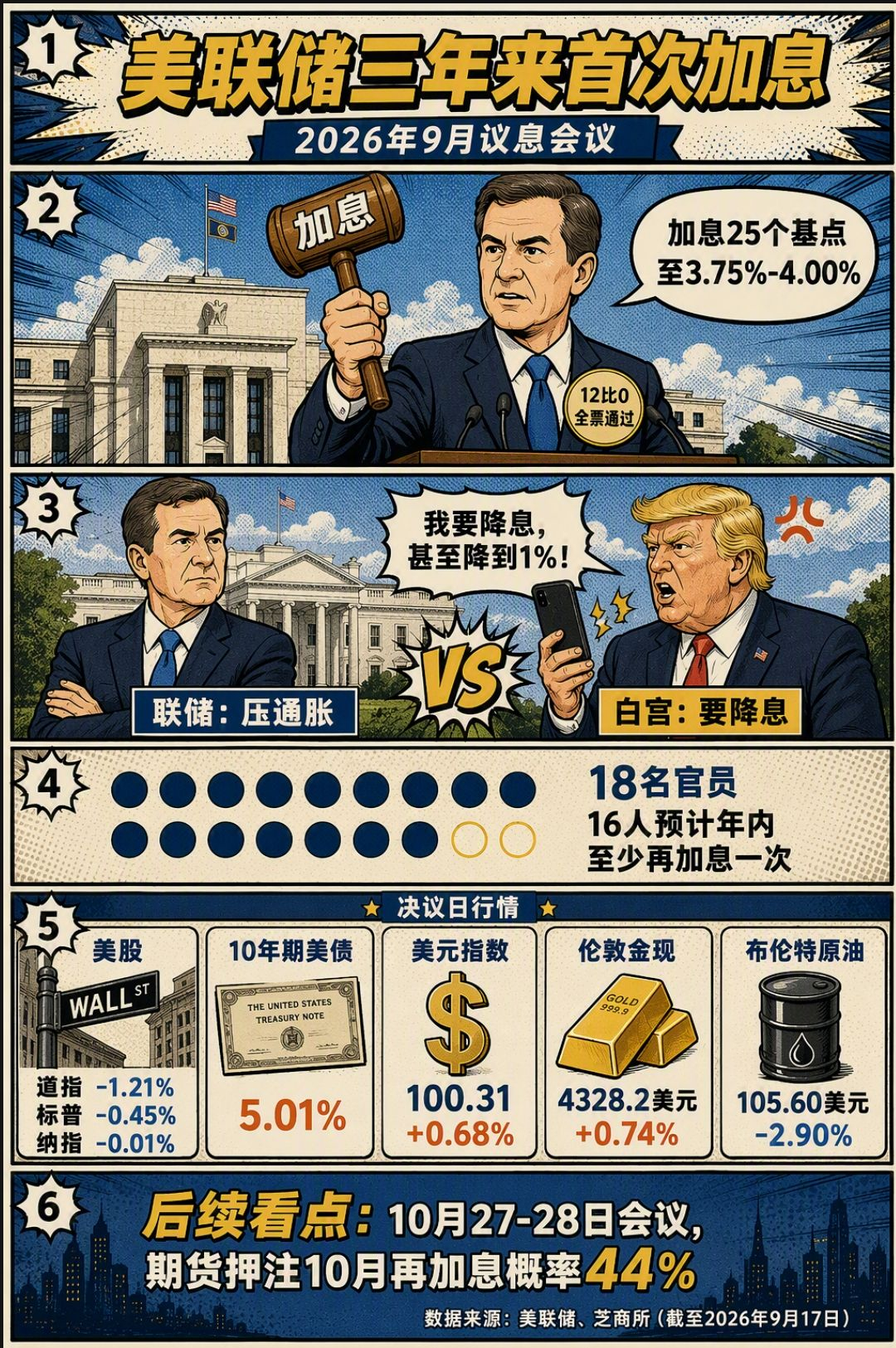
Internally, the vote is even more unanimous than in the past: there were still three dissenters in July, but this time it passed 12-0.
The problem is that inflation has been above target for more than five years. Once businesses and households form persistent expectations, price pressure becomes entrenched. Gabon said the economy can handle a moderately tighter stance—but Waller’s dilemma is that energy shocks aren’t resolved by rate hikes, inflation keeps running, and he can’t keep treating it as temporary interference.
In short: the market is starting to reprice the tightening path again, and the October suspense is still there.#美联储SEP预计2026利率4.1%
#点阵图预示2026年再加息一次
Goldman Sachs now expects another hike in October. Bank of America is even more aggressive,押ing for back-to-back hikes in October and December. Morgan Stanley also raised its forecast from two hikes to three. Earlier, Goldman had thought September would be the last one—but it’s completely flipped its stance.
Waller didn’t promise a hike next month, but he also didn’t say it’s over. He said the move was “removing a dose of accommodation”—translated, it means rates aren’t tight enough yet, and there’s still work to be done. The yield on two-year U.S. Treasuries jumped straight to the highest level in more than two years.
Energy shocks are no longer being treated as short-term noise. Waller listed geopolitics as one of the three major changes since July. Oil has returned to above $100, and diesel prices have risen even more sharply. BNP Paribas said officials have entered an “acceptance phase”—acknowledging there’s a mild but persistent inflation problem. Two more rate hikes this year “are likely just the down payment.”
What’s worse: rate hikes won’t fix oil prices, and AI investment isn’t very sensitive to borrowing costs. Ultimately, the pressure may transmit from asset prices—first weakening financial prices, and then hitting consumption.
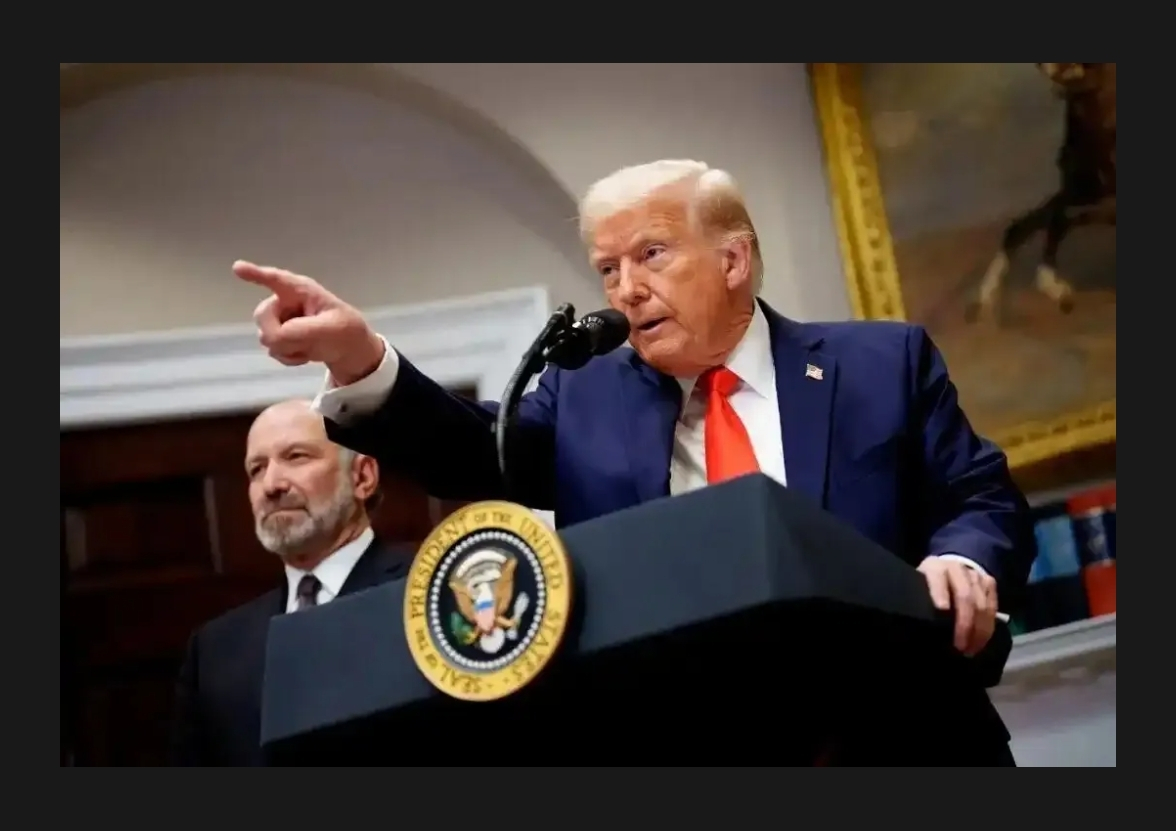
Rate hikes were previously derailed by the stock market selloff at the end of 2018, and the collapse of Silicon Valley Bank in 2023 is another warning sign. But this time, Trump signaled support for Waller, saying, “Do what you want to do.” Waller, in turn, emphasized that this was a “clear-eyed, serious, and responsible” decision.
Internally, the vote is even more unanimous than in the past: there were still three dissenters in July, but this time it passed 12-0.
The problem is that inflation has been above target for more than five years. Once businesses and households form persistent expectations, price pressure becomes entrenched. Gabon said the economy can handle a moderately tighter stance—but Waller’s dilemma is that energy shocks aren’t resolved by rate hikes, inflation keeps running, and he can’t keep treating it as temporary interference.
In short: the market is starting to reprice the tightening path again, and the October suspense is still there.#美联储SEP预计2026利率4.1%