Today let’s talk about three coins—each one follows a completely different playbook.
$ZEC
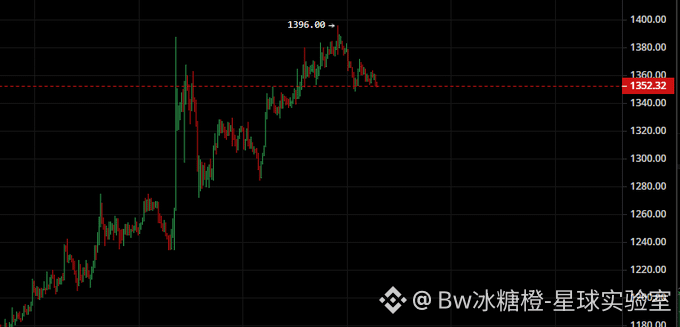
This one is a long-term whale building a trend. The pump has basically been going on for nearly a year. Relying on the privacy-coin narrative, plus the ETF expectations gradually being pushed upward. It’s not the kind of sudden, aggressive pump—pumping and then washing along the way—where money trickles in all at once. Instead, it’s a long-term trend.
$RAVE
This is more like a prop-trader’s short-term trade. The whole rally takes only about 4 to 6 days. It rockets upward fast, purely driven by market sentiment. After topping, it dumps decisively—pump fast, sell fast. Make a profit and then leave.
$LAB
This falls into a swing-trader whale style. The full rally cycle is about a bit over two months. They time it around the news window: pump a segment, wash a segment, keep going back and forth, and then gradually move higher.
I’ve summarized a rule for this: the smaller the float and the more flimsy the story, the shorter the rally duration. Only coins with narrative and logic to support them can sustain this kind of long-lasting trend.
Now specifically, when is ZEC more likely to dump?
First, when all the key positive catalysts have fully played out. The main players use the news to exit and directly realize profits.
Second, on-chain you see a large amount of holdings concentratedly transferring out. The whale starts distributing and offloading in batches.
Third, as the price keeps rising, the volume becomes huge, but the price doesn’t actually move higher. Then a single very long bearish candle appears—this is a very obvious signal that they’re preparing to leave.
As long as these signals haven’t appeared, the trend is still temporarily intact. But once any one of them triggers, even a long-term whale can still dump—don’t get overconfident. Don’t rush to go short; wait for the timing.
$ZEC
This one is a long-term whale building a trend. The pump has basically been going on for nearly a year. Relying on the privacy-coin narrative, plus the ETF expectations gradually being pushed upward. It’s not the kind of sudden, aggressive pump—pumping and then washing along the way—where money trickles in all at once. Instead, it’s a long-term trend.
$RAVE
This is more like a prop-trader’s short-term trade. The whole rally takes only about 4 to 6 days. It rockets upward fast, purely driven by market sentiment. After topping, it dumps decisively—pump fast, sell fast. Make a profit and then leave.
$LAB
This falls into a swing-trader whale style. The full rally cycle is about a bit over two months. They time it around the news window: pump a segment, wash a segment, keep going back and forth, and then gradually move higher.
I’ve summarized a rule for this: the smaller the float and the more flimsy the story, the shorter the rally duration. Only coins with narrative and logic to support them can sustain this kind of long-lasting trend.
Now specifically, when is ZEC more likely to dump?
First, when all the key positive catalysts have fully played out. The main players use the news to exit and directly realize profits.
Second, on-chain you see a large amount of holdings concentratedly transferring out. The whale starts distributing and offloading in batches.
Third, as the price keeps rising, the volume becomes huge, but the price doesn’t actually move higher. Then a single very long bearish candle appears—this is a very obvious signal that they’re preparing to leave.
As long as these signals haven’t appeared, the trend is still temporarily intact. But once any one of them triggers, even a long-term whale can still dump—don’t get overconfident. Don’t rush to go short; wait for the timing.