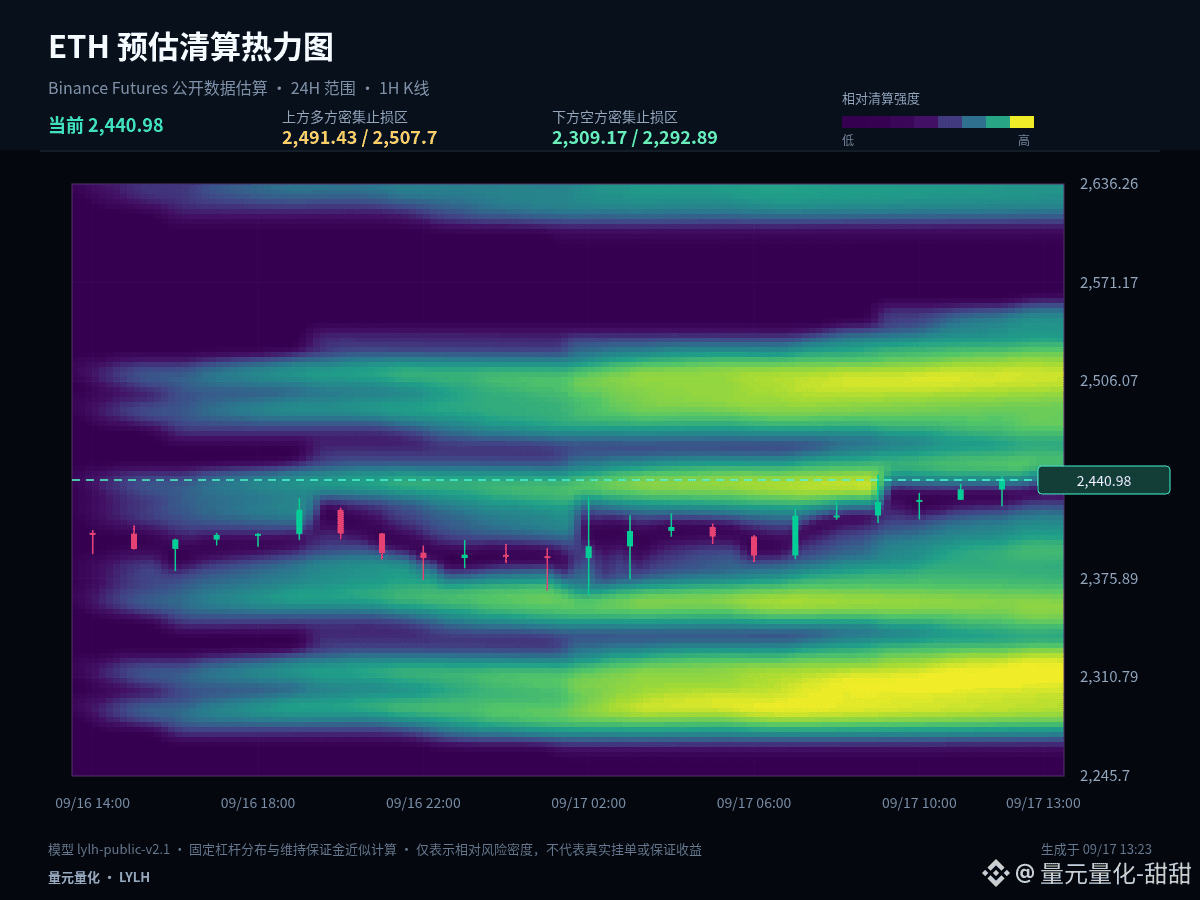
$ETH #ETH has already reached the upper band of the near-24-hour range, and the most important thing to verify at the moment is whether there is a valid breakout—or just a rebound after a spike followed by a quick pullback.
The current price is hovering close to the upper band of the near-24-hour fluctuation range: -0.01% over 1 hour, +1.67% over 24 hours. At the high end, the key is to confirm the market’s acceptance after a breakout: if price can stay above the upper band, it shows the market recognizes the higher range; if it only briefly pierces and then quickly reclaims back, you need to guard against a false breakout.
For the short term, first watch whether 2,369.11 can form continuous support/acceptance, then whether 2,407.89 can be reclaimed. The first determines whether the downside will slow down; the second determines whether the rebound can strengthen. Without confirmation of both, it’s not advisable to judge opportunity based on the magnitude of the drop alone.
There are three possible ways forward: (1) If price holds and stands effectively above 2,446.66, wait to see whether a pullback can fail to break, then reassess for continuation; (2) If price breaks down below 2,369.11, prioritize risk control and wait for new support; (3) If it continues to oscillate around 2,407.89, treat it as a range for rotation and do not repeatedly chase a direction while it’s in the middle.
For those holding positions already, the focus is to manage based on whether support fails—not to get swept along by every fluctuation. For those currently flat, prioritize waiting for a breakout-and-retest confirmation or support confirmation. For spot, you can scale in; for futures, shorten the decision chain: first set the stop-loss level, then decide whether to participate.
If the next 1-hour candle closes above 2,407.89, the structure will become more proactive; if it closes below, you should remain cautious. Which path are you leaning toward right now?
#RobinhoodToSupportCircleArcNetwork
The current price is hovering close to the upper band of the near-24-hour fluctuation range: -0.01% over 1 hour, +1.67% over 24 hours. At the high end, the key is to confirm the market’s acceptance after a breakout: if price can stay above the upper band, it shows the market recognizes the higher range; if it only briefly pierces and then quickly reclaims back, you need to guard against a false breakout.
For the short term, first watch whether 2,369.11 can form continuous support/acceptance, then whether 2,407.89 can be reclaimed. The first determines whether the downside will slow down; the second determines whether the rebound can strengthen. Without confirmation of both, it’s not advisable to judge opportunity based on the magnitude of the drop alone.
There are three possible ways forward: (1) If price holds and stands effectively above 2,446.66, wait to see whether a pullback can fail to break, then reassess for continuation; (2) If price breaks down below 2,369.11, prioritize risk control and wait for new support; (3) If it continues to oscillate around 2,407.89, treat it as a range for rotation and do not repeatedly chase a direction while it’s in the middle.
For those holding positions already, the focus is to manage based on whether support fails—not to get swept along by every fluctuation. For those currently flat, prioritize waiting for a breakout-and-retest confirmation or support confirmation. For spot, you can scale in; for futures, shorten the decision chain: first set the stop-loss level, then decide whether to participate.
If the next 1-hour candle closes above 2,407.89, the structure will become more proactive; if it closes below, you should remain cautious. Which path are you leaning toward right now?
#RobinhoodToSupportCircleArcNetwork