Do you hold losing trades longer than winning ones, hoping they turn?
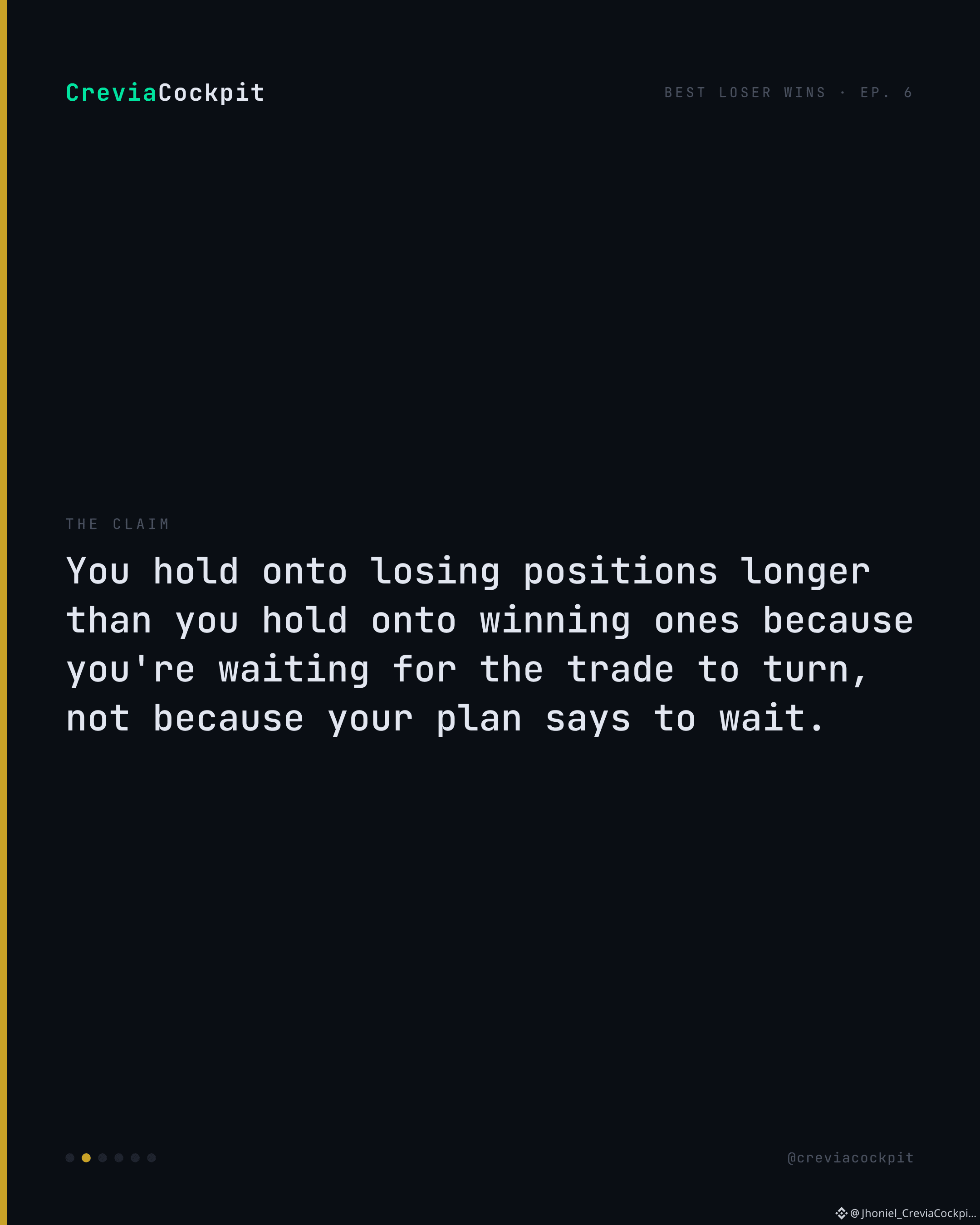
You hold onto losing positions longer than you hold onto winning ones because you're waiting for the trade to turn, not because your plan says to wait.
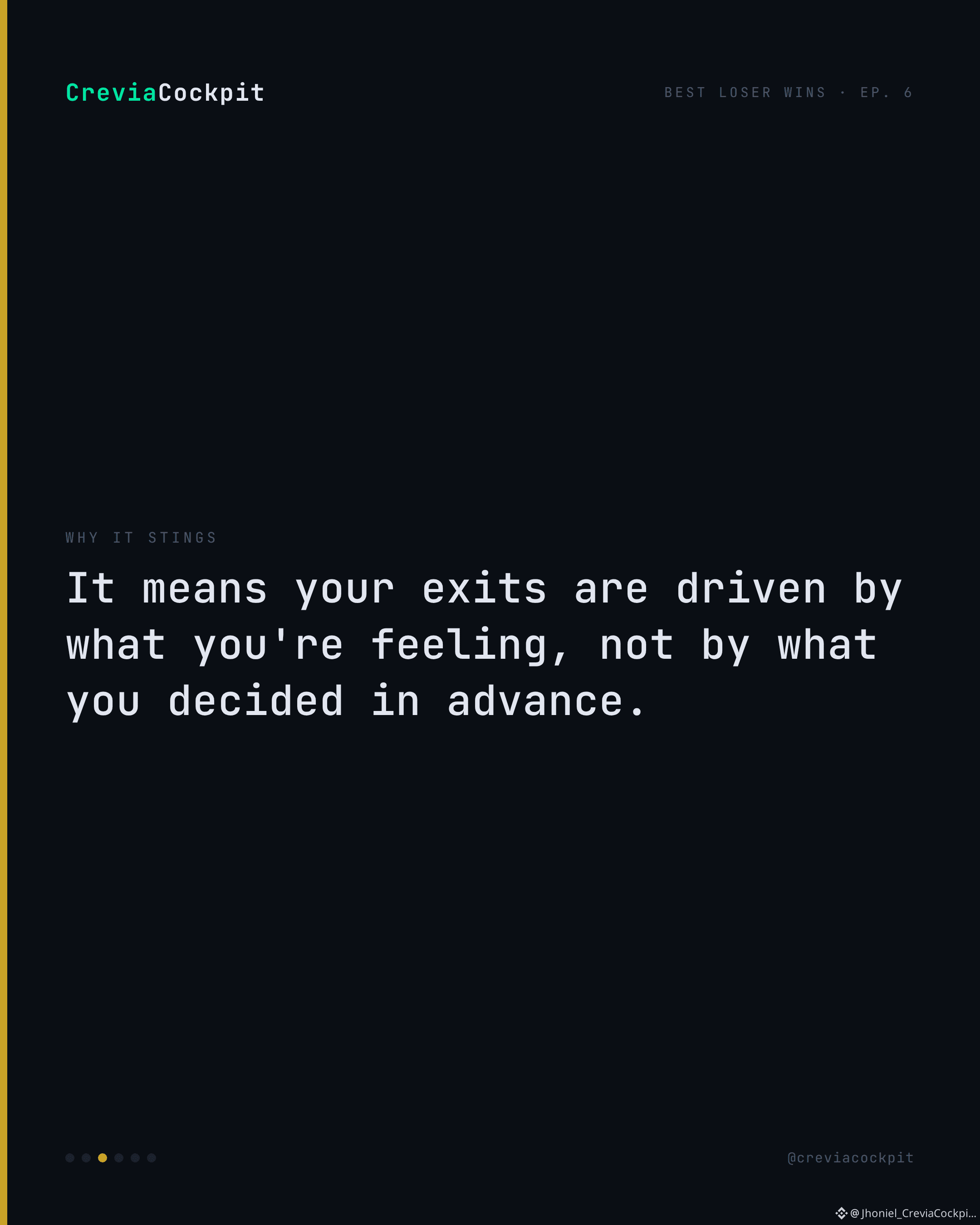
It means your exits are driven by what you're feeling, not by what you decided in advance.
From Best Loser Wins by Tom Hougaard. The check is yours.
Check it on your own record:
1. Find this figure: average holding time (or average loss size relative to your stop) on losing trades versus winning trades.
2. Put it next to the rest of your trades.
3. Decide whether it is true of you.
The full lesson, free: https://creviacockpit.com/r/deck-book-8?s=square
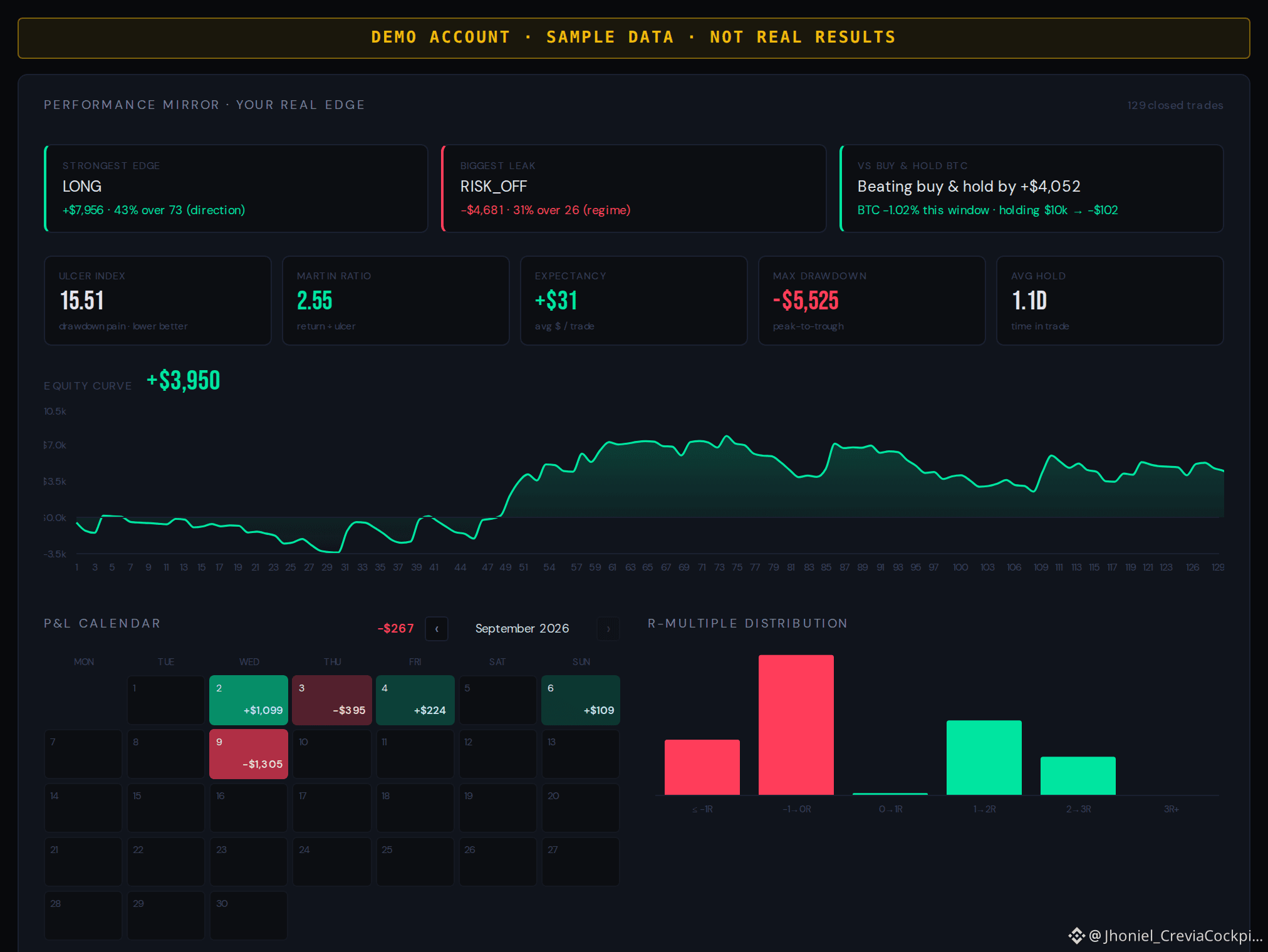
Last image: a journal on our demo account, sample trades. Where the edge and the leaks show up once every trade is logged.
Be honest: is this you? Answer below.
Follow for a trading lesson from the books every week.
$BTC
#TradingPsychology #Crypto #CreviaCockpit | creviacockpit.com/lessons?s=square
You hold onto losing positions longer than you hold onto winning ones because you're waiting for the trade to turn, not because your plan says to wait.
It means your exits are driven by what you're feeling, not by what you decided in advance.
From Best Loser Wins by Tom Hougaard. The check is yours.
Check it on your own record:
1. Find this figure: average holding time (or average loss size relative to your stop) on losing trades versus winning trades.
2. Put it next to the rest of your trades.
3. Decide whether it is true of you.
The full lesson, free: https://creviacockpit.com/r/deck-book-8?s=square
Last image: a journal on our demo account, sample trades. Where the edge and the leaks show up once every trade is logged.
Be honest: is this you? Answer below.
Follow for a trading lesson from the books every week.
$BTC
#TradingPsychology #Crypto #CreviaCockpit | creviacockpit.com/lessons?s=square