
静心1688
2.6k Posts

静心1688
 Square Verified+
SHIB Holder
Occasional Trader
5.5 Years
270 Following
52.6K+ Followers
46.7K+ Liked
Posts
All
Quotes
PINNED

PINNED


全球零撸达人
·
--
Good afternoon🌞 #红包 h b#红包 🧧


520龙行天下
·
--
Today’s Crypto Market Hot Topics: The Fed rate-hike “shoe” has dropped, market sentiment has warmed up, and crypto prices are surging. The DeFi sector has jumped 6.8%; UNI is up nearly 20% and has broken above $8; ZEC has hit a new high again; NEAR and HYPE lead the gains. The SEC has rolled out a novel exemption for tokenized stocks, and the RWA concept is heating up. BTC is holding steady around $76,000. Invest rationally and watch out for risks.


白鲨观点马来西亚
·
--
BTC falls below the 78,000 mark—today’s PPI is the “trailer” for the CPI
This morning, BTC tested the 78,000 support, dipping as low as 77,900.
The market is like a fully drawn bow, just waiting for tonight’s PPI and tomorrow’s CPI to release the string.
First, let’s talk about why PPI matters.
PPI is the Producer Price Index—basically a “leading indicator” for CPI.
If factory costs rise, it will eventually filter through to consumers.
Market expectations are PPI MoM +0.2% and YoY +1.4%.
If it comes in above expectations, it’s basically like previewing that tomorrow’s CPI won’t look good either—
the probability of further rate hikes keeps climbing, and BTC will most likely drop to test lower supports.
Conversely, if PPI is below expectations,
markets may price in optimism in advance that “the CPI could cool off,”
and the 80,000 level might be pulled back just like that.
My plan today: I’m not betting on direction—I’ll wait for the data.
I cut my position to 30%, keeping plenty of ammunition on hand, and I’ll make moves once the numbers come out.
The PPI release is tonight at 20:30, and I’ll interpret it in real time in the chat.
Want to know first how the data will affect the market? Tap my avatar to enter the chat—the code word is “PPI.”
By the way, do you think today’s PPI will beat expectations or come in below them?
Drop your bet in the comments: if it beats expectations, you lose 1; if it’s below expectations, you lose 2.
#BinanceSquare #bitcoin #PPI #加密市场 #CPI前瞻
This morning, BTC tested the 78,000 support, dipping as low as 77,900.
The market is like a fully drawn bow, just waiting for tonight’s PPI and tomorrow’s CPI to release the string.
First, let’s talk about why PPI matters.
PPI is the Producer Price Index—basically a “leading indicator” for CPI.
If factory costs rise, it will eventually filter through to consumers.
Market expectations are PPI MoM +0.2% and YoY +1.4%.
If it comes in above expectations, it’s basically like previewing that tomorrow’s CPI won’t look good either—
the probability of further rate hikes keeps climbing, and BTC will most likely drop to test lower supports.
Conversely, if PPI is below expectations,
markets may price in optimism in advance that “the CPI could cool off,”
and the 80,000 level might be pulled back just like that.
My plan today: I’m not betting on direction—I’ll wait for the data.
I cut my position to 30%, keeping plenty of ammunition on hand, and I’ll make moves once the numbers come out.
The PPI release is tonight at 20:30, and I’ll interpret it in real time in the chat.
Want to know first how the data will affect the market? Tap my avatar to enter the chat—the code word is “PPI.”
By the way, do you think today’s PPI will beat expectations or come in below them?
Drop your bet in the comments: if it beats expectations, you lose 1; if it’s below expectations, you lose 2.
#BinanceSquare #bitcoin #PPI #加密市场 #CPI前瞻


奕泽YIZZE
·
--
🧧🔥 In the tide of the digital age, steadfast belief is the key to moving forward. Follow LUCIC exclusive card dividend updates—don’t blindly follow, don’t chase trends. Amid the interweaving of technological change and market shifts, stay confident in quality assets. Let’s explore together the possibilities ahead and seize today’s long-term opportunities.
Please follow, like, and share!
Please follow, like, and share!


Mira小白桃
·
--
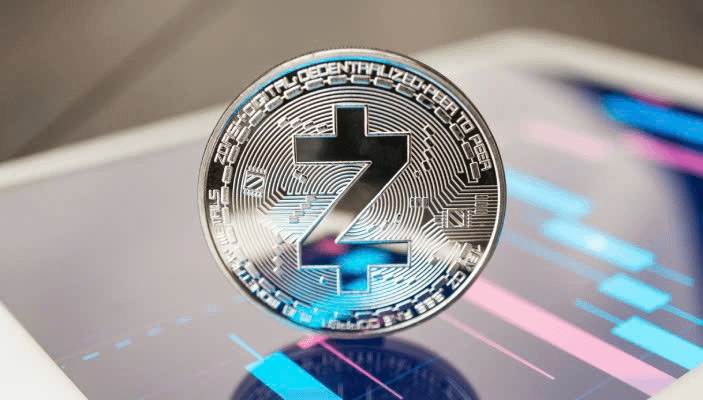
🔥$ZEC has rushed to 1500—can it still move higher from here?
This round of ZEC’s strength has indeed gone beyond many people’s expectations.
From breaking through a key resistance level and continuously setting new highs, it has now entered a very critical position:
The uptrend hasn’t shown obvious signs of being broken, but the short-term market has already entered a high-level standoff.
Currently, the market has a few viewpoints that are quite interesting.
Some traders believe that ZEC now looks more like high-level consolidation within a strong trend. As long as the core breakout zone can be defended, there’s still a possibility for further upward expansion.
But some analysts are starting to warn:
Rising too fast is itself a risk.
Derivatives positioning continues to increase, and technical indicators have also moved into a clearly overheated area.
So going forward, I won’t simply chase the number “1500.”
I’m watching three areas instead:
First, the breakout zone overhead.
If ZEC can continue to break the prior high with expanding volume, and after breaking out it can turn this zone into a new support level, then the strong uptrend still has room to continue.
For the next phase above, keep an eye on higher integer psychological levels.
Second, the pressure around 1500.
This is a very important psychological level.
If it spikes up and then quickly falls back, it suggests that profit-taking from higher levels has started to cash in.
In that case, the short term is more likely to enter consolidation rather than immediately pushing higher.
Third, the core support zone below.
Right now, market analysis is focused on the earlier breakout zone.
As long as this zone holds, ZEC is still in a strong structure.
But if it breaks down and the subsequent retest can’t reclaim it, then be careful—this rally may be entering a deeper correction. Earlier analysis also pointed to the next lower layer of support as an observation area if the trend starts to weaken.
So my conclusion is simple:
ZEC still has upside potential, but the risk of chasing after a spike is getting higher.
Strong breakout and holding firm → continue to look for trend extension.
Push high and then pull back at high levels → wait for the dip to confirm.
If core support is lost → guard against the uptrend structure weakening.
When the market is strong, you can’t rely on emotion to chase.
I’d rather wait for a comfortable entry point than FOMO just because I see 1500.
This round of ZEC’s strength has indeed gone beyond many people’s expectations.
From breaking through a key resistance level and continuously setting new highs, it has now entered a very critical position:
The uptrend hasn’t shown obvious signs of being broken, but the short-term market has already entered a high-level standoff.
Currently, the market has a few viewpoints that are quite interesting.
Some traders believe that ZEC now looks more like high-level consolidation within a strong trend. As long as the core breakout zone can be defended, there’s still a possibility for further upward expansion.
But some analysts are starting to warn:
Rising too fast is itself a risk.
Derivatives positioning continues to increase, and technical indicators have also moved into a clearly overheated area.
So going forward, I won’t simply chase the number “1500.”
I’m watching three areas instead:
First, the breakout zone overhead.
If ZEC can continue to break the prior high with expanding volume, and after breaking out it can turn this zone into a new support level, then the strong uptrend still has room to continue.
For the next phase above, keep an eye on higher integer psychological levels.
Second, the pressure around 1500.
This is a very important psychological level.
If it spikes up and then quickly falls back, it suggests that profit-taking from higher levels has started to cash in.
In that case, the short term is more likely to enter consolidation rather than immediately pushing higher.
Third, the core support zone below.
Right now, market analysis is focused on the earlier breakout zone.
As long as this zone holds, ZEC is still in a strong structure.
But if it breaks down and the subsequent retest can’t reclaim it, then be careful—this rally may be entering a deeper correction. Earlier analysis also pointed to the next lower layer of support as an observation area if the trend starts to weaken.
So my conclusion is simple:
ZEC still has upside potential, but the risk of chasing after a spike is getting higher.
Strong breakout and holding firm → continue to look for trend extension.
Push high and then pull back at high levels → wait for the dip to confirm.
If core support is lost → guard against the uptrend structure weakening.
When the market is strong, you can’t rely on emotion to chase.
I’d rather wait for a comfortable entry point than FOMO just because I see 1500.

慢就是快Mike
·
--
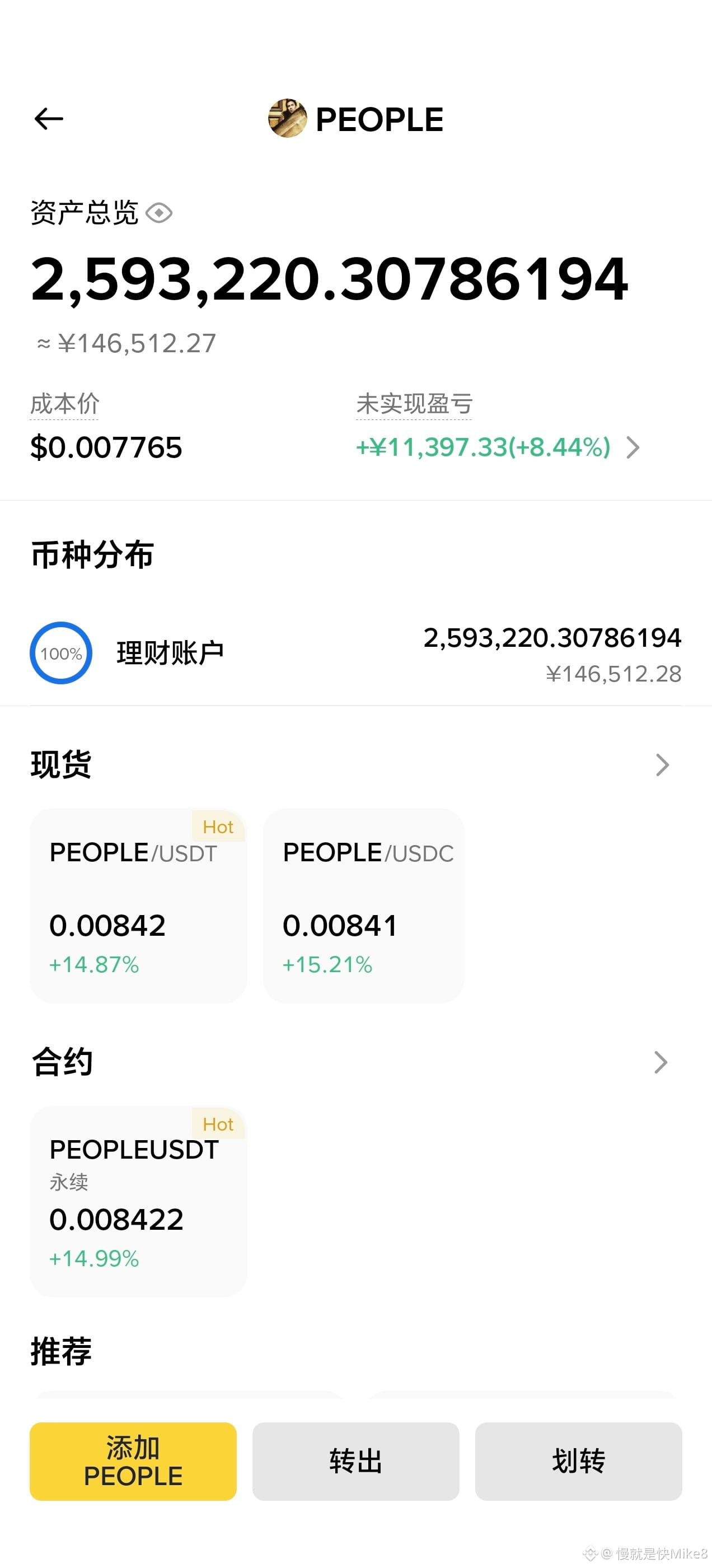
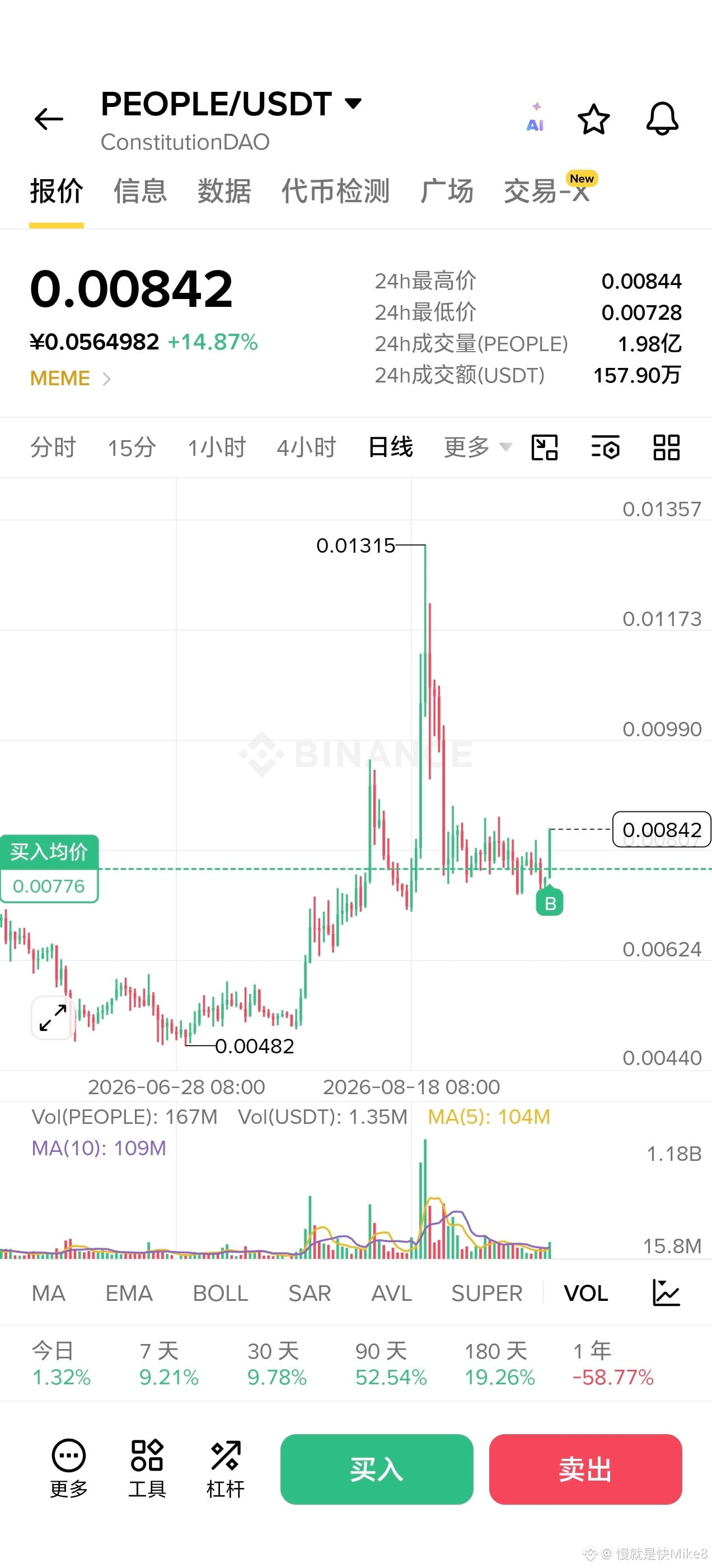
$PEOPLE Every year during the U.S. presidential election, this coin will have market action. “By the people, for the people” — you can stake a position in advance!

蒋雅琪1368
·
--
Bitcoin rebounds—will it continue to rise further?
✅ Reasons for the rebound: Price pulled back to support above the 75,000 level that has been confirmed multiple times in the past, triggering the rebound.
Rebound targets: First target at 78,500; next resistance at 80,500. For more cautious investors, take profit around 78,500; spot holdings can take profits in batches.
✅ My view: The market is highly uncertain right now, so it’s not suitable for long-term holding. Tomorrow’s bill, Wednesday’s interest rate hike, and officials’ remarks are all unknown variables. The priority is to lock in existing profits, then re-enter with a heavier position once the market becomes clearer.
During yesterday’s sharp sell-off, I advised setting up spot positions around 76,000; it has now risen nearly 2,000 points. Strategy logic: Buy at support to catch the rebound; take profit at resistance. Do not open positions unless support is reached; if the price continues to surge and approaches the resistance zone, you can try shorting.
Strong resistance is at 81,000–82,000. Attempt shorts in this range; the expected win rate is about 70%. Swing trade based on support and resistance—if the price breaks out, cut losses. In complex market conditions, I’ll keep digging for opportunities and synchronize my real-time trading mindset every day.
✅ Reasons for the rebound: Price pulled back to support above the 75,000 level that has been confirmed multiple times in the past, triggering the rebound.
Rebound targets: First target at 78,500; next resistance at 80,500. For more cautious investors, take profit around 78,500; spot holdings can take profits in batches.
✅ My view: The market is highly uncertain right now, so it’s not suitable for long-term holding. Tomorrow’s bill, Wednesday’s interest rate hike, and officials’ remarks are all unknown variables. The priority is to lock in existing profits, then re-enter with a heavier position once the market becomes clearer.
During yesterday’s sharp sell-off, I advised setting up spot positions around 76,000; it has now risen nearly 2,000 points. Strategy logic: Buy at support to catch the rebound; take profit at resistance. Do not open positions unless support is reached; if the price continues to surge and approaches the resistance zone, you can try shorting.
Strong resistance is at 81,000–82,000. Attempt shorts in this range; the expected win rate is about 70%. Swing trade based on support and resistance—if the price breaks out, cut losses. In complex market conditions, I’ll keep digging for opportunities and synchronize my real-time trading mindset every day.

白鲨观点
·
--
BearishIt’s Friday. Let’s break down the key data from this week in the crypto market. After you finish reading, you’ll have a pretty good sense of where things stand:
📊 Price Data
BTC this week: high 79,800, low 74,944, range 6.2%. Currently around 77,000. Weekly: nearly flat.
ETH this week: high 2,640, low 2,360, range 11.9%. Currently around 2,460. Weekly: slightly up.
BTC dominance fell from 59.3% to 58.6%. Funds started rotating toward altcoins and derivatives: trading volume down 13.8%, suggesting short-term capital is waiting on the sidelines—nobody’s making reckless moves.
🔥 Sector Performance (24h)
DeFi +6.8% (top performer): UNI +17%, NEAR +24%, AAVE +8%
DePIN +5.5%: Geodnet +45%
L2 +4.5%
RWA +5%
Meanwhile, major coins rose the least: BTC +0.7%, ETH +1.5%
📰 Weekly Highlights
Monday: The “Clear Act” Senate vote failed 50:49; probability of passage within the year is only 16%
Wednesday: The Fed raised rates by 25 bps to 3.75%–4%; passed unanimously; the dot plot suggests another hike is likely still this year
Thursday: BTC ETF saw a daily outflow of $450 million, the largest since June
Thursday night: The SEC issued an “innovation exemption,” allowing tokenized stocks to trade on-chain (with trading limits and transparency requirements)
Friday early morning: S&P Global announced the acquisition of smart contract security firm OpenZeppelin
💡 My Take:
It looks like there were plenty of negative catalysts this week—failed legislation, rate hikes, ETF outflows—but prices didn’t drop much at all. In fact, altcoins started rising. What does that mean? It suggests the damage from the negatives is weakening, and buy-side demand is stepping in from below.
Especially worth noting are the last two pieces of news: the SEC allowing tokenized stocks to trade on-chain, and S&P Global acquiring OpenZeppelin. Many people focus only on the “Clear Act” failing and assume regulation is basically over—but regulation isn’t simply black or white. Major legislation may not move, but innovation in smaller areas keeps progressing. Traditional finance is also quietly moving into blockchain.
So don’t be too pessimistic, and don’t be too optimistic either. What you’re seeing now is a choppy “bottoming-out” range market: pressure overhead, support below. In terms of strategy, don’t chase or panic-sell—buy low and sell high.
At 4 p.m., let’s chat in the room: “How will next week likely go, and which sectors could have opportunities?” If you’re interested, come join.
$BTC $ETH #BinanceSquare #行情复盘
📊 Price Data
BTC this week: high 79,800, low 74,944, range 6.2%. Currently around 77,000. Weekly: nearly flat.
ETH this week: high 2,640, low 2,360, range 11.9%. Currently around 2,460. Weekly: slightly up.
BTC dominance fell from 59.3% to 58.6%. Funds started rotating toward altcoins and derivatives: trading volume down 13.8%, suggesting short-term capital is waiting on the sidelines—nobody’s making reckless moves.
🔥 Sector Performance (24h)
DeFi +6.8% (top performer): UNI +17%, NEAR +24%, AAVE +8%
DePIN +5.5%: Geodnet +45%
L2 +4.5%
RWA +5%
Meanwhile, major coins rose the least: BTC +0.7%, ETH +1.5%
📰 Weekly Highlights
Monday: The “Clear Act” Senate vote failed 50:49; probability of passage within the year is only 16%
Wednesday: The Fed raised rates by 25 bps to 3.75%–4%; passed unanimously; the dot plot suggests another hike is likely still this year
Thursday: BTC ETF saw a daily outflow of $450 million, the largest since June
Thursday night: The SEC issued an “innovation exemption,” allowing tokenized stocks to trade on-chain (with trading limits and transparency requirements)
Friday early morning: S&P Global announced the acquisition of smart contract security firm OpenZeppelin
💡 My Take:
It looks like there were plenty of negative catalysts this week—failed legislation, rate hikes, ETF outflows—but prices didn’t drop much at all. In fact, altcoins started rising. What does that mean? It suggests the damage from the negatives is weakening, and buy-side demand is stepping in from below.
Especially worth noting are the last two pieces of news: the SEC allowing tokenized stocks to trade on-chain, and S&P Global acquiring OpenZeppelin. Many people focus only on the “Clear Act” failing and assume regulation is basically over—but regulation isn’t simply black or white. Major legislation may not move, but innovation in smaller areas keeps progressing. Traditional finance is also quietly moving into blockchain.
So don’t be too pessimistic, and don’t be too optimistic either. What you’re seeing now is a choppy “bottoming-out” range market: pressure overhead, support below. In terms of strategy, don’t chase or panic-sell—buy low and sell high.
At 4 p.m., let’s chat in the room: “How will next week likely go, and which sectors could have opportunities?” If you’re interested, come join.
$BTC $ETH #BinanceSquare #行情复盘


大丽7613
·
--
The strategy direction is already clear:
Spot first—enter in batches at 75,000 and 73,000, further improving fault tolerance;
At the 75,000 level for futures, we’ve repeatedly “harvested” there multiple times. Missing once is fine—wait for stronger support at 73,000;
ETH support reference: 2360, 2200.
Once a deep drawdown of 20% or so arrives—like a sudden bloodbath—this kind of “golden falling” window must be boldly used to build positions.
Simplicity is the ultimate sophistication. This strategy is simple yet very effective: sell when crowds are loud, buy when no one is paying attention.
After successfully escaping the top at a high level, the main task now is to gradually take back the chips on dips.
After that, when you encounter good trading opportunities, jump right in. For long-term positioning, hold steadfast; for short-term gains, also seize the moment.
Spot first—enter in batches at 75,000 and 73,000, further improving fault tolerance;
At the 75,000 level for futures, we’ve repeatedly “harvested” there multiple times. Missing once is fine—wait for stronger support at 73,000;
ETH support reference: 2360, 2200.
Once a deep drawdown of 20% or so arrives—like a sudden bloodbath—this kind of “golden falling” window must be boldly used to build positions.
Simplicity is the ultimate sophistication. This strategy is simple yet very effective: sell when crowds are loud, buy when no one is paying attention.
After successfully escaping the top at a high level, the main task now is to gradually take back the chips on dips.
After that, when you encounter good trading opportunities, jump right in. For long-term positioning, hold steadfast; for short-term gains, also seize the moment.

CZ_ANUU
·
--
If your dream seems unreachable, don't lower your dream, raise your effort...
Have a productive day and be safe out there ❣️....
Have a productive day and be safe out there ❣️....


Shaheen 69
·
--
🎁 Red Packet for my community! ❤️
Three simple trading tips: 1️⃣ Trade with a plan, not emotions. 2️⃣ Always protect your capital with a stop-loss. 3️⃣ Wait for confirmation before entering.
Small steps, disciplined trading. Good luck everyone! 🚀
$BNB
Three simple trading tips: 1️⃣ Trade with a plan, not emotions. 2️⃣ Always protect your capital with a stop-loss. 3️⃣ Wait for confirmation before entering.
Small steps, disciplined trading. Good luck everyone! 🚀
$BNB


橙子Joyce
·
--
BullishWill the Federal Reserve raise rates as expected this week? Wall Street is debating: will it end the U.S. stock bull market?
After an unexpectedly strong U.S. CPI report came out last Friday, traders generally expect the Federal Reserve to begin raising rates at this week’s policy meeting—marking the first rate hike in more than three years.
Historically, previous rounds of rate hikes have offered a reference point for today’s market. Based on past experience (though history of course can’t guarantee the future), U.S. stocks may first weaken, then rebound.
Among the six tightening cycles since 1994, during the first four months after the rate-hike cycle began, the S&P 500’s average return was negative.
This suggests that once the “rate-hike shoe” drops, U.S. stocks may look lackluster through the beginning of next year.
As of the close last Friday, the benchmark U.S. equity index, the S&P 500, is up nearly 12% year to date. Strong corporate earnings and a fairly resilient economy have provided solid support for bulls in the stock market.
If you extend the time horizon, the S&P 500’s performance tends to improve gradually: in the 12 months after the start of a rate-hiking cycle, the index’s average return is close to 7%, with a median return of about 11%. (Using median-based statistics helps remove distortions from extreme outliers—for example, the index surged more than 40% after hikes began in March 1997.)
If the Federal Reserve implements a rate hike this Wednesday, it will be the first hike since July 2023—when the Fed raised rates to a range of 5.25% to 5.50%.
Currently, the federal funds rate in the U.S. is at 3.50% to 3.75%. According to the CME Group’s FedWatch tool, futures traders currently assign an 86% probability to a 25-basis-point hike this week.
One positive factor for the market is that mega-scale cloud service providers are still driving growth in excess returns through large-scale AI spending. The S&P 500 component stocks’ forecast for earnings growth in 2027 is expected to reach double digits. If the outlook for AI spending remains unchanged, it may be enough to offset any cooling in optimistic sentiment caused by the rate hikes.
Another bright spot for equities is that although inflation remains sticky, it appears to be slowing. The inflation rate has fallen from a May peak of 4.2%. This should allow the Federal Reserve to take a more gradual approach, and the data shows that the pace of rate hikes is crucial for stock performance—slower pacing gives investors more time to absorb policy changes!
$BZ
$CL
Energy
After an unexpectedly strong U.S. CPI report came out last Friday, traders generally expect the Federal Reserve to begin raising rates at this week’s policy meeting—marking the first rate hike in more than three years.
Historically, previous rounds of rate hikes have offered a reference point for today’s market. Based on past experience (though history of course can’t guarantee the future), U.S. stocks may first weaken, then rebound.
Among the six tightening cycles since 1994, during the first four months after the rate-hike cycle began, the S&P 500’s average return was negative.
This suggests that once the “rate-hike shoe” drops, U.S. stocks may look lackluster through the beginning of next year.
As of the close last Friday, the benchmark U.S. equity index, the S&P 500, is up nearly 12% year to date. Strong corporate earnings and a fairly resilient economy have provided solid support for bulls in the stock market.
If you extend the time horizon, the S&P 500’s performance tends to improve gradually: in the 12 months after the start of a rate-hiking cycle, the index’s average return is close to 7%, with a median return of about 11%. (Using median-based statistics helps remove distortions from extreme outliers—for example, the index surged more than 40% after hikes began in March 1997.)
If the Federal Reserve implements a rate hike this Wednesday, it will be the first hike since July 2023—when the Fed raised rates to a range of 5.25% to 5.50%.
Currently, the federal funds rate in the U.S. is at 3.50% to 3.75%. According to the CME Group’s FedWatch tool, futures traders currently assign an 86% probability to a 25-basis-point hike this week.
One positive factor for the market is that mega-scale cloud service providers are still driving growth in excess returns through large-scale AI spending. The S&P 500 component stocks’ forecast for earnings growth in 2027 is expected to reach double digits. If the outlook for AI spending remains unchanged, it may be enough to offset any cooling in optimistic sentiment caused by the rate hikes.
Another bright spot for equities is that although inflation remains sticky, it appears to be slowing. The inflation rate has fallen from a May peak of 4.2%. This should allow the Federal Reserve to take a more gradual approach, and the data shows that the pace of rate hikes is crucial for stock performance—slower pacing gives investors more time to absorb policy changes!
$BZ
$CL
Energy

Fabi_4043
·
--
There will always be more beautiful places than others 🎁🎁🥰
Follow and stay
$NVDAB
#StellarActivatesProtocol28At211TPS
Follow and stay
$NVDAB
#StellarActivatesProtocol28At211TPS


Aria Daisy 阿莉娅_黛西
·
--
BullishA night filled with ambition, elegance, and endless possibilities. ✨🌃
Dubai’s skyline is a reminder that big dreams are built one step at a time.
In the world of crypto, consistency, patience, and learning matter more than ever. 🚀
Keep building. Keep learning. Keep moving forward. 💎
#Binance #Web3 #crypto
$BTC $1000SATS
Dubai’s skyline is a reminder that big dreams are built one step at a time.
In the world of crypto, consistency, patience, and learning matter more than ever. 🚀
Keep building. Keep learning. Keep moving forward. 💎
#Binance #Web3 #crypto
$BTC $1000SATS


乘风Sunshine
·
--
Starting next Monday, we will officially resume live streaming. From Monday to Friday, we will broadcast the spot contract & event contract at 7:00 AM and 3:00 PM each day, and broadcast the perpetual contract & event contract at 10:00 PM. Please be informed.



晚风Vesper_1688
·
--
🍃Walk forward with the mountain breeze, and let yourself settle through each step⛰️
When climbing to see the scenery, what matters most is focus on your footing—trading and “cultivation” are the same📊.
Market ups and downs come and go swiftly—don’t let short-term fluctuations disrupt your rhythm🕊️.
Stay independent in thinking, keep your inner order, and don’t blindly follow the crowd or chase trends✨.
Accumulate understanding slowly, hold your impulses in check—opportunities will come in their own time💎.
Keep your passion, delve deeper inward, and along the way you’ll have your own rewards🌿
#交易心理
#Paradigm披露持有ZEC
#1688家族family
When climbing to see the scenery, what matters most is focus on your footing—trading and “cultivation” are the same📊.
Market ups and downs come and go swiftly—don’t let short-term fluctuations disrupt your rhythm🕊️.
Stay independent in thinking, keep your inner order, and don’t blindly follow the crowd or chase trends✨.
Accumulate understanding slowly, hold your impulses in check—opportunities will come in their own time💎.
Keep your passion, delve deeper inward, and along the way you’ll have your own rewards🌿
#交易心理
#Paradigm披露持有ZEC
#1688家族family





币圈现货小旋风
·
--
Spring, summer, autumn, and winter are full of worries over money; I roam everywhere in the four directions—east, south, west, and north. 🔥 I’ve tasted every kind of hardship in the coin world, just to never bow my head in front of people. 🔥 There is no way back in life—once the principal is gone, who can keep it? 🔥 Hoping the market will turn warm again, more take-profits and fewer worries. 🔥

Log in to explore more content