
币圈小贝贝
90 Posts

币圈小贝贝
Report
Block User
6年市场经验,公众号.比特柠檬,记录市场真实逻辑,研究下一步会去哪
12 Following
1.6K+ Followers
652 Liked
Posts
All
Live
·
--
See translation
印度现在稳卢比,正在打一个比较特别的算盘
不是只靠央行不断卖美元,而是直接把目光放到了海外印度人身上
印度央行推出特殊的外汇掉期机制,鼓励银行提高对非居民印度人的外币存款吸引力,让海外印度人的美元资金进入印度银行体系
实时交易计划 🫶🏻[加入公开粉丝群](https://app.binance.com/uni-qr/6d5gRrvm)
这套方案的效果比最初预期更明显,截至8月21日,相关机制带来的外汇流入已经达到约730亿美元,其中FCNR(B)存款约654亿美元,规模非常大
为什么印度现在这么重视这笔钱
因为卢比面对的压力并不只是国内问题,美元走强、美国利率、油价上涨以及外资流动,都会直接影响印度的外汇市场
最近卢比一度跌到96附近,印度央行也被市场认为持续在外汇市场进行干预,同时通过美元兑卢比掉期等方式管理银行体系流动性
所以海外印度人的存款,本质上就像给印度多增加了一层外汇缓冲
资金进来之后,可以增加外汇储备,也让央行在面对卢比贬值压力的时候有更多操作空间
但这里也有一个值得注意的地方
这并不代表卢比的压力已经消失,因为如果美元继续强势、油价维持高位,美债收益率继续上升,印度依然需要面对外部资金和进口成本带来的压力
甚至最近印度央行还在通过出售债券等方式回收银行体系过剩流动性,说明稳定汇率和管理国内流动性之间,也需要同时平衡
这件事情放到全球市场来看也很有意思
现在越来越多国家都在想办法把海外资金吸引回来,因为在美元流动性偏紧、全球利率维持高位的环境下,谁手里的外汇缓冲更多,谁在面对货币波动时就多一层空间
所以印度这次真正值得看的,不只是卢比短期涨跌
而是一个国家开始主动把本国海外资金,变成稳定本国金融体系的工具 👀
印度现在稳卢比,正在打一个比较特别的算盘
不是只靠央行不断卖美元,而是直接把目光放到了海外印度人身上
印度央行推出特殊的外汇掉期机制,鼓励银行提高对非居民印度人的外币存款吸引力,让海外印度人的美元资金进入印度银行体系
实时交易计划 🫶🏻加入公开粉丝群
这套方案的效果比最初预期更明显,截至8月21日,相关机制带来的外汇流入已经达到约730亿美元,其中FCNR(B)存款约654亿美元,规模非常大
为什么印度现在这么重视这笔钱
因为卢比面对的压力并不只是国内问题,美元走强、美国利率、油价上涨以及外资流动,都会直接影响印度的外汇市场
最近卢比一度跌到96附近,印度央行也被市场认为持续在外汇市场进行干预,同时通过美元兑卢比掉期等方式管理银行体系流动性
所以海外印度人的存款,本质上就像给印度多增加了一层外汇缓冲
资金进来之后,可以增加外汇储备,也让央行在面对卢比贬值压力的时候有更多操作空间
但这里也有一个值得注意的地方
这并不代表卢比的压力已经消失,因为如果美元继续强势、油价维持高位,美债收益率继续上升,印度依然需要面对外部资金和进口成本带来的压力
甚至最近印度央行还在通过出售债券等方式回收银行体系过剩流动性,说明稳定汇率和管理国内流动性之间,也需要同时平衡
这件事情放到全球市场来看也很有意思
现在越来越多国家都在想办法把海外资金吸引回来,因为在美元流动性偏紧、全球利率维持高位的环境下,谁手里的外汇缓冲更多,谁在面对货币波动时就多一层空间
所以印度这次真正值得看的,不只是卢比短期涨跌
而是一个国家开始主动把本国海外资金,变成稳定本国金融体系的工具 👀
不是只靠央行不断卖美元,而是直接把目光放到了海外印度人身上
印度央行推出特殊的外汇掉期机制,鼓励银行提高对非居民印度人的外币存款吸引力,让海外印度人的美元资金进入印度银行体系
实时交易计划 🫶🏻加入公开粉丝群
这套方案的效果比最初预期更明显,截至8月21日,相关机制带来的外汇流入已经达到约730亿美元,其中FCNR(B)存款约654亿美元,规模非常大
为什么印度现在这么重视这笔钱
因为卢比面对的压力并不只是国内问题,美元走强、美国利率、油价上涨以及外资流动,都会直接影响印度的外汇市场
最近卢比一度跌到96附近,印度央行也被市场认为持续在外汇市场进行干预,同时通过美元兑卢比掉期等方式管理银行体系流动性
所以海外印度人的存款,本质上就像给印度多增加了一层外汇缓冲
资金进来之后,可以增加外汇储备,也让央行在面对卢比贬值压力的时候有更多操作空间
但这里也有一个值得注意的地方
这并不代表卢比的压力已经消失,因为如果美元继续强势、油价维持高位,美债收益率继续上升,印度依然需要面对外部资金和进口成本带来的压力
甚至最近印度央行还在通过出售债券等方式回收银行体系过剩流动性,说明稳定汇率和管理国内流动性之间,也需要同时平衡
这件事情放到全球市场来看也很有意思
现在越来越多国家都在想办法把海外资金吸引回来,因为在美元流动性偏紧、全球利率维持高位的环境下,谁手里的外汇缓冲更多,谁在面对货币波动时就多一层空间
所以印度这次真正值得看的,不只是卢比短期涨跌
而是一个国家开始主动把本国海外资金,变成稳定本国金融体系的工具 👀

·
--
$BTC $MSTR Many people who look at Bitcoin still stay at the “how high will the price go?” level.
But a noteworthy change recently is that on BTC, a new layer of financial market is slowly emerging—and its scale could be far larger than what we’re seeing today.
I’ll share a real-time market outlook 🙊[加入免费聊天室](https://app.binance.com/uni-qr/6d5gRrvm)
Dan Hillery of UTXO mentioned that the size of the digital credit market has already reached roughly $16 billion. And he believes that as Bitcoin financialization continues to advance, this market could even grow toward the $150 billion—on the order of magnitude of BTC itself ($15000 billion).
Note: this isn’t saying that BTC’s market cap is about to be surpassed right away. We’re talking about something entirely different— a market for credit, yield, and structured financial products built around BTC.
Now you can already see some early forms.
For example, STRC from #strategy and other senior securities in essence further packages a BTC balance sheet into credit-like products that traditional investors can understand.
UTXO also breaks this financialization into different layers: from BTC itself, to products that directly represent BTC, to securities built on BTC, and finally to structured products on top of those securities.
This means that in the future, Bitcoin’s value may not be only “how much someone is willing to pay for a coin.”
Instead, more and more financial products will begin to be priced on BTC, raise funding with it, generate yield, and distribute risk.
Previously, when everyone bought #BTC , they were buying an asset.
In the future, the market may increasingly be about “creating financial products” on top of BTC.
Of course, risks here also can’t be ignored.
Credit products are not the same as BTC spot. Priority, interest rates, liquidity, leverage, and the issuer’s balance sheet will all affect the final risk.
So if the digital credit market truly continues to expand, what’s more worth paying attention to for BTC may not be how much additional capital comes in, but how BTC’s role in the broader financial system is changing.
If this path continues to develop, Bitcoin may not just be a digital asset—it could increasingly function as a foundational asset that can support credit and capital-market products.
This shift may be worth monitoring long-term more than short-term up-and-down moves of $1,000 to $2,000 👀
$BTC $MSTR Many people who look at Bitcoin still stay at the “how high will the price go?” level.
But a noteworthy change recently is that on BTC, a new layer of financial market is slowly emerging—and its scale could be far larger than what we’re seeing today.
I’ll share a real-time market outlook 🙊加入免费聊天室
Dan Hillery of UTXO mentioned that the size of the digital credit market has already reached roughly $16 billion. And he believes that as Bitcoin financialization continues to advance, this market could even grow toward the $150 billion—on the order of magnitude of BTC itself ($15000 billion).
Note: this isn’t saying that BTC’s market cap is about to be surpassed right away. We’re talking about something entirely different— a market for credit, yield, and structured financial products built around BTC.
Now you can already see some early forms.
For example, STRC from #strategy and other senior securities in essence further packages a BTC balance sheet into credit-like products that traditional investors can understand.
UTXO also breaks this financialization into different layers: from BTC itself, to products that directly represent BTC, to securities built on BTC, and finally to structured products on top of those securities.
This means that in the future, Bitcoin’s value may not be only “how much someone is willing to pay for a coin.”
Instead, more and more financial products will begin to be priced on BTC, raise funding with it, generate yield, and distribute risk.
Previously, when everyone bought #BTC , they were buying an asset.
In the future, the market may increasingly be about “creating financial products” on top of BTC.
Of course, risks here also can’t be ignored.
Credit products are not the same as BTC spot. Priority, interest rates, liquidity, leverage, and the issuer’s balance sheet will all affect the final risk.
So if the digital credit market truly continues to expand, what’s more worth paying attention to for BTC may not be how much additional capital comes in, but how BTC’s role in the broader financial system is changing.
If this path continues to develop, Bitcoin may not just be a digital asset—it could increasingly function as a foundational asset that can support credit and capital-market products.
This shift may be worth monitoring long-term more than short-term up-and-down moves of $1,000 to $2,000 👀
But a noteworthy change recently is that on BTC, a new layer of financial market is slowly emerging—and its scale could be far larger than what we’re seeing today.
I’ll share a real-time market outlook 🙊加入免费聊天室
Dan Hillery of UTXO mentioned that the size of the digital credit market has already reached roughly $16 billion. And he believes that as Bitcoin financialization continues to advance, this market could even grow toward the $150 billion—on the order of magnitude of BTC itself ($15000 billion).
Note: this isn’t saying that BTC’s market cap is about to be surpassed right away. We’re talking about something entirely different— a market for credit, yield, and structured financial products built around BTC.
Now you can already see some early forms.
For example, STRC from #strategy and other senior securities in essence further packages a BTC balance sheet into credit-like products that traditional investors can understand.
UTXO also breaks this financialization into different layers: from BTC itself, to products that directly represent BTC, to securities built on BTC, and finally to structured products on top of those securities.
This means that in the future, Bitcoin’s value may not be only “how much someone is willing to pay for a coin.”
Instead, more and more financial products will begin to be priced on BTC, raise funding with it, generate yield, and distribute risk.
Previously, when everyone bought #BTC , they were buying an asset.
In the future, the market may increasingly be about “creating financial products” on top of BTC.
Of course, risks here also can’t be ignored.
Credit products are not the same as BTC spot. Priority, interest rates, liquidity, leverage, and the issuer’s balance sheet will all affect the final risk.
So if the digital credit market truly continues to expand, what’s more worth paying attention to for BTC may not be how much additional capital comes in, but how BTC’s role in the broader financial system is changing.
If this path continues to develop, Bitcoin may not just be a digital asset—it could increasingly function as a foundational asset that can support credit and capital-market products.
This shift may be worth monitoring long-term more than short-term up-and-down moves of $1,000 to $2,000 👀

63
·
--
The pressure South Korea has faced recently is no longer just about trade.
On one side, U.S. President Trump has continued to push South Korea to implement its investment arrangements with the United States. On the other side, security and military cooperation are also involved. They are negotiating several lines at the same time. What the Lee Jae-myung administration is dealing with now is a relatively complex policy balancing act.
Trending news ❤️[快乐聊天室](https://app.binance.com/uni-qr/6d5gRrvm)
Under last year’s U.S.-South Korea trade agreement, South Korea promised to invest $350 billion in the United States. In return, the U.S. set an upper limit on tariffs for Korean goods at 15%. But to date, neither side has fully worked out how this investment will be carried out in practice.
Of that amount, $150 billion has already been earmarked for the shipbuilding industry. The remaining roughly $200 billion for projects is still under discussion, including large-scale investment plans such as energy and nuclear power. The South Korean government has even postponed the meeting originally scheduled to brief the National Assembly on its investment plan, indicating that concrete terms are still in dispute.
Meanwhile, the U.S. is also pushing South Korea to take on a larger role in security issues in the Strait of Hormuz.
As a result, the problem has shifted from simply “how much money is invested” to being a package deal involving trade, energy, security, and foreign policy. South Korea needs to consider its alliance with the United States, as well as domestic different voices regarding large-scale overseas investment and military involvement.
What’s even more noteworthy is that these negotiations may also affect South Korea’s plans for semiconductors, energy, and manufacturing.
South Korea is home to major chip companies such as Samsung and SK hynix. At the same time, the U.S. is pushing for more AI and advanced manufacturing industries to take root domestically. In other words, South Korea’s investment in the U.S., chip trade, and future supply-chain arrangements are actually all interconnected.
So when looking at South Korea’s current policies, you can’t just focus on a single line like “Trump is pressuring them.”
What really needs to be watched is how the final allocation of the $350 billion investment will be determined, what trade terms South Korea will be able to secure, and whether security issues will become further linked to economic negotiations.
If these changes continue to expand, the impact will not only be felt in South Korea itself—it could also ripple into Asia’s manufacturing industry, semiconductor supply chains, and where dollar capital flows. What the market truly needs to pay attention to is whether these policy negotiations ultimately change the direction of corporate investment and capital flows 👀 #SKHYNIX
The pressure South Korea has faced recently is no longer just about trade.
On one side, U.S. President Trump has continued to push South Korea to implement its investment arrangements with the United States. On the other side, security and military cooperation are also involved. They are negotiating several lines at the same time. What the Lee Jae-myung administration is dealing with now is a relatively complex policy balancing act.
Trending news ❤️快乐聊天室
Under last year’s U.S.-South Korea trade agreement, South Korea promised to invest $350 billion in the United States. In return, the U.S. set an upper limit on tariffs for Korean goods at 15%. But to date, neither side has fully worked out how this investment will be carried out in practice.
Of that amount, $150 billion has already been earmarked for the shipbuilding industry. The remaining roughly $200 billion for projects is still under discussion, including large-scale investment plans such as energy and nuclear power. The South Korean government has even postponed the meeting originally scheduled to brief the National Assembly on its investment plan, indicating that concrete terms are still in dispute.
Meanwhile, the U.S. is also pushing South Korea to take on a larger role in security issues in the Strait of Hormuz.
As a result, the problem has shifted from simply “how much money is invested” to being a package deal involving trade, energy, security, and foreign policy. South Korea needs to consider its alliance with the United States, as well as domestic different voices regarding large-scale overseas investment and military involvement.
What’s even more noteworthy is that these negotiations may also affect South Korea’s plans for semiconductors, energy, and manufacturing.
South Korea is home to major chip companies such as Samsung and SK hynix. At the same time, the U.S. is pushing for more AI and advanced manufacturing industries to take root domestically. In other words, South Korea’s investment in the U.S., chip trade, and future supply-chain arrangements are actually all interconnected.
So when looking at South Korea’s current policies, you can’t just focus on a single line like “Trump is pressuring them.”
What really needs to be watched is how the final allocation of the $350 billion investment will be determined, what trade terms South Korea will be able to secure, and whether security issues will become further linked to economic negotiations.
If these changes continue to expand, the impact will not only be felt in South Korea itself—it could also ripple into Asia’s manufacturing industry, semiconductor supply chains, and where dollar capital flows. What the market truly needs to pay attention to is whether these policy negotiations ultimately change the direction of corporate investment and capital flows 👀 #SKHYNIX
On one side, U.S. President Trump has continued to push South Korea to implement its investment arrangements with the United States. On the other side, security and military cooperation are also involved. They are negotiating several lines at the same time. What the Lee Jae-myung administration is dealing with now is a relatively complex policy balancing act.
Trending news ❤️快乐聊天室
Under last year’s U.S.-South Korea trade agreement, South Korea promised to invest $350 billion in the United States. In return, the U.S. set an upper limit on tariffs for Korean goods at 15%. But to date, neither side has fully worked out how this investment will be carried out in practice.
Of that amount, $150 billion has already been earmarked for the shipbuilding industry. The remaining roughly $200 billion for projects is still under discussion, including large-scale investment plans such as energy and nuclear power. The South Korean government has even postponed the meeting originally scheduled to brief the National Assembly on its investment plan, indicating that concrete terms are still in dispute.
Meanwhile, the U.S. is also pushing South Korea to take on a larger role in security issues in the Strait of Hormuz.
As a result, the problem has shifted from simply “how much money is invested” to being a package deal involving trade, energy, security, and foreign policy. South Korea needs to consider its alliance with the United States, as well as domestic different voices regarding large-scale overseas investment and military involvement.
What’s even more noteworthy is that these negotiations may also affect South Korea’s plans for semiconductors, energy, and manufacturing.
South Korea is home to major chip companies such as Samsung and SK hynix. At the same time, the U.S. is pushing for more AI and advanced manufacturing industries to take root domestically. In other words, South Korea’s investment in the U.S., chip trade, and future supply-chain arrangements are actually all interconnected.
So when looking at South Korea’s current policies, you can’t just focus on a single line like “Trump is pressuring them.”
What really needs to be watched is how the final allocation of the $350 billion investment will be determined, what trade terms South Korea will be able to secure, and whether security issues will become further linked to economic negotiations.
If these changes continue to expand, the impact will not only be felt in South Korea itself—it could also ripple into Asia’s manufacturing industry, semiconductor supply chains, and where dollar capital flows. What the market truly needs to pay attention to is whether these policy negotiations ultimately change the direction of corporate investment and capital flows 👀 #SKHYNIX

151
·
--
$BTC $ETH #CLARITYAct Good news—there are new developments.
Earlier, a procedural vote in the Senate failed to advance the bill by a margin of 49 to 50. But now, seven Democratic senators—including Gillibrand—have renewed signals that this setback does not mean the negotiations are over. They are still willing to push for bipartisan cooperation.
Daily strategy 🤖[加入公开粉丝群](https://app.binance.com/uni-qr/6d5gRrvm)
The question is that the market and the industry are not getting any more optimistic just because of this statement.
After all, to move the CLARITY Act forward, it’s not just a matter of resolving simple partisan differences. Multiple complex issues need to be addressed, including crypto regulatory authority, token classification, DeFi versus self-custody, stablecoins, and conflicts of interest involving officials.
Also, previously the Senate needed 60 votes to proceed, and the actual vote is still clearly far from that threshold. So even if negotiations restart now and move toward a real legislative process, there’s still a long way to go in between.
That’s why some in the industry believe the more realistic path may be shifting from “passing legislation in Congress” to “regulators take the first step.”
The SEC and CFTC are already moving forward with relevant rulemaking. In the future, they may first build regulatory frameworks around areas like token classification, DeFi, self-custody, and the tokenization of assets.
But the biggest difference between the two is obvious.
Laws passed by Congress are generally more stable, whereas rules set by regulatory agencies may still be adjusted in the future. So what the market truly wants is a set of market-structure rules that can remain stable long term.
So this round of renewed Democratic negotiations feels, to the market, more like “the window is reopening,” rather than the CLARITY Act having definitively returned to a clear path toward passage.
For the short term, it’s enough to watch two things.
One is what specific amendment proposals these seven Democratic senators will come up with next. The other is whether the SEC and CFTC will continue推进 their own regulatory rules while the legislative process is stalled.
If bipartisan compromise really does emerge later on, policy expectations for crypto market structure could heat up again.
But until the specific text and voting outcomes are released, the market still needs to separate “renegotiation” from “actual passage.” 👀
There’s a lot of market news, but truly important items aren’t that many. I’ll help you filter the key points worth watching every day 🔎
$BTC $ETH #CLARITYAct Good news—there are new developments.
Earlier, a procedural vote in the Senate failed to advance the bill by a margin of 49 to 50. But now, seven Democratic senators—including Gillibrand—have renewed signals that this setback does not mean the negotiations are over. They are still willing to push for bipartisan cooperation.
Daily strategy 🤖加入公开粉丝群
The question is that the market and the industry are not getting any more optimistic just because of this statement.
After all, to move the CLARITY Act forward, it’s not just a matter of resolving simple partisan differences. Multiple complex issues need to be addressed, including crypto regulatory authority, token classification, DeFi versus self-custody, stablecoins, and conflicts of interest involving officials.
Also, previously the Senate needed 60 votes to proceed, and the actual vote is still clearly far from that threshold. So even if negotiations restart now and move toward a real legislative process, there’s still a long way to go in between.
That’s why some in the industry believe the more realistic path may be shifting from “passing legislation in Congress” to “regulators take the first step.”
The SEC and CFTC are already moving forward with relevant rulemaking. In the future, they may first build regulatory frameworks around areas like token classification, DeFi, self-custody, and the tokenization of assets.
But the biggest difference between the two is obvious.
Laws passed by Congress are generally more stable, whereas rules set by regulatory agencies may still be adjusted in the future. So what the market truly wants is a set of market-structure rules that can remain stable long term.
So this round of renewed Democratic negotiations feels, to the market, more like “the window is reopening,” rather than the CLARITY Act having definitively returned to a clear path toward passage.
For the short term, it’s enough to watch two things.
One is what specific amendment proposals these seven Democratic senators will come up with next. The other is whether the SEC and CFTC will continue推进 their own regulatory rules while the legislative process is stalled.
If bipartisan compromise really does emerge later on, policy expectations for crypto market structure could heat up again.
But until the specific text and voting outcomes are released, the market still needs to separate “renegotiation” from “actual passage.” 👀
There’s a lot of market news, but truly important items aren’t that many. I’ll help you filter the key points worth watching every day 🔎
Earlier, a procedural vote in the Senate failed to advance the bill by a margin of 49 to 50. But now, seven Democratic senators—including Gillibrand—have renewed signals that this setback does not mean the negotiations are over. They are still willing to push for bipartisan cooperation.
Daily strategy 🤖加入公开粉丝群
The question is that the market and the industry are not getting any more optimistic just because of this statement.
After all, to move the CLARITY Act forward, it’s not just a matter of resolving simple partisan differences. Multiple complex issues need to be addressed, including crypto regulatory authority, token classification, DeFi versus self-custody, stablecoins, and conflicts of interest involving officials.
Also, previously the Senate needed 60 votes to proceed, and the actual vote is still clearly far from that threshold. So even if negotiations restart now and move toward a real legislative process, there’s still a long way to go in between.
That’s why some in the industry believe the more realistic path may be shifting from “passing legislation in Congress” to “regulators take the first step.”
The SEC and CFTC are already moving forward with relevant rulemaking. In the future, they may first build regulatory frameworks around areas like token classification, DeFi, self-custody, and the tokenization of assets.
But the biggest difference between the two is obvious.
Laws passed by Congress are generally more stable, whereas rules set by regulatory agencies may still be adjusted in the future. So what the market truly wants is a set of market-structure rules that can remain stable long term.
So this round of renewed Democratic negotiations feels, to the market, more like “the window is reopening,” rather than the CLARITY Act having definitively returned to a clear path toward passage.
For the short term, it’s enough to watch two things.
One is what specific amendment proposals these seven Democratic senators will come up with next. The other is whether the SEC and CFTC will continue推进 their own regulatory rules while the legislative process is stalled.
If bipartisan compromise really does emerge later on, policy expectations for crypto market structure could heat up again.
But until the specific text and voting outcomes are released, the market still needs to separate “renegotiation” from “actual passage.” 👀
There’s a lot of market news, but truly important items aren’t that many. I’ll help you filter the key points worth watching every day 🔎

227
·
--
$BTC $ETH After the Fed’s rate hike was implemented this time, the market’s first reaction was indeed quite intense. However, the assessment from Grayscale is worth paying attention to.
They believe this rate hike is closer to a policy adjustment within a cycle rather than the restart of a prolonged tightening cycle similar to 2022.
Public group 🔥[看懂各大新闻](https://app.binance.com/uni-qr/6d5gRrvm)
Starting in March 2022, the Fed raised rates steadily. By July 2023, the cumulative increase totaled 525 basis points. This truly changed the market’s liquidity environment, and it also clearly raised the opportunity cost of holding non-yielding assets like BTC.
Now, the situation is different. In September, this move was only 25 basis points, pushing the interest rate range to 3.75%–4%. If, afterward, there are only one or two more hikes, that doesn’t necessarily mean the market is about to enter another long-term,持续 tightening cycle right away.
That’s also why Grayscale thinks there’s no need to simply interpret this rate hike as a “replay of 2022.”
Of course, this doesn’t mean BTC has nothing to fear from interest rates.
What really needs to be watched is whether the Fed will continue hiking, and whether inflation and U.S. Treasury yields will keep moving upward.
If rates are adjusted only slightly and the market has already priced it in early, the impact may be limited.
But if inflation re-accelerates, and the 10-year U.S. Treasury yield stays at a high level, with the cost of capital continuing to rise, risk assets will still face pressure.
So, looking at #BTC now, you shouldn’t focus only on the words “rate hike.”
More importantly, determine whether this is just one or two policy adjustments—or the beginning of a new round of long-term tightening.
Grayscale’s view is fairly clear for now: don’t directly equate this rate hike with the major tightening cycle of 2022.
What’s worth keeping an eye on next is the policy path in October, inflation data, and changes in Treasury yields.
Every day, I’ll help you break down new market developments—looking not only at surface-level gains and losses, but also at what capital and sentiment are really doing 👀
$BTC $ETH After the Fed’s rate hike was implemented this time, the market’s first reaction was indeed quite intense. However, the assessment from Grayscale is worth paying attention to.
They believe this rate hike is closer to a policy adjustment within a cycle rather than the restart of a prolonged tightening cycle similar to 2022.
Public group 🔥看懂各大新闻
Starting in March 2022, the Fed raised rates steadily. By July 2023, the cumulative increase totaled 525 basis points. This truly changed the market’s liquidity environment, and it also clearly raised the opportunity cost of holding non-yielding assets like BTC.
Now, the situation is different. In September, this move was only 25 basis points, pushing the interest rate range to 3.75%–4%. If, afterward, there are only one or two more hikes, that doesn’t necessarily mean the market is about to enter another long-term,持续 tightening cycle right away.
That’s also why Grayscale thinks there’s no need to simply interpret this rate hike as a “replay of 2022.”
Of course, this doesn’t mean BTC has nothing to fear from interest rates.
What really needs to be watched is whether the Fed will continue hiking, and whether inflation and U.S. Treasury yields will keep moving upward.
If rates are adjusted only slightly and the market has already priced it in early, the impact may be limited.
But if inflation re-accelerates, and the 10-year U.S. Treasury yield stays at a high level, with the cost of capital continuing to rise, risk assets will still face pressure.
So, looking at #BTC now, you shouldn’t focus only on the words “rate hike.”
More importantly, determine whether this is just one or two policy adjustments—or the beginning of a new round of long-term tightening.
Grayscale’s view is fairly clear for now: don’t directly equate this rate hike with the major tightening cycle of 2022.
What’s worth keeping an eye on next is the policy path in October, inflation data, and changes in Treasury yields.
Every day, I’ll help you break down new market developments—looking not only at surface-level gains and losses, but also at what capital and sentiment are really doing 👀
They believe this rate hike is closer to a policy adjustment within a cycle rather than the restart of a prolonged tightening cycle similar to 2022.
Public group 🔥看懂各大新闻
Starting in March 2022, the Fed raised rates steadily. By July 2023, the cumulative increase totaled 525 basis points. This truly changed the market’s liquidity environment, and it also clearly raised the opportunity cost of holding non-yielding assets like BTC.
Now, the situation is different. In September, this move was only 25 basis points, pushing the interest rate range to 3.75%–4%. If, afterward, there are only one or two more hikes, that doesn’t necessarily mean the market is about to enter another long-term,持续 tightening cycle right away.
That’s also why Grayscale thinks there’s no need to simply interpret this rate hike as a “replay of 2022.”
Of course, this doesn’t mean BTC has nothing to fear from interest rates.
What really needs to be watched is whether the Fed will continue hiking, and whether inflation and U.S. Treasury yields will keep moving upward.
If rates are adjusted only slightly and the market has already priced it in early, the impact may be limited.
But if inflation re-accelerates, and the 10-year U.S. Treasury yield stays at a high level, with the cost of capital continuing to rise, risk assets will still face pressure.
So, looking at #BTC now, you shouldn’t focus only on the words “rate hike.”
More importantly, determine whether this is just one or two policy adjustments—or the beginning of a new round of long-term tightening.
Grayscale’s view is fairly clear for now: don’t directly equate this rate hike with the major tightening cycle of 2022.
What’s worth keeping an eye on next is the policy path in October, inflation data, and changes in Treasury yields.
Every day, I’ll help you break down new market developments—looking not only at surface-level gains and losses, but also at what capital and sentiment are really doing 👀

392
·
--
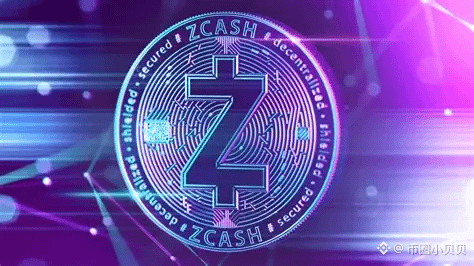
$ZEC After the Fed rate hike is implemented, the market didn’t follow the script many people had written
On September 16, the Federal Reserve announced a 25-basis-point rate hike, raising the interest-rate range to 3.75%–4%. This was the first hike since July 2023, and the market had largely priced in this move in advance
Hot news [看懂各大新闻](https://app.binance.com/uni-qr/6d5gRrvm)
US equities tech stocks strengthened. Big BTC (the first coin) has once again moved above the $76,000 area, and second coin is rebounding as well. Meanwhile, the altcoin market has been more active; among them, ZEC directly surged to a new all-time high, briefly approaching $1,400 during the day, and its 24-hour gain at one point exceeded 20%
The rate hike itself did not surprise expectations. What truly affected market sentiment was whether the Fed will keep tightening further
Currently, the Fed’s dot plot shows that among 18 officials, 16 expect at least one more rate hike by the end of 2026, meaning rate pressure has not fully disappeared
However, the market is also seeing the other side: this is not like a freshly restarted aggressive tightening cycle. The policy path looks more like modest adjustments going forward, rather than continuous, large-scale tightening
So this time, BTC didn’t drop sharply just because the rate was hiked. That doesn’t mean “the rate-hike bearishness has become ineffective.”
A more accurate interpretation is: after the anticipated bearish move was already priced in, capital began to look for new dominant trading themes
ZEC is a clear example
Beyond an overall recovery in risk assets, Paradigm co-founder Matt Huang publicly disclosed that institutions hold ZEC and described Zcash as a “privacy complement to Bitcoin.” Add to that Zcash’s recent network upgrades and governance changes—when these storylines stack together, they further amplified ZEC’s rally
So going forward, what’s really worth watching isn’t simply judging whether “it can still rise after the rate hike.”
Instead, watch whether capital continues to spread from BTC to the second coin and into altcoins, and whether strong names like ZEC can have their upside broaden from a single narrative into wider capital rotation
If US Treasury yields keep falling afterward, pressure on risk assets may ease further
But if inflation starts to reaccelerate, and the Fed continues to release stronger tightening signals, the market will still have to face rate pressure again
Today’s market focus has already been laid out. Less chasing news, and more understanding the impact behind the news 👀 #zec #zcash
$ZEC After the Fed rate hike is implemented, the market didn’t follow the script many people had written
On September 16, the Federal Reserve announced a 25-basis-point rate hike, raising the interest-rate range to 3.75%–4%. This was the first hike since July 2023, and the market had largely priced in this move in advance
Hot news 看懂各大新闻
US equities tech stocks strengthened. Big BTC (the first coin) has once again moved above the $76,000 area, and second coin is rebounding as well. Meanwhile, the altcoin market has been more active; among them, ZEC directly surged to a new all-time high, briefly approaching $1,400 during the day, and its 24-hour gain at one point exceeded 20%
The rate hike itself did not surprise expectations. What truly affected market sentiment was whether the Fed will keep tightening further
Currently, the Fed’s dot plot shows that among 18 officials, 16 expect at least one more rate hike by the end of 2026, meaning rate pressure has not fully disappeared
However, the market is also seeing the other side: this is not like a freshly restarted aggressive tightening cycle. The policy path looks more like modest adjustments going forward, rather than continuous, large-scale tightening
So this time, BTC didn’t drop sharply just because the rate was hiked. That doesn’t mean “the rate-hike bearishness has become ineffective.”
A more accurate interpretation is: after the anticipated bearish move was already priced in, capital began to look for new dominant trading themes
ZEC is a clear example
Beyond an overall recovery in risk assets, Paradigm co-founder Matt Huang publicly disclosed that institutions hold ZEC and described Zcash as a “privacy complement to Bitcoin.” Add to that Zcash’s recent network upgrades and governance changes—when these storylines stack together, they further amplified ZEC’s rally
So going forward, what’s really worth watching isn’t simply judging whether “it can still rise after the rate hike.”
Instead, watch whether capital continues to spread from BTC to the second coin and into altcoins, and whether strong names like ZEC can have their upside broaden from a single narrative into wider capital rotation
If US Treasury yields keep falling afterward, pressure on risk assets may ease further
But if inflation starts to reaccelerate, and the Fed continues to release stronger tightening signals, the market will still have to face rate pressure again
Today’s market focus has already been laid out. Less chasing news, and more understanding the impact behind the news 👀 #zec #zcash
On September 16, the Federal Reserve announced a 25-basis-point rate hike, raising the interest-rate range to 3.75%–4%. This was the first hike since July 2023, and the market had largely priced in this move in advance
Hot news 看懂各大新闻
US equities tech stocks strengthened. Big BTC (the first coin) has once again moved above the $76,000 area, and second coin is rebounding as well. Meanwhile, the altcoin market has been more active; among them, ZEC directly surged to a new all-time high, briefly approaching $1,400 during the day, and its 24-hour gain at one point exceeded 20%
The rate hike itself did not surprise expectations. What truly affected market sentiment was whether the Fed will keep tightening further
Currently, the Fed’s dot plot shows that among 18 officials, 16 expect at least one more rate hike by the end of 2026, meaning rate pressure has not fully disappeared
However, the market is also seeing the other side: this is not like a freshly restarted aggressive tightening cycle. The policy path looks more like modest adjustments going forward, rather than continuous, large-scale tightening
So this time, BTC didn’t drop sharply just because the rate was hiked. That doesn’t mean “the rate-hike bearishness has become ineffective.”
A more accurate interpretation is: after the anticipated bearish move was already priced in, capital began to look for new dominant trading themes
ZEC is a clear example
Beyond an overall recovery in risk assets, Paradigm co-founder Matt Huang publicly disclosed that institutions hold ZEC and described Zcash as a “privacy complement to Bitcoin.” Add to that Zcash’s recent network upgrades and governance changes—when these storylines stack together, they further amplified ZEC’s rally
So going forward, what’s really worth watching isn’t simply judging whether “it can still rise after the rate hike.”
Instead, watch whether capital continues to spread from BTC to the second coin and into altcoins, and whether strong names like ZEC can have their upside broaden from a single narrative into wider capital rotation
If US Treasury yields keep falling afterward, pressure on risk assets may ease further
But if inflation starts to reaccelerate, and the Fed continues to release stronger tightening signals, the market will still have to face rate pressure again
Today’s market focus has already been laid out. Less chasing news, and more understanding the impact behind the news 👀 #zec #zcash
418
·
--
Verified
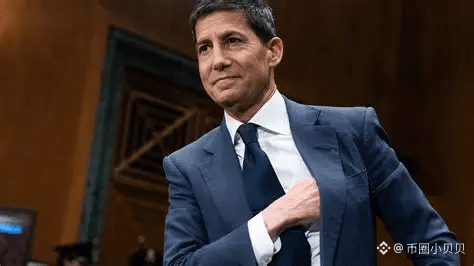
$BTC $ETH The Fed has just hiked rates by 25 basis points, and the market has already begun discussing a more sensitive issue: will there be another rate hike in October?
On September 16, the Federal Reserve raised the target range for the federal funds rate to 3.75%–4%. In the latest policy projections, 16 out of 18 officials expect that at least another 25 basis points of tightening will be needed by the end of this year, while only 2 expect to keep the current level unchanged.
Free strategy 🍀[加入公开粉丝群](https://app.binance.com/uni-qr/6d5gRrvm)
Meanwhile, the interest-rate futures market has started to reprice the October meeting. At one point, it reflected about a 50% probability of another hike.
If October really delivers another rate increase, the U.S. interest-rate path could further align with a “higher for longer” stance, requiring a reassessment of funding costs and U.S. dollar liquidity.
That’s also why Trump, after this rate hike, once again publicly demanded rate cuts, even saying that U.S. rates should be reduced to 1% or lower.
But the policy signals the Fed has publicly released are not pointing in that direction. Fed Chair Kevin Warsh said inflation is still too high and has lasted too long, so the September hike was made based on inflation conditions.
For #BTC and #ETH , what’s really worth watching here isn’t whose voice—Trump’s or the Fed’s—is louder.
It’s which rate path the market ultimately reprices.
If expectations for a hike in October continue to heat up, the dollar and U.S. Treasury yields may continue to put pressure on risk assets.
Right now, the yield on the U.S. 10-year Treasury has climbed back above 5%. On September 16, it closed at about 5.01%, and the 2-year yield has also risen to 4.74%.
So, over the next phase, the market needs to focus on three variables:
The probability of a rate hike in October
U.S. inflation data
and whether Treasury yields can continue to hold at high levels
If all three tilt tight simultaneously, the macro pressure facing BTC and ETH may continue to exist.
On the other hand, if inflation starts to cool and expectations for an October hike fall again, risk assets may regain the relief of more dovish rate expectations.
At this point, what the market is truly trading isn’t just a single rate hike, but which direction U.S. dollar liquidity will move over the coming months 👀
$BTC $ETH The Fed has just hiked rates by 25 basis points, and the market has already begun discussing a more sensitive issue: will there be another rate hike in October?
On September 16, the Federal Reserve raised the target range for the federal funds rate to 3.75%–4%. In the latest policy projections, 16 out of 18 officials expect that at least another 25 basis points of tightening will be needed by the end of this year, while only 2 expect to keep the current level unchanged.
Free strategy 🍀加入公开粉丝群
Meanwhile, the interest-rate futures market has started to reprice the October meeting. At one point, it reflected about a 50% probability of another hike.
If October really delivers another rate increase, the U.S. interest-rate path could further align with a “higher for longer” stance, requiring a reassessment of funding costs and U.S. dollar liquidity.
That’s also why Trump, after this rate hike, once again publicly demanded rate cuts, even saying that U.S. rates should be reduced to 1% or lower.
But the policy signals the Fed has publicly released are not pointing in that direction. Fed Chair Kevin Warsh said inflation is still too high and has lasted too long, so the September hike was made based on inflation conditions.
For #BTC and #ETH , what’s really worth watching here isn’t whose voice—Trump’s or the Fed’s—is louder.
It’s which rate path the market ultimately reprices.
If expectations for a hike in October continue to heat up, the dollar and U.S. Treasury yields may continue to put pressure on risk assets.
Right now, the yield on the U.S. 10-year Treasury has climbed back above 5%. On September 16, it closed at about 5.01%, and the 2-year yield has also risen to 4.74%.
So, over the next phase, the market needs to focus on three variables:
The probability of a rate hike in October
U.S. inflation data
and whether Treasury yields can continue to hold at high levels
If all three tilt tight simultaneously, the macro pressure facing BTC and ETH may continue to exist.
On the other hand, if inflation starts to cool and expectations for an October hike fall again, risk assets may regain the relief of more dovish rate expectations.
At this point, what the market is truly trading isn’t just a single rate hike, but which direction U.S. dollar liquidity will move over the coming months 👀
On September 16, the Federal Reserve raised the target range for the federal funds rate to 3.75%–4%. In the latest policy projections, 16 out of 18 officials expect that at least another 25 basis points of tightening will be needed by the end of this year, while only 2 expect to keep the current level unchanged.
Free strategy 🍀加入公开粉丝群
Meanwhile, the interest-rate futures market has started to reprice the October meeting. At one point, it reflected about a 50% probability of another hike.
If October really delivers another rate increase, the U.S. interest-rate path could further align with a “higher for longer” stance, requiring a reassessment of funding costs and U.S. dollar liquidity.
That’s also why Trump, after this rate hike, once again publicly demanded rate cuts, even saying that U.S. rates should be reduced to 1% or lower.
But the policy signals the Fed has publicly released are not pointing in that direction. Fed Chair Kevin Warsh said inflation is still too high and has lasted too long, so the September hike was made based on inflation conditions.
For #BTC and #ETH , what’s really worth watching here isn’t whose voice—Trump’s or the Fed’s—is louder.
It’s which rate path the market ultimately reprices.
If expectations for a hike in October continue to heat up, the dollar and U.S. Treasury yields may continue to put pressure on risk assets.
Right now, the yield on the U.S. 10-year Treasury has climbed back above 5%. On September 16, it closed at about 5.01%, and the 2-year yield has also risen to 4.74%.
So, over the next phase, the market needs to focus on three variables:
The probability of a rate hike in October
U.S. inflation data
and whether Treasury yields can continue to hold at high levels
If all three tilt tight simultaneously, the macro pressure facing BTC and ETH may continue to exist.
On the other hand, if inflation starts to cool and expectations for an October hike fall again, risk assets may regain the relief of more dovish rate expectations.
At this point, what the market is truly trading isn’t just a single rate hike, but which direction U.S. dollar liquidity will move over the coming months 👀
133
·
--
Verified
$NVDA Nvidia has poured more money into AI infrastructure
This time, it’s not just about buying a company, nor is it simply continuing to expand GPU production. Instead, it has committed $2 billion to an AI infrastructure fund under Brookfield, becoming one of the fund’s key anchor investors.
Group chat 🔥[每日行情实时策略](https://app.binance.com/uni-qr/6d5gRrvm)
Brookfield’s fund aims to raise $10 billion in equity capital, and plans to use co-investments and financing to ultimately drive up to about $100 billion worth of AI infrastructure assets to be built.
The money will mainly flow to AI factories, data centers, compute infrastructure, and supporting power systems. This means the AI race is gradually shifting from “whose chips are stronger” to “who can actually build the compute capacity.”
In fact, this trend is becoming increasingly obvious.
Recently, Nvidia also partnered with major financial institutions such as Apollo, BlackRock, Blackstone, Brookfield, Goldman Sachs, and KKR to establish an AI compute financing platform. The goal is to mobilize more than $500 billion in third-party capital over the long term to support funding for AI data center, power, and compute buildouts.
The logic behind it is quite simple.
As AI models consume more compute, compute depends on land, electricity, data centers, and a large amount of long-term capital. So in the future, the real bottleneck of the AI industry chain may not be only whether GPUs are sufficient, but whether there is enough power and infrastructure to install those GPUs.
For Nvidia, this is also a new way to position itself across the industry chain.
Selling chips is only the first step. If customers don’t have the funding to build data centers, GPU demand is hard to turn into real deployment.
So what we’re seeing now is not just “a chip company investing in AI.”
It’s that a core compute company is beginning to proactively participate in the financing ecosystem of the entire AI infrastructure.
This also implies that future AI capex may become increasingly financialized—AI compute itself is gradually turning into an infrastructure asset that can be invested in and financed by long-term capital 👀
What’s really worth watching next is how much of this money ultimately turns into real data centers, electricity, and compute—and whether AI demand can keep absorbing such a massive level of infrastructure investment.
The AI story continues, but the next phase may not be about technology alone—rather, it’s about who can truly organize money, electricity, and compute #NVDA
$NVDA Nvidia has poured more money into AI infrastructure
This time, it’s not just about buying a company, nor is it simply continuing to expand GPU production. Instead, it has committed $2 billion to an AI infrastructure fund under Brookfield, becoming one of the fund’s key anchor investors.
Group chat 🔥每日行情实时策略
Brookfield’s fund aims to raise $10 billion in equity capital, and plans to use co-investments and financing to ultimately drive up to about $100 billion worth of AI infrastructure assets to be built.
The money will mainly flow to AI factories, data centers, compute infrastructure, and supporting power systems. This means the AI race is gradually shifting from “whose chips are stronger” to “who can actually build the compute capacity.”
In fact, this trend is becoming increasingly obvious.
Recently, Nvidia also partnered with major financial institutions such as Apollo, BlackRock, Blackstone, Brookfield, Goldman Sachs, and KKR to establish an AI compute financing platform. The goal is to mobilize more than $500 billion in third-party capital over the long term to support funding for AI data center, power, and compute buildouts.
The logic behind it is quite simple.
As AI models consume more compute, compute depends on land, electricity, data centers, and a large amount of long-term capital. So in the future, the real bottleneck of the AI industry chain may not be only whether GPUs are sufficient, but whether there is enough power and infrastructure to install those GPUs.
For Nvidia, this is also a new way to position itself across the industry chain.
Selling chips is only the first step. If customers don’t have the funding to build data centers, GPU demand is hard to turn into real deployment.
So what we’re seeing now is not just “a chip company investing in AI.”
It’s that a core compute company is beginning to proactively participate in the financing ecosystem of the entire AI infrastructure.
This also implies that future AI capex may become increasingly financialized—AI compute itself is gradually turning into an infrastructure asset that can be invested in and financed by long-term capital 👀
What’s really worth watching next is how much of this money ultimately turns into real data centers, electricity, and compute—and whether AI demand can keep absorbing such a massive level of infrastructure investment.
The AI story continues, but the next phase may not be about technology alone—rather, it’s about who can truly organize money, electricity, and compute #NVDA
This time, it’s not just about buying a company, nor is it simply continuing to expand GPU production. Instead, it has committed $2 billion to an AI infrastructure fund under Brookfield, becoming one of the fund’s key anchor investors.
Group chat 🔥每日行情实时策略
Brookfield’s fund aims to raise $10 billion in equity capital, and plans to use co-investments and financing to ultimately drive up to about $100 billion worth of AI infrastructure assets to be built.
The money will mainly flow to AI factories, data centers, compute infrastructure, and supporting power systems. This means the AI race is gradually shifting from “whose chips are stronger” to “who can actually build the compute capacity.”
In fact, this trend is becoming increasingly obvious.
Recently, Nvidia also partnered with major financial institutions such as Apollo, BlackRock, Blackstone, Brookfield, Goldman Sachs, and KKR to establish an AI compute financing platform. The goal is to mobilize more than $500 billion in third-party capital over the long term to support funding for AI data center, power, and compute buildouts.
The logic behind it is quite simple.
As AI models consume more compute, compute depends on land, electricity, data centers, and a large amount of long-term capital. So in the future, the real bottleneck of the AI industry chain may not be only whether GPUs are sufficient, but whether there is enough power and infrastructure to install those GPUs.
For Nvidia, this is also a new way to position itself across the industry chain.
Selling chips is only the first step. If customers don’t have the funding to build data centers, GPU demand is hard to turn into real deployment.
So what we’re seeing now is not just “a chip company investing in AI.”
It’s that a core compute company is beginning to proactively participate in the financing ecosystem of the entire AI infrastructure.
This also implies that future AI capex may become increasingly financialized—AI compute itself is gradually turning into an infrastructure asset that can be invested in and financed by long-term capital 👀
What’s really worth watching next is how much of this money ultimately turns into real data centers, electricity, and compute—and whether AI demand can keep absorbing such a massive level of infrastructure investment.
The AI story continues, but the next phase may not be about technology alone—rather, it’s about who can truly organize money, electricity, and compute #NVDA
108
·
--
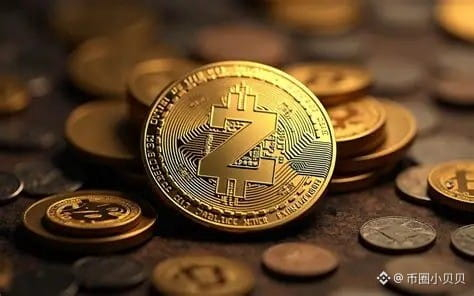
$ZEC #zec Recently, whale activity has become increasingly frequent
According to the latest on-chain data, three new wallets withdrew a total of 28,759 ZEC from exchanges such as Binance, worth about $41.43 million. The move of funds from exchanges to new wallets has once again drawn market attention
Join the chat 👉🏻 [每日行情实时策略](https://app.binance.com/uni-qr/6d5gRrvm)
And this isn’t the first time a similar situation has occurred recently
Earlier, whales also accumulated purchases of around 12.9k ZEC from exchanges and transferred them to new wallets, showing that large capital has indeed continued to appear in ZEC’s on-chain activity in recent times
What’s even more noteworthy is that ZEC itself has recently shown very strong price performance
On September 17, ZEC briefly rose by about 18% over 24 hours. Over the past month, it has gained more than 160% in total, and its market cap also once broke above $22 billion, moving it close to the top ten in the crypto market
Why has ZEC already surged so much, while whales keep withdrawing from exchanges?
One possibility is that some funds are being held long-term or that exchange balances are being reduced. Another possibility is that the funds are being reallocated across different wallets and trading strategies
So just seeing how much whales bought isn’t enough
What really needs to be observed is whether these ZEC later flow back to exchanges, and whether exchange balances continue to decline when spot prices rise
If prices are rising while large amounts of ZEC keep leaving exchanges, this fund structure becomes even more worth关注
But if, later on, there’s a large-scale return to exchanges—especially after a rapid price rally—then you should be alert that whales may be starting to adjust their positions
ZEC is now in a phase that can easily heat up market sentiment
With strong price action + whale accumulation + institutional wallet activity appearing at the same time, it’s definitely worth continued tracking. But the faster an asset is rising, the more closely you need to watch the flow of funds and changes in leverage
What matters most for ZEC right now isn’t how much whales bought—it’s how long these funds plan to stay after entering 👀
$ZEC #zec Recently, whale activity has become increasingly frequent
According to the latest on-chain data, three new wallets withdrew a total of 28,759 ZEC from exchanges such as Binance, worth about $41.43 million. The move of funds from exchanges to new wallets has once again drawn market attention
Join the chat 👉🏻 每日行情实时策略
And this isn’t the first time a similar situation has occurred recently
Earlier, whales also accumulated purchases of around 12.9k ZEC from exchanges and transferred them to new wallets, showing that large capital has indeed continued to appear in ZEC’s on-chain activity in recent times
What’s even more noteworthy is that ZEC itself has recently shown very strong price performance
On September 17, ZEC briefly rose by about 18% over 24 hours. Over the past month, it has gained more than 160% in total, and its market cap also once broke above $22 billion, moving it close to the top ten in the crypto market
Why has ZEC already surged so much, while whales keep withdrawing from exchanges?
One possibility is that some funds are being held long-term or that exchange balances are being reduced. Another possibility is that the funds are being reallocated across different wallets and trading strategies
So just seeing how much whales bought isn’t enough
What really needs to be observed is whether these ZEC later flow back to exchanges, and whether exchange balances continue to decline when spot prices rise
If prices are rising while large amounts of ZEC keep leaving exchanges, this fund structure becomes even more worth关注
But if, later on, there’s a large-scale return to exchanges—especially after a rapid price rally—then you should be alert that whales may be starting to adjust their positions
ZEC is now in a phase that can easily heat up market sentiment
With strong price action + whale accumulation + institutional wallet activity appearing at the same time, it’s definitely worth continued tracking. But the faster an asset is rising, the more closely you need to watch the flow of funds and changes in leverage
What matters most for ZEC right now isn’t how much whales bought—it’s how long these funds plan to stay after entering 👀
According to the latest on-chain data, three new wallets withdrew a total of 28,759 ZEC from exchanges such as Binance, worth about $41.43 million. The move of funds from exchanges to new wallets has once again drawn market attention
Join the chat 👉🏻 每日行情实时策略
And this isn’t the first time a similar situation has occurred recently
Earlier, whales also accumulated purchases of around 12.9k ZEC from exchanges and transferred them to new wallets, showing that large capital has indeed continued to appear in ZEC’s on-chain activity in recent times
What’s even more noteworthy is that ZEC itself has recently shown very strong price performance
On September 17, ZEC briefly rose by about 18% over 24 hours. Over the past month, it has gained more than 160% in total, and its market cap also once broke above $22 billion, moving it close to the top ten in the crypto market
Why has ZEC already surged so much, while whales keep withdrawing from exchanges?
One possibility is that some funds are being held long-term or that exchange balances are being reduced. Another possibility is that the funds are being reallocated across different wallets and trading strategies
So just seeing how much whales bought isn’t enough
What really needs to be observed is whether these ZEC later flow back to exchanges, and whether exchange balances continue to decline when spot prices rise
If prices are rising while large amounts of ZEC keep leaving exchanges, this fund structure becomes even more worth关注
But if, later on, there’s a large-scale return to exchanges—especially after a rapid price rally—then you should be alert that whales may be starting to adjust their positions
ZEC is now in a phase that can easily heat up market sentiment
With strong price action + whale accumulation + institutional wallet activity appearing at the same time, it’s definitely worth continued tracking. But the faster an asset is rising, the more closely you need to watch the flow of funds and changes in leverage
What matters most for ZEC right now isn’t how much whales bought—it’s how long these funds plan to stay after entering 👀
339
·
--
SOL reclaims the $100 mark
After the Federal Reserve raised rates by 25 basis points, SOL came under pressure at one point, but then managed to regain the $100 level. At this position again, it has become a key area of focus for the market.
Group chat [每日行情实时策略](https://app.binance.com/uni-qr/6d5gRrvm)
The latest analysis suggests that the $95–$100 range has formed an important support zone. If SOL can continue to hold this area, the short-term structure still has a chance to remain intact.
But there’s a concern here: this rate hike is the first since 2023. The Fed has lifted the target interest-rate range to 3.75%–4%, and the market is also watching whether further tightening will follow.
For an asset like SOL, which tends to be highly volatile, once the interest-rate environment turns back toward tighter conditions, market pressure on risk assets will likely be more pronounced.
So at $100, the significance is no longer just about a round-number level.
If SOL can hold steady in the $95–$100 zone and then push back toward the $109–$110 area, the market will need to reassess whether upward momentum can recover.
On the other hand, if the $100 level is lost again, and if $95 can’t be held either, then the structure of this rebound would need to be re-evaluated.
In addition, Solana has also shown some relatively positive ecosystem signals recently, including continued growth in the number of RWA holders and the integration of SOL-related products into traditional markets. Whether these fundamental changes can offset macro pressure is also something worth watching going forward.
So right now, the key things to watch for SOL are simple:
Support at $95–$100.
Resistance overhead at $109–$110.
And whether risk appetite in the market continues to fall after the rate hike may be the most important variable in determining SOL’s next phase of momentum.
SOL reclaiming $100 is only the first step. What’s really worth watching is whether this level can turn a short-term rebound into a new market consensus 👀 #solana
SOL reclaims the $100 mark
After the Federal Reserve raised rates by 25 basis points, SOL came under pressure at one point, but then managed to regain the $100 level. At this position again, it has become a key area of focus for the market.
Group chat 每日行情实时策略
The latest analysis suggests that the $95–$100 range has formed an important support zone. If SOL can continue to hold this area, the short-term structure still has a chance to remain intact.
But there’s a concern here: this rate hike is the first since 2023. The Fed has lifted the target interest-rate range to 3.75%–4%, and the market is also watching whether further tightening will follow.
For an asset like SOL, which tends to be highly volatile, once the interest-rate environment turns back toward tighter conditions, market pressure on risk assets will likely be more pronounced.
So at $100, the significance is no longer just about a round-number level.
If SOL can hold steady in the $95–$100 zone and then push back toward the $109–$110 area, the market will need to reassess whether upward momentum can recover.
On the other hand, if the $100 level is lost again, and if $95 can’t be held either, then the structure of this rebound would need to be re-evaluated.
In addition, Solana has also shown some relatively positive ecosystem signals recently, including continued growth in the number of RWA holders and the integration of SOL-related products into traditional markets. Whether these fundamental changes can offset macro pressure is also something worth watching going forward.
So right now, the key things to watch for SOL are simple:
Support at $95–$100.
Resistance overhead at $109–$110.
And whether risk appetite in the market continues to fall after the rate hike may be the most important variable in determining SOL’s next phase of momentum.
SOL reclaiming $100 is only the first step. What’s really worth watching is whether this level can turn a short-term rebound into a new market consensus 👀 #solana
After the Federal Reserve raised rates by 25 basis points, SOL came under pressure at one point, but then managed to regain the $100 level. At this position again, it has become a key area of focus for the market.
Group chat 每日行情实时策略
The latest analysis suggests that the $95–$100 range has formed an important support zone. If SOL can continue to hold this area, the short-term structure still has a chance to remain intact.
But there’s a concern here: this rate hike is the first since 2023. The Fed has lifted the target interest-rate range to 3.75%–4%, and the market is also watching whether further tightening will follow.
For an asset like SOL, which tends to be highly volatile, once the interest-rate environment turns back toward tighter conditions, market pressure on risk assets will likely be more pronounced.
So at $100, the significance is no longer just about a round-number level.
If SOL can hold steady in the $95–$100 zone and then push back toward the $109–$110 area, the market will need to reassess whether upward momentum can recover.
On the other hand, if the $100 level is lost again, and if $95 can’t be held either, then the structure of this rebound would need to be re-evaluated.
In addition, Solana has also shown some relatively positive ecosystem signals recently, including continued growth in the number of RWA holders and the integration of SOL-related products into traditional markets. Whether these fundamental changes can offset macro pressure is also something worth watching going forward.
So right now, the key things to watch for SOL are simple:
Support at $95–$100.
Resistance overhead at $109–$110.
And whether risk appetite in the market continues to fall after the rate hike may be the most important variable in determining SOL’s next phase of momentum.
SOL reclaiming $100 is only the first step. What’s really worth watching is whether this level can turn a short-term rebound into a new market consensus 👀 #solana

343
·
--
Lighter suddenly surged 18%
This rise happened after a continuous 7-day pullback. The market cap has once again reclaimed the vicinity of $1.2B. Behind the move, several changes worth paying attention to have emerged at the same time: Circle’s Arc ecosystem integration, whales’ persistent buying, and short-term short positions covering
Free Strategy 🍀[加入免费聊天室](https://app.binance.com/uni-qr/6d5gRrvm)
Lighter has already been integrated with Circle’s Arc chain. Users and developers can directly deposit assets from Arc into Lighter. This means that, in the future, stablecoin liquidity may have further opportunities to flow into this DEX ecosystem
For a decentralized derivatives platform, liquidity itself is an extremely important variable.
When liquidity increases, it may improve trading depth and capital efficiency. However, the key still comes down to whether actual trading volume can keep up—not just a single ecosystem partnership
Another fairly obvious signal comes from the whales
On-chain data shows that a related wallet has withdrawn 208,600 LIT, with an average price of about $4.27. In addition, the previously withdrawn 770,000 units of #Lıt have also already been staked. At present, the related wallets collectively hold nearly 979,000 LIT, worth approximately $4.24M
But there’s an important detail here
While the LIT price is rising, open interest (OI) in perpetual contracts actually declines. This usually means that part of the upward momentum comes from short covering, rather than purely fresh leverage entering the market
So is this rally driven by new capital, or are shorts being forced to exit? We’ll need to keep observing.
From a technical standpoint, LIT has already broken through an hourly bullish flag pattern. The breakout area is around $4.38. Above, the market is watching the previous historical high at $5.30
If we can continue to see capital inflows, and if OI rises again, then the structure of this move will be even more worth关注.
Conversely, if the price rises but capital and OI don’t follow, be careful—this could just be a short-term correction
So what’s truly worth watching for LIT now isn’t only this 18% jump
But whether the liquidity brought by Arc can be converted into real trading volume, whether whale buying can be sustained, and after short covering ends, whether new capital is willing to carry the momentum forward
Spotlight rallies can look superficial. What really matters is why this capital is coming in—and whether it can stay 👀
Lighter suddenly surged 18%
This rise happened after a continuous 7-day pullback. The market cap has once again reclaimed the vicinity of $1.2B. Behind the move, several changes worth paying attention to have emerged at the same time: Circle’s Arc ecosystem integration, whales’ persistent buying, and short-term short positions covering
Free Strategy 🍀加入免费聊天室
Lighter has already been integrated with Circle’s Arc chain. Users and developers can directly deposit assets from Arc into Lighter. This means that, in the future, stablecoin liquidity may have further opportunities to flow into this DEX ecosystem
For a decentralized derivatives platform, liquidity itself is an extremely important variable.
When liquidity increases, it may improve trading depth and capital efficiency. However, the key still comes down to whether actual trading volume can keep up—not just a single ecosystem partnership
Another fairly obvious signal comes from the whales
On-chain data shows that a related wallet has withdrawn 208,600 LIT, with an average price of about $4.27. In addition, the previously withdrawn 770,000 units of #Lıt have also already been staked. At present, the related wallets collectively hold nearly 979,000 LIT, worth approximately $4.24M
But there’s an important detail here
While the LIT price is rising, open interest (OI) in perpetual contracts actually declines. This usually means that part of the upward momentum comes from short covering, rather than purely fresh leverage entering the market
So is this rally driven by new capital, or are shorts being forced to exit? We’ll need to keep observing.
From a technical standpoint, LIT has already broken through an hourly bullish flag pattern. The breakout area is around $4.38. Above, the market is watching the previous historical high at $5.30
If we can continue to see capital inflows, and if OI rises again, then the structure of this move will be even more worth关注.
Conversely, if the price rises but capital and OI don’t follow, be careful—this could just be a short-term correction
So what’s truly worth watching for LIT now isn’t only this 18% jump
But whether the liquidity brought by Arc can be converted into real trading volume, whether whale buying can be sustained, and after short covering ends, whether new capital is willing to carry the momentum forward
Spotlight rallies can look superficial. What really matters is why this capital is coming in—and whether it can stay 👀
This rise happened after a continuous 7-day pullback. The market cap has once again reclaimed the vicinity of $1.2B. Behind the move, several changes worth paying attention to have emerged at the same time: Circle’s Arc ecosystem integration, whales’ persistent buying, and short-term short positions covering
Free Strategy 🍀加入免费聊天室
Lighter has already been integrated with Circle’s Arc chain. Users and developers can directly deposit assets from Arc into Lighter. This means that, in the future, stablecoin liquidity may have further opportunities to flow into this DEX ecosystem
For a decentralized derivatives platform, liquidity itself is an extremely important variable.
When liquidity increases, it may improve trading depth and capital efficiency. However, the key still comes down to whether actual trading volume can keep up—not just a single ecosystem partnership
Another fairly obvious signal comes from the whales
On-chain data shows that a related wallet has withdrawn 208,600 LIT, with an average price of about $4.27. In addition, the previously withdrawn 770,000 units of #Lıt have also already been staked. At present, the related wallets collectively hold nearly 979,000 LIT, worth approximately $4.24M
But there’s an important detail here
While the LIT price is rising, open interest (OI) in perpetual contracts actually declines. This usually means that part of the upward momentum comes from short covering, rather than purely fresh leverage entering the market
So is this rally driven by new capital, or are shorts being forced to exit? We’ll need to keep observing.
From a technical standpoint, LIT has already broken through an hourly bullish flag pattern. The breakout area is around $4.38. Above, the market is watching the previous historical high at $5.30
If we can continue to see capital inflows, and if OI rises again, then the structure of this move will be even more worth关注.
Conversely, if the price rises but capital and OI don’t follow, be careful—this could just be a short-term correction
So what’s truly worth watching for LIT now isn’t only this 18% jump
But whether the liquidity brought by Arc can be converted into real trading volume, whether whale buying can be sustained, and after short covering ends, whether new capital is willing to carry the momentum forward
Spotlight rallies can look superficial. What really matters is why this capital is coming in—and whether it can stay 👀

313
·
--
SOL has fallen below $100 ‼️‼️
This pullback is related to market pressure brought by recent U.S. regulatory news. SOL once dropped from above $101 to around $96, and then saw a certain degree of rebound; in the short term, market sentiment has clearly weakened.
Hot spot news 👉🏻[每日行情实时策略](https://app.binance.com/uni-qr/6d5gRrvm)
What really needs to be watched now isn’t the $100 whole-number level itself, but whether SOL can reclaim it after breaking below.
Because if $100 turns from support into resistance, the market’s focus will shift to lower price areas.
A key support the market is watching right now is around $93. If this zone can hold, SOL still has a chance to reorganize and attempt to recover $100.
But if $93 is also lost, more room may open up to the downside in the short term, and market attention will continue to move toward the area around $90.
Of course, SOL’s fundamentals themselves haven’t changed just because of a price pullback.
Institutional demand for Solana-related products, network activity, and the trading ecosystem are still a few of the variables the market watches long term. So what’s more worth observing this time is whether there will be a clear divergence between short-term fund sentiment and long-term fundamentals.
Watch whether $100 can be reclaimed.
Watch whether $93 can be held.
And what truly determines the pace of the next phase is whether trading volume and capital return.
#sol You’re now entering a key observation zone—next, don’t just watch up or down; also check whether money flow and market sentiment will change again 👀
SOL has fallen below $100 ‼️‼️
This pullback is related to market pressure brought by recent U.S. regulatory news. SOL once dropped from above $101 to around $96, and then saw a certain degree of rebound; in the short term, market sentiment has clearly weakened.
Hot spot news 👉🏻每日行情实时策略
What really needs to be watched now isn’t the $100 whole-number level itself, but whether SOL can reclaim it after breaking below.
Because if $100 turns from support into resistance, the market’s focus will shift to lower price areas.
A key support the market is watching right now is around $93. If this zone can hold, SOL still has a chance to reorganize and attempt to recover $100.
But if $93 is also lost, more room may open up to the downside in the short term, and market attention will continue to move toward the area around $90.
Of course, SOL’s fundamentals themselves haven’t changed just because of a price pullback.
Institutional demand for Solana-related products, network activity, and the trading ecosystem are still a few of the variables the market watches long term. So what’s more worth observing this time is whether there will be a clear divergence between short-term fund sentiment and long-term fundamentals.
Watch whether $100 can be reclaimed.
Watch whether $93 can be held.
And what truly determines the pace of the next phase is whether trading volume and capital return.
#sol You’re now entering a key observation zone—next, don’t just watch up or down; also check whether money flow and market sentiment will change again 👀
This pullback is related to market pressure brought by recent U.S. regulatory news. SOL once dropped from above $101 to around $96, and then saw a certain degree of rebound; in the short term, market sentiment has clearly weakened.
Hot spot news 👉🏻每日行情实时策略
What really needs to be watched now isn’t the $100 whole-number level itself, but whether SOL can reclaim it after breaking below.
Because if $100 turns from support into resistance, the market’s focus will shift to lower price areas.
A key support the market is watching right now is around $93. If this zone can hold, SOL still has a chance to reorganize and attempt to recover $100.
But if $93 is also lost, more room may open up to the downside in the short term, and market attention will continue to move toward the area around $90.
Of course, SOL’s fundamentals themselves haven’t changed just because of a price pullback.
Institutional demand for Solana-related products, network activity, and the trading ecosystem are still a few of the variables the market watches long term. So what’s more worth observing this time is whether there will be a clear divergence between short-term fund sentiment and long-term fundamentals.
Watch whether $100 can be reclaimed.
Watch whether $93 can be held.
And what truly determines the pace of the next phase is whether trading volume and capital return.
#sol You’re now entering a key observation zone—next, don’t just watch up or down; also check whether money flow and market sentiment will change again 👀
651
·
--
The CLARITY Act didn’t move forward, but XRP instead showed a signal worth paying attention to
Earlier, the U.S. Senate failed to advance the CLARITY Act with a procedural vote of 49–50. XRP then briefly dropped noticeably, but liquidity did not weaken in full synchronization. On September 16, the spot XRP ETF still recorded net inflows of about $3.5 million, and inflows have already appeared for 10 straight trading days.
Fan group 👉🏻[免费策略](https://app.binance.com/uni-qr/6d5gRrvm)
On the same day, spot ETFs #BTC and #ETH saw net outflows of about $295 million and $224 million, respectively. However, ETF #xrp became one of the categories with the largest inflow size among crypto ETFs that day. This suggests that some institutional attention to XRP has not completely disappeared just because the bill was blocked.
Regulatory developments are also worth watching
SEC Chair Paul Atkins said that even if the CLARITY Act does not pass, the SEC will continue to push forward crypto regulation within its existing statutory authority. CFTC Chair Michael Selig also said institutions are ready to continue drafting relevant rules.
This implies the market may be gradually shifting from waiting for congressional legislation to first seeing how regulators move forward.
However, XRP currently has one fairly clear pressure point.
XRP open interest has fallen from about $1.128 billion in August to roughly $871 million. OI on both Binance and Bybit has declined in tandem.
This indicates that leverage in the derivatives market is being reduced significantly. So XRP’s rise can’t be understood purely as money fully returning; more importantly, we need to watch whether spot ETF inflows can keep up, and when derivatives capital will return.
On the technical side, XRP is still in a fairly key position.
According to the article, XRP is around $1.30—still below the 200-week EMA of about $1.36. If it can reclaim $1.36, attention can again be placed on the $1.52 area above.
Conversely, if the price action keeps weakening, the market should watch the support region around $1.04.
So what’s most worth watching for XRP right now isn’t whether the CLARITY Act will pass immediately, but rather three things: whether ETF capital inflows can continue, whether the SEC and CFTC can continue advancing regulation within existing authority, and whether XRP’s price can reclaim $1.36.
If all three signals start improving at the same time, the market’s XRP pricing logic may change again.
The CLARITY Act didn’t move forward, but XRP instead showed a signal worth paying attention to
Earlier, the U.S. Senate failed to advance the CLARITY Act with a procedural vote of 49–50. XRP then briefly dropped noticeably, but liquidity did not weaken in full synchronization. On September 16, the spot XRP ETF still recorded net inflows of about $3.5 million, and inflows have already appeared for 10 straight trading days.
Fan group 👉🏻免费策略
On the same day, spot ETFs #BTC and #ETH saw net outflows of about $295 million and $224 million, respectively. However, ETF #xrp became one of the categories with the largest inflow size among crypto ETFs that day. This suggests that some institutional attention to XRP has not completely disappeared just because the bill was blocked.
Regulatory developments are also worth watching
SEC Chair Paul Atkins said that even if the CLARITY Act does not pass, the SEC will continue to push forward crypto regulation within its existing statutory authority. CFTC Chair Michael Selig also said institutions are ready to continue drafting relevant rules.
This implies the market may be gradually shifting from waiting for congressional legislation to first seeing how regulators move forward.
However, XRP currently has one fairly clear pressure point.
XRP open interest has fallen from about $1.128 billion in August to roughly $871 million. OI on both Binance and Bybit has declined in tandem.
This indicates that leverage in the derivatives market is being reduced significantly. So XRP’s rise can’t be understood purely as money fully returning; more importantly, we need to watch whether spot ETF inflows can keep up, and when derivatives capital will return.
On the technical side, XRP is still in a fairly key position.
According to the article, XRP is around $1.30—still below the 200-week EMA of about $1.36. If it can reclaim $1.36, attention can again be placed on the $1.52 area above.
Conversely, if the price action keeps weakening, the market should watch the support region around $1.04.
So what’s most worth watching for XRP right now isn’t whether the CLARITY Act will pass immediately, but rather three things: whether ETF capital inflows can continue, whether the SEC and CFTC can continue advancing regulation within existing authority, and whether XRP’s price can reclaim $1.36.
If all three signals start improving at the same time, the market’s XRP pricing logic may change again.
Earlier, the U.S. Senate failed to advance the CLARITY Act with a procedural vote of 49–50. XRP then briefly dropped noticeably, but liquidity did not weaken in full synchronization. On September 16, the spot XRP ETF still recorded net inflows of about $3.5 million, and inflows have already appeared for 10 straight trading days.
Fan group 👉🏻免费策略
On the same day, spot ETFs #BTC and #ETH saw net outflows of about $295 million and $224 million, respectively. However, ETF #xrp became one of the categories with the largest inflow size among crypto ETFs that day. This suggests that some institutional attention to XRP has not completely disappeared just because the bill was blocked.
Regulatory developments are also worth watching
SEC Chair Paul Atkins said that even if the CLARITY Act does not pass, the SEC will continue to push forward crypto regulation within its existing statutory authority. CFTC Chair Michael Selig also said institutions are ready to continue drafting relevant rules.
This implies the market may be gradually shifting from waiting for congressional legislation to first seeing how regulators move forward.
However, XRP currently has one fairly clear pressure point.
XRP open interest has fallen from about $1.128 billion in August to roughly $871 million. OI on both Binance and Bybit has declined in tandem.
This indicates that leverage in the derivatives market is being reduced significantly. So XRP’s rise can’t be understood purely as money fully returning; more importantly, we need to watch whether spot ETF inflows can keep up, and when derivatives capital will return.
On the technical side, XRP is still in a fairly key position.
According to the article, XRP is around $1.30—still below the 200-week EMA of about $1.36. If it can reclaim $1.36, attention can again be placed on the $1.52 area above.
Conversely, if the price action keeps weakening, the market should watch the support region around $1.04.
So what’s most worth watching for XRP right now isn’t whether the CLARITY Act will pass immediately, but rather three things: whether ETF capital inflows can continue, whether the SEC and CFTC can continue advancing regulation within existing authority, and whether XRP’s price can reclaim $1.36.
If all three signals start improving at the same time, the market’s XRP pricing logic may change again.
363
·
--
$BTC $ETH CLARITY Act hasn’t been fully concluded, but U.S. crypto regulation may take another path
After a procedural vote of 49 to 50 in the Senate, #CLARITYAct was temporarily unable to move forward, and the previously expected U.S. crypto market-structure legislation has once again stalled
Group chat 👉🏻[每日行情实时策略](https://app.binance.com/uni-qr/6d5gRrvm)
Seven Democratic lawmakers—including Mark Warner, Kirsten Gillibrand, and Cory Booker—have publicly stated that they still support moving this bill forward and hope to get back to the bipartisan negotiating table
At the moment, this version hasn’t secured enough votes. Next, the team will need to revisit core disputes such as the ethics provisions, stablecoins, and regulatory authority
The problem is that time is getting increasingly tight
If the market-structure bill continues to get stuck in Congress, regulators may use existing powers to advance their own rules first
The SEC and CFTC have already sent very clear signals: even if Congress fails to pass legislation, both agencies will continue to use their existing legal authority to push forward crypto regulatory rules
For BTC and ETH, this is actually a change worth paying close attention to
Because the “regulatory clarity” the market has long been waiting for may not only be achieved through a congressional bill
If the SEC and the CFTC next roll out more specific rules on digital-asset classification, DeFi, self-custody, and tokenized assets, some regulatory uncertainty may still be alleviated
But the biggest difference between the two routes is obvious
Once the bill passes, the rules’ legal stability will be stronger
Whereas rules issued by the SEC and the CFTC under existing authority could still be modified as administrations change, and may also face legal challenges
So what the market really needs to watch next isn’t just when the CLARITY Act will be brought back for another vote
Instead, it’s what rules the SEC and CFTC will put out first—and whether these seven Democratic lawmakers can successfully restart bipartisan negotiations
U.S. crypto regulation may not be heading to an endpoint
It may be shifting—for now—from “congressional legislation” to “regulatory agencies acting first”
And that also means that going forward, #BTC #ETH and the entire U.S. crypto market will still face new policy variables
Join me every day to break down new market developments—not just looking at surface-level gains and losses, but also what’s really happening with funds and sentiment 👀
$BTC $ETH CLARITY Act hasn’t been fully concluded, but U.S. crypto regulation may take another path
After a procedural vote of 49 to 50 in the Senate, #CLARITYAct was temporarily unable to move forward, and the previously expected U.S. crypto market-structure legislation has once again stalled
Group chat 👉🏻每日行情实时策略
Seven Democratic lawmakers—including Mark Warner, Kirsten Gillibrand, and Cory Booker—have publicly stated that they still support moving this bill forward and hope to get back to the bipartisan negotiating table
At the moment, this version hasn’t secured enough votes. Next, the team will need to revisit core disputes such as the ethics provisions, stablecoins, and regulatory authority
The problem is that time is getting increasingly tight
If the market-structure bill continues to get stuck in Congress, regulators may use existing powers to advance their own rules first
The SEC and CFTC have already sent very clear signals: even if Congress fails to pass legislation, both agencies will continue to use their existing legal authority to push forward crypto regulatory rules
For BTC and ETH, this is actually a change worth paying close attention to
Because the “regulatory clarity” the market has long been waiting for may not only be achieved through a congressional bill
If the SEC and the CFTC next roll out more specific rules on digital-asset classification, DeFi, self-custody, and tokenized assets, some regulatory uncertainty may still be alleviated
But the biggest difference between the two routes is obvious
Once the bill passes, the rules’ legal stability will be stronger
Whereas rules issued by the SEC and the CFTC under existing authority could still be modified as administrations change, and may also face legal challenges
So what the market really needs to watch next isn’t just when the CLARITY Act will be brought back for another vote
Instead, it’s what rules the SEC and CFTC will put out first—and whether these seven Democratic lawmakers can successfully restart bipartisan negotiations
U.S. crypto regulation may not be heading to an endpoint
It may be shifting—for now—from “congressional legislation” to “regulatory agencies acting first”
And that also means that going forward, #BTC #ETH and the entire U.S. crypto market will still face new policy variables
Join me every day to break down new market developments—not just looking at surface-level gains and losses, but also what’s really happening with funds and sentiment 👀
After a procedural vote of 49 to 50 in the Senate, #CLARITYAct was temporarily unable to move forward, and the previously expected U.S. crypto market-structure legislation has once again stalled
Group chat 👉🏻每日行情实时策略
Seven Democratic lawmakers—including Mark Warner, Kirsten Gillibrand, and Cory Booker—have publicly stated that they still support moving this bill forward and hope to get back to the bipartisan negotiating table
At the moment, this version hasn’t secured enough votes. Next, the team will need to revisit core disputes such as the ethics provisions, stablecoins, and regulatory authority
The problem is that time is getting increasingly tight
If the market-structure bill continues to get stuck in Congress, regulators may use existing powers to advance their own rules first
The SEC and CFTC have already sent very clear signals: even if Congress fails to pass legislation, both agencies will continue to use their existing legal authority to push forward crypto regulatory rules
For BTC and ETH, this is actually a change worth paying close attention to
Because the “regulatory clarity” the market has long been waiting for may not only be achieved through a congressional bill
If the SEC and the CFTC next roll out more specific rules on digital-asset classification, DeFi, self-custody, and tokenized assets, some regulatory uncertainty may still be alleviated
But the biggest difference between the two routes is obvious
Once the bill passes, the rules’ legal stability will be stronger
Whereas rules issued by the SEC and the CFTC under existing authority could still be modified as administrations change, and may also face legal challenges
So what the market really needs to watch next isn’t just when the CLARITY Act will be brought back for another vote
Instead, it’s what rules the SEC and CFTC will put out first—and whether these seven Democratic lawmakers can successfully restart bipartisan negotiations
U.S. crypto regulation may not be heading to an endpoint
It may be shifting—for now—from “congressional legislation” to “regulatory agencies acting first”
And that also means that going forward, #BTC #ETH and the entire U.S. crypto market will still face new policy variables
Join me every day to break down new market developments—not just looking at surface-level gains and losses, but also what’s really happening with funds and sentiment 👀

2
512
·
--
$DOGE Giant whales buy 240 million DOGE in a week, but the real key is here
On-chain data recently shows that large holders have cumulatively increased their holdings by more than 240 million DOGE within a week. This suggests that even as prices weaken, there is still capital continuously stepping in.
But there’s one easy-to-overlook issue here.
Check the fan group ❤️[了解最新行情分析](https://app.binance.com/uni-qr/6d5gRrvm)
A giant whale purchase only indicates that the available supply (tokens/chips) is changing hands—it does not directly mean that DOGE will start a rally immediately.
What the market truly needs to pay attention to is the pressure zone around $0.093.
If DOGE can break through effectively and hold above this level, then the significance of the whales’ continued accumulation will become much more pronounced—because that would mean buying pressure is no longer just appearing at low prices, but is actively pushing the price beyond a key resistance area.
On the other hand, if the price keeps failing to break $0.093, then this round of whale accumulation is more likely just premature positioning, or gradually building a position at lower levels.
What’s even more worth noting is that DOGE’s recent on-chain capital activity is not the first time this has happened.
Back in June this year, there was also a case where large addresses accumulated more than 200 million—up to 240 million—DOGE in a short period. At that time, the market was also debating whether this type of capital behavior suggested that the price was nearing a cyclical bottom.
So this time, what’s truly worth watching isn’t simply “how much the whales bought.”
Instead, it’s whether, after the buying, DOGE can turn its chip advantage into a real price breakout.
If $0.093 is taken out, market sentiment could improve significantly.
But if continuous retests still can’t break through, that would indicate sell pressure overhead remains heavy, and whale accumulation may need more time to show its effect.
The most interesting part about DOGE right now is right here.
Capital has started moving, but the price hasn’t fully answered yet 👀
The market has new developments every day. Let us filter out the signals that really matter, and see what might happen next 👀
$DOGE Giant whales buy 240 million DOGE in a week, but the real key is here
On-chain data recently shows that large holders have cumulatively increased their holdings by more than 240 million DOGE within a week. This suggests that even as prices weaken, there is still capital continuously stepping in.
But there’s one easy-to-overlook issue here.
Check the fan group ❤️了解最新行情分析
A giant whale purchase only indicates that the available supply (tokens/chips) is changing hands—it does not directly mean that DOGE will start a rally immediately.
What the market truly needs to pay attention to is the pressure zone around $0.093.
If DOGE can break through effectively and hold above this level, then the significance of the whales’ continued accumulation will become much more pronounced—because that would mean buying pressure is no longer just appearing at low prices, but is actively pushing the price beyond a key resistance area.
On the other hand, if the price keeps failing to break $0.093, then this round of whale accumulation is more likely just premature positioning, or gradually building a position at lower levels.
What’s even more worth noting is that DOGE’s recent on-chain capital activity is not the first time this has happened.
Back in June this year, there was also a case where large addresses accumulated more than 200 million—up to 240 million—DOGE in a short period. At that time, the market was also debating whether this type of capital behavior suggested that the price was nearing a cyclical bottom.
So this time, what’s truly worth watching isn’t simply “how much the whales bought.”
Instead, it’s whether, after the buying, DOGE can turn its chip advantage into a real price breakout.
If $0.093 is taken out, market sentiment could improve significantly.
But if continuous retests still can’t break through, that would indicate sell pressure overhead remains heavy, and whale accumulation may need more time to show its effect.
The most interesting part about DOGE right now is right here.
Capital has started moving, but the price hasn’t fully answered yet 👀
The market has new developments every day. Let us filter out the signals that really matter, and see what might happen next 👀
On-chain data recently shows that large holders have cumulatively increased their holdings by more than 240 million DOGE within a week. This suggests that even as prices weaken, there is still capital continuously stepping in.
But there’s one easy-to-overlook issue here.
Check the fan group ❤️了解最新行情分析
A giant whale purchase only indicates that the available supply (tokens/chips) is changing hands—it does not directly mean that DOGE will start a rally immediately.
What the market truly needs to pay attention to is the pressure zone around $0.093.
If DOGE can break through effectively and hold above this level, then the significance of the whales’ continued accumulation will become much more pronounced—because that would mean buying pressure is no longer just appearing at low prices, but is actively pushing the price beyond a key resistance area.
On the other hand, if the price keeps failing to break $0.093, then this round of whale accumulation is more likely just premature positioning, or gradually building a position at lower levels.
What’s even more worth noting is that DOGE’s recent on-chain capital activity is not the first time this has happened.
Back in June this year, there was also a case where large addresses accumulated more than 200 million—up to 240 million—DOGE in a short period. At that time, the market was also debating whether this type of capital behavior suggested that the price was nearing a cyclical bottom.
So this time, what’s truly worth watching isn’t simply “how much the whales bought.”
Instead, it’s whether, after the buying, DOGE can turn its chip advantage into a real price breakout.
If $0.093 is taken out, market sentiment could improve significantly.
But if continuous retests still can’t break through, that would indicate sell pressure overhead remains heavy, and whale accumulation may need more time to show its effect.
The most interesting part about DOGE right now is right here.
Capital has started moving, but the price hasn’t fully answered yet 👀
The market has new developments every day. Let us filter out the signals that really matter, and see what might happen next 👀

2
2.1k
·
--
$BTC $ETH CLARITY Act is set for a key vote today
The U.S. Senate will hold a crucial procedural vote on the CLARITY Act today, expected at 2:15 PM ET.
Learn the latest strategy 👇🏻
[快乐聊天室](https://app.binance.com/uni-qr/6d5gRrvm)
This time, at least 60 votes are needed to end debate and move the bill forward. Republicans currently hold only 53 seats, so whether they can secure support from Democratic lawmakers is the biggest storyline of the day 😶
Just hours before the vote, both sides still hadn’t fully reached an agreement. The Republicans have released a revised version, adding 126 amendments, including stricter limits on political figures’ interests in digital assets, and allowing state attorneys general to participate in related enforcement.
But Democrats believe the ethics provisions still don’t fully meet the requirements and have prepared their own counterproposal.
So today’s vote isn’t really about whether the CLARITY Act will immediately become law.
It’s about whether it still has the right to move forward. If 60 votes are secured, the market may interpret it as U.S. political parties getting closer to a formal digital-asset regulatory framework, which would be positively significant for long-term regulatory expectations for major assets like BTC, ETH, and XRP 🫨
However, if the vote count falls short and the bill gets stuck, the market may resume trading the expectation that “U.S. crypto regulation will continue to be delayed.”
Even more noteworthy is that #BTC is also hovering near a critical level today. If the vote result surprises beyond market expectations, short-term sentiment could see a noticeable swing.
So what’s truly worth watching today isn’t just a line like “#CLARITYAct passes,”
but whether the 60 votes can actually be reached.
This vote will very likely determine the pace of the next phase of U.S. crypto regulation. Today’s market focus is already laid out. Spend a little less time chasing headlines, and a little more time understanding the impact behind the news 👀
$BTC $ETH CLARITY Act is set for a key vote today
The U.S. Senate will hold a crucial procedural vote on the CLARITY Act today, expected at 2:15 PM ET.
Learn the latest strategy 👇🏻
快乐聊天室
This time, at least 60 votes are needed to end debate and move the bill forward. Republicans currently hold only 53 seats, so whether they can secure support from Democratic lawmakers is the biggest storyline of the day 😶
Just hours before the vote, both sides still hadn’t fully reached an agreement. The Republicans have released a revised version, adding 126 amendments, including stricter limits on political figures’ interests in digital assets, and allowing state attorneys general to participate in related enforcement.
But Democrats believe the ethics provisions still don’t fully meet the requirements and have prepared their own counterproposal.
So today’s vote isn’t really about whether the CLARITY Act will immediately become law.
It’s about whether it still has the right to move forward. If 60 votes are secured, the market may interpret it as U.S. political parties getting closer to a formal digital-asset regulatory framework, which would be positively significant for long-term regulatory expectations for major assets like BTC, ETH, and XRP 🫨
However, if the vote count falls short and the bill gets stuck, the market may resume trading the expectation that “U.S. crypto regulation will continue to be delayed.”
Even more noteworthy is that #BTC is also hovering near a critical level today. If the vote result surprises beyond market expectations, short-term sentiment could see a noticeable swing.
So what’s truly worth watching today isn’t just a line like “#CLARITYAct passes,”
but whether the 60 votes can actually be reached.
This vote will very likely determine the pace of the next phase of U.S. crypto regulation. Today’s market focus is already laid out. Spend a little less time chasing headlines, and a little more time understanding the impact behind the news 👀
The U.S. Senate will hold a crucial procedural vote on the CLARITY Act today, expected at 2:15 PM ET.
Learn the latest strategy 👇🏻
快乐聊天室
This time, at least 60 votes are needed to end debate and move the bill forward. Republicans currently hold only 53 seats, so whether they can secure support from Democratic lawmakers is the biggest storyline of the day 😶
Just hours before the vote, both sides still hadn’t fully reached an agreement. The Republicans have released a revised version, adding 126 amendments, including stricter limits on political figures’ interests in digital assets, and allowing state attorneys general to participate in related enforcement.
But Democrats believe the ethics provisions still don’t fully meet the requirements and have prepared their own counterproposal.
So today’s vote isn’t really about whether the CLARITY Act will immediately become law.
It’s about whether it still has the right to move forward. If 60 votes are secured, the market may interpret it as U.S. political parties getting closer to a formal digital-asset regulatory framework, which would be positively significant for long-term regulatory expectations for major assets like BTC, ETH, and XRP 🫨
However, if the vote count falls short and the bill gets stuck, the market may resume trading the expectation that “U.S. crypto regulation will continue to be delayed.”
Even more noteworthy is that #BTC is also hovering near a critical level today. If the vote result surprises beyond market expectations, short-term sentiment could see a noticeable swing.
So what’s truly worth watching today isn’t just a line like “#CLARITYAct passes,”
but whether the 60 votes can actually be reached.
This vote will very likely determine the pace of the next phase of U.S. crypto regulation. Today’s market focus is already laid out. Spend a little less time chasing headlines, and a little more time understanding the impact behind the news 👀

3
1.1k
·
--
$BTC 77900 US dollars nearby: high-level consolidation is not over yet
#BTC What’s most worth watching now is no longer how much the price can pump in a short-term trade, but whether it can continue to hold steady around 78,000 US dollars
If this level can continue to hold firm, and if buy orders keep increasing, then the market will naturally retest the psychological level at 80,000 US dollars
Group chat 🫶🏻 [每天分享交易计划](https://app.binance.com/uni-qr/6d5gRrvm)
But if 78,000 US dollars keeps failing to hold—falling back below 77,000—then it means the sell pressure from above is still obvious, and the short-term trend may continue to stay in a range
At this stage, the most common scenario is that the price looks like it’s about to break out, only for it to suddenly get pushed back
So rather than guessing the next candlestick, it’s better to watch whether the key levels are truly confirmed by price action
Above: look at 80,000 US dollars
Below: first look at 77,000 US dollars
Whichever of these two levels gets broken out of first and effectively will make the next leg’s direction much clearer
I’ll take you along to track market hotspots, explain the impact behind the news, and lay out what changes may happen next 🔍
$BTC 77900 US dollars nearby: high-level consolidation is not over yet
#BTC What’s most worth watching now is no longer how much the price can pump in a short-term trade, but whether it can continue to hold steady around 78,000 US dollars
If this level can continue to hold firm, and if buy orders keep increasing, then the market will naturally retest the psychological level at 80,000 US dollars
Group chat 🫶🏻 每天分享交易计划
But if 78,000 US dollars keeps failing to hold—falling back below 77,000—then it means the sell pressure from above is still obvious, and the short-term trend may continue to stay in a range
At this stage, the most common scenario is that the price looks like it’s about to break out, only for it to suddenly get pushed back
So rather than guessing the next candlestick, it’s better to watch whether the key levels are truly confirmed by price action
Above: look at 80,000 US dollars
Below: first look at 77,000 US dollars
Whichever of these two levels gets broken out of first and effectively will make the next leg’s direction much clearer
I’ll take you along to track market hotspots, explain the impact behind the news, and lay out what changes may happen next 🔍
#BTC What’s most worth watching now is no longer how much the price can pump in a short-term trade, but whether it can continue to hold steady around 78,000 US dollars
If this level can continue to hold firm, and if buy orders keep increasing, then the market will naturally retest the psychological level at 80,000 US dollars
Group chat 🫶🏻 每天分享交易计划
But if 78,000 US dollars keeps failing to hold—falling back below 77,000—then it means the sell pressure from above is still obvious, and the short-term trend may continue to stay in a range
At this stage, the most common scenario is that the price looks like it’s about to break out, only for it to suddenly get pushed back
So rather than guessing the next candlestick, it’s better to watch whether the key levels are truly confirmed by price action
Above: look at 80,000 US dollars
Below: first look at 77,000 US dollars
Whichever of these two levels gets broken out of first and effectively will make the next leg’s direction much clearer
I’ll take you along to track market hotspots, explain the impact behind the news, and lay out what changes may happen next 🔍
15
1.1k
·
--
$DASH Surge 165% then suddenly retraces 31%—now at a critical level
DASH rallied from $29.62 on August 19 to $78.68 on September 6 in less than three weeks—an increase of 165%. But then it started cooling off rapidly. It has already retraced about 31% from the high and is now testing the important area around $55.
Join the group chat: [加入免费聊天室](https://app.binance.com/uni-qr/6d5gRrvm)
What’s truly worth watching here isn’t how much it surged earlier, but whether after this run-up, the price can hold the prior breakout zone.
Right now, the $52 to $55 area has become the core battleground between bulls and bears. Among them, $52.13 is also close to both the prior stage high and the 61.8% retracement level. If this area can hold, DASH still has room to repair higher again.
But if support continues to fail, the next level worth watching would be $45.85.
On the other hand, if price can reclaim above $57 to $58 and continue pushing toward the $60 zone, then it would indicate that this retracement may just be a consolidation within an uptrend—not a complete end to the trend.
So the #DASH at this moment is already at a rather interesting point. It rose too fast earlier, so a retracement now is completely normal. What will really determine the next leg of the market is whether the $52 to $55 area can hold.
Join the group chat—every day I’ll take you to follow the biggest highlights in the crypto world. Not just what news happens, but also helping you understand the logic and opportunities behind it 👀🚀
$DASH Surge 165% then suddenly retraces 31%—now at a critical level
DASH rallied from $29.62 on August 19 to $78.68 on September 6 in less than three weeks—an increase of 165%. But then it started cooling off rapidly. It has already retraced about 31% from the high and is now testing the important area around $55.
Join the group chat: 加入免费聊天室
What’s truly worth watching here isn’t how much it surged earlier, but whether after this run-up, the price can hold the prior breakout zone.
Right now, the $52 to $55 area has become the core battleground between bulls and bears. Among them, $52.13 is also close to both the prior stage high and the 61.8% retracement level. If this area can hold, DASH still has room to repair higher again.
But if support continues to fail, the next level worth watching would be $45.85.
On the other hand, if price can reclaim above $57 to $58 and continue pushing toward the $60 zone, then it would indicate that this retracement may just be a consolidation within an uptrend—not a complete end to the trend.
So the #DASH at this moment is already at a rather interesting point. It rose too fast earlier, so a retracement now is completely normal. What will really determine the next leg of the market is whether the $52 to $55 area can hold.
Join the group chat—every day I’ll take you to follow the biggest highlights in the crypto world. Not just what news happens, but also helping you understand the logic and opportunities behind it 👀🚀
DASH rallied from $29.62 on August 19 to $78.68 on September 6 in less than three weeks—an increase of 165%. But then it started cooling off rapidly. It has already retraced about 31% from the high and is now testing the important area around $55.
Join the group chat: 加入免费聊天室
What’s truly worth watching here isn’t how much it surged earlier, but whether after this run-up, the price can hold the prior breakout zone.
Right now, the $52 to $55 area has become the core battleground between bulls and bears. Among them, $52.13 is also close to both the prior stage high and the 61.8% retracement level. If this area can hold, DASH still has room to repair higher again.
But if support continues to fail, the next level worth watching would be $45.85.
On the other hand, if price can reclaim above $57 to $58 and continue pushing toward the $60 zone, then it would indicate that this retracement may just be a consolidation within an uptrend—not a complete end to the trend.
So the #DASH at this moment is already at a rather interesting point. It rose too fast earlier, so a retracement now is completely normal. What will really determine the next leg of the market is whether the $52 to $55 area can hold.
Join the group chat—every day I’ll take you to follow the biggest highlights in the crypto world. Not just what news happens, but also helping you understand the logic and opportunities behind it 👀🚀
1.4k
·
--
$BTC $ETH Institutional funds begin to show clear differentiation ‼️
Recently, there has been a noteworthy shift in the flow of U.S. spot ETF funds
In the most recent four-trading-day period, Bitcoin spot ETFs recorded a net outflow of $462.7 million, with funds withdrawing for four consecutive days. In contrast, Ethereum spot ETFs, over the same period, recorded about a $196.9 million net inflow
This suggests institutional funds are not simply leaving the crypto market—instead, they are beginning to rotate among assets
Chat room 👇🏻
:[加入免费聊天室](https://app.binance.com/uni-qr/6d5gRrvm)
Among all of this, the most striking point is September 11
On that day, Ethereum ETF saw a single-day net inflow of $216.4 million, becoming the key day that helped push the entire cycle back into positive territory. BlackRock’s ETHA alone pulled in about $148.8 million in one day
On the flip side for BTC: on September 11, there was only about a $13.2 million net outflow, but the day before saw a single-day outflow of $282.7 million—one of the largest capital withdrawals since July
So now the market is showing a very interesting picture: BTC ETF fund flow is cooling down
#ETH ETF funds, however, are starting to attract institutions again
This doesn’t necessarily mean institutions are broadly bearish on BTC. More likely, some funds are looking for opportunities in the next phase of performance
Especially since ETH recently experienced a clear rally, and market attention to the Ethereum ecosystem, staking yields, and ETF products has been rising 🙊
But here, too, it’s important to note that ETF fund flows don’t necessarily mean prices will definitely go up. Asset rotation could also simply reflect short-term position adjustments
If#BTC ETFs continue to see outflows, but ETH ETFs are able to maintain net inflows for multiple consecutive weeks, that would be the part worth paying closer attention to
Because then it wouldn’t just be one or two days of fund-flow fluctuations—it could indicate that institutions’ allocation logic between BTC and ETH is changing
What’s really worth watching now is the next few trading days
Whether BTC funds can return
and whether ETH’s ETF inflows can keep up
If BTC’s outflow stabilizes and ETH continues to pull in funds, overall market risk appetite could heat up again
But if BTC continues to see large-scale withdrawals, the short-term price pressure on “big pie” cannot be ignored
Join the fan group—every day I’ll help you track crypto market hotspots. Not only will we look at what happened in the news, but we’ll also help you understand the underlying logic and opportunities 👀🚀
$BTC $ETH Institutional funds begin to show clear differentiation ‼️
Recently, there has been a noteworthy shift in the flow of U.S. spot ETF funds
In the most recent four-trading-day period, Bitcoin spot ETFs recorded a net outflow of $462.7 million, with funds withdrawing for four consecutive days. In contrast, Ethereum spot ETFs, over the same period, recorded about a $196.9 million net inflow
This suggests institutional funds are not simply leaving the crypto market—instead, they are beginning to rotate among assets
Chat room 👇🏻
:加入免费聊天室
Among all of this, the most striking point is September 11
On that day, Ethereum ETF saw a single-day net inflow of $216.4 million, becoming the key day that helped push the entire cycle back into positive territory. BlackRock’s ETHA alone pulled in about $148.8 million in one day
On the flip side for BTC: on September 11, there was only about a $13.2 million net outflow, but the day before saw a single-day outflow of $282.7 million—one of the largest capital withdrawals since July
So now the market is showing a very interesting picture: BTC ETF fund flow is cooling down
#ETH ETF funds, however, are starting to attract institutions again
This doesn’t necessarily mean institutions are broadly bearish on BTC. More likely, some funds are looking for opportunities in the next phase of performance
Especially since ETH recently experienced a clear rally, and market attention to the Ethereum ecosystem, staking yields, and ETF products has been rising 🙊
But here, too, it’s important to note that ETF fund flows don’t necessarily mean prices will definitely go up. Asset rotation could also simply reflect short-term position adjustments
If#BTC ETFs continue to see outflows, but ETH ETFs are able to maintain net inflows for multiple consecutive weeks, that would be the part worth paying closer attention to
Because then it wouldn’t just be one or two days of fund-flow fluctuations—it could indicate that institutions’ allocation logic between BTC and ETH is changing
What’s really worth watching now is the next few trading days
Whether BTC funds can return
and whether ETH’s ETF inflows can keep up
If BTC’s outflow stabilizes and ETH continues to pull in funds, overall market risk appetite could heat up again
But if BTC continues to see large-scale withdrawals, the short-term price pressure on “big pie” cannot be ignored
Join the fan group—every day I’ll help you track crypto market hotspots. Not only will we look at what happened in the news, but we’ll also help you understand the underlying logic and opportunities 👀🚀
Recently, there has been a noteworthy shift in the flow of U.S. spot ETF funds
In the most recent four-trading-day period, Bitcoin spot ETFs recorded a net outflow of $462.7 million, with funds withdrawing for four consecutive days. In contrast, Ethereum spot ETFs, over the same period, recorded about a $196.9 million net inflow
This suggests institutional funds are not simply leaving the crypto market—instead, they are beginning to rotate among assets
Chat room 👇🏻
:加入免费聊天室
Among all of this, the most striking point is September 11
On that day, Ethereum ETF saw a single-day net inflow of $216.4 million, becoming the key day that helped push the entire cycle back into positive territory. BlackRock’s ETHA alone pulled in about $148.8 million in one day
On the flip side for BTC: on September 11, there was only about a $13.2 million net outflow, but the day before saw a single-day outflow of $282.7 million—one of the largest capital withdrawals since July
So now the market is showing a very interesting picture: BTC ETF fund flow is cooling down
#ETH ETF funds, however, are starting to attract institutions again
This doesn’t necessarily mean institutions are broadly bearish on BTC. More likely, some funds are looking for opportunities in the next phase of performance
Especially since ETH recently experienced a clear rally, and market attention to the Ethereum ecosystem, staking yields, and ETF products has been rising 🙊
But here, too, it’s important to note that ETF fund flows don’t necessarily mean prices will definitely go up. Asset rotation could also simply reflect short-term position adjustments
If#BTC ETFs continue to see outflows, but ETH ETFs are able to maintain net inflows for multiple consecutive weeks, that would be the part worth paying closer attention to
Because then it wouldn’t just be one or two days of fund-flow fluctuations—it could indicate that institutions’ allocation logic between BTC and ETH is changing
What’s really worth watching now is the next few trading days
Whether BTC funds can return
and whether ETH’s ETF inflows can keep up
If BTC’s outflow stabilizes and ETH continues to pull in funds, overall market risk appetite could heat up again
But if BTC continues to see large-scale withdrawals, the short-term price pressure on “big pie” cannot be ignored
Join the fan group—every day I’ll help you track crypto market hotspots. Not only will we look at what happened in the news, but we’ll also help you understand the underlying logic and opportunities 👀🚀

1.1k
·
--
#DOGE Recently a very strange signal appeared..
The price didn’t really give face, but on-chain things suddenly got busy
According to the latest data, DOGE active addresses have jumped by 35%, and the daily number of transactions has even broken 1.2 million...
Group chat: [加入公开粉丝群](https://app.binance.com/uni-qr/DXaccF5q)
Now, the DOGE price is actually still weakening, with a drop of more than 6% over the past 7 days
If the price rises while active addresses surge, then it can, well, be understood as money coming in..
But now the price is weak while on-chain activity suddenly increases, and that’s starting to get interesting..
Because an increase in active addresses doesn’t necessarily mean people are crazily buying DOGE
It could also be exchange rebalancing, wallet transfers, bot activity, or other on-chain operations..
So what’s truly worth keeping an eye on isn’t the 1.2 million number itself
but whether this kind of on-chain activity can continue to hold up..
If DOGE price keeps trading sideways or even falls, yet active addresses and transaction counts keep rising
then the market may be quietly going through something—chips are starting to become active again..
And once market sentiment suddenly turns warmer
this network activity that’s already heated up in advance may, in fact, become a reason for capital to refocus on DOGE..
#DOGE Recently a very strange signal appeared..
The price didn’t really give face, but on-chain things suddenly got busy
According to the latest data, DOGE active addresses have jumped by 35%, and the daily number of transactions has even broken 1.2 million...
Group chat: 加入公开粉丝群
Now, the DOGE price is actually still weakening, with a drop of more than 6% over the past 7 days
If the price rises while active addresses surge, then it can, well, be understood as money coming in..
But now the price is weak while on-chain activity suddenly increases, and that’s starting to get interesting..
Because an increase in active addresses doesn’t necessarily mean people are crazily buying DOGE
It could also be exchange rebalancing, wallet transfers, bot activity, or other on-chain operations..
So what’s truly worth keeping an eye on isn’t the 1.2 million number itself
but whether this kind of on-chain activity can continue to hold up..
If DOGE price keeps trading sideways or even falls, yet active addresses and transaction counts keep rising
then the market may be quietly going through something—chips are starting to become active again..
And once market sentiment suddenly turns warmer
this network activity that’s already heated up in advance may, in fact, become a reason for capital to refocus on DOGE..
The price didn’t really give face, but on-chain things suddenly got busy
According to the latest data, DOGE active addresses have jumped by 35%, and the daily number of transactions has even broken 1.2 million...
Group chat: 加入公开粉丝群
Now, the DOGE price is actually still weakening, with a drop of more than 6% over the past 7 days
If the price rises while active addresses surge, then it can, well, be understood as money coming in..
But now the price is weak while on-chain activity suddenly increases, and that’s starting to get interesting..
Because an increase in active addresses doesn’t necessarily mean people are crazily buying DOGE
It could also be exchange rebalancing, wallet transfers, bot activity, or other on-chain operations..
So what’s truly worth keeping an eye on isn’t the 1.2 million number itself
but whether this kind of on-chain activity can continue to hold up..
If DOGE price keeps trading sideways or even falls, yet active addresses and transaction counts keep rising
then the market may be quietly going through something—chips are starting to become active again..
And once market sentiment suddenly turns warmer
this network activity that’s already heated up in advance may, in fact, become a reason for capital to refocus on DOGE..

636
Log in to explore more content
Join global crypto users on Binance Square
⚡️ Get latest and useful information about crypto.
💬 Trusted by the world’s largest crypto exchange.
👍 Discover real insights from verified creators.
Email / Phone number
Trending Topics
ChainlinkPowersBottomlinePaymentPlatform
1,099 views
78 Discussing
#chainlinkpowersbottomlinepaymentplatform $LINK
just landed a deal with a top-3 SWIFT service provider.
Bottomline
serves 600+ banks and processes $16T+ a year.
The banks keep SWIFT.
Chainlink
becomes the bridge to blockchain settlement.
The oracle coin is slowly turning into bank plumbing.$GPS $NFLX
Isabella-I
·1 Likes
·83 views
StellarActivatesProtocol28At211TPS
9,060 views
277 Discussing
SECGrantsInnovationExemptionForTokenizedStocks
7,515 views
220 Discussing