
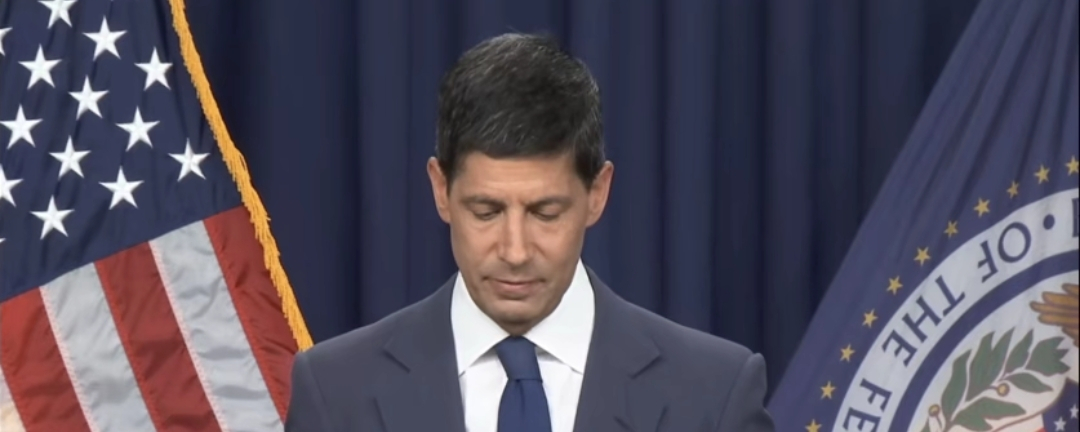

What did Wosh say?
In short, there are three key points.
The first sentence: “Inflation is too high, and it’s been too high for too long. The inflation data this summer hasn’t told me that there’s been a substantive improvement in the underlying trend.”
Sentence two: “We do not intend to provide forward guidance.” This is not a technical statement—it’s dismantling the “signposts” the market relies on to judge the direction of policy.
Sentence three: Financial conditions “are not particularly restrictive.” Translated, it means: the current rates are not high enough yet, and there is still room to tighten.
Why is this time different?
The Federal Reserve raised the interest rate from 3.5%–3.75% to 3.75%–4%. This was the first rate hike since July 2023. It was approved unanimously by all 12 votes, with zero opposition.
But more worrisome than the rate hikes themselves is the way Waller is communicating. He isn’t “guiding” the market—he’s “informing” the market. In the past, Fed chairs would spend a lot of effort managing market expectations so that policy would be as smooth as possible. Waller has tossed that away. He said it clearly: you can look at the data yourselves—I won’t tell you how the next step will be.
This shift in communication philosophy is even more far-reaching than the impact of a single rate hike. The market has lost the anchor of a “central bank put option,” and volatility will rise systemically.
The market is voting with its feet.
After Waller’s remarks, the yield on the U.S. 2-year Treasury rose to 4.712%, the highest level since July 2024. Spot gold fell below $4,280 per ounce. The S&P 500 quickly gave back its gains and touched its intraday low. Traders increased bets that the Fed will add two more rate hikes before year-end.
This isn’t a response of a “hawkish hold.” It’s the market repricing a more hawkish Fed.
Morgan Stanley has revised its forecast from “no more rate hikes” to “two more rate hikes,” citing Waller’s public remarks combined with the rise in oil prices and inflationary expansion driven by AI. The firm’s chief U.S. economist Michael Gapen wrote: “Not doing so would risk losing credibility and a rise in the long-end risk premium, similar to the reaction after the July FOMC meeting.”
What does it mean for traders?
First, don’t go head-to-head with Waller on inflation. He said, “The trend failed the test,” which means that as long as inflation data does not show a sustained, clear decline, he will continue tightening. The hesitation after the July meeting has already cost him credibility, and he won’t make the same mistake again in September.
Second, the dollar has near-term support. Rate-hike expectations directly push up short-term interest rates, and the yield on the 2-year U.S. Treasury has already priced this in. A stronger dollar puts pressure on commodities—especially U.S.-dollar-priced oil and gold.
Third, the illusion that equities are “immune” to rate hikes is being broken. In the past two years, U.S. stocks still rose during the rate-hike cycle, driven by earnings growth and an AI narrative. But Waller said financial conditions are “not restrictive,” which amounts to telling the market: I don’t care how stocks move—I only care about inflation. If he adds another hike in December, pressure will be felt for real on the valuation end.
Fourth, don’t rush to buy the dip. After Waller dismantled the forward guidance, the market needs to find its own direction without a “central bank map.” This process typically comes with sharp volatility and false breakouts. When the direction is unclear, the best position is to stay out of the market.
In one sentence: Waller has staked the Federal Reserve’s credibility on the idea that inflation must return to 2%. Until substantial progress appears on that goal, he won’t give the market any gentle hints. For traders, this means that in the coming months, the key word is—defense, not offense.