
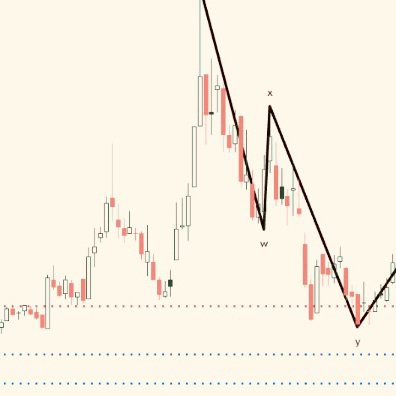
The analogy you’re seeing—“the Fed’s rate hike this time is more like the action in 1997”—mainly lies in the fact that both are preventive, incremental, and sufficiently anticipated “insurance-style” hikes. Their aim is to cool an overheating economy, not to deal with runaway inflation.
📜 The backdrop for the 1997 rate hikes: an “insurance-style” fine-tuning
On March 25, 1997, the Fed raised the federal funds rate by 25 basis points to 5.5%. At the time, the U.S. economy was strong, with the unemployment rate falling to 5.3%. The Fed’s move was a preventive measure—concerned that strong demand could trigger inflation—intended to prolong the economic expansion. Greenspan called it “a form of insurance.”
🔍 Key similarities with today’s core situation
The current environment is highly similar to 1997, mainly in that:
· The economy has resilience: the labor market is healthy, the economy has not entered a recession—similar to 1997.
· Inflation is not out of control: while inflation is heating up, it is still far below the 2022 peak and within a manageable range.
· The tech cycle supports growth: today’s AI investment boom is similar to the internet wave in 1997, supporting growth and offsetting the impact of higher rates.
· Rate-hike expectations are fully priced in: the market has already digested the expectation of rate hikes, so the downside may be “all but exhausted” upon implementation.
⚠️ Key differences and risks
History will not simply repeat itself—be mindful of the following differences:
· Economic bifurcation: today’s U.S. economy shows “K-shaped” divergence, with traditional demand constrained by high interest rates.
· A higher starting point for policy rates: current rates are already elevated, leaving limited room for further hikes.
· A more complex external environment: today faces challenges such as trade wars and weak global growth, which are more complex than the 1997 situation, where the Asian financial crisis was the main complication.
📈 Reference for market impact
Market performance after the 1997 rate hikes provides some guidance:
· Near-term pressure: around the rate hike, U.S. stocks typically face headwinds—for example, in 1997, the S&P 500 fell by about 10%.
· Mid-term strength: once the market confirms the tightening is over, stocks often rebound quickly. One year after the 1997 rate hike, the S&P 500 rose cumulatively by 42%.
· U.S. Treasuries peak: after the rate hike is implemented, yields on 10-year U.S. Treasuries typically peak and then turn down.
Overall, the “1997” analogy is a summary of today’s preventive, incremental rate-hike character, not a simple prediction of market走势.
📜 The backdrop for the 1997 rate hikes: an “insurance-style” fine-tuning
On March 25, 1997, the Fed raised the federal funds rate by 25 basis points to 5.5%. At the time, the U.S. economy was strong, with the unemployment rate falling to 5.3%. The Fed’s move was a preventive measure—concerned that strong demand could trigger inflation—intended to prolong the economic expansion. Greenspan called it “a form of insurance.”
🔍 Key similarities with today’s core situation
The current environment is highly similar to 1997, mainly in that:
· The economy has resilience: the labor market is healthy, the economy has not entered a recession—similar to 1997.
· Inflation is not out of control: while inflation is heating up, it is still far below the 2022 peak and within a manageable range.
· The tech cycle supports growth: today’s AI investment boom is similar to the internet wave in 1997, supporting growth and offsetting the impact of higher rates.
· Rate-hike expectations are fully priced in: the market has already digested the expectation of rate hikes, so the downside may be “all but exhausted” upon implementation.
⚠️ Key differences and risks
History will not simply repeat itself—be mindful of the following differences:
· Economic bifurcation: today’s U.S. economy shows “K-shaped” divergence, with traditional demand constrained by high interest rates.
· A higher starting point for policy rates: current rates are already elevated, leaving limited room for further hikes.
· A more complex external environment: today faces challenges such as trade wars and weak global growth, which are more complex than the 1997 situation, where the Asian financial crisis was the main complication.
📈 Reference for market impact
Market performance after the 1997 rate hikes provides some guidance:
· Near-term pressure: around the rate hike, U.S. stocks typically face headwinds—for example, in 1997, the S&P 500 fell by about 10%.
· Mid-term strength: once the market confirms the tightening is over, stocks often rebound quickly. One year after the 1997 rate hike, the S&P 500 rose cumulatively by 42%.
· U.S. Treasuries peak: after the rate hike is implemented, yields on 10-year U.S. Treasuries typically peak and then turn down.
Overall, the “1997” analogy is a summary of today’s preventive, incremental rate-hike character, not a simple prediction of market走势.