Binance Square
Mira小白桃
569 Posts

Mira小白桃

推特X:xiaobaitao05,越南胡志明,边学Web3边看市场,每下午准时开播陪你聊行情和热点, 分享学习心得, 陪新手一起成长

BNB Holder
BNB Holder
High-Frequency Trader
4.1 Months
257 Following
16.5K+ Followers
2.2K+ Liked
Posts
PINNED
·
--
Verified
Crude Oil Rises—Why Is Gold Under Pressure Instead? Recently, the market has been influenced at the same time by geopolitical risks, energy prices, and expectations for Federal Reserve policy. At present, Brent crude is around $107, while WTI is around $105. Oil prices have remained at elevated levels. What the market is most worried about is not crude oil itself, but its impact on inflation expectations. The logic is simple: Oil prices rise → inflation pressure increases → the Fed’s room to cut rates is constrained → U.S. Treasury yields rise → gold comes under pressure. So right now, gold is being pulled by two forces: On one hand, safe-haven demand driven by geopolitical conditions supports gold; On the other hand, higher oil prices boost inflation and rate-expectation pressures that suppress gold. That’s also why you can’t simply understand it as: “Geopolitical risk rises = gold must rise.” In reality, gold’s short-term price action still depends on the U.S. dollar and U.S. Treasury yields. Currently, the 10-year Treasury yield is already around 5%. If yields continue to move higher, gold’s short-term downside pressure could increase further. Next, I will focus on three variables: First, crude oil. If oil prices keep rising quickly, inflation expectations may heat up further. Second, Treasury yields. If the 10-year yield keeps moving higher, gold may continue to be weighed down. Third, the Federal Reserve. Today’s FOMC rate decision is only the first step; more important is the policy guidance/signals after the meeting. If the Fed releases more hawkish signals: A stronger dollar and firmer yields → gold faces pressure. If the policy statement is not as hawkish as the market expected: Yields fall back → gold receives support. So my view on gold now won’t be based solely on geopolitical news. Crude oil determines inflation expectations, interest rates determine the cost of capital, and risk-off/safe-haven sentiment determines how much support is underneath gold. Only when all three factors move at the same time is the key to understanding this round of the gold market. $XAU {future}(XAUUSDT) $CL {future}(CLUSDT) $BZ {future}(BZUSDT)
Crude Oil Rises—Why Is Gold Under Pressure Instead?

Recently, the market has been influenced at the same time by geopolitical risks, energy prices, and expectations for Federal Reserve policy.

At present, Brent crude is around $107, while WTI is around $105. Oil prices have remained at elevated levels. What the market is most worried about is not crude oil itself, but its impact on inflation expectations.

The logic is simple:

Oil prices rise → inflation pressure increases → the Fed’s room to cut rates is constrained → U.S. Treasury yields rise → gold comes under pressure.

So right now, gold is being pulled by two forces:

On one hand, safe-haven demand driven by geopolitical conditions supports gold;

On the other hand, higher oil prices boost inflation and rate-expectation pressures that suppress gold.

That’s also why you can’t simply understand it as:

“Geopolitical risk rises = gold must rise.”

In reality, gold’s short-term price action still depends on the U.S. dollar and U.S. Treasury yields.

Currently, the 10-year Treasury yield is already around 5%. If yields continue to move higher, gold’s short-term downside pressure could increase further.

Next, I will focus on three variables:

First, crude oil.

If oil prices keep rising quickly, inflation expectations may heat up further.

Second, Treasury yields.

If the 10-year yield keeps moving higher, gold may continue to be weighed down.

Third, the Federal Reserve.

Today’s FOMC rate decision is only the first step; more important is the policy guidance/signals after the meeting.

If the Fed releases more hawkish signals:

A stronger dollar and firmer yields → gold faces pressure.

If the policy statement is not as hawkish as the market expected:

Yields fall back → gold receives support.

So my view on gold now won’t be based solely on geopolitical news.

Crude oil determines inflation expectations, interest rates determine the cost of capital, and risk-off/safe-haven sentiment determines how much support is underneath gold.

Only when all three factors move at the same time is the key to understanding this round of the gold market.
$XAU
$CL
$BZ

PINNED
When you’re bored, feel free to come chat in the group and bullsh*t a bit 🍑 We can also discuss and exchange interesting news and market hotspots~ See you every afternoon in the live room—don’t be a stranger ❤️
When you’re bored, feel free to come chat in the group and bullsh*t a bit 🍑
We can also discuss and exchange interesting news and market hotspots~
See you every afternoon in the live room—don’t be a stranger ❤️
Mira小白桃
·
--
Crude Oil Rises—Why Is Gold Under Pressure Instead?

Recently, the market has been influenced at the same time by geopolitical risks, energy prices, and expectations for Federal Reserve policy.

At present, Brent crude is around $107, while WTI is around $105. Oil prices have remained at elevated levels. What the market is most worried about is not crude oil itself, but its impact on inflation expectations.

The logic is simple:

Oil prices rise → inflation pressure increases → the Fed’s room to cut rates is constrained → U.S. Treasury yields rise → gold comes under pressure.

So right now, gold is being pulled by two forces:

On one hand, safe-haven demand driven by geopolitical conditions supports gold;

On the other hand, higher oil prices boost inflation and rate-expectation pressures that suppress gold.

That’s also why you can’t simply understand it as:

“Geopolitical risk rises = gold must rise.”

In reality, gold’s short-term price action still depends on the U.S. dollar and U.S. Treasury yields.

Currently, the 10-year Treasury yield is already around 5%. If yields continue to move higher, gold’s short-term downside pressure could increase further.

Next, I will focus on three variables:

First, crude oil.

If oil prices keep rising quickly, inflation expectations may heat up further.

Second, Treasury yields.

If the 10-year yield keeps moving higher, gold may continue to be weighed down.

Third, the Federal Reserve.

Today’s FOMC rate decision is only the first step; more important is the policy guidance/signals after the meeting.

If the Fed releases more hawkish signals:

A stronger dollar and firmer yields → gold faces pressure.

If the policy statement is not as hawkish as the market expected:

Yields fall back → gold receives support.

So my view on gold now won’t be based solely on geopolitical news.

Crude oil determines inflation expectations, interest rates determine the cost of capital, and risk-off/safe-haven sentiment determines how much support is underneath gold.

Only when all three factors move at the same time is the key to understanding this round of the gold market.
$XAU

$CL

$BZ

路人1688luren
·
--
🦋🦋Big Breaking News🦋🦋

As the butterfly momentum rises, good news arrives.
This Thursday, Butterfly President will appear live on the Binance livestream,
publicly take the stage, and personally cheer on Butterfly’s journey,
to share and forge a grand blueprint for the butterfly transformation.

🦋🦋Butterfly Life|Bstork Coin Equity-in-Common Sector🦋🦋
Currently leading globally in second place, with the goal to top the world by this Friday—number one!

The inclusive community is in full swing, and the shareholder team continues to grow stronger.
As the great tide surges forward, only by gathering as one can we ride the wind and break through the waves.
Witness Butterfly Life—perfectly surpassing what was before. We will spare no effort and go all in to reach the peak together!

🦋Butterfly Life: From Cocoon to Rise, Headed for the Peak🦋

The butterfly has endured long dormancy, only then can it spread its wings;
the business has weathered deep stillness, only then will its grandeur emerge.

Standing on the new track of equity-in-common for coin holders,
Bstork Coin is rising strongly, firmly holding the second place among global sectors,
while fully accelerating toward becoming number one worldwide.

With the whole inclusive community united in purpose and effort,
we continue to bring together golden, silver, and bronze shareholders,
holding fast to a shared consensus among countless people.
Breaking out of the cocoon is not a coincidence—it is the fruit of determined efforts from all our partners shoulder to shoulder.

As market tides surge and clouds roll in,
we embrace the resilience of the butterfly and directly face the challenges of the storm.
This time, the president’s personal appearance on the Binance livestream stage is both a solemn witness to the achievements of this phase,
and a loud call to kick off a brand-new journey.

Witness the rise of Butterfly Life—surpassing past constraints,
heading toward the era of glory that belongs to you and me.
With full effort, let’s go together and achieve brilliance.

Leo - F0
·
--
Bullish
🧧🧧🔥GOOD MORNING FROM DUBAİ, FAMİLY.🔥🧧🧧
I told you to buy $ZEC 💛 when it was at $30.
As I told you before, $ZEC 💛 will be 3K.💎
$BTC 🔥🔥🧧🧧
#1688家族family 💚 @周周1688
#比特币突破8万美元 #ZcashRises6% #xrp #zec

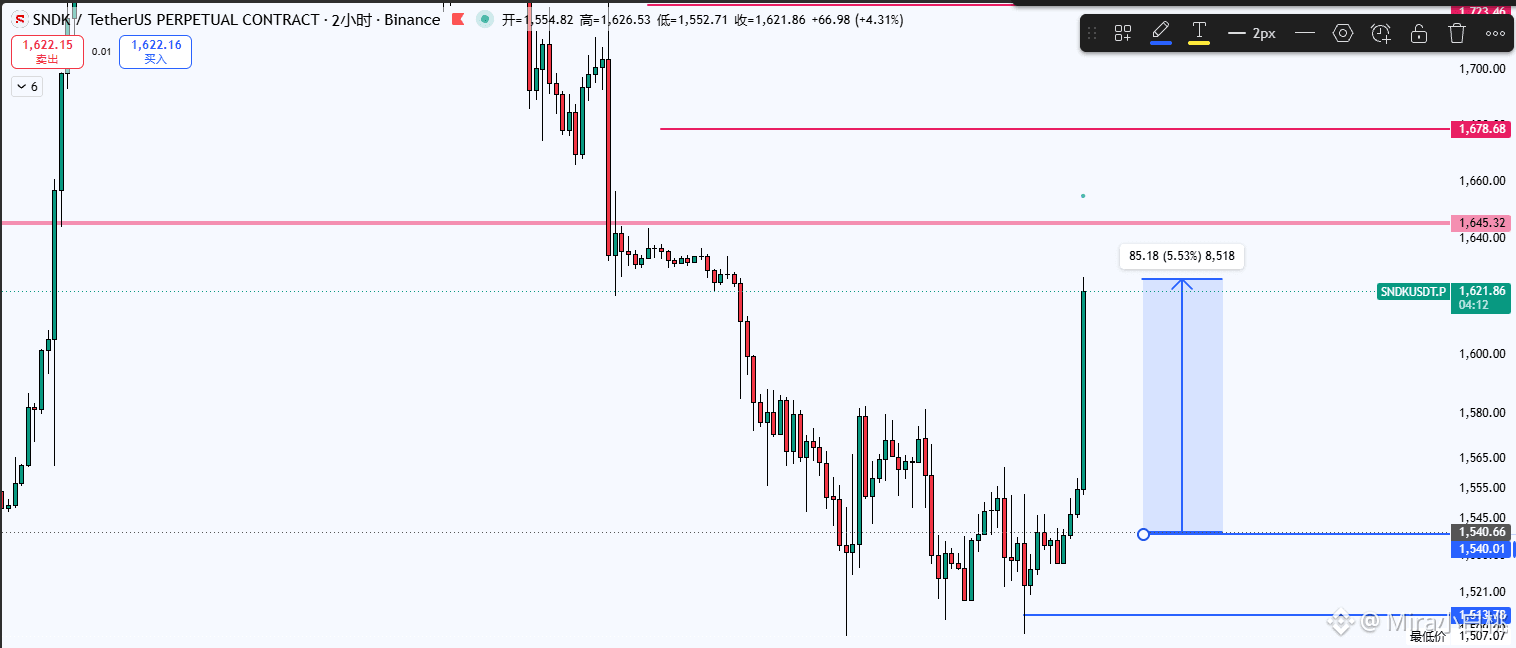
$SNDK Sandisk already told everyone that you can't stay empty, right? If you have references, let's eat the meat together. 1450 only confirmed the short trend when it broke below at the key level 😁 happy about it {future}(SNDKUSDT)
$SNDK Sandisk already told everyone that you can't stay empty, right? If you have references, let's eat the meat together. 1450 only confirmed the short trend when it broke below at the key level 😁 happy about it
Mira小白桃
·
--
$SNDK Hey everyone, about Sandisk 1450—if it hasn't broken through, that's still not an M head!

But you still need to be cautious because the key area wasn’t touched.

For Sandisk 1525-1550, I’ve kept telling you during the live stream to pay attention to this zone. Next, you’ll be taking profit with your operations 😁

Tomorrow we’ll livestream as usual. Don’t forget to come to the live room at 4:30 PM!
$SNDK
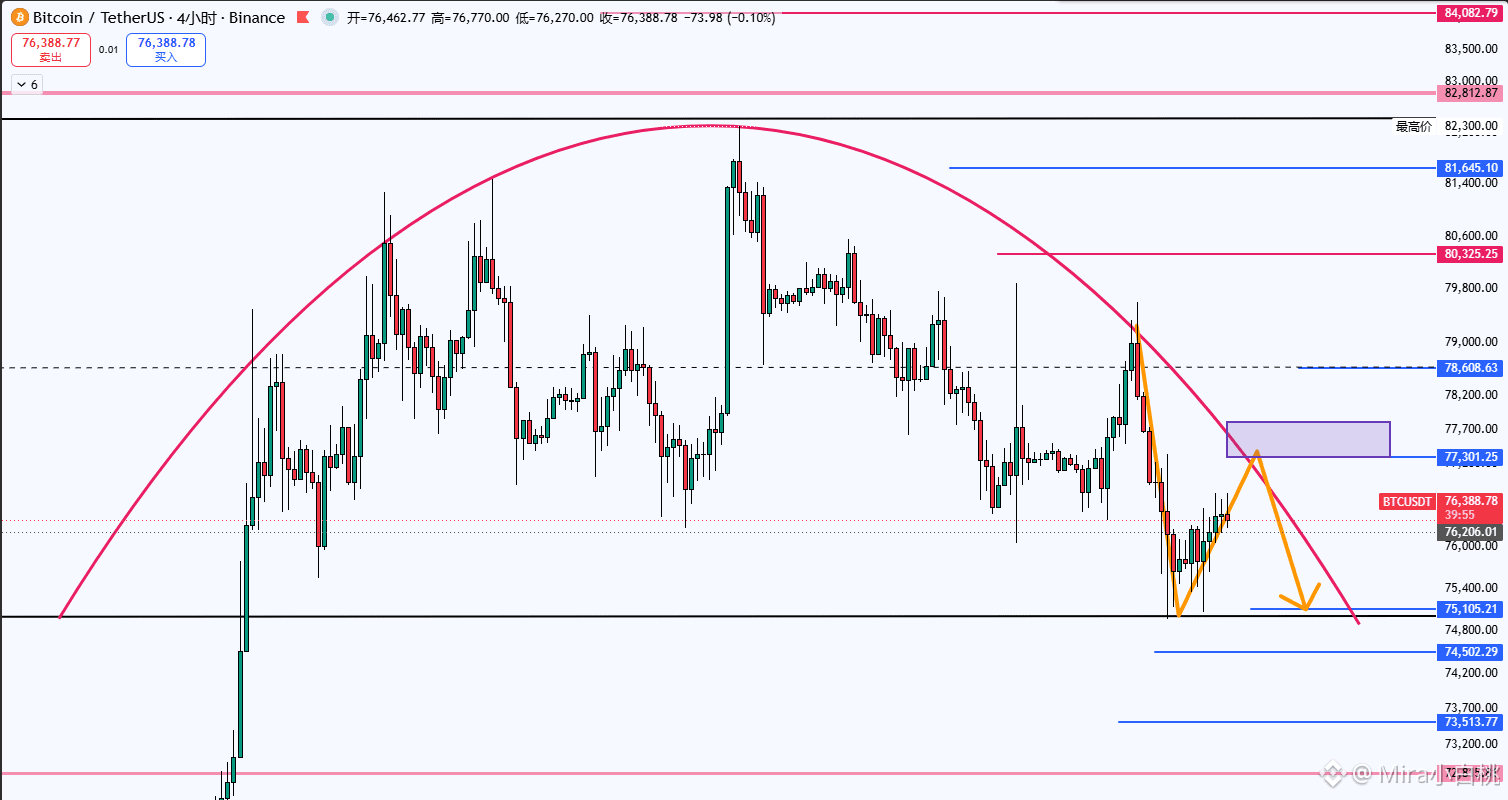
$BTC Now that this rebound is underway, I won’t rush to define it as a reversal. From the 4H structure, there was a clear pullback earlier, and now price is starting to rebound. However, combined with the key zones provided by several analysts in the current market, I believe what’s truly important next is not “how much it rises,” but whether it can reclaim the area above the resistance. At the moment, I mainly look at three zones: First, the overhead rebound resistance zone. This is where longs and shorts truly first face off in the short term. If price reaches this area and then gets rejected again, it suggests that sell pressure remains above, and the price is likely to return to consolidation—or even continue downward to find support. Second, the stronger resistance zone further up. This corresponds to the area near the previous highs, which is also the spot the market is paying the most attention to right now. Only if price breaks through and holds that zone again can the prior pullback structure have a real chance of being decisively invalidated. That’s also why I don’t immediately view the current short-term rebound as the start of a new uptrend. Third, the key support zone below. At present, most market analysis considers the area near the prior low as an important defense level. As long as this area can still hold, BTC still has the possibility of consolidating and repairing. But if support is effectively broken, the market structure will weaken further, and lower support zones will need to be watched again. So my logic is simple: Above, see whether resistance can be broken; below, see whether core support can hold. Break resistance → watch for trend repair; Resistance rejected → continue with weaker consolidation; Core support fails → guard against a new round of downside. At this point, I’d rather wait for structural confirmation than guess the direction early. A trader doesn’t predict exactly how the market will move—rather, they think through different scenarios in advance. $BTC {future}(BTCUSDT)
$BTC Now that this rebound is underway, I won’t rush to define it as a reversal.

From the 4H structure, there was a clear pullback earlier, and now price is starting to rebound.

However, combined with the key zones provided by several analysts in the current market, I believe what’s truly important next is not “how much it rises,” but whether it can reclaim the area above the resistance.

At the moment, I mainly look at three zones:
First, the overhead rebound resistance zone.
This is where longs and shorts truly first face off in the short term.
If price reaches this area and then gets rejected again, it suggests that sell pressure remains above, and the price is likely to return to consolidation—or even continue downward to find support.

Second, the stronger resistance zone further up.
This corresponds to the area near the previous highs, which is also the spot the market is paying the most attention to right now.
Only if price breaks through and holds that zone again can the prior pullback structure have a real chance of being decisively invalidated.
That’s also why I don’t immediately view the current short-term rebound as the start of a new uptrend.

Third, the key support zone below.
At present, most market analysis considers the area near the prior low as an important defense level.
As long as this area can still hold, BTC still has the possibility of consolidating and repairing.
But if support is effectively broken, the market structure will weaken further, and lower support zones will need to be watched again.

So my logic is simple:
Above, see whether resistance can be broken; below, see whether core support can hold.
Break resistance → watch for trend repair;
Resistance rejected → continue with weaker consolidation;
Core support fails → guard against a new round of downside.

At this point, I’d rather wait for structural confirmation than guess the direction early.

A trader doesn’t predict exactly how the market will move—rather, they think through different scenarios in advance.
$BTC
慢就是快Mike
·
--
$ETH Will the rate hike affect the bull market???

Last night, the Fed raised rates by 25 basis points as expected, bringing the federal funds rate to 3.75%–4%. After the news was released, BTC didn’t fall—rather, it rebounded, briefly reclaiming $76,000. ETH also followed with a bounce. But Dan Jie believes that what’s truly worth watching now isn’t the 25 basis points themselves, but what the Fed is planning to do next.

This time the hike was within expectations, and the market had already priced in the negative news in advance. So when the announcement landed, short-covering showed up, and it’s not surprising that BTC was pushed up.

However, judging from the policy signals, inflation is still on the high side, and the dot plot hasn’t fully shifted toward easing. By the end of 2026, the median rate is still around 3.9%.

心月势不可挡
·
--
It isn’t a flood of panic to raise interest rates, but it will change the price of capital and the ranking of assets.

In a low-interest-rate environment, many assets can be supported by liquidity; once rates rise, the market will evaluate profits, valuations, and risks more seriously. For investors, what truly matters isn’t predicting every rate hike, but assessing whether the interest-rate core will remain higher for the long term—and whether corporate earnings can absorb the increase in funding costs.

正乾商学--四条2
·
--
Are you really suited to make a living by trading?
Serial [5]

⑤ Only after you solve the first four questions will you truly stand at the starting line of trading

Pay attention.

What I covered earlier—

income sources, daily routine, time you can trade, trading instruments, your personal character, your trading style…

All of it is just to help you reach: the starting line.

Not the finish line.

Only after you’ve truly reached the starting line do you begin the part everyone is most familiar with:

learning.

And not learning one or two indicators;

not stopping once you know what support and resistance are.

You must first gain broad understanding of:

Scalping—very short-term trading / scalp trading: frequent trades within a very short time (seconds to minutes) to profit from small price fluctuations
Day Trading: opening and closing positions on the same day, without holding overnight
Swing Trading: capturing market swings over several days to a few weeks, aiming to profit from swing trends
Trend Following: trading in line with the market’s main direction—for example, going long in an uptrend and short in a downtrend
Breakout Trading: entering the market when price breaks through a key resistance or support level
Mean Reversion: trading that assumes when price deviates from normal levels, it will return to the average value, seeking opportunities from that
Technical Analysis: analyzing the market through candlesticks, indicators, volume, and price structure
Fundamental Analysis: studying a project’s value—such as the team, economic data, industry development, and more
Macro: macroeconomic analysis studying how the global economic environment (interest rates, inflation, the US dollar, policies, etc.) affects the market
Risk Management: controlling trading risk, including stop-losses, position sizes, and capital protection
Position Sizing: position management—deciding how much capital to risk or allocate to each trade based on your account size and risk
Trading Psychology: managing emotions, discipline, and execution ability to prevent fear and greed from affecting your trading

Then test them one by one.

You must personally know:

what suits you.
what doesn’t suit you.

This is not something others can tell you directly.

If you’re interested in trading, feel free to leave a comment in the comment section or join the chat room to exchange ideas—learn together and grow together!
#美联储加息25基点美股收跌
🎙️ Have you been DCA’ing into BNB?
avatar
End
02 h 15 m 25 s
5.1k
16
14
🎙️ Let's talk about today's market trend
avatar
End
03 h 06 m 57 s
1.1k
3
3
Verified
🔥The Federal Reserve raises rates for the first time in three years—how should $BTC look next? The shoe has finally dropped. The Federal Reserve has just announced a 25-basis-point hike, raising the benchmark rate to 3.75%—4.00%. This is the Fed’s first rate increase since July 2023. But what’s interesting is: This hike was actually already priced in by the market. So what’s really worth watching isn’t whether they raised rates— it’s whether they’ll keep raising them next. The Fed’s latest projections show that there could be one more rate hike before the end of this year, and they also raised their forecast for inflation this year. That means the “easing environment” the market wants hasn’t truly returned—for now. For BTC, the biggest short-term pressure still likely comes from interest rates and dollar liquidity. And since the earlier CLARITY bill wasn’t able to move forward, BTC has already gone through a round of declines. So right now, I actually wouldn’t recommend shorting just because you see the word “rate hike.” After the news is released, the most important thing is to see how price moves. If BTC can hold the key support levels ahead of it, and then regains an important position after the rate decision, that would suggest the market may be digesting this hike more strongly than expected. On the other hand, if support continues to be broken and the Fed sends an even stronger tightening signal, you’ll need to watch out for the market continuing to look lower for support. In short: The rate hike itself isn’t the biggest variable for today. What really matters is: How many more times the Fed plans to hike next? And whether the market will keep repricing interest rates. For today’s BTC, don’t rush to guess the direction. Watch the support, watch the reaction, and see what Powell says. In times like this, patience matters even more. #美联储加息是否已成定局 #美联储利率决议即将公布 {future}(BTCUSDT)
🔥The Federal Reserve raises rates for the first time in three years—how should $BTC look next?

The shoe has finally dropped.

The Federal Reserve has just announced a 25-basis-point hike, raising the benchmark rate to 3.75%—4.00%.

This is the Fed’s first rate increase since July 2023.

But what’s interesting is:

This hike was actually already priced in by the market.

So what’s really worth watching isn’t whether they raised rates—

it’s whether they’ll keep raising them next.

The Fed’s latest projections show that there could be one more rate hike before the end of this year, and they also raised their forecast for inflation this year.

That means the “easing environment” the market wants hasn’t truly returned—for now.

For BTC, the biggest short-term pressure still likely comes from interest rates and dollar liquidity.

And since the earlier CLARITY bill wasn’t able to move forward, BTC has already gone through a round of declines.

So right now, I actually wouldn’t recommend shorting just because you see the word “rate hike.”

After the news is released, the most important thing is to see how price moves.

If BTC can hold the key support levels ahead of it, and then regains an important position after the rate decision, that would suggest the market may be digesting this hike more strongly than expected.

On the other hand, if support continues to be broken and the Fed sends an even stronger tightening signal, you’ll need to watch out for the market continuing to look lower for support.

In short:

The rate hike itself isn’t the biggest variable for today.

What really matters is:

How many more times the Fed plans to hike next?

And whether the market will keep repricing interest rates.

For today’s BTC, don’t rush to guess the direction.

Watch the support, watch the reaction, and see what Powell says.

In times like this, patience matters even more.

#美联储加息是否已成定局 #美联储利率决议即将公布
$ZEC has broken to new highs again. This trend is getting more and more outrageous. When it broke above $1,000 earlier, many people already felt the rally was happening too fast. So what happened? After the pullback, instead of weakening for good, it actually pulled back up again—directly breaking through the previous high once more. Now, ZEC isn’t just a simple rebound trade anymore. From around $800, it has risen all the way to where it is now. In a short time, it has continuously broken through one key level after another, and market sentiment has clearly been fully ignited. And after this breakout, I actually think there’s one position that’s especially important: The previous high. In the past, if a former resistance level could flip into support after breaking, then the significance of this new high would be completely different. Next, I’ll focus on whether it can hold steady around 1,300. If, after breaking through, it pulls back and there’s clear support around 1,300, it means the bulls are still there and the price may continue expanding higher. But if it spikes up and then quickly drops back below the previous high, then be careful. After all, it has already risen so much in a row—there must be a lot of profit-taking. So the biggest taboo right now is: When you see a new high and emotions run hot, don’t just chase immediately. A strong trend doesn’t mean it won’t pull back. A truly healthy move should be: after the breakout, it digests the profit-taking, and then continues higher—rather than yanking it up every day with one big bullish candle. As for how far this ZEC rally can go, I’m not in a hurry to guess. Watch the strength at the new high; watch the support on the pullback. As long as key levels can still be defended, the trend is still intact. But if we start seeing a surge followed by a selloff with heavy volume, be cautious—the market may shift from “wildly rising” into “high-level consolidation.” This time, ZEC really has pulled the curtain on the privacy track’s visibility. Next comes the most interesting part. After setting a new high, can it keep creating new highs? #Zcash持币者投票支持NU7升级 #Zcash上涨6% {future}(ZECUSDT)
$ZEC has broken to new highs again.

This trend is getting more and more outrageous.

When it broke above $1,000 earlier, many people already felt the rally was happening too fast.

So what happened?

After the pullback, instead of weakening for good, it actually pulled back up again—directly breaking through the previous high once more.

Now, ZEC isn’t just a simple rebound trade anymore.

From around $800, it has risen all the way to where it is now. In a short time, it has continuously broken through one key level after another, and market sentiment has clearly been fully ignited.

And after this breakout, I actually think there’s one position that’s especially important:

The previous high.

In the past, if a former resistance level could flip into support after breaking, then the significance of this new high would be completely different.

Next, I’ll focus on whether it can hold steady around 1,300.

If, after breaking through, it pulls back and there’s clear support around 1,300, it means the bulls are still there and the price may continue expanding higher.

But if it spikes up and then quickly drops back below the previous high, then be careful.

After all, it has already risen so much in a row—there must be a lot of profit-taking.

So the biggest taboo right now is:

When you see a new high and emotions run hot, don’t just chase immediately.

A strong trend doesn’t mean it won’t pull back.

A truly healthy move should be: after the breakout, it digests the profit-taking, and then continues higher—rather than yanking it up every day with one big bullish candle.

As for how far this ZEC rally can go, I’m not in a hurry to guess.

Watch the strength at the new high; watch the support on the pullback.

As long as key levels can still be defended, the trend is still intact.

But if we start seeing a surge followed by a selloff with heavy volume, be cautious—the market may shift from “wildly rising” into “high-level consolidation.”

This time, ZEC really has pulled the curtain on the privacy track’s visibility.

Next comes the most interesting part.

After setting a new high, can it keep creating new highs?
#Zcash持币者投票支持NU7升级 #Zcash上涨6%
🎙️ It’s dropping again—what should you pay attention to on the 16th?
avatar
End
02 h 32 m 18 s
1.2k
1
2
Verified
#越南试点加密资产市场 Vietnam government bond auctions raise $564 million—should this news be taken seriously? My understanding is: By itself, $564 million is unlikely to have a major impact on global markets. What matters more is the funding behind it and the interest-rate logic. Vietnam has recently continued to finance itself through government bond issuance. This year, the size of government bond issuance has already been relatively large. At the same time, Vietnam’s 10-year government bond yield is currently above 4.5%, and compared with the beginning of the year it has risen noticeably. So I’m paying attention to three points in this news: First, funding needs. When the government issues bonds, in essence it is raising funds from the market. If the issuance size keeps increasing afterward, the market will need to absorb more bonds, which could put some pressure on liquidity. Second, bond yields. If bond supply increases while yields continue to rise, that suggests the market is demanding a higher cost of capital. This would affect banks, corporate financing costs, and overall liquidity. Third, consider it together with the global interest-rate environment. Right now, US Treasury yields, oil prices, and inflation expectations are all highly sensitive. So I won’t interpret this news on its own as purely “good” or “bad.” What’s truly important is: the bond issuance size + bond yields + market liquidity—how these things change going forward. For us in trading $BTC and assets like gold, Vietnam’s government bonds themselves are not a core driver. But if global funding costs keep rising, risk assets overall will likely face some pressure. When traders read the news, they can’t just look at the numbers—they must also look at the funding logic behind those numbers.
#越南试点加密资产市场 Vietnam government bond auctions raise $564 million—should this news be taken seriously?

My understanding is:
By itself, $564 million is unlikely to have a major impact on global markets.
What matters more is the funding behind it and the interest-rate logic.

Vietnam has recently continued to finance itself through government bond issuance. This year, the size of government bond issuance has already been relatively large. At the same time, Vietnam’s 10-year government bond yield is currently above 4.5%, and compared with the beginning of the year it has risen noticeably.

So I’m paying attention to three points in this news:
First, funding needs.
When the government issues bonds, in essence it is raising funds from the market.
If the issuance size keeps increasing afterward, the market will need to absorb more bonds, which could put some pressure on liquidity.
Second, bond yields.
If bond supply increases while yields continue to rise, that suggests the market is demanding a higher cost of capital.
This would affect banks, corporate financing costs, and overall liquidity.
Third, consider it together with the global interest-rate environment.
Right now, US Treasury yields, oil prices, and inflation expectations are all highly sensitive.
So I won’t interpret this news on its own as purely “good” or “bad.”

What’s truly important is: the bond issuance size + bond yields + market liquidity—how these things change going forward.
For us in trading $BTC and assets like gold, Vietnam’s government bonds themselves are not a core driver.
But if global funding costs keep rising, risk assets overall will likely face some pressure.
When traders read the news, they can’t just look at the numbers—they must also look at the funding logic behind those numbers.
Did the CLARITY Bill fail? Should $BTC now be looking to go short? Last night, the US Senate held a procedural vote on the CLARITY Bill. The result was 49 against and 50 in favor—failing to reach the 60 votes needed to move forward. After the news came out, both BTC and ETH saw a clear drop. But I actually don’t recommend chasing a short just because two words—"bad news". The first wave of selling has already happened. What matters more now is whether support can truly hold. $BTC Currently, BTC is around $75,000. Key levels to watch: $74.8k—$75k: crucial support $76k—$76.5k: important reclaim zone $77.5k—$78k: overhead resistance $80k: psychological level If it breaks below $75k and the rebound can’t reclaim the level, the short-side structure will become more obvious. Downward, you can look for $73k → $72k. But if $75k holds, and on the 1-hour and 4-hour charts you see higher highs and higher lows, and then it can move back above $76.5k—$77k, then you’ll need to reassess the rebound. So around $75k, I won’t force a short just to chase a segment of the sell-off. $ETH For ETH, focus on the $2,400 area. On the upside, watch $2,450—$2,500; above that is $2,530—$2,560. Only if it breaks below $2,380 and the rebound can’t get back above it would it lean more toward continued weakness. If $2,400 holds, and BTC is also stable around $75k, then you can wait for ETH to retake $2,450—$2,500 before looking again. Also, today there’s the Fed interest-rate decision, so volatility could expand further. So don’t rush into a trade today. If it breaks, wait for the pullback to confirm. If it holds, wait for the structure to form. News can influence the market, but what truly determines the next direction is whether price can hold key levels. #比特币跌至7.6万美元 {future}(ETHUSDT) {future}(BTCUSDT)
Did the CLARITY Bill fail? Should $BTC now be looking to go short?

Last night, the US Senate held a procedural vote on the CLARITY Bill. The result was 49 against and 50 in favor—failing to reach the 60 votes needed to move forward.

After the news came out, both BTC and ETH saw a clear drop.

But I actually don’t recommend chasing a short just because two words—"bad news".

The first wave of selling has already happened. What matters more now is whether support can truly hold.

$BTC

Currently, BTC is around $75,000.

Key levels to watch:

$74.8k—$75k: crucial support
$76k—$76.5k: important reclaim zone
$77.5k—$78k: overhead resistance
$80k: psychological level

If it breaks below $75k and the rebound can’t reclaim the level, the short-side structure will become more obvious. Downward, you can look for $73k → $72k.

But if $75k holds, and on the 1-hour and 4-hour charts you see higher highs and higher lows, and then it can move back above $76.5k—$77k, then you’ll need to reassess the rebound.

So around $75k, I won’t force a short just to chase a segment of the sell-off.

$ETH

For ETH, focus on the $2,400 area.

On the upside, watch $2,450—$2,500; above that is $2,530—$2,560.

Only if it breaks below $2,380 and the rebound can’t get back above it would it lean more toward continued weakness. If $2,400 holds, and BTC is also stable around $75k, then you can wait for ETH to retake $2,450—$2,500 before looking again.

Also, today there’s the Fed interest-rate decision, so volatility could expand further.

So don’t rush into a trade today.

If it breaks, wait for the pullback to confirm.
If it holds, wait for the structure to form.

News can influence the market, but what truly determines the next direction is whether price can hold key levels.

#比特币跌至7.6万美元
#美联储加息是否已成定局 CLARITY Act stuck—does the crypto market have to wait again? Last night, the U.S. Senate held a key vote on the “Digital Assets Market Clarity Act.” The result was 49 votes in favor and 50 against, not reaching the 60 votes needed to move forward. So this time, it’s not that the bill became law—it’s that even the step to continue reviewing it failed. So what’s the big deal with this bill? In simple terms, it aims to make the U.S. crypto market’s regulatory rules clearer. The market has long had a major problem: Which coins fall under securities regulation? Which are commodities? And who is responsible for overseeing them? The CLARITY Act wants to write these boundaries into law, clearly define what the U.S. Securities and Exchange Commission (SEC) and the Commodity Futures Trading Commission (CFTC) handle, and establish more explicit rules for trading platforms, digital asset issuers, and others. Because it couldn’t advance this time, market sentiment naturally took a hit. After the news broke, Bitcoin briefly dipped to around $76,000, and crypto-related stocks like Coinbase and Circle also saw noticeable declines. But one thing to pay attention to: This doesn’t mean the CLARITY Act is completely over. This time, the procedural vote failed. Also, after the vote, Senator Thom Tillis proposed a motion to reconsider—so there is still room for further negotiations and another push forward. What’s really getting stuck isn’t only the question of whether crypto should be regulated. There are currently many disagreements within the Senate, including issues about officials holding and participating in crypto assets, anti–money laundering requirements, and competition between stablecoins and traditional banks. Even before this vote, the Senate Republicans had already released a revised version, adding a lot of new content—but they still couldn’t secure enough votes. So I think in the short term, the market may continue to be affected by news flow. But in a longer-term view, what’s truly worth watching is: When will the U.S. finally set the regulatory boundaries for the crypto market for real? That may matter more than the result of a single vote. The CLARITY Act didn’t advance this time. It doesn’t mean the regulatory story for crypto has ended. It just means this road has another hurdle. Do you think there will be renewed talks later?
#美联储加息是否已成定局 CLARITY Act stuck—does the crypto market have to wait again?

Last night, the U.S. Senate held a key vote on the “Digital Assets Market Clarity Act.”

The result was 49 votes in favor and 50 against, not reaching the 60 votes needed to move forward.

So this time, it’s not that the bill became law—it’s that even the step to continue reviewing it failed.

So what’s the big deal with this bill?

In simple terms, it aims to make the U.S. crypto market’s regulatory rules clearer.

The market has long had a major problem:

Which coins fall under securities regulation? Which are commodities? And who is responsible for overseeing them?

The CLARITY Act wants to write these boundaries into law, clearly define what the U.S. Securities and Exchange Commission (SEC) and the Commodity Futures Trading Commission (CFTC) handle, and establish more explicit rules for trading platforms, digital asset issuers, and others.

Because it couldn’t advance this time, market sentiment naturally took a hit.

After the news broke, Bitcoin briefly dipped to around $76,000, and crypto-related stocks like Coinbase and Circle also saw noticeable declines.

But one thing to pay attention to:

This doesn’t mean the CLARITY Act is completely over.

This time, the procedural vote failed. Also, after the vote, Senator Thom Tillis proposed a motion to reconsider—so there is still room for further negotiations and another push forward.

What’s really getting stuck isn’t only the question of whether crypto should be regulated.

There are currently many disagreements within the Senate, including issues about officials holding and participating in crypto assets, anti–money laundering requirements, and competition between stablecoins and traditional banks.

Even before this vote, the Senate Republicans had already released a revised version, adding a lot of new content—but they still couldn’t secure enough votes.

So I think in the short term, the market may continue to be affected by news flow.

But in a longer-term view, what’s truly worth watching is:

When will the U.S. finally set the regulatory boundaries for the crypto market for real?

That may matter more than the result of a single vote.

The CLARITY Act didn’t advance this time.

It doesn’t mean the regulatory story for crypto has ended.

It just means this road has another hurdle.

Do you think there will be renewed talks later?
Verified
#比特币现货etf净流入1.6亿美元 Fed rate hike probability has already risen to 89%! But I actually think the most interesting part right now is this: The market has already priced in the outcome. Currently, the market’s expectation for a 25bp hike at the September FOMC is around 89%; Wednesday will be the final answer. So the question is: If everyone knows the hike is coming, why hasn’t BTC just crashed outright? Because trading has never been about “whether to hike,” but about: what the Fed will say after the hike. 📊 What I’m focusing on right now is three things: ① Can BTC hold above 77K? As long as it can stay stable around 77K, I won’t immediately turn bearish just because rate-hike expectations have increased. ② Can 80K break through? 80K is the level that bulls must reclaim right now. If 80K breaks with strong volume, market sentiment will improve noticeably. Then to look further: 82K—83K. ③ Post-FOMC remarks This is what I’m really watching. If there’s a 25bp hike, but the subsequent guidance is not as hawkish as the market expects, then “bad news” landing could turn into a catalyst for BTC to rise. But if there’s a hike and hawkish statements at the same time, then be careful—the market may continue compressing valuations. 🍑 So my logic is simple: Hold 77K → continue observing the bulls. Break 80K → target 82K—83K. Hold 82K—83K → the upside space opens up again. But if: 77K breaks down → defend first on the short term. I’m not going to panic just because “an 89% chance of a hike” is four words, and I’m also not going to start FOMO just because BTC rebounds. When the market is truly dangerous, it’s often not when the news is most frightening, but when everyone thinks “it’s definitely fine.” Over the next couple of days, I’d rather: wait for the data, wait for the FOMC, wait for price confirmation. Don’t guess the bottom, and don’t chase the top.
#比特币现货etf净流入1.6亿美元 Fed rate hike probability has already risen to 89%!

But I actually think the most interesting part right now is this:
The market has already priced in the outcome.
Currently, the market’s expectation for a 25bp hike at the September FOMC is around 89%; Wednesday will be the final answer.
So the question is:
If everyone knows the hike is coming, why hasn’t BTC just crashed outright?
Because trading has never been about “whether to hike,”
but about:
what the Fed will say after the hike.

📊 What I’m focusing on right now is three things:
① Can BTC hold above 77K?
As long as it can stay stable around 77K, I won’t immediately turn bearish just because rate-hike expectations have increased.
② Can 80K break through?
80K is the level that bulls must reclaim right now.
If 80K breaks with strong volume, market sentiment will improve noticeably.
Then to look further:
82K—83K.
③ Post-FOMC remarks
This is what I’m really watching.
If there’s a 25bp hike, but the subsequent guidance is not as hawkish as the market expects,
then “bad news” landing could turn into a catalyst for BTC to rise.
But if there’s a hike and hawkish statements at the same time,
then be careful—the market may continue compressing valuations.

🍑 So my logic is simple:
Hold 77K → continue observing the bulls.
Break 80K → target 82K—83K.
Hold 82K—83K → the upside space opens up again.
But if:
77K breaks down → defend first on the short term.
I’m not going to panic just because “an 89% chance of a hike” is four words,
and I’m also not going to start FOMO just because BTC rebounds.
When the market is truly dangerous,
it’s often not when the news is most frightening,
but when everyone thinks “it’s definitely fine.”

Over the next couple of days, I’d rather:
wait for the data, wait for the FOMC, wait for price confirmation.
Don’t guess the bottom, and don’t chase the top.
🎙️ Check Today’s Market Trend
avatar
End
02 h 16 m 30 s
1.2k
2
1
Log in to explore more content
Join global crypto users on Binance Square
⚡️ Get latest and useful information about crypto.
💬 Trusted by the world’s largest crypto exchange.
👍 Discover real insights from verified creators.
Email / Phone number
Sitemap
Cookie Preferences
Platform T&Cs