
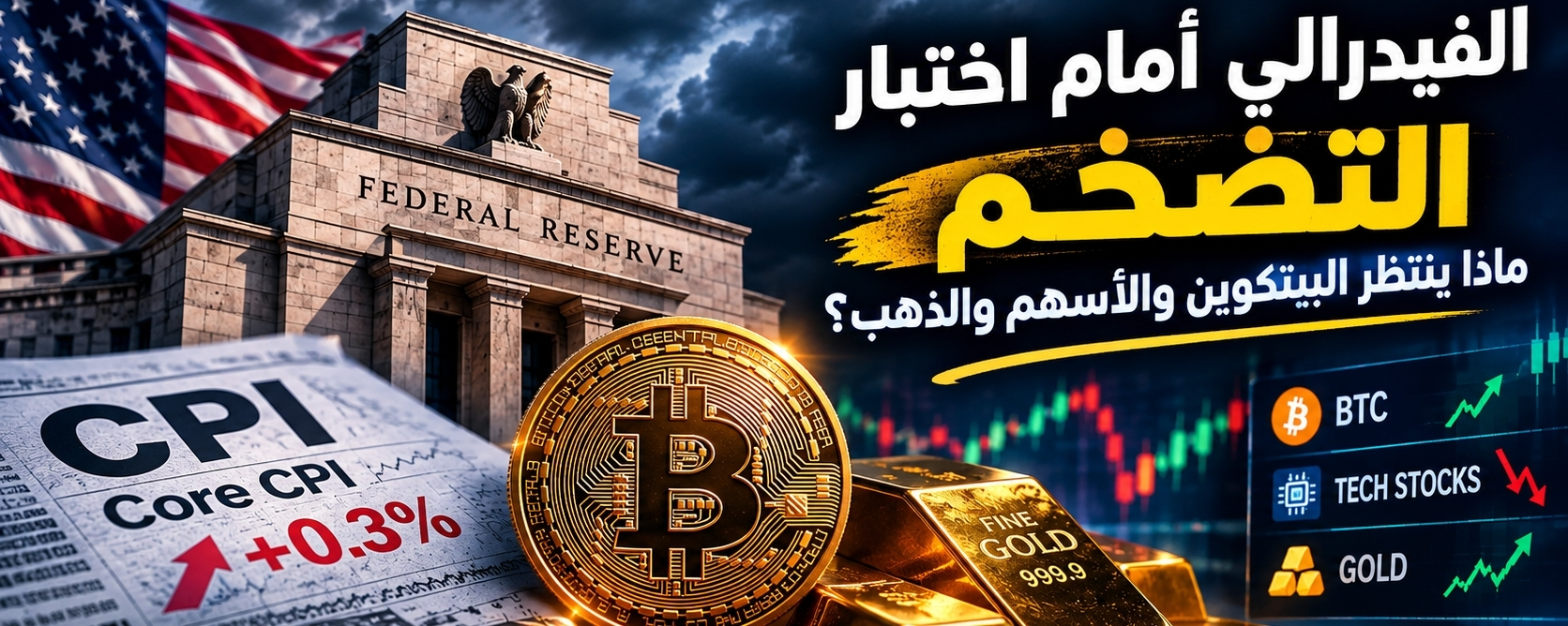

Markets’ focus today is on the U.S. Federal Reserve meeting, amid the return of inflationary pressures to the forefront after the release of August’s Consumer Price Index data.
The data showed that the core Consumer Price Index (Core CPI) rose by 0.3% month-on-month, exceeding expectations of 0.2%. Headline inflation also increased by 0.4% during the month, reaching 3.4% year-on-year.
These numbers pushed markets to raise their expectations for a 25-basis-point rate hike at the September meeting. Before the decision, market pricing pointed to nearly a 90% chance of a rate hike, with the target range expected to move to around 3.75%–4.00%.
Will the rate hike be a one-off move?
The most important question for investors isn’t just: Will the Fed raise rates?
But rather: what will happen next?
So if the rate hike comes alongside comments suggesting that inflation is still a problem and that more tightening is needed, markets may start pricing in the likelihood of continued hikes in upcoming meetings.
However, if the Fed views the recent rise in inflation as tied to temporary factors, the focus may be on the rate hike as a one-time precautionary step, waiting for the coming inflation and jobs data before making any further decisions.
The importance of this point grows further due to higher energy prices too, as oil has already broken above $100 per barrel—an issue that could increase inflationary pressures in the coming months.
What does the decision mean for Bitcoin?
Typically, higher interest rates create a tougher environment for high-risk assets, including Bitcoin, because higher yields on safe assets and tighter liquidity can reduce investors’ appetite for risk.
But there is an important factor:
If a rate hike is already expected and priced into the market, then the hike itself may not be the decisive factor.
Bitcoin’s reaction could be linked more to the Fed’s tone and its expectations for upcoming decisions.
Raising rates by 25 basis points with a signal that tightening may stop is fundamentally different from a similar hike paired with the indication that another hike could happen in December.
And tech stocks?
Tech stocks are especially sensitive to moves in interest rates and bond yields, because higher yields can weigh on company valuations—particularly for companies whose valuations rely more on expected future earnings.
And that’s why the continued rise in bond yields could weigh on the technology sector.
Nevertheless, ahead of the decision, markets demonstrated the ability to absorb expectations of a rate hike; the Nasdaq rose in Wednesday’s session before the decision, while major tech stocks continued to move with company results and also expectations for the AI sector.
And what about gold?
The picture for gold is more complicated.
In theory, higher rates and real yields increase the cost of holding a non-yielding asset like gold, which could put pressure on it.
Yet gold rose despite higher expectations for rate hikes, suggesting that investors are also watching inflation, geopolitical risks, fiscal policy, and confidence in currencies and markets.
That’s why gold’s reaction to a Fed decision may not be immediate or as straightforward as in some previous cycles.
The most important moment isn’t only the decision
A 25-basis-point rate hike may already be heavily expected.
That’s why the Fed’s statement language, its outlook for the rate path, and the press conference are among the key factors that could determine the direction of markets after the decision.
The market doesn’t trade only on what has happened, but also on what it expects to happen next.
If the Fed signals that inflation is still high and that additional tightening may be necessary, we may see pressure on high-risk assets, while the U.S. dollar and bond yields could benefit.
If, however, the message is more cautious about future increases, markets may revise their pricing of expectations—something that could show up differently in Bitcoin, stocks, and gold.
In the end, the decision on rates is the beginning of the move, not necessarily its end.
The real question for markets today is:
Are we facing a single rate hike to counter a temporary rise in inflation, or the start of a new phase of monetary tightening?