
灼见
944 Posts
灼见
灼见|K线只是表象,人心才是博弈的终点。
13年实战沉淀,拒绝废话,只做最硬核的技术拆解与宏观透视。帮你看清下一步。如果你厌倦了噪音,这里是你的最后一站。
Open Trade

BTC Holder
Occasional Trader
8.5 Years
437 Following
25.0K+ Followers
7.8K+ Liked
Posts
Portfolio
All
Quotes
Videos
Live

币圈现货小旋风
·
--
Spring, summer, autumn, and winter are full of worries over money; I roam everywhere in the four directions—east, south, west, and north. 🔥 I’ve tasted every kind of hardship in the coin world, just to never bow my head in front of people. 🔥 There is no way back in life—once the principal is gone, who can keep it? 🔥 Hoping the market will turn warm again, more take-profits and fewer worries. 🔥


悠哉独自在
·
--
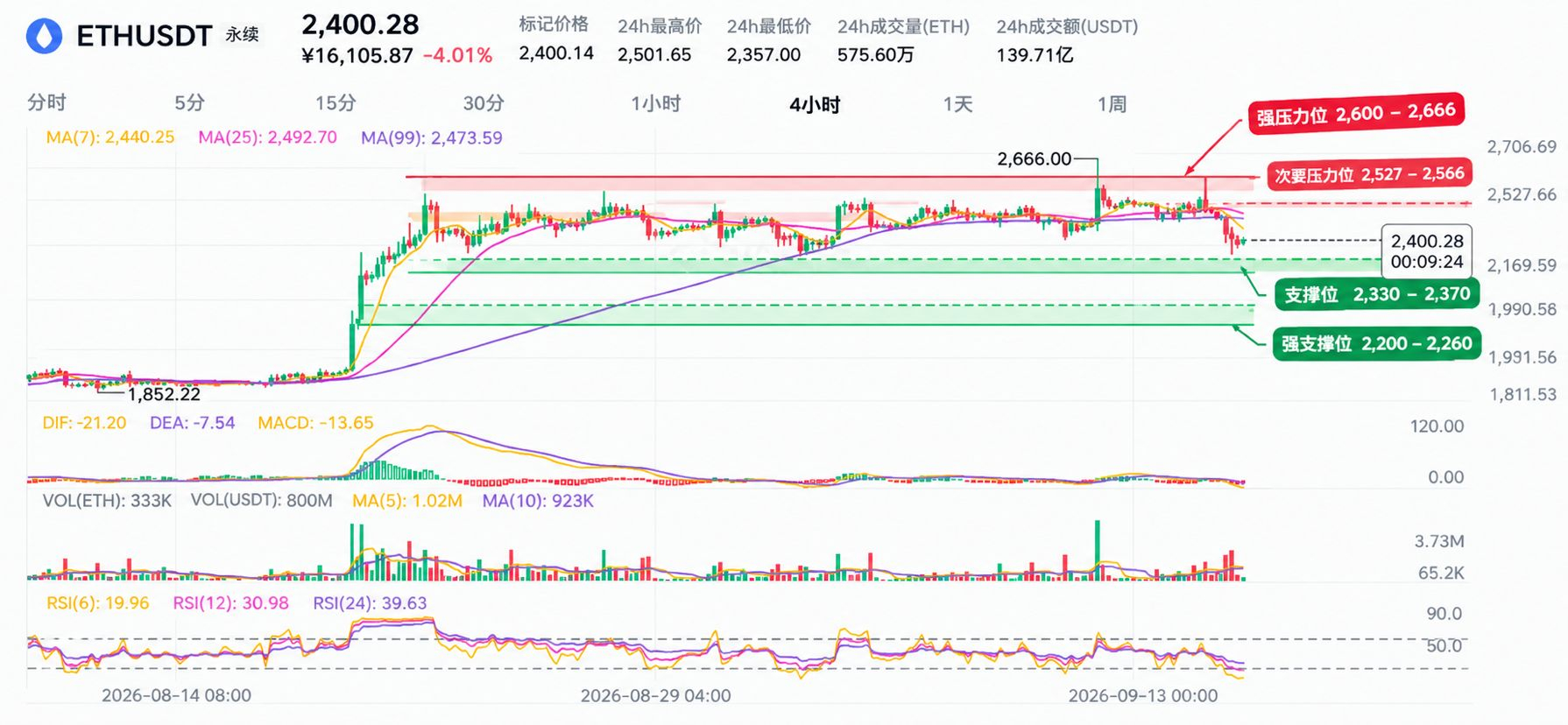
Bearish$ETH The CLARITY Act vote did not pass, with 49 votes in favor and 50 against — it was 11 votes short of the 60-vote threshold.
As soon as the news came out, the overnight market got slammed. BTC briefly fell below 75,000, ETH dipped to 2,358 at its lowest, and is now barely holding around 2,400, down 4% over the past 24 hours.
Looking at ETH’s current data, both bulls and bears are in a pretty awkward spot.
Combined with the liquidation map, there’s a heavy cluster of short liquidation orders above 2,500 to 2,550, while below 2,300 to 2,350 there’s also a big pile of long positions. With the price at 2,400 now, it’s right in the middle. No matter which way it moves, there are liquidation orders waiting to be triggered, so neither side has it easy.
On top of that, the Fed’s FOMC meeting is tonight, and the Bank of Japan is on Friday. There are major risks all around. The fact that the CLARITY Act didn’t pass has clearly hurt market sentiment in the short term, and crypto-related stocks in the U.S. stock market also got hit hard across the board.
Right now, I absolutely won’t buy the dip, and I also won’t chase the short. Both going long and going short are easy ways to get whipsawed here. I’m keeping my spot holdings and doing nothing, staying flat on futures, waiting for the Fed news tonight to land and seeing how the market digests it. If ETH can climb back above 2,450, that would mean the bearish news has mostly been priced in. If it breaks below 2,350 outright, then 2,300 below really becomes dangerous.
Did you get stopped out by last night’s sharp drop? Are you staying flat and waiting, or are you planning to gamble on the FOMC?
#ETH #When will the Fed cut interest rates?
As soon as the news came out, the overnight market got slammed. BTC briefly fell below 75,000, ETH dipped to 2,358 at its lowest, and is now barely holding around 2,400, down 4% over the past 24 hours.
Looking at ETH’s current data, both bulls and bears are in a pretty awkward spot.
Combined with the liquidation map, there’s a heavy cluster of short liquidation orders above 2,500 to 2,550, while below 2,300 to 2,350 there’s also a big pile of long positions. With the price at 2,400 now, it’s right in the middle. No matter which way it moves, there are liquidation orders waiting to be triggered, so neither side has it easy.
On top of that, the Fed’s FOMC meeting is tonight, and the Bank of Japan is on Friday. There are major risks all around. The fact that the CLARITY Act didn’t pass has clearly hurt market sentiment in the short term, and crypto-related stocks in the U.S. stock market also got hit hard across the board.
Right now, I absolutely won’t buy the dip, and I also won’t chase the short. Both going long and going short are easy ways to get whipsawed here. I’m keeping my spot holdings and doing nothing, staying flat on futures, waiting for the Fed news tonight to land and seeing how the market digests it. If ETH can climb back above 2,450, that would mean the bearish news has mostly been priced in. If it breaks below 2,350 outright, then 2,300 below really becomes dangerous.
Did you get stopped out by last night’s sharp drop? Are you staying flat and waiting, or are you planning to gamble on the FOMC?
#ETH #When will the Fed cut interest rates?
币圈现货小旋风
·
--
Spring, summer, autumn, and winter are full of worries over money; I roam everywhere in the four directions—east, south, west, and north. 🔥 I’ve tasted every kind of hardship in the coin world, just to never bow my head in front of people. 🔥 There is no way back in life—once the principal is gone, who can keep it? 🔥 Hoping the market will turn warm again, more take-profits and fewer worries. 🔥
白鲨观点VN
·
--
One evening, Lý Dương asked me:
“Mr. Bai, what does it take to be considered a good trader? Is it all about making a lot of money?”
I smiled: “Maybe not for sure.”
At the beginning, Lý Dương only had a few tens of thousands of dollars. He traded very carefully—if he made a profit, he felt happy; if he lost, he would look for the reasons. But when his account grew to a few hundred thousand dollars, everything gradually changed.
He traded more, with larger volumes. The profit of 5k—something that once made him happy—now felt too small. Losing 10k no longer led him to analyze; he only wanted to quickly make it back.
One day, he said: “Earlier, I traded to make money. Now I trade like I’m trying to prove that I’m right.”
I fell silent.
After that, Lý Dương started reducing the frequency and volume of his trades, pulling back some profits and spending more time on his life.
A few months later, he said: “I’m not making money as fast as before, but I sleep better.”
I thought, that’s the real maturity of a trader. Making money is a skill. Not letting money and emotions control you—that’s real class.
“Mr. Bai, what does it take to be considered a good trader? Is it all about making a lot of money?”
I smiled: “Maybe not for sure.”
At the beginning, Lý Dương only had a few tens of thousands of dollars. He traded very carefully—if he made a profit, he felt happy; if he lost, he would look for the reasons. But when his account grew to a few hundred thousand dollars, everything gradually changed.
He traded more, with larger volumes. The profit of 5k—something that once made him happy—now felt too small. Losing 10k no longer led him to analyze; he only wanted to quickly make it back.
One day, he said: “Earlier, I traded to make money. Now I trade like I’m trying to prove that I’m right.”
I fell silent.
After that, Lý Dương started reducing the frequency and volume of his trades, pulling back some profits and spending more time on his life.
A few months later, he said: “I’m not making money as fast as before, but I sleep better.”
I thought, that’s the real maturity of a trader. Making money is a skill. Not letting money and emotions control you—that’s real class.


Virus明哥
·
--
🧧🧧Actually, when you feel tired, it means you're walking a path that can only be completed through growth.


@奋斗Hustle1688
is speaking[LIVE] 🎙️ Build BNB together
2.7k listens

楠楠nannan势不可挡
·
--
🧧🧧🧧🧧🧧🧧🧧🧧🧧🧧🧧
Life isn’t a race—you don’t need to keep up with everyone’s pace. When you’re tired, slow down, take care of your emotions, and let ordinary days be warm enough. $BNB
Life isn’t a race—you don’t need to keep up with everyone’s pace. When you’re tired, slow down, take care of your emotions, and let ordinary days be warm enough. $BNB


英鸿³³₇
·
--
[Replay] 🎙️ The number of people in the square suddenly decreased—are you still there? bnb
02 h 22 m 56 s · 5.3k listens

Mira小白桃
·
--
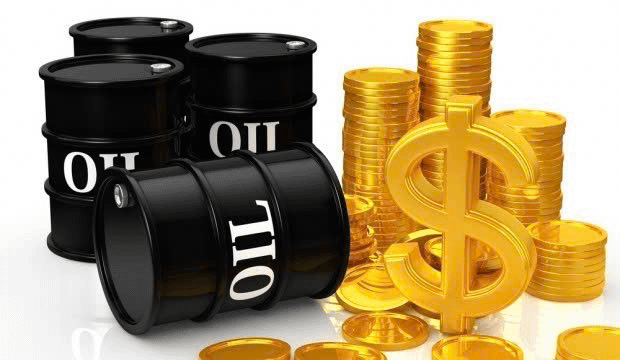
Crude Oil Rises—Why Is Gold Under Pressure Instead?
Recently, the market has been influenced at the same time by geopolitical risks, energy prices, and expectations for Federal Reserve policy.
At present, Brent crude is around $107, while WTI is around $105. Oil prices have remained at elevated levels. What the market is most worried about is not crude oil itself, but its impact on inflation expectations.
The logic is simple:
Oil prices rise → inflation pressure increases → the Fed’s room to cut rates is constrained → U.S. Treasury yields rise → gold comes under pressure.
So right now, gold is being pulled by two forces:
On one hand, safe-haven demand driven by geopolitical conditions supports gold;
On the other hand, higher oil prices boost inflation and rate-expectation pressures that suppress gold.
That’s also why you can’t simply understand it as:
“Geopolitical risk rises = gold must rise.”
In reality, gold’s short-term price action still depends on the U.S. dollar and U.S. Treasury yields.
Currently, the 10-year Treasury yield is already around 5%. If yields continue to move higher, gold’s short-term downside pressure could increase further.
Next, I will focus on three variables:
First, crude oil.
If oil prices keep rising quickly, inflation expectations may heat up further.
Second, Treasury yields.
If the 10-year yield keeps moving higher, gold may continue to be weighed down.
Third, the Federal Reserve.
Today’s FOMC rate decision is only the first step; more important is the policy guidance/signals after the meeting.
If the Fed releases more hawkish signals:
A stronger dollar and firmer yields → gold faces pressure.
If the policy statement is not as hawkish as the market expected:
Yields fall back → gold receives support.
So my view on gold now won’t be based solely on geopolitical news.
Crude oil determines inflation expectations, interest rates determine the cost of capital, and risk-off/safe-haven sentiment determines how much support is underneath gold.
Only when all three factors move at the same time is the key to understanding this round of the gold market.
$XAU
$CL
$BZ
Recently, the market has been influenced at the same time by geopolitical risks, energy prices, and expectations for Federal Reserve policy.
At present, Brent crude is around $107, while WTI is around $105. Oil prices have remained at elevated levels. What the market is most worried about is not crude oil itself, but its impact on inflation expectations.
The logic is simple:
Oil prices rise → inflation pressure increases → the Fed’s room to cut rates is constrained → U.S. Treasury yields rise → gold comes under pressure.
So right now, gold is being pulled by two forces:
On one hand, safe-haven demand driven by geopolitical conditions supports gold;
On the other hand, higher oil prices boost inflation and rate-expectation pressures that suppress gold.
That’s also why you can’t simply understand it as:
“Geopolitical risk rises = gold must rise.”
In reality, gold’s short-term price action still depends on the U.S. dollar and U.S. Treasury yields.
Currently, the 10-year Treasury yield is already around 5%. If yields continue to move higher, gold’s short-term downside pressure could increase further.
Next, I will focus on three variables:
First, crude oil.
If oil prices keep rising quickly, inflation expectations may heat up further.
Second, Treasury yields.
If the 10-year yield keeps moving higher, gold may continue to be weighed down.
Third, the Federal Reserve.
Today’s FOMC rate decision is only the first step; more important is the policy guidance/signals after the meeting.
If the Fed releases more hawkish signals:
A stronger dollar and firmer yields → gold faces pressure.
If the policy statement is not as hawkish as the market expected:
Yields fall back → gold receives support.
So my view on gold now won’t be based solely on geopolitical news.
Crude oil determines inflation expectations, interest rates determine the cost of capital, and risk-off/safe-haven sentiment determines how much support is underneath gold.
Only when all three factors move at the same time is the key to understanding this round of the gold market.
$XAU
$CL
$BZ

乘风Sunshine
·
--
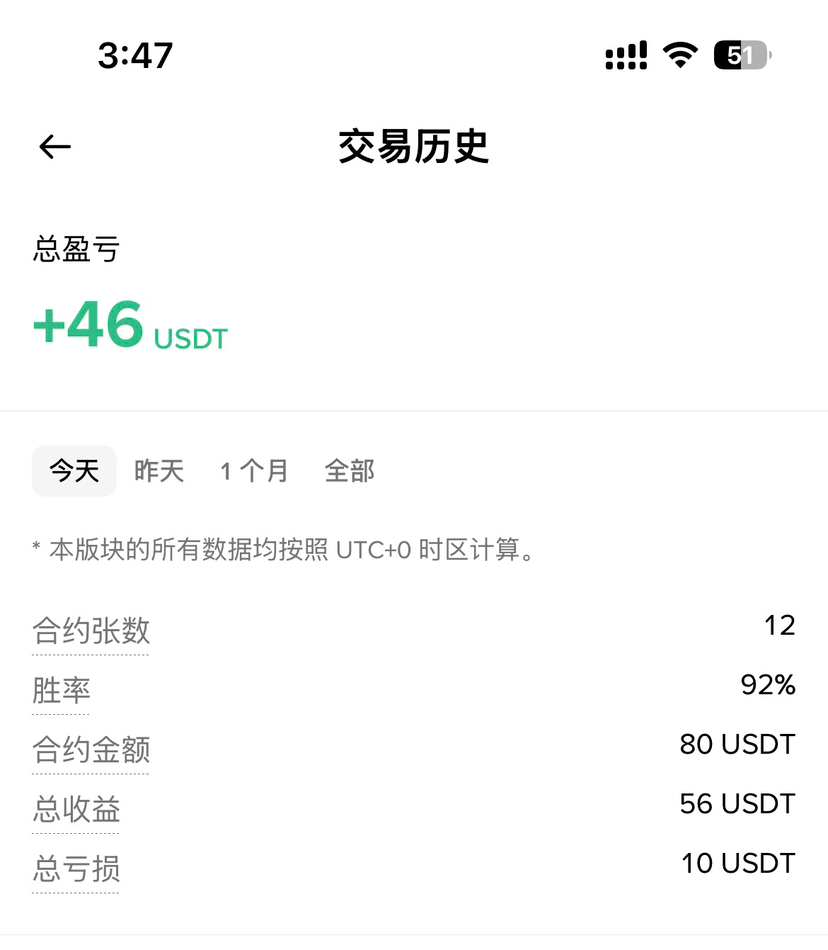
Combat power is still recovering. Number 12 clears number 11 alone—I'll be back to stream once I'm recovered, brothers. (ps: The estimated stream times are still the old schedule: 7 AM, 3 PM for event contracts, and 10 PM for perpetual contracts.)



好运来Hawk
·
--
Bullish$Hawk 佛 only guides those who are destined/“fated” to it! #Hawk doesn’t expect everyone to understand it or be able to hold onto it!
#Hawk only guides those who have wisdom and are worthy of it❗️
#Hawk only guides those who have wisdom and are worthy of it❗️



貓咪喵 Hawk
·
--
#Hawk
No matter if you’re a bull or a bear,
if you’re an eagle, I’m a cat—my little kitty.
No matter if you’re a bull or a bear,
if you’re an eagle, I’m a cat—my little kitty.



圣克斯Lucky1688
·
--
🧧🎁🧧🎁🧧🎁
On September 17, the crypto industry saw multiple highly关注able sector updates and events. The core news mainly centered on regulatory roundtables, traditional financial giants entering the space, and industry summits, among other topics:
1. The U.S. SEC holds a 24-hour on-chain stock trading roundtable
On September 17, the U.S. Securities and Exchange Commission (SEC) hosted an important roundtable on “24-hour on-chain stock trading.” The meeting invited traditional financial giants such as BlackRock, Nasdaq, the New York Stock Exchange, and Robinhood, along with crypto industry participants and institutions.
Key agenda: The meeting aims to discuss the rule framework for enabling U.S. equities to settle on-chain 24/7.
Technology route competition: The market is currently focused on which blockchain—Ethereum or Solana—will take on the role of the primary underlying settlement infrastructure. Solana holds an advantage in terms of tokenized U.S. stock volume and low fees, while Ethereum is favored by traditional finance due to its deep institutional compliance foundation (such as BlackRock’s BUIDL fund).
2. The Fourth U.S. Crypto Banking, Compliance & Stablecoin Summit (CBC Summit USA) kicks off
The 4th annual CBC Summit USA was held on September 17 at the National Press Club in Washington, D.C.
Main focus: This summit brings together senior executives, regulators, and lawmakers across the industry. Key topics include crypto banking services, compliance frameworks, stablecoin development, and the deep integration of traditional finance with Web3.
3. Deeper cooperation between traditional industries and Web3 infrastructure
Hyundai explores the Avalanche ecosystem: After successfully completing a pilot project, Hyundai is considering further expanding its related business and applications on the Avalanche (Avalanche Protocol) blockchain.
Circle Arc mainnet goes live: Stablecoin issuer Circle’s Arc mainnet recently launched and has introduced support from payment giants such as Visa and Mastercard, injecting new momentum into the Web3 payments sector.
Overall, the Web3 industry updates on September 17 show that traditional financial regulators and Wall Street capital are accelerating the process of bringing assets on-chain and strengthening compliance.
Follow me—answer 1 will take away the $SOL red envelope.
🧧🎁🧧🎁🧧🎁
On September 17, the crypto industry saw multiple highly关注able sector updates and events. The core news mainly centered on regulatory roundtables, traditional financial giants entering the space, and industry summits, among other topics:
1. The U.S. SEC holds a 24-hour on-chain stock trading roundtable
On September 17, the U.S. Securities and Exchange Commission (SEC) hosted an important roundtable on “24-hour on-chain stock trading.” The meeting invited traditional financial giants such as BlackRock, Nasdaq, the New York Stock Exchange, and Robinhood, along with crypto industry participants and institutions.
Key agenda: The meeting aims to discuss the rule framework for enabling U.S. equities to settle on-chain 24/7.
Technology route competition: The market is currently focused on which blockchain—Ethereum or Solana—will take on the role of the primary underlying settlement infrastructure. Solana holds an advantage in terms of tokenized U.S. stock volume and low fees, while Ethereum is favored by traditional finance due to its deep institutional compliance foundation (such as BlackRock’s BUIDL fund).
2. The Fourth U.S. Crypto Banking, Compliance & Stablecoin Summit (CBC Summit USA) kicks off
The 4th annual CBC Summit USA was held on September 17 at the National Press Club in Washington, D.C.
Main focus: This summit brings together senior executives, regulators, and lawmakers across the industry. Key topics include crypto banking services, compliance frameworks, stablecoin development, and the deep integration of traditional finance with Web3.
3. Deeper cooperation between traditional industries and Web3 infrastructure
Hyundai explores the Avalanche ecosystem: After successfully completing a pilot project, Hyundai is considering further expanding its related business and applications on the Avalanche (Avalanche Protocol) blockchain.
Circle Arc mainnet goes live: Stablecoin issuer Circle’s Arc mainnet recently launched and has introduced support from payment giants such as Visa and Mastercard, injecting new momentum into the Web3 payments sector.
Overall, the Web3 industry updates on September 17 show that traditional financial regulators and Wall Street capital are accelerating the process of bringing assets on-chain and strengthening compliance.
Follow me—answer 1 will take away the $SOL red envelope.
🧧🎁🧧🎁🧧🎁



K大宝
·
--
[Replay] 🎙️ Maintain ecological balance and build the Binance Plaza
04 h 11 m 57 s · 7.7k listens

光明社区-阿波罗
·
--
Riding the waves to迎光, embarking on new horizons, together we reach far, and open a brilliant new chapter.
Ride the waves, embrace light, and stride toward a brilliant future.
Ride the waves, embrace light, and stride toward a brilliant future.


燕寶Melissa
·
--
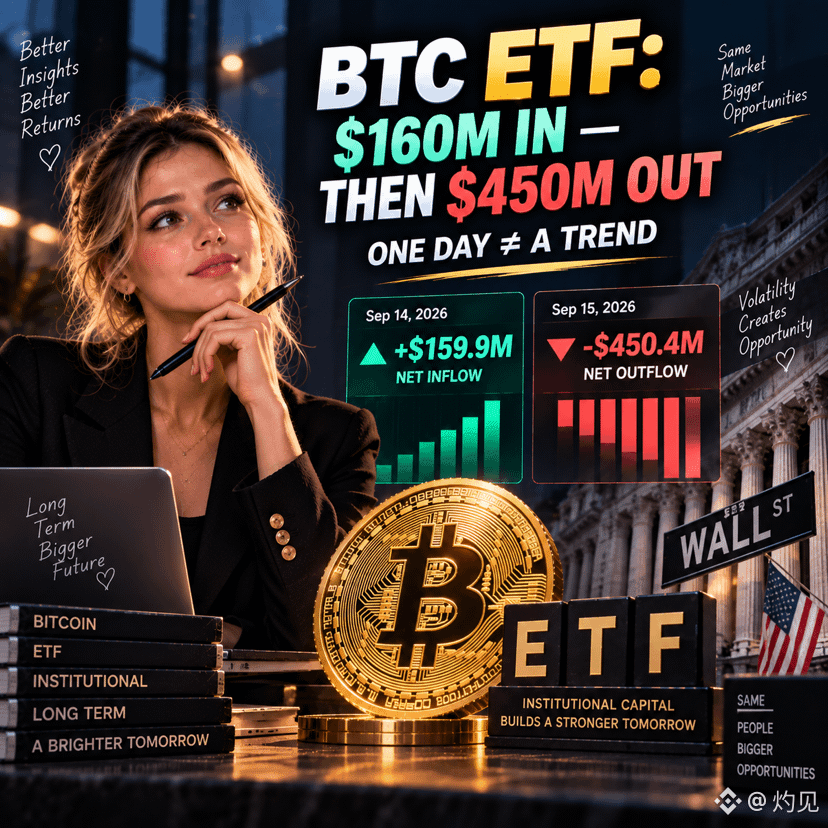
Bearish🚀 ETF Store CEO: The Crypto Future Isn’t Determined by a Single Bill!
The “Clarity Act” will affect market sentiment for crypto, but it isn’t the only variable that determines the industry’s future.
ETF Store CEO Nate Geraci says:
Even if the “Clarity Act” can’t secure enough votes this week to move forward, the crypto industry’s progress won’t come to a halt.
The reason is simple—
The pace of market innovation is always faster than the pace of regulatory legislation.
Under the Trump administration’s environment, the SEC and CFTC may still use existing regulatory authority to drive the digital asset industry forward.
The real force that will change the financial system comes not only from policy documents, but from:
✅ Institutional capital continuing to flow in
✅ The capital bridge created by BTC ETFs
✅ Upgrades to on-chain financial infrastructure
✅ AI × Web3 fusion and innovation
✅ The global trend toward digitizing assets
The “Clarity Act” is more like an “accelerator” — boosting market confidence and helping the industry develop more smoothly.
But Crypto’s big-picture trajectory won’t pause because of a single bill.
As traditional finance gradually embraces blockchain, the upgrade to the future financial system may already be quietly underway.
#比特币下跌4%
$BTC
$ETH
$BNB
The “Clarity Act” will affect market sentiment for crypto, but it isn’t the only variable that determines the industry’s future.
ETF Store CEO Nate Geraci says:
Even if the “Clarity Act” can’t secure enough votes this week to move forward, the crypto industry’s progress won’t come to a halt.
The reason is simple—
The pace of market innovation is always faster than the pace of regulatory legislation.
Under the Trump administration’s environment, the SEC and CFTC may still use existing regulatory authority to drive the digital asset industry forward.
The real force that will change the financial system comes not only from policy documents, but from:
✅ Institutional capital continuing to flow in
✅ The capital bridge created by BTC ETFs
✅ Upgrades to on-chain financial infrastructure
✅ AI × Web3 fusion and innovation
✅ The global trend toward digitizing assets
The “Clarity Act” is more like an “accelerator” — boosting market confidence and helping the industry develop more smoothly.
But Crypto’s big-picture trajectory won’t pause because of a single bill.
As traditional finance gradually embraces blockchain, the upgrade to the future financial system may already be quietly underway.
#比特币下跌4%
$BTC
$ETH
$BNB

·
--
🎙️ The number of people in the square suddenly decreased—are you still there? bnb

End
02 h 22 m 56 s
5.2k
32

CJ_GraceWang1688
·
--
🎁🎁
Watching others eat meat~#Zcash上涨6%
$ZEC
Are you on board?
Watching others eat meat~#Zcash上涨6%
$ZEC
Are you on board?
心月势不可挡
·
--
It isn’t a flood of panic to raise interest rates, but it will change the price of capital and the ranking of assets.
In a low-interest-rate environment, many assets can be supported by liquidity; once rates rise, the market will evaluate profits, valuations, and risks more seriously. For investors, what truly matters isn’t predicting every rate hike, but assessing whether the interest-rate core will remain higher for the long term—and whether corporate earnings can absorb the increase in funding costs.
In a low-interest-rate environment, many assets can be supported by liquidity; once rates rise, the market will evaluate profits, valuations, and risks more seriously. For investors, what truly matters isn’t predicting every rate hike, but assessing whether the interest-rate core will remain higher for the long term—and whether corporate earnings can absorb the increase in funding costs.


Log in to explore more content