

There’s one habit that I think is fairly common in the crypto world. We buy BTC because we believe its price still has a story to tell. Buy ETH because we want to hold long-term. Keep BNB because it’s something that’s often used. Or have USDT and USDC that are deliberately set aside to wait for the next opportunity.
And after that?
Yeah, that’s it. Just keep it.
Every once in a while, open the wallet. Check the balance. Close it again.
I also used to see crypto kind of like that. As long as the assets aren't ready to be sold, it feels like it’s fine just to keep them. But then, if we already have a plan to hold, there’s a question that’s actually quite interesting:
Why not make idle assets more productive?
This is where Binance Earn starts to look interesting to me.
Not because Earn makes us rich overnight—definitely not that. What’s interesting is how Binance Earn gives several options for managing the assets we already have, including through Simple Earn with Flexible Products and Locked Products. Right now, Binance Earn also supports hundreds of crypto assets, although the available assets and products still depend on the product and the user’s region.
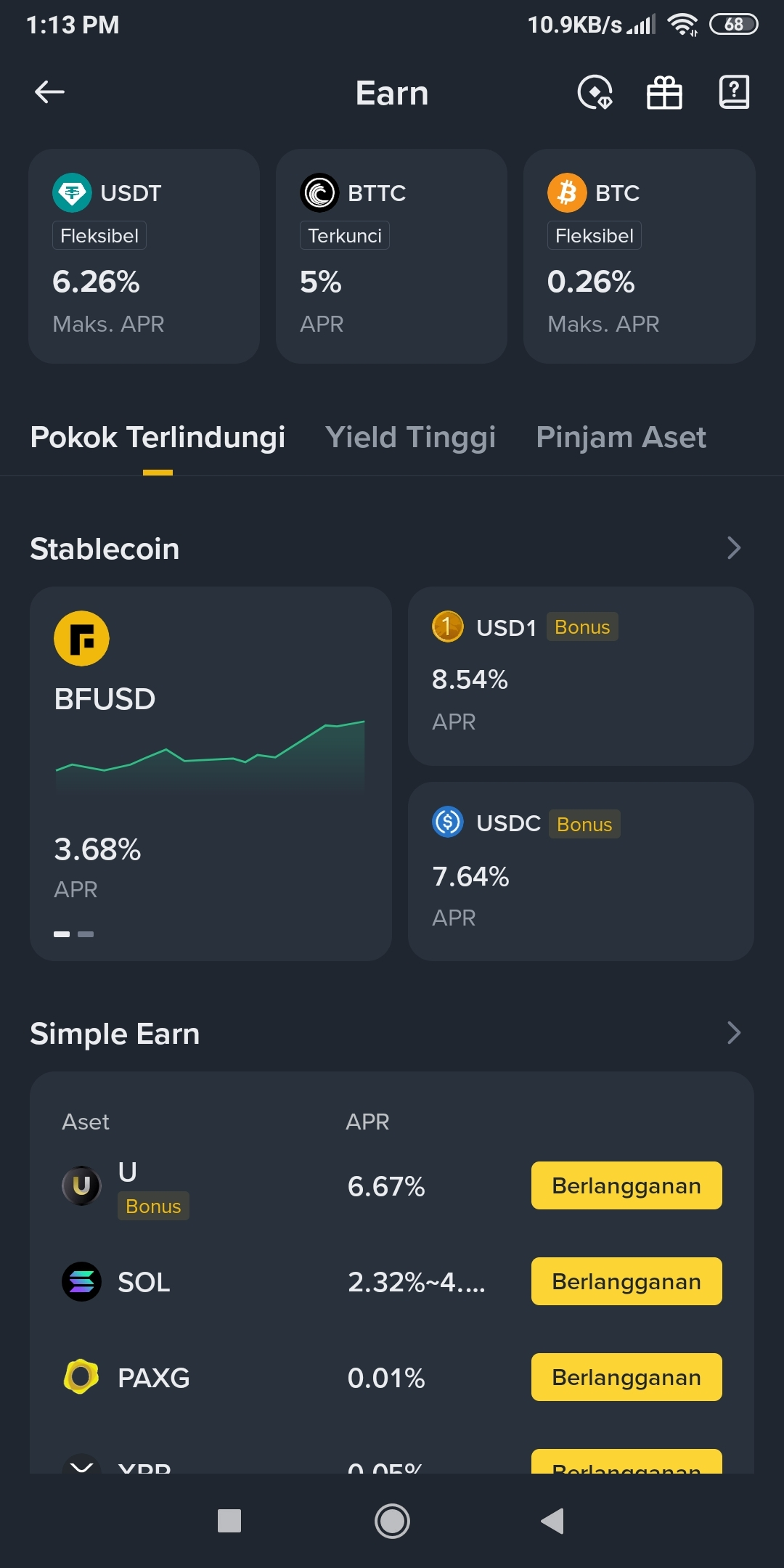
Binance Earn home page
It’s not only about “what percent can I get?”
When you open the Earn page, the first thing that might catch your attention is APR. It’s only natural for our eyes to automatically look for the biggest number.
But here, I feel many people can easily lose focus.
In my opinion, the first question shouldn’t be “Which one has the highest APR?”
The question is:
“What do I actually want to do with this asset?”
For example, I have BTC that I don’t plan to sell anytime soon. Or I have ETH that I want to hold. There are also USDT or USDC that aren’t being used yet.
If that asset will indeed stay in the portfolio, I can start by checking whether there’s an Earn product that fits.
So the idea isn’t to change your investment strategy into chasing rewards. It’s simpler than that.
For the assets you do want to hold, find a way to manage them so they don’t just sit idle.
And in my opinion, this is one side of Binance Earn that’s often overlooked.
💎 Hidden Gem #1 — Simple Earn turns out to be quite flexible
For those who are new to Binance Earn, I’d actually recommend starting by looking at Simple Earn first.
Simple Earn allows users to add assets into products with flexible or locked periods. In Flexible Products, users can subscribe and start earning rewards every minute. Meanwhile, Locked Products use a specific time period with a different reward mechanism.
Simple Earn page showing available products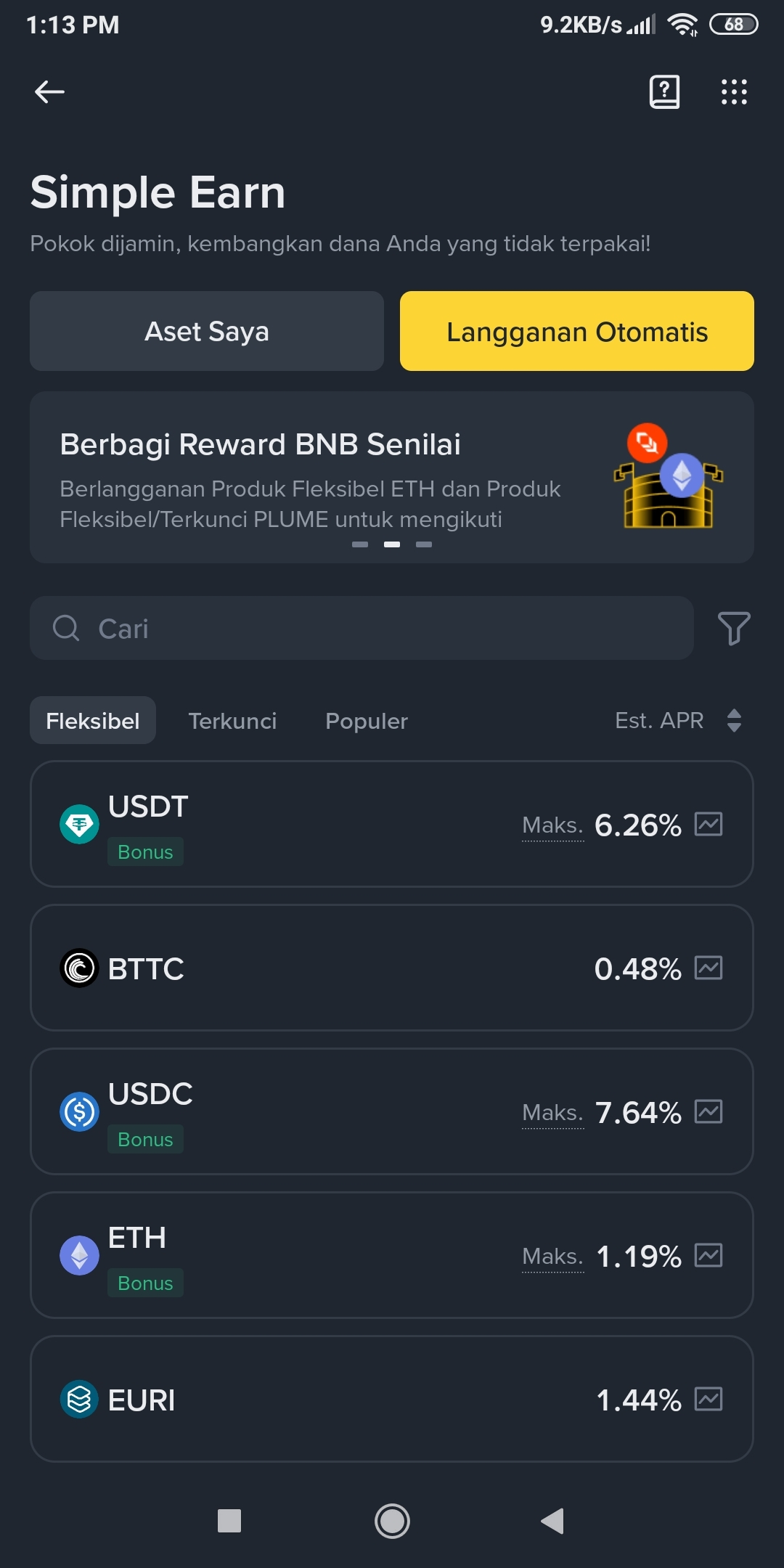
Here we start to see that not all assets have to be treated the same way.
BTC has its own characteristics.
ETH is also different.
BNB has its own ecosystem.
Meanwhile, USDT or USDC could be used for different needs than assets like BTC and ETH.
So I’m not really a fan of the approach of “all assets going into the same product.”
It makes more sense if each asset has a purpose. Some assets are for trading. Some are for holding. And some are intentionally kept as reserves.
And if there’s an Earn product that fits, then part of the assets that are currently not being used can be considered to generate rewards.
💎 Hidden Gem #2 — Flexible doesn’t mean “no rules”
The name Flexible sounds comfortable. And there’s a reason for that.
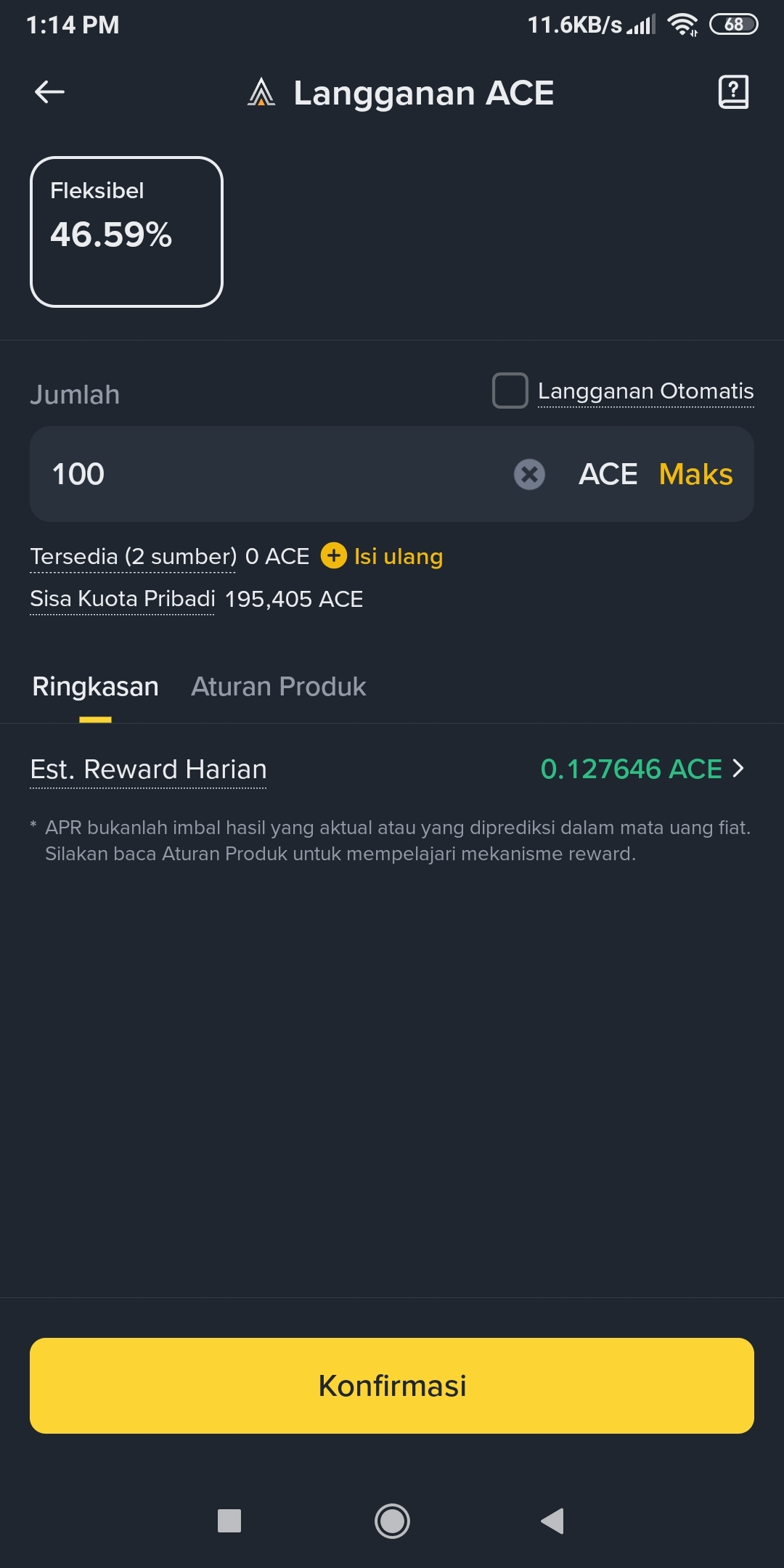
Binance explains that Flexible Products can be unsubscribed at any time, and Real-Time APR rewards can accumulate every minute. But there are also daily redemption limits, and in certain conditions the redemption process can be delayed.
Flexible Product details, including APR, Subscribe, and redemption information
This is the part I think is really important to understand before clicking Subscribe.
Flexible doesn’t mean we can treat the asset exactly the same as Spot balance that’s always freely usable without any conditions.
There are product rules. There are limits. And there are certain conditions that can affect the redemption process.
Even Binance explains that Flexible assets used as collateral for a Binance Flexible Loan can’t be redeemed until the loan is repaid and the collateral is released.
So if I use Flexible, I’ll still read the product details. Because “flexible” doesn’t mean “without rules.”
Flexible means different access options and different time periods from the locked products.
💎 Hidden Gem #3 — Locked can be attractive if you don’t need the assets
Now we move on to Locked Products. The concept is easier.
We agree to lock assets for a certain period, then receive rewards based on the terms of that product. Binance itself explains that Locked Products offer specific lock periods and different reward structures.
Example details of a Locked Product with different lock period options
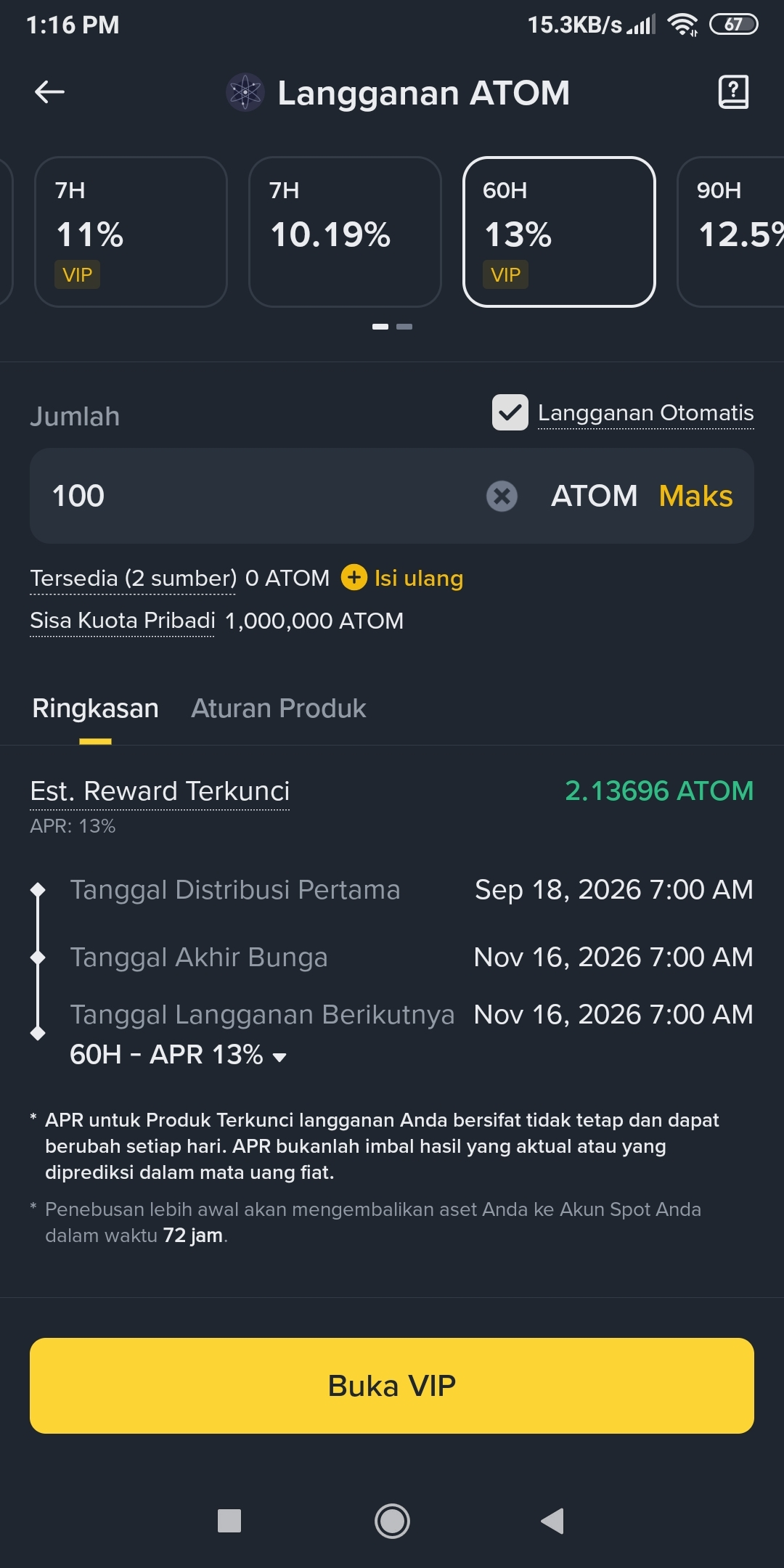
In my opinion, Locked is not something you need to fear.
What should be avoided is locking assets without knowing when you’ll need them again.
For example, there’s ETH that I won’t use for a few months. Or part of my assets that I intentionally separated from my trading funds.
In a situation like that, a product with a lock period might be worth considering.
But what if that money might be used next week? Then I personally would think twice.
Because getting extra rewards isn’t that meaningful if a few days later we suddenly need those assets and only then realize there are consequences of early redemption.
Liquidity also has value.
This is sometimes forgotten when we only look at the APR number.
💎 Hidden Gem #4 — Small features that can actually change habits
There’s one Binance Earn feature that I find quite interesting and often gets missed: Auto-Subscribe.
Binance explains that Auto-Subscribe allows idle assets in your Spot Account to automatically enter Simple Earn products that meet the requirements, or it updates your subscription to a Locked Product with the same duration when the previous period ends.
Auto-Subscribe settings, or an Earn page that shows Auto-Subscribe options
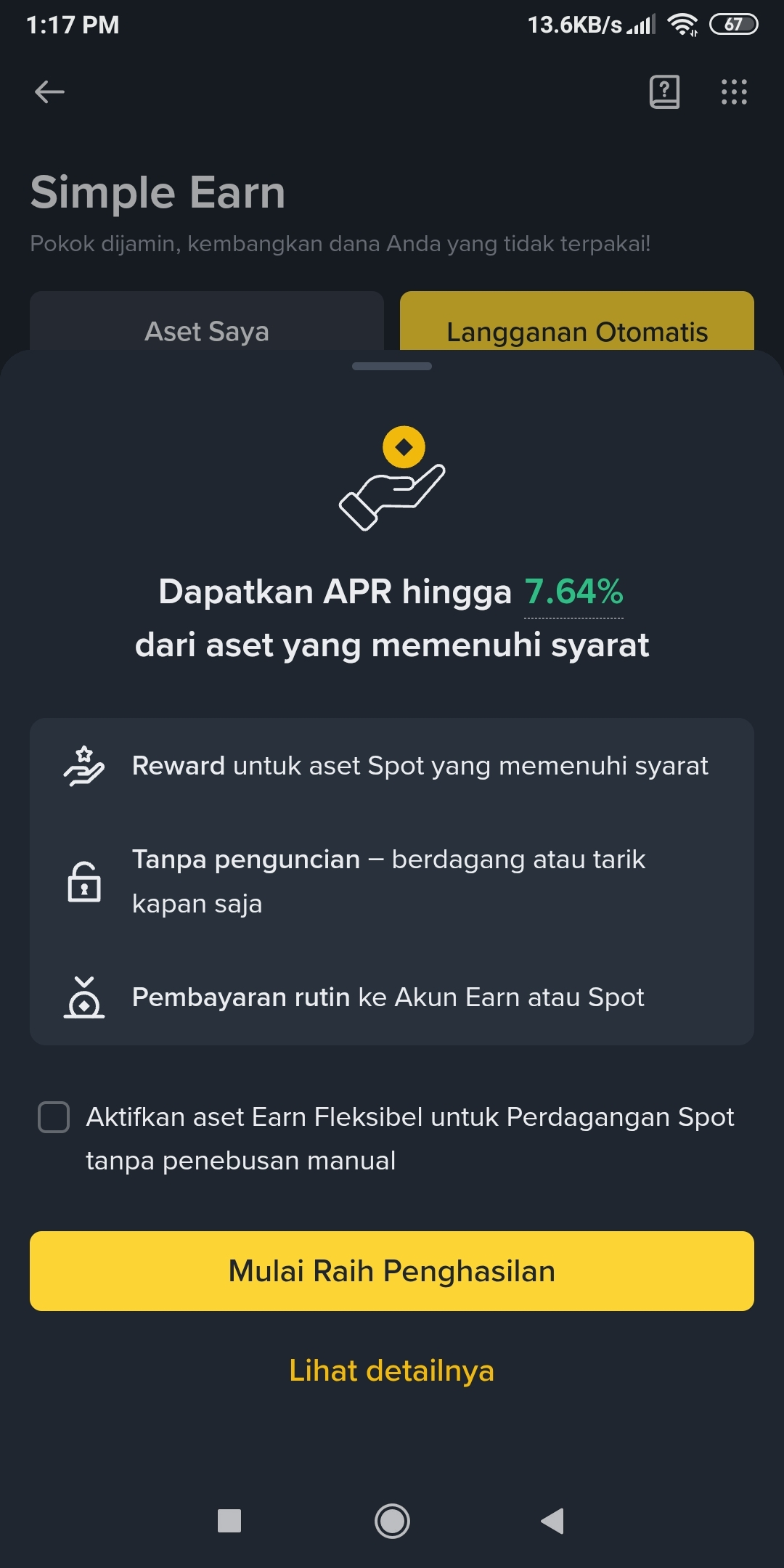
For me, this is interesting not because it sounds sophisticated. Rather, because it’s simple.
We often end up with assets that just sit in the Spot Wallet because we forgot to manage them.
Tomorrow, forget.
Next week, forgot.
Next month, forgot.
With features like Auto-Subscribe, some of those processes can be made more automatic for qualifying products.
Of course, automatic doesn’t mean we can stop paying attention to the account. I’ll keep checking the product, the reward rate, and its terms periodically.
So, don’t just look at the APR number
This is probably the part I want to emphasize the most.
When you open Binance Earn and see lots of reward options, the first temptation is definitely to look for the biggest number.
But I’ll do the opposite. I start with the asset. Then the goal. Only after that do I look at the product.
For example:
BTC: is it meant to be held, or is it still possible to use it for trading?
ETH: is there a plan to use those assets soon or not?
BNB: is there any other reason to keep it in the Binance ecosystem?
USDT/USDC: are you waiting for an entry, or do you simply not have a need for it in the near future?
After that question is answered, that’s when I look at the available Earn products.
Because a reward that looks big isn’t necessarily suitable for our needs.
And there’s one thing you must not confuse:
More rewards doesn’t necessarily mean the portfolio value will definitely rise.
If we earn rewards in BTC, the amount of BTC we hold can increase. But the price of BTC versus USDT can still move up or down.
The same applies to other crypto assets.
Binance itself warns that the price of virtual assets can be highly volatile, and their value can go up or down.
So don’t see Binance Earn as a profit machine without risk.
It’s better to think of it as one of the tools to manage the assets we already have.
My way of looking at Binance Earn
If I had to summarize it, I don’t see Binance Earn as a place to chase the highest APR.
I prefer to think of it like this:
Trading is for when we actually want to trade.
Holding is used when we truly believe we want to keep an asset.
And Earn can be one way to make currently unused assets more productive, as long as the product and its risks are indeed a match.
That’s why, in my view, the term “Hidden Gem” is pretty intriguing.
Not because Binance Earn is some secret feature. The feature is clearly there in Binance. What’s often hidden is its potential in our own routines.
We’re too busy staring at the BTC chart. Too busy waiting for an ETH breakout. Too busy hunting for the next altcoin. Meanwhile, there are assets we already own that might just sit there doing nothing.
But maybe what we need to do isn’t always finding new assets.
Sometimes we only need to manage the assets we already have, better.
And before choosing any product, don’t forget to check the latest details like APR, lock period, redemption, eligibility, and other terms. Products and availability can change over time.
Because in the end, maximizing assets doesn’t mean chasing the highest rewards.
To maximize assets means knowing:
this asset is mine—what’s the purpose, when do I need it, and how can I manage it in a more reasonable way.
That’s what makes Binance Earn worth taking a look at, in my opinion. Not as a shortcut. But as one of the tools along our crypto journey.