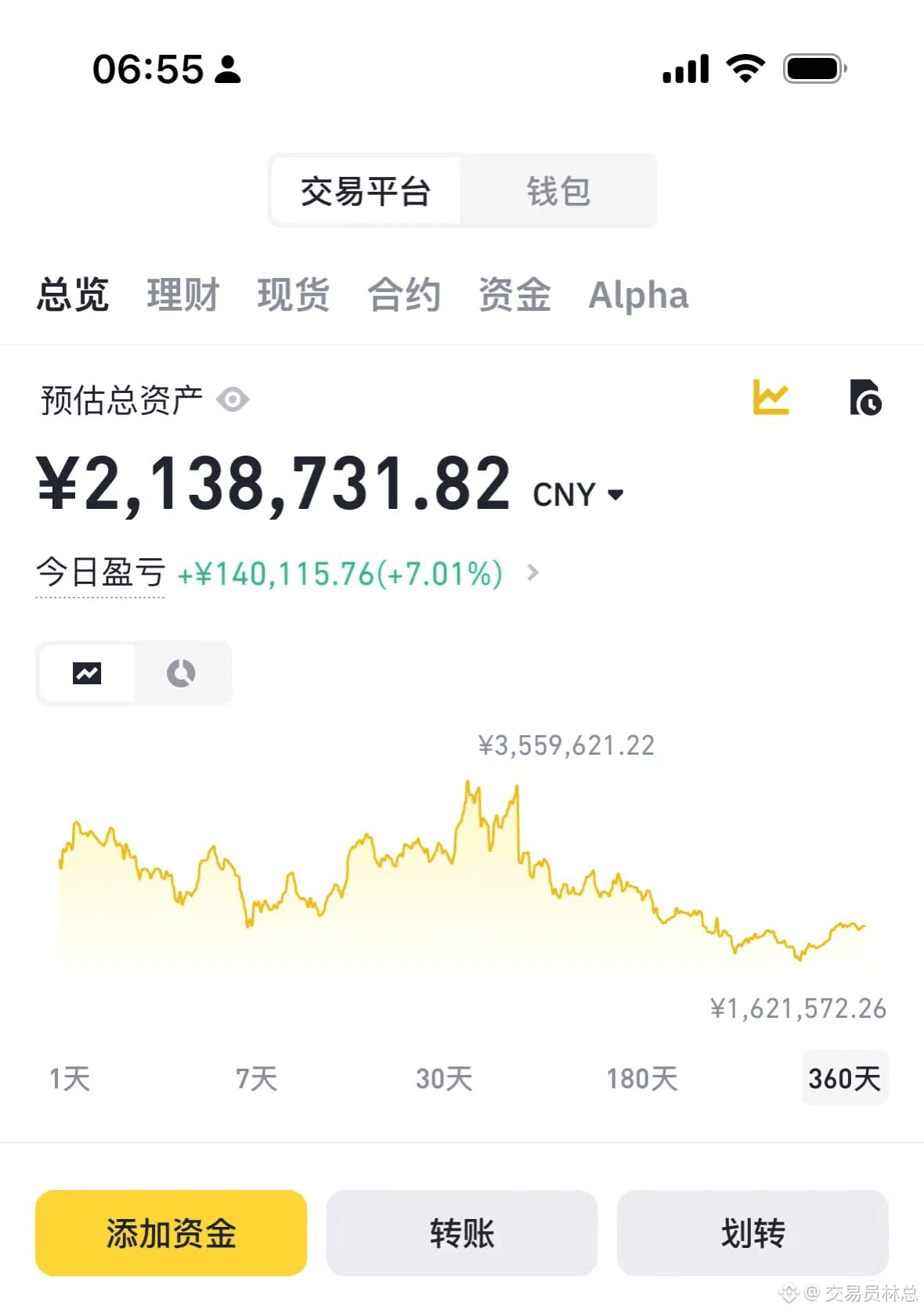
The money you’ve earned is always reluctant to take out, and in the end you may only have a few profitable screenshot images.
Last year, there was a friend of mine who put in 10,000 U. He caught a good run of the market and built his account all the way up to 50,000 U. During that time, he was especially upbeat—every few days he’d show off his returns. When people asked, he’d just say, “It’s already over 50,000.”
I asked him, “How much are you planning to take out first?”
He said, “Not yet. The market hasn’t finished.”
Later, when the account dropped to 40,000, he thought it was a normal adjustment. When it fell to a bit over 30,000, he started waiting for a rebound before cutting down. He kept dragging it on and on until most of the earlier profits he’d made got given back.
After we ate together again, he was still going on about it: “If I’d taken out 20,000 back then, no matter what happened later, at least I would have left that portion of money behind.”
When he was at 50,000, all he could think about was how much more he could make. He simply couldn’t bear to take even a little off his position.
Many people have this problem. If they lose a little, they feel pained; but if they’ve gained a long stretch, they actually think they can keep pushing higher.
When 10,000 grows to 20,000, they start thinking about 30,000. When they truly reach 30,000, they focus on 50,000. And once the account has 50,000, 100,000 suddenly seems not that far away.
The target keeps getting raised higher and higher, but the act of locking in gains keeps getting postponed.
Yet as long as the money stays tied up in positions, you have to endure the next round of volatility. Even if you’ve already closed and secured the profits, if you use all of it to open new trades, you might lose it all again in the subsequent transactions.
So my habit is simple: after a streak of continuous gains, I兑现 a portion of the profits, then take out part of it as well. I don’t keep adding more into trading.
The amount doesn’t need to be big—just leave yourself a tangible portion of your real gains. The remaining funds follow the plan. If it keeps going up later, and I earn a little less, I accept it. And if the market pulls back, I don’t have to watch all the profits shrink together.
Market moves back and forth—this is normal. The money you’ve earned doesn’t have to be all used to ride out the roller coaster with the positions. After trading for so long, I’m no longer that stubborn about selling at the very highest point. After one market cycle ends, the amount of money I truly have left in hand—no matter how high the account used to reach—makes me feel much more at ease. @交易员林总 $AKE
Last year, there was a friend of mine who put in 10,000 U. He caught a good run of the market and built his account all the way up to 50,000 U. During that time, he was especially upbeat—every few days he’d show off his returns. When people asked, he’d just say, “It’s already over 50,000.”
I asked him, “How much are you planning to take out first?”
He said, “Not yet. The market hasn’t finished.”
Later, when the account dropped to 40,000, he thought it was a normal adjustment. When it fell to a bit over 30,000, he started waiting for a rebound before cutting down. He kept dragging it on and on until most of the earlier profits he’d made got given back.
After we ate together again, he was still going on about it: “If I’d taken out 20,000 back then, no matter what happened later, at least I would have left that portion of money behind.”
When he was at 50,000, all he could think about was how much more he could make. He simply couldn’t bear to take even a little off his position.
Many people have this problem. If they lose a little, they feel pained; but if they’ve gained a long stretch, they actually think they can keep pushing higher.
When 10,000 grows to 20,000, they start thinking about 30,000. When they truly reach 30,000, they focus on 50,000. And once the account has 50,000, 100,000 suddenly seems not that far away.
The target keeps getting raised higher and higher, but the act of locking in gains keeps getting postponed.
Yet as long as the money stays tied up in positions, you have to endure the next round of volatility. Even if you’ve already closed and secured the profits, if you use all of it to open new trades, you might lose it all again in the subsequent transactions.
So my habit is simple: after a streak of continuous gains, I兑现 a portion of the profits, then take out part of it as well. I don’t keep adding more into trading.
The amount doesn’t need to be big—just leave yourself a tangible portion of your real gains. The remaining funds follow the plan. If it keeps going up later, and I earn a little less, I accept it. And if the market pulls back, I don’t have to watch all the profits shrink together.
Market moves back and forth—this is normal. The money you’ve earned doesn’t have to be all used to ride out the roller coaster with the positions. After trading for so long, I’m no longer that stubborn about selling at the very highest point. After one market cycle ends, the amount of money I truly have left in hand—no matter how high the account used to reach—makes me feel much more at ease. @交易员林总 $AKE