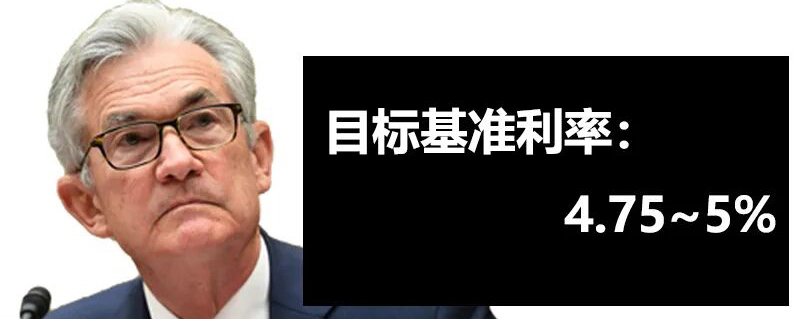
The market has essentially already made the decision for Waller. On the eve of the decision, the CME “FedWatch” tool showed a 92.5% probability of a 25-basis-point rate hike in September, and only a 7.5% probability of keeping rates unchanged. The target range for the federal funds rate will be raised from the current 3.50%–3.75% to 3.75%–4.00%.
But what the market is truly waiting for isn’t these 25 basis points. What will actually drive the next phase of global bond markets, the FX market, and risk assets is whether Waller can use this decision to respond to three signals: is the oil-price shock a temporary disruption, or will it spread to wages, service prices, and long-term inflation expectations? Is this just an adjustment, or the start of a new tightening cycle? And how much economic and market pressure is Waller willing to endure to keep inflation down?
Tonight, what truly matters is not “to hike or not,” but whether the Fed can stabilize market expectations again.
One. Market logic has flipped: not hiking is the bigger negative
In recent years, the market has grown used to a simple logic: economic weakness leads the Fed to cut rates; liquidity is loosened again; and risk assets are supported.
Now, this logic has run into a new variable.
With oil prices above $100, inflation is back; U.S. Treasury yields have broken above 5%, and financing costs keep rising; global debt is also at historic highs. Once the economy weakens, the Fed may not be able to cut rates quickly. If inflation continues to heat up, it may even require more rate hikes.
This is the change that global markets are adapting to anew.
Against this backdrop, the traditional notion that “rate hikes are bad news for the bond market” has already stopped working. The market has priced in a rate hike with a 92.5% probability across all asset prices. If Waller chooses to stand pat, long-end yields would instead rise in a more chaotic, disorderly way than the Fed’s hike. The so-called “new bond king,” Gorlach, bluntly said that if the Fed unexpectedly maintains rates unchanged, it could intensify the historic selloff wave in U.S. Treasuries. Some institutions have warned that the 30-year Treasury yield could jump quickly to 5.75%.
The lesson from late July is still burning hot. Back then, the market priced in a 38% probability of a hike on the day of the decision, but the Fed ultimately stood pat. After the meeting, Waller failed to give a clear explanation for maintaining rates unchanged, and long-term Treasury yields jumped immediately, triggering an outpouring of criticism from both the market and economists. The cost that time was a credibility discount—and a credibility discount shows up directly in long-end yields.
Put another way, if the Fed doesn’t hike, long-end yields will end up doing the Fed’s job for it— and they could even rise more sharply, more disorderly, and more uncontrollably. This is the market’s “reversal” logic right now: in an environment where the market is highly sensitive to inflation credibility, standing pat is itself a tightening signal, only this tightening happens in a chaotic way.
Two. The three signals Waller must answer
Signal one: Is the oil price shock a short-term disturbance, or will it spread?
August CPI data have already reached the Fed’s rate-hike threshold. Headline CPI year over year is 3.4%, unchanged from the prior value and matching expectations, but core CPI month over month is 0.3%, above the market’s expected 0.2% and the largest month-over-month increase since April this year. Non-rent core services CPI month over month rose 0.5%, revealing again the stickiness of services inflation.
More importantly, it’s oil prices. The conflict in the Middle East has pushed Brent crude above $100 per barrel for the first time since July, and in September the month-over-month increase in WTI crude is approaching 13.5%. With high oil prices and a low base, nominal CPI will face rebound pressure starting in September.
Waller needs to judge whether this is a temporary energy-price disruption, or whether it will spread into more persistent inflation pressure through wages, service prices, and long-term inflation expectations. He has already drawn his action threshold at Jackson Hole, saying recent inflation data “cannot show that underlying inflation trends have improved,” and adding that if inflation does not improve in the near term, “we have a lot of work to do.”
The data have already hit the Fed’s threshold for rate hikes. The shift from “waiting” to “acting” is not a choice Waller made; it is an inevitable result forced by the data.
Signal two: Is this an adjustment, or the start of a new rate-hike cycle?
The statement of this decision itself may not bring many surprises. The real signals are in the dot plot and Waller’s press conference.
Economists expect that the median rate in the dot plot at end-2026 could be raised to around 4.1%. Deutsche Bank expects the median in the dot plot to show another rate hike still this year, and that some officials’ expectations could be even more aggressive. HSBC expects the Fed to hike 25 basis points in both September and December. Goldman also expects hikes in September and December and has pushed back the timing of rate cuts in 2027.
But Waller himself has long refused to provide forward guidance. Even when he submitted forecasts in June, he did not participate in the dot plot. This time, the market does not need his personal forecast—it needs his qualitative characterization of whether “this is a one-off hike or the start of a new cycle.”
If Waller can clearly convey at the press conference, “This rate hike is to anchor inflation expectations; the subsequent path will depend on data rather than on a pre-set direction,” then the bond market will gain a framework that can be priced. Conversely, if he continues to avoid judging the economic situation, long-end yields may rise again due to uncertainty—exactly the lesson from the July meeting.
Signal three: How much pressure is Waller willing to bear?
Waller needs to strike a balance between pressure from the White House and the rise in U.S. Treasury yields to 5%.
Trump’s stance is already within expectations. Over the weekend, he reiterated that “America should pay the lowest global interest rates,” and when asked whether the Fed would raise rates, he said, “I don’t know.” The chair of the White House National Economic Council, Hassett, also said the Fed “should not raise rates ahead of the midterm elections.”
But Waller doesn’t need to be surprised by this. When Trump nominated Waller, he promised, “Do your own thing,” and that promise is now being tested. Obsterfeld, a senior fellow at the Peterson Institute for International Economics and the former IMF chief economist, pointed out that Waller does not want to leave the historical assessment that, “at a crucial moment when the Fed’s mission was under pressure, this Fed chair caved to government pressure.”
For Waller, Trump’s dissatisfaction is a known political cost that can be priced in. The truly unbearable cost is to abandon rate hikes when inflation is still not under control, causing long-term bond markets to lose trust and thereby raising financing costs for society as a whole. Between the two evils, a rate hike carries the smaller political risk.
More importantly, although 25 basis points is not that big, what will truly affect the next phase of the market is whether Waller can make investors believe: the Fed still has the ability to bring inflation under control without tearing apart the highly indebted financial system. What the whole world is waiting for is this signal.
Three. The rate-hike rhythm: after one hike, stand pat and observe the data
From Waller’s perspective, the rate hike this time must be clearly framed: it is a “credibility-repair type of hike,” not the starting point of a new tightening cycle.
The imagined pacing is as follows:
After completing a 25-basis-point hike in September, the October meeting will keep rates unchanged, giving the market a window to digest. If subsequent inflation data do not worsen further—core CPI month over month falls back below 0.2%, and oil prices stabilize—then no additional hikes will be needed before year-end. This cycle will end with a single rate hike.
This pacing is broadly consistent with expectations from mainstream institutions, but Waller’s path could be more restrained than these forecasts. His core objective is not the rate hike itself, but to get the market to believe that the Fed will hike when necessary. Once this signal is transmitted effectively, long-end yields could actually fall because inflation expectations are anchored—this completes the logic loop of “a rate hike that strengthens credibility, and credibility that suppresses long-end yields.”
On the other hand, if no rate hike is implemented this time, conditions will become extremely passive afterward. The October meeting will fall within the final time window before the midterm elections, and political pressure will only increase. Meanwhile, if inflation data continue to rise due to oil-price transmission, the Fed will be forced into action on the eve of the election, with both credibility losses and political risks amplified at the same time.
Four. Conclusion: the signal the whole world is waiting for.
From Waller’s standpoint, the September rate hike is not a question of “whether to do it,” but of “whether it can still be avoided.” The market has already returned decision-making power to the Fed with a 92.5% probability, but the only way to receive that authority is to carry it out.
A rate hike is bad news; not hiking is even worse news. The former is an orderly policy action, while the latter is an disorderly market punishment. In essence, Waller’s choice is between two kinds of bad news—choosing the one that can be controlled, priced, and guided.
The world is on the eve of a full-scale outbreak of malignant inflation. As inflation pressure rises, Waller needs to turn the rate hikes already priced into the market into policy actions led by the Fed. Tonight, what truly matters is not “to hike or not,” but whether the Fed can stabilize market expectations again—whether it can make investors believe it still has the ability to crush inflation without tearing apart the high-leverage financial system.
What the whole world is waiting for is this signal.