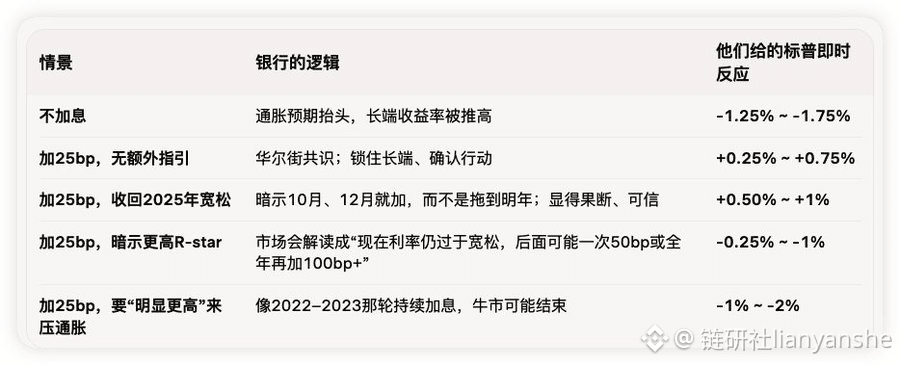
Rehearsing the Fed meeting at night, the core trading idea boils down to one sentence: when hikes have already been priced in, the market rewards credible, measured hawks, and punishes hawks that abandon anti-inflation efforts and go for unlimited hawkishness.
This rate hike is the first since July 2023, and in 2025 there were three cuts.
Extreme dovish: no rate hike. This would be seen as damage to credibility (Warsh just said that if inflation doesn’t meet targets, you have to take action). The long end will rise because inflation risk premium increases, which is bearish for U.S. equities and could lead to a sharp drop.
Good hawk: add a little + roll back the promise from last year’s cuts. Instead, it’s seen as bullish, because the bond market may interpret that the Fed is serious, and the long-term inflation risk premium may decline.
Bad hawk: only when communication lays out a path that still calls for a large, sustained move toward extremely hawkish policy will it hit valuations (especially long-duration growth stocks).
This rate hike is the first since July 2023, and in 2025 there were three cuts.
Extreme dovish: no rate hike. This would be seen as damage to credibility (Warsh just said that if inflation doesn’t meet targets, you have to take action). The long end will rise because inflation risk premium increases, which is bearish for U.S. equities and could lead to a sharp drop.
Good hawk: add a little + roll back the promise from last year’s cuts. Instead, it’s seen as bullish, because the bond market may interpret that the Fed is serious, and the long-term inflation risk premium may decline.
Bad hawk: only when communication lays out a path that still calls for a large, sustained move toward extremely hawkish policy will it hit valuations (especially long-duration growth stocks).