
Web3 X先生
1.1k Posts
 LIVE
LIVEWeb3 X先生
Report
Block User
X先生 6年Web3观察 | 每日策略 热点解读 | 公众号:比特春天
Frequent Trader
5.2 Months
37 Following
1.9K+ Followers
457 Liked
Posts
All
Quotes
Live
·
--
[A $176.7 billion asset manager has moved money market funds on-chain🔥]
Join Mr. X’s fan group chat on the homepage🔥
On Thursday, WisdomTree and MoonPay announced they’re partnering. This U.S. asset manager manages a total of $176.7 billion in assets. Its $1.23 billion on-chain U.S. Treasury money market fund will be opened to retail investors in the United States.
First, let’s make sure what this fund really is. WTGXX is a tokenized money market fund, with its net asset value targeted and pegged to $1. In the past 30 days, it saw net inflows of $466 million—within its peer category, it’s the only one with a positive flow.
What’s really worth looking at is where its reserve capital will be used. MoonPay plans to put this fund into the reserves backing its own stablecoin. This payments company has 35 million accounts, and its distribution channels can be connected instantly.
For crypto, U.S. Treasuries and stablecoins are now linked into a complete chain. Across the entire market, on-chain U.S. Treasuries total $15.4 billion, and this firm alone accounts for nearly one-tenth of that. After reserve assets are converted into on-chain funds, settlements no longer have to wait for banks to open.
Do you think this is stablecoins truly going mainstream, or just swapping the shell? Let’s discuss in the comments.
[A $176.7 billion asset manager has moved money market funds on-chain🔥]
Join Mr. X’s fan group chat on the homepage🔥
On Thursday, WisdomTree and MoonPay announced they’re partnering. This U.S. asset manager manages a total of $176.7 billion in assets. Its $1.23 billion on-chain U.S. Treasury money market fund will be opened to retail investors in the United States.
First, let’s make sure what this fund really is. WTGXX is a tokenized money market fund, with its net asset value targeted and pegged to $1. In the past 30 days, it saw net inflows of $466 million—within its peer category, it’s the only one with a positive flow.
What’s really worth looking at is where its reserve capital will be used. MoonPay plans to put this fund into the reserves backing its own stablecoin. This payments company has 35 million accounts, and its distribution channels can be connected instantly.
For crypto, U.S. Treasuries and stablecoins are now linked into a complete chain. Across the entire market, on-chain U.S. Treasuries total $15.4 billion, and this firm alone accounts for nearly one-tenth of that. After reserve assets are converted into on-chain funds, settlements no longer have to wait for banks to open.
Do you think this is stablecoins truly going mainstream, or just swapping the shell? Let’s discuss in the comments.
Join Mr. X’s fan group chat on the homepage🔥
On Thursday, WisdomTree and MoonPay announced they’re partnering. This U.S. asset manager manages a total of $176.7 billion in assets. Its $1.23 billion on-chain U.S. Treasury money market fund will be opened to retail investors in the United States.
First, let’s make sure what this fund really is. WTGXX is a tokenized money market fund, with its net asset value targeted and pegged to $1. In the past 30 days, it saw net inflows of $466 million—within its peer category, it’s the only one with a positive flow.
What’s really worth looking at is where its reserve capital will be used. MoonPay plans to put this fund into the reserves backing its own stablecoin. This payments company has 35 million accounts, and its distribution channels can be connected instantly.
For crypto, U.S. Treasuries and stablecoins are now linked into a complete chain. Across the entire market, on-chain U.S. Treasuries total $15.4 billion, and this firm alone accounts for nearly one-tenth of that. After reserve assets are converted into on-chain funds, settlements no longer have to wait for banks to open.
Do you think this is stablecoins truly going mainstream, or just swapping the shell? Let’s discuss in the comments.

37
·
--
[US sanctions Iran exchange, Hormuz’s money can’t be hidden anymore 🚢]
Homepage join X Mr. fan chat group 🔥
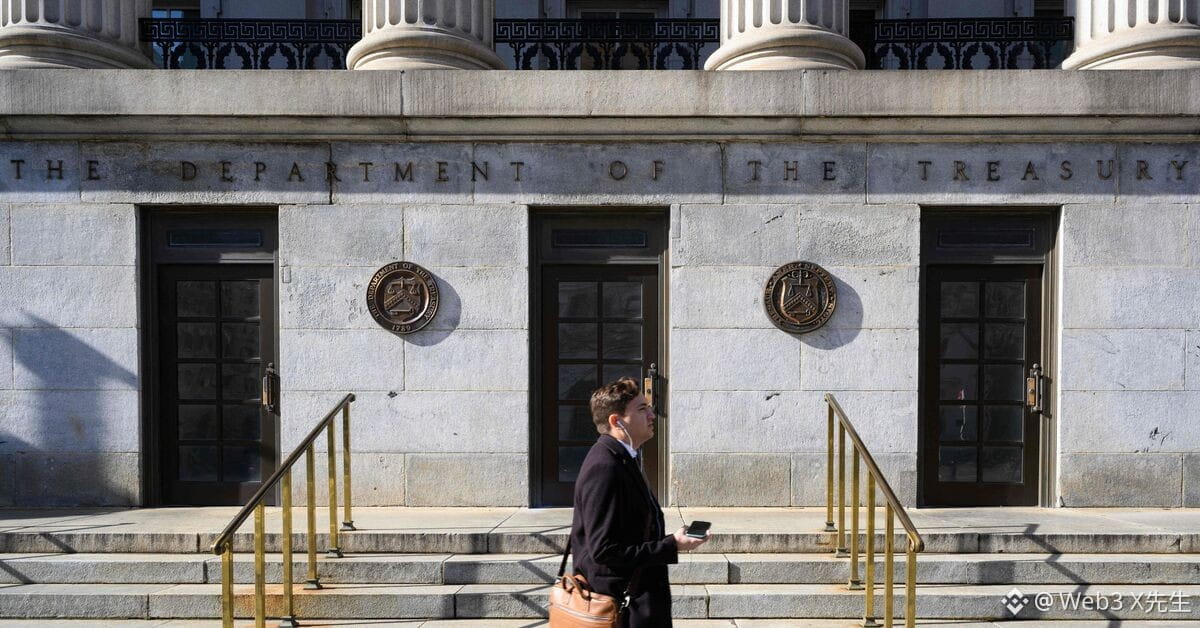
On Thursday, the U.S. Department of the Treasury added the Iran exchange BitBank to the sanctions list. It charges insurance premiums for the “Hormuz Security” program, and then reroutes the funds to the Iranian regime. Also named in the same batch were its developers and three associated individuals.
First, make sense of two layers: one layer is the people running the exchange, and the other is the payment collection channels. Hormuz’s insurance premiums do not go through banks; instead, they use crypto for collection. Payments come into BitBank first, then get converted into cash or stablecoins and sent out.
What’s really worth watching is how far OFAC’s reach can extend. This round of action has only been underway for a month, yet the list already includes institutions from three countries. Financial and trade institutions in Russia, the UAE, and Turkey have all been named.
For crypto, this isn’t good news or bad news—it’s an identity issue. The Bitcoin network itself can’t be pinned down, but USDT used for hand-to-hand settlement can be frozen; once it’s frozen, it’s frozen. If the entry point is shut, the money gets stuck in the middle.
Do you think crypto in this kind of deal is a tool to bypass sanctions, or is it the next new entry point being targeted? Let’s discuss in the comments section.
[US sanctions Iran exchange, Hormuz’s money can’t be hidden anymore 🚢]
Homepage join X Mr. fan chat group 🔥
On Thursday, the U.S. Department of the Treasury added the Iran exchange BitBank to the sanctions list. It charges insurance premiums for the “Hormuz Security” program, and then reroutes the funds to the Iranian regime. Also named in the same batch were its developers and three associated individuals.
First, make sense of two layers: one layer is the people running the exchange, and the other is the payment collection channels. Hormuz’s insurance premiums do not go through banks; instead, they use crypto for collection. Payments come into BitBank first, then get converted into cash or stablecoins and sent out.
What’s really worth watching is how far OFAC’s reach can extend. This round of action has only been underway for a month, yet the list already includes institutions from three countries. Financial and trade institutions in Russia, the UAE, and Turkey have all been named.
For crypto, this isn’t good news or bad news—it’s an identity issue. The Bitcoin network itself can’t be pinned down, but USDT used for hand-to-hand settlement can be frozen; once it’s frozen, it’s frozen. If the entry point is shut, the money gets stuck in the middle.
Do you think crypto in this kind of deal is a tool to bypass sanctions, or is it the next new entry point being targeted? Let’s discuss in the comments section.
Homepage join X Mr. fan chat group 🔥
On Thursday, the U.S. Department of the Treasury added the Iran exchange BitBank to the sanctions list. It charges insurance premiums for the “Hormuz Security” program, and then reroutes the funds to the Iranian regime. Also named in the same batch were its developers and three associated individuals.
First, make sense of two layers: one layer is the people running the exchange, and the other is the payment collection channels. Hormuz’s insurance premiums do not go through banks; instead, they use crypto for collection. Payments come into BitBank first, then get converted into cash or stablecoins and sent out.
What’s really worth watching is how far OFAC’s reach can extend. This round of action has only been underway for a month, yet the list already includes institutions from three countries. Financial and trade institutions in Russia, the UAE, and Turkey have all been named.
For crypto, this isn’t good news or bad news—it’s an identity issue. The Bitcoin network itself can’t be pinned down, but USDT used for hand-to-hand settlement can be frozen; once it’s frozen, it’s frozen. If the entry point is shut, the money gets stuck in the middle.
Do you think crypto in this kind of deal is a tool to bypass sanctions, or is it the next new entry point being targeted? Let’s discuss in the comments section.
87
·
--
【S&P Global moves in, acquiring a leading on-chain security firm 🔒】
Join X Mr.'s fan group chat on the homepage 🔥
On Thursday, S&P Global announced the acquisition of on-chain security company OpenZeppelin. Founded in 2015, the company has processed $3.7 trillion in transfers through smart contracts. It has conducted more than 900 security audits, though the transaction value hasn’t been disclosed.
Let’s first clarify each party’s core business. S&P Global sells data, ratings, and indices. OpenZeppelin sells code audits and on-chain risk control. This time, S&P is buying the latter.
What’s truly worth watching is the momentum. Earlier this week, S&P just co-led an investment in crypto data provider Kaiko, bringing Kaiko’s Series B to $110 million. Two deals in a week—both are aimed at on-chain data and security.
For crypto, rating agencies are starting to lay the infrastructure for on-chain assets. OpenZeppelin will operate as an independent business unit, and its founders will continue to lead the team. Previously, people within the on-chain risk-control circle managed things themselves; now, outside giants are coming in to hand out the scores.
Do you think the arrival of these rating giants is meant to add credibility to the crypto space—or to capture influence over the narrative? Let’s discuss in the comments.
【S&P Global moves in, acquiring a leading on-chain security firm 🔒】
Join X Mr.'s fan group chat on the homepage 🔥
On Thursday, S&P Global announced the acquisition of on-chain security company OpenZeppelin. Founded in 2015, the company has processed $3.7 trillion in transfers through smart contracts. It has conducted more than 900 security audits, though the transaction value hasn’t been disclosed.
Let’s first clarify each party’s core business. S&P Global sells data, ratings, and indices. OpenZeppelin sells code audits and on-chain risk control. This time, S&P is buying the latter.
What’s truly worth watching is the momentum. Earlier this week, S&P just co-led an investment in crypto data provider Kaiko, bringing Kaiko’s Series B to $110 million. Two deals in a week—both are aimed at on-chain data and security.
For crypto, rating agencies are starting to lay the infrastructure for on-chain assets. OpenZeppelin will operate as an independent business unit, and its founders will continue to lead the team. Previously, people within the on-chain risk-control circle managed things themselves; now, outside giants are coming in to hand out the scores.
Do you think the arrival of these rating giants is meant to add credibility to the crypto space—or to capture influence over the narrative? Let’s discuss in the comments.
Join X Mr.'s fan group chat on the homepage 🔥
On Thursday, S&P Global announced the acquisition of on-chain security company OpenZeppelin. Founded in 2015, the company has processed $3.7 trillion in transfers through smart contracts. It has conducted more than 900 security audits, though the transaction value hasn’t been disclosed.
Let’s first clarify each party’s core business. S&P Global sells data, ratings, and indices. OpenZeppelin sells code audits and on-chain risk control. This time, S&P is buying the latter.
What’s truly worth watching is the momentum. Earlier this week, S&P just co-led an investment in crypto data provider Kaiko, bringing Kaiko’s Series B to $110 million. Two deals in a week—both are aimed at on-chain data and security.
For crypto, rating agencies are starting to lay the infrastructure for on-chain assets. OpenZeppelin will operate as an independent business unit, and its founders will continue to lead the team. Previously, people within the on-chain risk-control circle managed things themselves; now, outside giants are coming in to hand out the scores.
Do you think the arrival of these rating giants is meant to add credibility to the crypto space—or to capture influence over the narrative? Let’s discuss in the comments.

177
·
--
【BlackRock 20-Day Buy-In of $1.08B Bitcoin💰】
Join Mr. X’s fan group chat on the home page🔥
On-chain data provider Arkham shows that BlackRock’s IBIT has been steadily buying. In the past 20 days, it purchased about $1.08B worth of Bitcoin. Its holdings have reached 785,900 BTC, worth roughly $61B.
First, separate two things: price and positioning are not the same. Over the past 20 days, secondary-market funds have been withdrawing, while primary-market subscriptions have been moving in. The traces remain on-chain, pointing to long-term holdings rather than day-to-day quotes.
What’s truly worth watching is the step-up in holding size—right now, it’s at 1.2 million BTC. The total value of U.S. spot BTC ETFs is about $92B. That’s more than 6% of the entire network’s available supply.
For crypto, the chips are moving from retail wallets into institutional accounts. BlackRock’s crypto holdings exceed $66B. IBIT’s annual fee is only 0.25%, while GBTC is as high as 1.5%—the money votes with its feet. An increase of $1.08B over 20 days is harder than any verbal claim.
Do you think this batch of institutional holdings is the foundation for a bull market, or the gunpowder for the next sell-off? Let’s discuss in the comments.
【BlackRock 20-Day Buy-In of $1.08B Bitcoin💰】
Join Mr. X’s fan group chat on the home page🔥
On-chain data provider Arkham shows that BlackRock’s IBIT has been steadily buying. In the past 20 days, it purchased about $1.08B worth of Bitcoin. Its holdings have reached 785,900 BTC, worth roughly $61B.
First, separate two things: price and positioning are not the same. Over the past 20 days, secondary-market funds have been withdrawing, while primary-market subscriptions have been moving in. The traces remain on-chain, pointing to long-term holdings rather than day-to-day quotes.
What’s truly worth watching is the step-up in holding size—right now, it’s at 1.2 million BTC. The total value of U.S. spot BTC ETFs is about $92B. That’s more than 6% of the entire network’s available supply.
For crypto, the chips are moving from retail wallets into institutional accounts. BlackRock’s crypto holdings exceed $66B. IBIT’s annual fee is only 0.25%, while GBTC is as high as 1.5%—the money votes with its feet. An increase of $1.08B over 20 days is harder than any verbal claim.
Do you think this batch of institutional holdings is the foundation for a bull market, or the gunpowder for the next sell-off? Let’s discuss in the comments.
Join Mr. X’s fan group chat on the home page🔥
On-chain data provider Arkham shows that BlackRock’s IBIT has been steadily buying. In the past 20 days, it purchased about $1.08B worth of Bitcoin. Its holdings have reached 785,900 BTC, worth roughly $61B.
First, separate two things: price and positioning are not the same. Over the past 20 days, secondary-market funds have been withdrawing, while primary-market subscriptions have been moving in. The traces remain on-chain, pointing to long-term holdings rather than day-to-day quotes.
What’s truly worth watching is the step-up in holding size—right now, it’s at 1.2 million BTC. The total value of U.S. spot BTC ETFs is about $92B. That’s more than 6% of the entire network’s available supply.
For crypto, the chips are moving from retail wallets into institutional accounts. BlackRock’s crypto holdings exceed $66B. IBIT’s annual fee is only 0.25%, while GBTC is as high as 1.5%—the money votes with its feet. An increase of $1.08B over 20 days is harder than any verbal claim.
Do you think this batch of institutional holdings is the foundation for a bull market, or the gunpowder for the next sell-off? Let’s discuss in the comments.
BTC+0.30%
IBITETF+0.81%
45
·
--
[North American gold ETF buy orders surge 108x in one month, pushing Bitcoin out of the spotlight 📉]
Join Mr. X’s fan group on the homepage 🔥
In July, North American physical gold ETFs saw net purchases of only $71 million. By August, that figure jumped to $7.7 billion. In the same period, global gold holdings surged to a record high of 4,189 tons. All of this buying happened before the September decision.
First, let’s clarify the figures: $7.7 billion refers to the combined total of North American physical gold ETFs. Behind it, the 1-month VIX rose 20.7%. On August 25, the gold price briefly touched $4,683 per ounce. GLDM fell 3% over the past month, yet money keeps flowing in.
What’s really worth watching is the timing. On September 16, the Fed raised rates by 25 basis points. The next day, spot gold dropped 1.2% to $4,240. The 10-year U.S. Treasury yield stood at 5.00%.
For crypto, the destination of this flight-to-safety capital is quite clear. The money went into gold first—not Bitcoin. Bitcoin has been stuck around the $76,000 mark, and its rebounds have been consistently lackluster.
Do you think this round of capital chooses gold over Bitcoin is just a temporary rotation, or a pullback in the “digital gold” narrative? Let’s discuss in the comments.
[North American gold ETF buy orders surge 108x in one month, pushing Bitcoin out of the spotlight 📉]
Join Mr. X’s fan group on the homepage 🔥
In July, North American physical gold ETFs saw net purchases of only $71 million. By August, that figure jumped to $7.7 billion. In the same period, global gold holdings surged to a record high of 4,189 tons. All of this buying happened before the September decision.
First, let’s clarify the figures: $7.7 billion refers to the combined total of North American physical gold ETFs. Behind it, the 1-month VIX rose 20.7%. On August 25, the gold price briefly touched $4,683 per ounce. GLDM fell 3% over the past month, yet money keeps flowing in.
What’s really worth watching is the timing. On September 16, the Fed raised rates by 25 basis points. The next day, spot gold dropped 1.2% to $4,240. The 10-year U.S. Treasury yield stood at 5.00%.
For crypto, the destination of this flight-to-safety capital is quite clear. The money went into gold first—not Bitcoin. Bitcoin has been stuck around the $76,000 mark, and its rebounds have been consistently lackluster.
Do you think this round of capital chooses gold over Bitcoin is just a temporary rotation, or a pullback in the “digital gold” narrative? Let’s discuss in the comments.
Join Mr. X’s fan group on the homepage 🔥
In July, North American physical gold ETFs saw net purchases of only $71 million. By August, that figure jumped to $7.7 billion. In the same period, global gold holdings surged to a record high of 4,189 tons. All of this buying happened before the September decision.
First, let’s clarify the figures: $7.7 billion refers to the combined total of North American physical gold ETFs. Behind it, the 1-month VIX rose 20.7%. On August 25, the gold price briefly touched $4,683 per ounce. GLDM fell 3% over the past month, yet money keeps flowing in.
What’s really worth watching is the timing. On September 16, the Fed raised rates by 25 basis points. The next day, spot gold dropped 1.2% to $4,240. The 10-year U.S. Treasury yield stood at 5.00%.
For crypto, the destination of this flight-to-safety capital is quite clear. The money went into gold first—not Bitcoin. Bitcoin has been stuck around the $76,000 mark, and its rebounds have been consistently lackluster.
Do you think this round of capital chooses gold over Bitcoin is just a temporary rotation, or a pullback in the “digital gold” narrative? Let’s discuss in the comments.
159
·
--
【SEC gives the green light to on-chain stock trading for the first time in five years—now US stocks are going to trade through the night 📜】
Join Mr. X’s fan group on the homepage 🔥
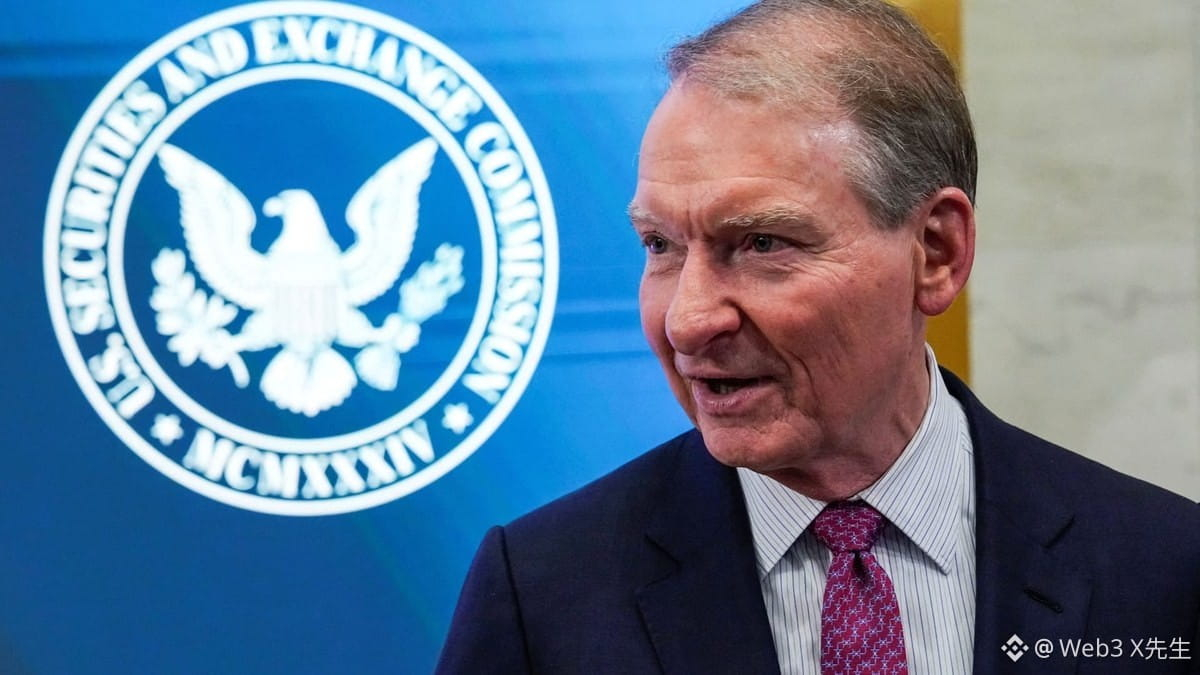
The U.S. SEC issued a exemption order on Thursday, and it took effect immediately. Compliant platforms can now trade tokenized U.S. stocks on-chain—this is the first time. When the news broke, Bitcoin was still hovering around $76,000.
First, let’s clearly define the boundaries of what’s been opened this time. Only stock tokens that are 1:1 backed, come with full shareholder rights and dividend entitlements, can be put on-chain. Platforms also must give the issuer a 30-day prior notice—if the other party objects, the plan can be halted.
This exemption took 14 months to be worked out and finally landed. Two days ago, the CLARITY Act failed 49–50. So the SEC simply bypassed Congress and opened the gate on its own. The exemption period lasts a full five years—Wall Street stocks are going on-chain like that.
For crypto, this opening effectively moves U.S. stocks straight into the on-chain market-making pool. Every trade in the pool will ultimately be settled using stablecoins. On-chain trading volume and demand for stablecoins may get another push.
Do you think this is crypto’s first step toward absorbing U.S. stocks—or just a short-lived, temporary experiment? Let’s discuss in the comments.
【SEC gives the green light to on-chain stock trading for the first time in five years—now US stocks are going to trade through the night 📜】
Join Mr. X’s fan group on the homepage 🔥
The U.S. SEC issued a exemption order on Thursday, and it took effect immediately. Compliant platforms can now trade tokenized U.S. stocks on-chain—this is the first time. When the news broke, Bitcoin was still hovering around $76,000.
First, let’s clearly define the boundaries of what’s been opened this time. Only stock tokens that are 1:1 backed, come with full shareholder rights and dividend entitlements, can be put on-chain. Platforms also must give the issuer a 30-day prior notice—if the other party objects, the plan can be halted.
This exemption took 14 months to be worked out and finally landed. Two days ago, the CLARITY Act failed 49–50. So the SEC simply bypassed Congress and opened the gate on its own. The exemption period lasts a full five years—Wall Street stocks are going on-chain like that.
For crypto, this opening effectively moves U.S. stocks straight into the on-chain market-making pool. Every trade in the pool will ultimately be settled using stablecoins. On-chain trading volume and demand for stablecoins may get another push.
Do you think this is crypto’s first step toward absorbing U.S. stocks—or just a short-lived, temporary experiment? Let’s discuss in the comments.
Join Mr. X’s fan group on the homepage 🔥
The U.S. SEC issued a exemption order on Thursday, and it took effect immediately. Compliant platforms can now trade tokenized U.S. stocks on-chain—this is the first time. When the news broke, Bitcoin was still hovering around $76,000.
First, let’s clearly define the boundaries of what’s been opened this time. Only stock tokens that are 1:1 backed, come with full shareholder rights and dividend entitlements, can be put on-chain. Platforms also must give the issuer a 30-day prior notice—if the other party objects, the plan can be halted.
This exemption took 14 months to be worked out and finally landed. Two days ago, the CLARITY Act failed 49–50. So the SEC simply bypassed Congress and opened the gate on its own. The exemption period lasts a full five years—Wall Street stocks are going on-chain like that.
For crypto, this opening effectively moves U.S. stocks straight into the on-chain market-making pool. Every trade in the pool will ultimately be settled using stablecoins. On-chain trading volume and demand for stablecoins may get another push.
Do you think this is crypto’s first step toward absorbing U.S. stocks—or just a short-lived, temporary experiment? Let’s discuss in the comments.
27
·
--
[Institutional Giants Publicly Disclose Holdings, Zcash Jumps 20% in a Day🔥]
Join X Mr.'s fan group chat on the homepage🔥
Zcash surged 20% in a day, climbing all the way to around $1,338. The real driving force is that top-tier institutions are putting their holdings on display for the first time. On Wednesday, Paradigm admitted that its team holds ZEC tokens.
First, clarify one thing: exactly what did the institution invest in this time. It’s not just buying the coin—it’s also investing in the privacy development lab ZODL. The seed round back in March exceeded $25 million, with a16z also participating.
What’s truly worth watching is the timing gap behind this rally. Over the past month, ZEC is up about 160%, while Bitcoin is up only 18% in the same period. In the privacy coin sector, performance is even 213% higher than the previous Bitcoin cycle’s peak.
For crypto, this time the pricing benchmark for risk assets is being replaced by institutions. In the past, the market priced assets using on-chain metrics like speed and trading volume. Now institutions are starting to price privacy capabilities that are resistant to surveillance and tracking.
Do you think this move in ZEC is a revaluation of the privacy narrative’s value—or a short-term play by incoming funds? Let’s discuss in the comments.
[Institutional Giants Publicly Disclose Holdings, Zcash Jumps 20% in a Day🔥]
Join X Mr.'s fan group chat on the homepage🔥
Zcash surged 20% in a day, climbing all the way to around $1,338. The real driving force is that top-tier institutions are putting their holdings on display for the first time. On Wednesday, Paradigm admitted that its team holds ZEC tokens.
First, clarify one thing: exactly what did the institution invest in this time. It’s not just buying the coin—it’s also investing in the privacy development lab ZODL. The seed round back in March exceeded $25 million, with a16z also participating.
What’s truly worth watching is the timing gap behind this rally. Over the past month, ZEC is up about 160%, while Bitcoin is up only 18% in the same period. In the privacy coin sector, performance is even 213% higher than the previous Bitcoin cycle’s peak.
For crypto, this time the pricing benchmark for risk assets is being replaced by institutions. In the past, the market priced assets using on-chain metrics like speed and trading volume. Now institutions are starting to price privacy capabilities that are resistant to surveillance and tracking.
Do you think this move in ZEC is a revaluation of the privacy narrative’s value—or a short-term play by incoming funds? Let’s discuss in the comments.
Join X Mr.'s fan group chat on the homepage🔥
Zcash surged 20% in a day, climbing all the way to around $1,338. The real driving force is that top-tier institutions are putting their holdings on display for the first time. On Wednesday, Paradigm admitted that its team holds ZEC tokens.
First, clarify one thing: exactly what did the institution invest in this time. It’s not just buying the coin—it’s also investing in the privacy development lab ZODL. The seed round back in March exceeded $25 million, with a16z also participating.
What’s truly worth watching is the timing gap behind this rally. Over the past month, ZEC is up about 160%, while Bitcoin is up only 18% in the same period. In the privacy coin sector, performance is even 213% higher than the previous Bitcoin cycle’s peak.
For crypto, this time the pricing benchmark for risk assets is being replaced by institutions. In the past, the market priced assets using on-chain metrics like speed and trading volume. Now institutions are starting to price privacy capabilities that are resistant to surveillance and tracking.
Do you think this move in ZEC is a revaluation of the privacy narrative’s value—or a short-term play by incoming funds? Let’s discuss in the comments.

106
·
--
【Bitcoin ETF pulled out $746 million in two days, only one is still buying📉】
Group chat: [📲 加入X先生的粉丝群聊](https://app.binance.com/uni-qr/XP5J3ynH)
U.S. spot Bitcoin ETFs have seen net outflows for two consecutive trading days.
On the second day, $296 million left; the day before, there was still $450 million.
On September 3, it had attracted $730 million in a single day—now it has turned around and run.
First, let’s look at this redemption pressure and which specific funds it hit.
BlackRock’s IBIT saw $144 million redeemed in a single day, ranking #1.
ARKB recorded outflows of $84.4 million, while Fidelity saw $52.7 million out.
What’s really worth watching is that, among the 12 funds, only one is buying.
On that day, Morgan Stanley’s MSBT had a reverse net inflow of $3.5 million.
This is happening right after the Fed just raised rates by 25 basis points, and the bill failed 49–50.
For crypto, this round of withdrawals isn’t as scary as people might think.
In two days, there were $746 million fewer—Bitcoin is down only 1.5%.
Based on total assets of $95.19 billion, this pullback is less than 1%.
Do you think this withdrawal wave is just normal rotation, or are institutions truly exiting?
Let’s discuss in the comments.
【Bitcoin ETF pulled out $746 million in two days, only one is still buying📉】
Group chat: 📲 加入X先生的粉丝群聊
U.S. spot Bitcoin ETFs have seen net outflows for two consecutive trading days.
On the second day, $296 million left; the day before, there was still $450 million.
On September 3, it had attracted $730 million in a single day—now it has turned around and run.
First, let’s look at this redemption pressure and which specific funds it hit.
BlackRock’s IBIT saw $144 million redeemed in a single day, ranking #1.
ARKB recorded outflows of $84.4 million, while Fidelity saw $52.7 million out.
What’s really worth watching is that, among the 12 funds, only one is buying.
On that day, Morgan Stanley’s MSBT had a reverse net inflow of $3.5 million.
This is happening right after the Fed just raised rates by 25 basis points, and the bill failed 49–50.
For crypto, this round of withdrawals isn’t as scary as people might think.
In two days, there were $746 million fewer—Bitcoin is down only 1.5%.
Based on total assets of $95.19 billion, this pullback is less than 1%.
Do you think this withdrawal wave is just normal rotation, or are institutions truly exiting?
Let’s discuss in the comments.
Group chat: 📲 加入X先生的粉丝群聊
U.S. spot Bitcoin ETFs have seen net outflows for two consecutive trading days.
On the second day, $296 million left; the day before, there was still $450 million.
On September 3, it had attracted $730 million in a single day—now it has turned around and run.
First, let’s look at this redemption pressure and which specific funds it hit.
BlackRock’s IBIT saw $144 million redeemed in a single day, ranking #1.
ARKB recorded outflows of $84.4 million, while Fidelity saw $52.7 million out.
What’s really worth watching is that, among the 12 funds, only one is buying.
On that day, Morgan Stanley’s MSBT had a reverse net inflow of $3.5 million.
This is happening right after the Fed just raised rates by 25 basis points, and the bill failed 49–50.
For crypto, this round of withdrawals isn’t as scary as people might think.
In two days, there were $746 million fewer—Bitcoin is down only 1.5%.
Based on total assets of $95.19 billion, this pullback is less than 1%.
Do you think this withdrawal wave is just normal rotation, or are institutions truly exiting?
Let’s discuss in the comments.

89
·
--
[The U.S. plans to lock up 320,000+ bitcoins for 20 years; the House passes the first hurdle 🔥]
Group chat: [📲加入X先生的粉丝群聊](https://app.binance.com/uni-qr/XP5J3ynH)
On Wednesday, the House Financial Services Committee voted 28-21 to pass the bill. This bill, the “Modernizing U.S. Reserves Act” numbered H.R. 8957, would codify an executive order into law. On the news, Bitcoin edged up slightly around $76,000.
First, look at the numbers. The U.S. government holds roughly 324,500 bitcoins, worth about $24.7 billion at current prices. The bill requires that after these coins enter the reserves, they be locked up for at least 20 years and not be sold casually.
What’s really worth watching is transparency. The bill requires all federal agencies to inventory their digital assets, submit a reserve certification every quarter, and also commission third-party audits. States can also deposit their own bitcoins into the Federal Reserve.
For crypto, this is a shift in the regulatory pathway. Last week, the CLARITY Act vote failed, so that route is temporarily blocked. With the reserves bill cleared by the committee, it means another door is now open; next, it still has to pass the full House and then the Senate.
Do you think this round of legislation is the beginning of Bitcoin’s move toward official reserves, or a long standoff? Let’s discuss in the comments.
#美众院推进比特币储备法案 #美联储加息25基点美股收跌
[The U.S. plans to lock up 320,000+ bitcoins for 20 years; the House passes the first hurdle 🔥]
Group chat: 📲加入X先生的粉丝群聊
On Wednesday, the House Financial Services Committee voted 28-21 to pass the bill. This bill, the “Modernizing U.S. Reserves Act” numbered H.R. 8957, would codify an executive order into law. On the news, Bitcoin edged up slightly around $76,000.
First, look at the numbers. The U.S. government holds roughly 324,500 bitcoins, worth about $24.7 billion at current prices. The bill requires that after these coins enter the reserves, they be locked up for at least 20 years and not be sold casually.
What’s really worth watching is transparency. The bill requires all federal agencies to inventory their digital assets, submit a reserve certification every quarter, and also commission third-party audits. States can also deposit their own bitcoins into the Federal Reserve.
For crypto, this is a shift in the regulatory pathway. Last week, the CLARITY Act vote failed, so that route is temporarily blocked. With the reserves bill cleared by the committee, it means another door is now open; next, it still has to pass the full House and then the Senate.
Do you think this round of legislation is the beginning of Bitcoin’s move toward official reserves, or a long standoff? Let’s discuss in the comments.
#美众院推进比特币储备法案 #美联储加息25基点美股收跌
Group chat: 📲加入X先生的粉丝群聊
On Wednesday, the House Financial Services Committee voted 28-21 to pass the bill. This bill, the “Modernizing U.S. Reserves Act” numbered H.R. 8957, would codify an executive order into law. On the news, Bitcoin edged up slightly around $76,000.
First, look at the numbers. The U.S. government holds roughly 324,500 bitcoins, worth about $24.7 billion at current prices. The bill requires that after these coins enter the reserves, they be locked up for at least 20 years and not be sold casually.
What’s really worth watching is transparency. The bill requires all federal agencies to inventory their digital assets, submit a reserve certification every quarter, and also commission third-party audits. States can also deposit their own bitcoins into the Federal Reserve.
For crypto, this is a shift in the regulatory pathway. Last week, the CLARITY Act vote failed, so that route is temporarily blocked. With the reserves bill cleared by the committee, it means another door is now open; next, it still has to pass the full House and then the Senate.
Do you think this round of legislation is the beginning of Bitcoin’s move toward official reserves, or a long standoff? Let’s discuss in the comments.
#美众院推进比特币储备法案 #美联储加息25基点美股收跌
201
·
--
Verified
【Circle’s new chain goes live—fees are charged only in USDC, not its own token 💵】
Group chat: [📲加入X先生的粉丝群聊](https://app.binance.com/uni-qr/XP5J3ynH)
Circle’s Arc mainnet officially launched on September 16. Transaction fees can be paid using USDC only, and the official goal is about one cent per transaction. Once confirmed in under one second, it’s also compatible with the entire set of Ethereum development tools.
First, let’s clarify one thing: yes, it did issue 10 billion ARC tokens, but they were not publicly sold. These tokens aren’t publicly circulating, and the official team has not promised they will definitely be listed later. If fees don’t use its own token, the price won’t be dragged around by the token’s valuation.
What’s truly worth looking at is its list of validator nodes. BlackRock, Visa, Mastercard, ICE, and DTCC are all in the founding roster. On the launch day, more than 100 companies and institutions participated.
For crypto, this is turning stablecoins from an asset into a settlement rail. This system is linked to more than 20 chains and also includes more than 20 fiat-pegged stablecoins. The on-ramp for traditional funds going on-chain is increasingly starting to resemble a bank’s own back office.
Do you think on-chain settlement will first eat into cross-border remittances, or first into broker-dealer clearing? Let’s discuss in the comments.
#Circle开放Arc主网
【Circle’s new chain goes live—fees are charged only in USDC, not its own token 💵】
Group chat: 📲加入X先生的粉丝群聊
Circle’s Arc mainnet officially launched on September 16. Transaction fees can be paid using USDC only, and the official goal is about one cent per transaction. Once confirmed in under one second, it’s also compatible with the entire set of Ethereum development tools.
First, let’s clarify one thing: yes, it did issue 10 billion ARC tokens, but they were not publicly sold. These tokens aren’t publicly circulating, and the official team has not promised they will definitely be listed later. If fees don’t use its own token, the price won’t be dragged around by the token’s valuation.
What’s truly worth looking at is its list of validator nodes. BlackRock, Visa, Mastercard, ICE, and DTCC are all in the founding roster. On the launch day, more than 100 companies and institutions participated.
For crypto, this is turning stablecoins from an asset into a settlement rail. This system is linked to more than 20 chains and also includes more than 20 fiat-pegged stablecoins. The on-ramp for traditional funds going on-chain is increasingly starting to resemble a bank’s own back office.
Do you think on-chain settlement will first eat into cross-border remittances, or first into broker-dealer clearing? Let’s discuss in the comments.
#Circle开放Arc主网
Group chat: 📲加入X先生的粉丝群聊
Circle’s Arc mainnet officially launched on September 16. Transaction fees can be paid using USDC only, and the official goal is about one cent per transaction. Once confirmed in under one second, it’s also compatible with the entire set of Ethereum development tools.
First, let’s clarify one thing: yes, it did issue 10 billion ARC tokens, but they were not publicly sold. These tokens aren’t publicly circulating, and the official team has not promised they will definitely be listed later. If fees don’t use its own token, the price won’t be dragged around by the token’s valuation.
What’s truly worth looking at is its list of validator nodes. BlackRock, Visa, Mastercard, ICE, and DTCC are all in the founding roster. On the launch day, more than 100 companies and institutions participated.
For crypto, this is turning stablecoins from an asset into a settlement rail. This system is linked to more than 20 chains and also includes more than 20 fiat-pegged stablecoins. The on-ramp for traditional funds going on-chain is increasingly starting to resemble a bank’s own back office.
Do you think on-chain settlement will first eat into cross-border remittances, or first into broker-dealer clearing? Let’s discuss in the comments.
#Circle开放Arc主网
138
·
--
【The Fed hikes rates for the first time in three years, lifting the rate to 4%📉】
Group chat: [📲 加入X先生的粉丝群聊](https://app.binance.com/uni-qr/XP5J3ynH)
The Federal Reserve raised rates by 25 basis points on Wednesday, moving the target range up to 3.75%–4%. This is the first rate hike since 2023, and all 12 members voted in favor. The rationale: persistent high inflation and oil prices in the Middle East are squeezing the outlook, and markets expect another hike later this year.
First, let’s separate one thing: rate hikes aren’t entirely bad news. The market had previously priced in a more than 85% chance of a hike, while “standing pat” was left at just 13.3%. The bad news was priced in early—the real disagreement lies in the wording and subsequent guidance.
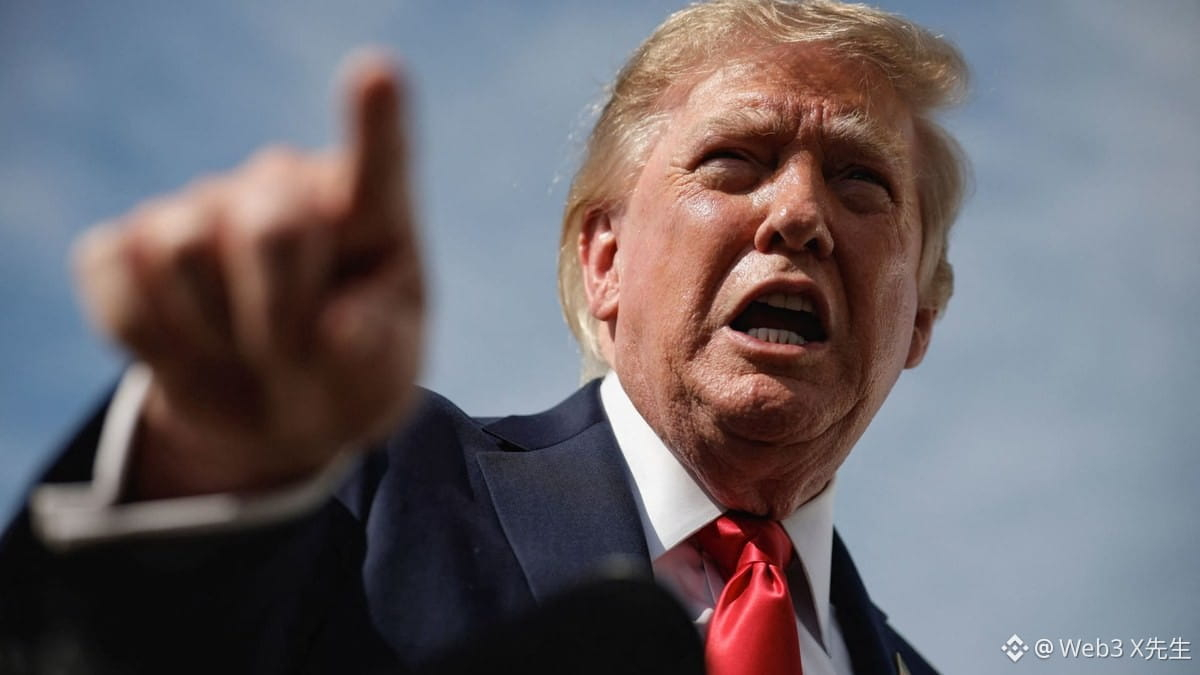
What’s more worth watching is the White House’s reaction. On the day, Trump said he still trusts Powell, but that rates should be brought below 1%. He demanded a cut of 3 percentage points and even said the board is intentionally going against him.
For crypto, what rate hikes do is raise the risk-free rate, putting pressure on the valuations of risk assets. But Bitcoin didn’t crash this time—over the past 24 hours it’s still up about 1%. Last week it closed below the 50-week moving average of $77,400.
Do you think this round of rate hikes is the final heavy blow before a bull market, or a signal that Bitcoin is starting to become “desensitized” to such news? Discuss in the comments.
#美联储加息是否已成定局 #美联储加息25基点美股收跌 #点阵图预示2026年再加息一次
【The Fed hikes rates for the first time in three years, lifting the rate to 4%📉】
Group chat: 📲 加入X先生的粉丝群聊
The Federal Reserve raised rates by 25 basis points on Wednesday, moving the target range up to 3.75%–4%. This is the first rate hike since 2023, and all 12 members voted in favor. The rationale: persistent high inflation and oil prices in the Middle East are squeezing the outlook, and markets expect another hike later this year.
First, let’s separate one thing: rate hikes aren’t entirely bad news. The market had previously priced in a more than 85% chance of a hike, while “standing pat” was left at just 13.3%. The bad news was priced in early—the real disagreement lies in the wording and subsequent guidance.
What’s more worth watching is the White House’s reaction. On the day, Trump said he still trusts Powell, but that rates should be brought below 1%. He demanded a cut of 3 percentage points and even said the board is intentionally going against him.
For crypto, what rate hikes do is raise the risk-free rate, putting pressure on the valuations of risk assets. But Bitcoin didn’t crash this time—over the past 24 hours it’s still up about 1%. Last week it closed below the 50-week moving average of $77,400.
Do you think this round of rate hikes is the final heavy blow before a bull market, or a signal that Bitcoin is starting to become “desensitized” to such news? Discuss in the comments.
#美联储加息是否已成定局 #美联储加息25基点美股收跌 #点阵图预示2026年再加息一次
Group chat: 📲 加入X先生的粉丝群聊
The Federal Reserve raised rates by 25 basis points on Wednesday, moving the target range up to 3.75%–4%. This is the first rate hike since 2023, and all 12 members voted in favor. The rationale: persistent high inflation and oil prices in the Middle East are squeezing the outlook, and markets expect another hike later this year.
First, let’s separate one thing: rate hikes aren’t entirely bad news. The market had previously priced in a more than 85% chance of a hike, while “standing pat” was left at just 13.3%. The bad news was priced in early—the real disagreement lies in the wording and subsequent guidance.
What’s more worth watching is the White House’s reaction. On the day, Trump said he still trusts Powell, but that rates should be brought below 1%. He demanded a cut of 3 percentage points and even said the board is intentionally going against him.
For crypto, what rate hikes do is raise the risk-free rate, putting pressure on the valuations of risk assets. But Bitcoin didn’t crash this time—over the past 24 hours it’s still up about 1%. Last week it closed below the 50-week moving average of $77,400.
Do you think this round of rate hikes is the final heavy blow before a bull market, or a signal that Bitcoin is starting to become “desensitized” to such news? Discuss in the comments.
#美联储加息是否已成定局 #美联储加息25基点美股收跌 #点阵图预示2026年再加息一次
186
·
--
[Three hours before the vote, 866 Bitcoins were all swapped for Ethereum🐋]
Group chat: [📲加入X先生的粉丝群聊](https://app.binance.com/uni-qr/XP5J3ynH)
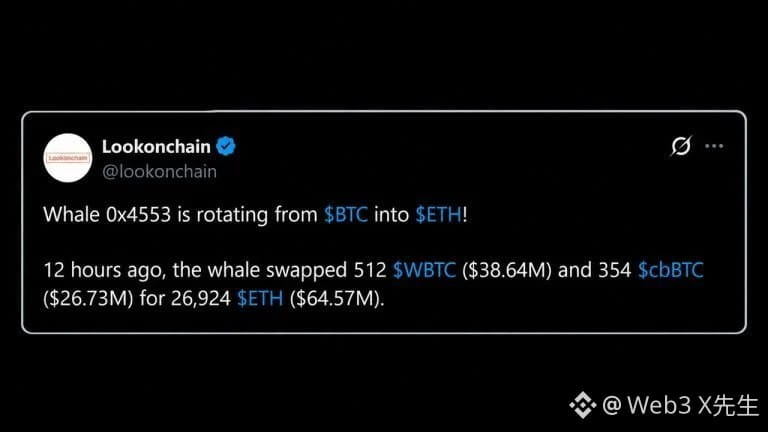
A giant whale address, 0x4553, took action on Tuesday, selling 866 Bitcoins. The proceeds weren’t cash, but 26,924 Ethereum. Three hours later, the Senate blocked the crypto bill with a vote of 49 to 50.
First, let’s be clear: this isn’t a panic sell-off—it’s an intentional switch of positions. It sold Bitcoin and bought Ethereum, worth about $64.57 million. The exchange rate moved from 0.0252 back to 0.0317, up 32%.
What’s really worth watching is the timing of the move—not the direction. It acted three hours before the vote, dodging the day’s worst stretch. Within one hour after the vote, a $289 million leveraged position was liquidated.
For crypto, the money didn’t leave the arena—it just changed tracks. Bitcoin fell 2.2% on the day, Ethereum fell 3.6%, and neither held up. There’s still a gatekeeper above the exchange rate—0.0321. That’s the real test.
Do you think this rotation of positions is Ethereum taking the baton, or did the whale escape the top? Let’s chat in the comments.
[Three hours before the vote, 866 Bitcoins were all swapped for Ethereum🐋]
Group chat: 📲加入X先生的粉丝群聊
A giant whale address, 0x4553, took action on Tuesday, selling 866 Bitcoins. The proceeds weren’t cash, but 26,924 Ethereum. Three hours later, the Senate blocked the crypto bill with a vote of 49 to 50.
First, let’s be clear: this isn’t a panic sell-off—it’s an intentional switch of positions. It sold Bitcoin and bought Ethereum, worth about $64.57 million. The exchange rate moved from 0.0252 back to 0.0317, up 32%.
What’s really worth watching is the timing of the move—not the direction. It acted three hours before the vote, dodging the day’s worst stretch. Within one hour after the vote, a $289 million leveraged position was liquidated.
For crypto, the money didn’t leave the arena—it just changed tracks. Bitcoin fell 2.2% on the day, Ethereum fell 3.6%, and neither held up. There’s still a gatekeeper above the exchange rate—0.0321. That’s the real test.
Do you think this rotation of positions is Ethereum taking the baton, or did the whale escape the top? Let’s chat in the comments.
Group chat: 📲加入X先生的粉丝群聊
A giant whale address, 0x4553, took action on Tuesday, selling 866 Bitcoins. The proceeds weren’t cash, but 26,924 Ethereum. Three hours later, the Senate blocked the crypto bill with a vote of 49 to 50.
First, let’s be clear: this isn’t a panic sell-off—it’s an intentional switch of positions. It sold Bitcoin and bought Ethereum, worth about $64.57 million. The exchange rate moved from 0.0252 back to 0.0317, up 32%.
What’s really worth watching is the timing of the move—not the direction. It acted three hours before the vote, dodging the day’s worst stretch. Within one hour after the vote, a $289 million leveraged position was liquidated.
For crypto, the money didn’t leave the arena—it just changed tracks. Bitcoin fell 2.2% on the day, Ethereum fell 3.6%, and neither held up. There’s still a gatekeeper above the exchange rate—0.0321. That’s the real test.
Do you think this rotation of positions is Ethereum taking the baton, or did the whale escape the top? Let’s chat in the comments.
158
·
--
[Miners sold coins worth 1.6 billion to move into AI; now they’ve bought back 100 million worth of Bitcoin 😳]
Group chat: [📲加入X先生的粉丝群聊](https://app.binance.com/uni-qr/XP5J3ynH)
US-listed mining company MARA bought back 1,292 bitcoins overnight. This deal cost $98.64 million and was processed via FalconX. This year, it sold 23,093 bitcoins, cashing out $1.63 billion. Then it pivoted to building an AI data center. After the buyback, it holds 35,577 bitcoins, worth about $2.7 billion.
First, look at the timing. This trade appeared the day after a group of AI heavyweights collectively called for slowing down. Anthropic’s Amodei published a long post, saying he wants to slow model development. OpenAI and xAI followed by discussing risks, and AI stocks promptly plunged.
What’s really worth watching is where the money went. A company that lives off computing power should be the most knowledgeable about the economics of AI. It “bets” its data center capacity on AI, yet converts its profits back into Bitcoin. As worries about excess computing capacity rise, the coin becomes its hardest form of reserves.
For crypto, this is a reversal of the miners’ narrative. In the first half of the year, mining firms collectively dumped coins to go into AI and were criticized as traitors. Now the first buyback is here—effectively a vote for the coin price at $76,000.
Do you think this buyback means the miners are admitting they were wrong, or that the AI bubble is about to burst? Let’s discuss in the comments.
[Miners sold coins worth 1.6 billion to move into AI; now they’ve bought back 100 million worth of Bitcoin 😳]
Group chat: 📲加入X先生的粉丝群聊
US-listed mining company MARA bought back 1,292 bitcoins overnight. This deal cost $98.64 million and was processed via FalconX. This year, it sold 23,093 bitcoins, cashing out $1.63 billion. Then it pivoted to building an AI data center. After the buyback, it holds 35,577 bitcoins, worth about $2.7 billion.
First, look at the timing. This trade appeared the day after a group of AI heavyweights collectively called for slowing down. Anthropic’s Amodei published a long post, saying he wants to slow model development. OpenAI and xAI followed by discussing risks, and AI stocks promptly plunged.
What’s really worth watching is where the money went. A company that lives off computing power should be the most knowledgeable about the economics of AI. It “bets” its data center capacity on AI, yet converts its profits back into Bitcoin. As worries about excess computing capacity rise, the coin becomes its hardest form of reserves.
For crypto, this is a reversal of the miners’ narrative. In the first half of the year, mining firms collectively dumped coins to go into AI and were criticized as traitors. Now the first buyback is here—effectively a vote for the coin price at $76,000.
Do you think this buyback means the miners are admitting they were wrong, or that the AI bubble is about to burst? Let’s discuss in the comments.
Group chat: 📲加入X先生的粉丝群聊
US-listed mining company MARA bought back 1,292 bitcoins overnight. This deal cost $98.64 million and was processed via FalconX. This year, it sold 23,093 bitcoins, cashing out $1.63 billion. Then it pivoted to building an AI data center. After the buyback, it holds 35,577 bitcoins, worth about $2.7 billion.
First, look at the timing. This trade appeared the day after a group of AI heavyweights collectively called for slowing down. Anthropic’s Amodei published a long post, saying he wants to slow model development. OpenAI and xAI followed by discussing risks, and AI stocks promptly plunged.
What’s really worth watching is where the money went. A company that lives off computing power should be the most knowledgeable about the economics of AI. It “bets” its data center capacity on AI, yet converts its profits back into Bitcoin. As worries about excess computing capacity rise, the coin becomes its hardest form of reserves.
For crypto, this is a reversal of the miners’ narrative. In the first half of the year, mining firms collectively dumped coins to go into AI and were criticized as traitors. Now the first buyback is here—effectively a vote for the coin price at $76,000.
Do you think this buyback means the miners are admitting they were wrong, or that the AI bubble is about to burst? Let’s discuss in the comments.

118
·
--
【ARK’s Cathie Wood offloaded a $61 million crypto position in a day 😱】
Group chat: [📲 加入X先生的粉丝群聊](https://app.binance.com/uni-qr/XP5J3ynH)
On Monday, Cathie Wood’s ARK fund sold $61 million worth of holdings. The largest single trade was its own Bitcoin ETF: it sold 1.53 million shares, about $40 million. The next day, a Senate vote took place— the bill failed to pass, and stablecoin stocks fell 11.5%.
First, separate this clearly: she sold two types of assets—crypto exchange stocks and a Bitcoin ETF. The sell signal came the day before the vote; she made the move after Monday’s close. On that day, the stock price was still rising—her orders were already out.
What’s really worth watching is that she trimmed an entire chain. Stablecoin stocks, exchange stocks, and the Bitcoin ETF were reduced together—about 20+ million shares plus $40 million in funds. That’s where the trouble lies: even the most bullish players are cutting risk.
For crypto, a stalled bill means the compliance upside will take even longer to arrive. The Senate vote was 49 to 50—missing the 60-vote threshold by 11 votes. It’s basically unlikely within the year. BTC briefly dropped below $75,000 that day, and it’s down about 13% year-to-date.
Do you think this selloff is driven by short-term sentiment after the bill fell through, or the start of institutions pulling back? Let’s discuss in the comments.
【ARK’s Cathie Wood offloaded a $61 million crypto position in a day 😱】
Group chat: 📲 加入X先生的粉丝群聊
On Monday, Cathie Wood’s ARK fund sold $61 million worth of holdings. The largest single trade was its own Bitcoin ETF: it sold 1.53 million shares, about $40 million. The next day, a Senate vote took place— the bill failed to pass, and stablecoin stocks fell 11.5%.
First, separate this clearly: she sold two types of assets—crypto exchange stocks and a Bitcoin ETF. The sell signal came the day before the vote; she made the move after Monday’s close. On that day, the stock price was still rising—her orders were already out.
What’s really worth watching is that she trimmed an entire chain. Stablecoin stocks, exchange stocks, and the Bitcoin ETF were reduced together—about 20+ million shares plus $40 million in funds. That’s where the trouble lies: even the most bullish players are cutting risk.
For crypto, a stalled bill means the compliance upside will take even longer to arrive. The Senate vote was 49 to 50—missing the 60-vote threshold by 11 votes. It’s basically unlikely within the year. BTC briefly dropped below $75,000 that day, and it’s down about 13% year-to-date.
Do you think this selloff is driven by short-term sentiment after the bill fell through, or the start of institutions pulling back? Let’s discuss in the comments.
Group chat: 📲 加入X先生的粉丝群聊
On Monday, Cathie Wood’s ARK fund sold $61 million worth of holdings. The largest single trade was its own Bitcoin ETF: it sold 1.53 million shares, about $40 million. The next day, a Senate vote took place— the bill failed to pass, and stablecoin stocks fell 11.5%.
First, separate this clearly: she sold two types of assets—crypto exchange stocks and a Bitcoin ETF. The sell signal came the day before the vote; she made the move after Monday’s close. On that day, the stock price was still rising—her orders were already out.
What’s really worth watching is that she trimmed an entire chain. Stablecoin stocks, exchange stocks, and the Bitcoin ETF were reduced together—about 20+ million shares plus $40 million in funds. That’s where the trouble lies: even the most bullish players are cutting risk.
For crypto, a stalled bill means the compliance upside will take even longer to arrive. The Senate vote was 49 to 50—missing the 60-vote threshold by 11 votes. It’s basically unlikely within the year. BTC briefly dropped below $75,000 that day, and it’s down about 13% year-to-date.
Do you think this selloff is driven by short-term sentiment after the bill fell through, or the start of institutions pulling back? Let’s discuss in the comments.

166
·
--
【Central Bank Institutions Find a Vulnerability in On-Chain Data, Transfer Amounts Can Be Off by Up to 6x 📊】
Group chat: [📲加入X先生的粉丝群聊](https://app.binance.com/uni-qr/XP5J3ynH)
The Bank for International Settlements has just released a research report specifically investigating on-chain data. They reviewed 100 billion on-chain records covering Bitcoin and Ethereum. They found that estimates of Bitcoin on-chain transfer amounts can be off by as much as 6 times.
First, let’s clarify: this isn’t about exchange trading volumes. It’s about on-chain transfer amounts. When paying with Bitcoin, change is returned to your own wallet and is counted as a new transfer. The “market cap” measure has even more noise—at most, it can be up to 4 times the realized market cap.
What’s truly worth looking at is stablecoins—there’s also plenty of “water” here. Visa data shows that over a 30-day period, stablecoin transfers totaled $6.4 trillion. After removing bots, cross-chain activity, and internal transfers, only $313.1 billion remains.
For crypto, on-chain data is the main window for judging fund inflows and outflows. With inconsistent definitions, institutions and retail users don’t see the same risk picture. The same USDT can serve totally different purposes on Ethereum versus TRON.
Do you think on-chain data is credible evidence of demand, or just numbers that get amplified? Let’s discuss in the comments.
【Central Bank Institutions Find a Vulnerability in On-Chain Data, Transfer Amounts Can Be Off by Up to 6x 📊】
Group chat: 📲加入X先生的粉丝群聊
The Bank for International Settlements has just released a research report specifically investigating on-chain data. They reviewed 100 billion on-chain records covering Bitcoin and Ethereum. They found that estimates of Bitcoin on-chain transfer amounts can be off by as much as 6 times.
First, let’s clarify: this isn’t about exchange trading volumes. It’s about on-chain transfer amounts. When paying with Bitcoin, change is returned to your own wallet and is counted as a new transfer. The “market cap” measure has even more noise—at most, it can be up to 4 times the realized market cap.
What’s truly worth looking at is stablecoins—there’s also plenty of “water” here. Visa data shows that over a 30-day period, stablecoin transfers totaled $6.4 trillion. After removing bots, cross-chain activity, and internal transfers, only $313.1 billion remains.
For crypto, on-chain data is the main window for judging fund inflows and outflows. With inconsistent definitions, institutions and retail users don’t see the same risk picture. The same USDT can serve totally different purposes on Ethereum versus TRON.
Do you think on-chain data is credible evidence of demand, or just numbers that get amplified? Let’s discuss in the comments.
Group chat: 📲加入X先生的粉丝群聊
The Bank for International Settlements has just released a research report specifically investigating on-chain data. They reviewed 100 billion on-chain records covering Bitcoin and Ethereum. They found that estimates of Bitcoin on-chain transfer amounts can be off by as much as 6 times.
First, let’s clarify: this isn’t about exchange trading volumes. It’s about on-chain transfer amounts. When paying with Bitcoin, change is returned to your own wallet and is counted as a new transfer. The “market cap” measure has even more noise—at most, it can be up to 4 times the realized market cap.
What’s truly worth looking at is stablecoins—there’s also plenty of “water” here. Visa data shows that over a 30-day period, stablecoin transfers totaled $6.4 trillion. After removing bots, cross-chain activity, and internal transfers, only $313.1 billion remains.
For crypto, on-chain data is the main window for judging fund inflows and outflows. With inconsistent definitions, institutions and retail users don’t see the same risk picture. The same USDT can serve totally different purposes on Ethereum versus TRON.
Do you think on-chain data is credible evidence of demand, or just numbers that get amplified? Let’s discuss in the comments.

314
·
--
【On-chain tokenization of real-world assets hits $46.7B, with Ethereum taking half alone 📈】
Group chat: [📲 加入X先生的粉丝群聊](https://app.binance.com/uni-qr/XP5J3ynH)
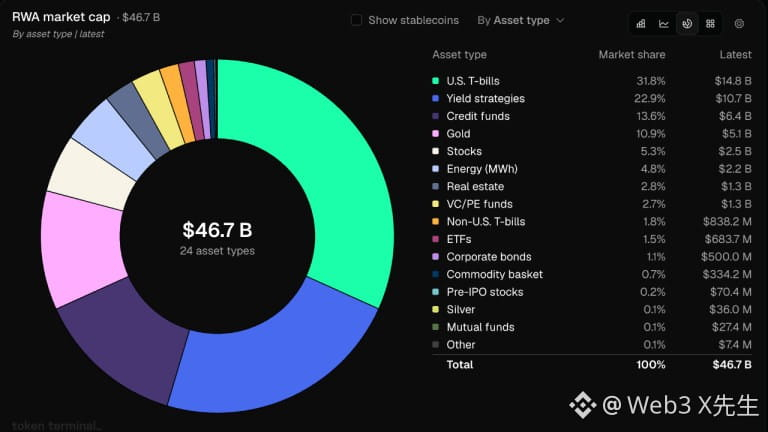
On-chain tokenized real-world assets were already standing at $46.7B a day ago. Over three years, the entire market size has grown by a full 17.4x. What’s rising isn’t new coins, but credit funds, gold, and tokenized stocks.
First, separate two things: one layer is issuance, and the other is whether it can actually be used. In the issuance layer, $6.4B went into credit funds, and $5.1B went into gold. But what truly ended up sitting in on-chain DeFi liquidity is only $3.6B.
The real part worth looking at is the level of concentration among issuers. The top three issuers are $4.6B, $4.5B, and $3.5B respectively. No one exceeds a 10% market share— the leader and runner-up are only about $100M apart.
For crypto, the money being put on-chain is now being converted into another batch of new sources. Ethereum alone took 49.1%, nearly $22.9B. Over the past 30 days, Solana also chased in an additional $260M.
Do you think this wave of tokenization reflects genuine demand entering the market—or concept-driven hype? Let’s discuss in the comments.
【On-chain tokenization of real-world assets hits $46.7B, with Ethereum taking half alone 📈】
Group chat: 📲 加入X先生的粉丝群聊
On-chain tokenized real-world assets were already standing at $46.7B a day ago. Over three years, the entire market size has grown by a full 17.4x. What’s rising isn’t new coins, but credit funds, gold, and tokenized stocks.
First, separate two things: one layer is issuance, and the other is whether it can actually be used. In the issuance layer, $6.4B went into credit funds, and $5.1B went into gold. But what truly ended up sitting in on-chain DeFi liquidity is only $3.6B.
The real part worth looking at is the level of concentration among issuers. The top three issuers are $4.6B, $4.5B, and $3.5B respectively. No one exceeds a 10% market share— the leader and runner-up are only about $100M apart.
For crypto, the money being put on-chain is now being converted into another batch of new sources. Ethereum alone took 49.1%, nearly $22.9B. Over the past 30 days, Solana also chased in an additional $260M.
Do you think this wave of tokenization reflects genuine demand entering the market—or concept-driven hype? Let’s discuss in the comments.
Group chat: 📲 加入X先生的粉丝群聊
On-chain tokenized real-world assets were already standing at $46.7B a day ago. Over three years, the entire market size has grown by a full 17.4x. What’s rising isn’t new coins, but credit funds, gold, and tokenized stocks.
First, separate two things: one layer is issuance, and the other is whether it can actually be used. In the issuance layer, $6.4B went into credit funds, and $5.1B went into gold. But what truly ended up sitting in on-chain DeFi liquidity is only $3.6B.
The real part worth looking at is the level of concentration among issuers. The top three issuers are $4.6B, $4.5B, and $3.5B respectively. No one exceeds a 10% market share— the leader and runner-up are only about $100M apart.
For crypto, the money being put on-chain is now being converted into another batch of new sources. Ethereum alone took 49.1%, nearly $22.9B. Over the past 30 days, Solana also chased in an additional $260M.
Do you think this wave of tokenization reflects genuine demand entering the market—or concept-driven hype? Let’s discuss in the comments.
239
·
--
【Encryption bill 49 out of 50 failed, Bitcoin drops below $75K 📉】
Group chat: [📲 加入X先生的粉丝群聊](https://app.binance.com/uni-qr/XP5J3ynH)
On Tuesday, the U.S. Senate cast a procedural vote on the CLARITY bill.
The result was 49 in favor and 50 against—11 votes short of the 60-vote threshold.
After the news broke, Bitcoin briefly fell below $75,000, dropping more than 5% in a single day.
First, let’s separate one thing: what failed this time was the procedure, not the bill’s content.
A procedural vote only determines whether the bill can be brought to a formal debate in the Senate.
With 49 to 50, it didn’t even get the right to enter debate—the bill was stuck at the door.
What’s truly worth watching is how long the remaining window of time this year is.
Congress has fewer than 36 working days left this year, and there’s a midterm election in November.
If lawmakers want to redo it, it will most likely have to wait until next year, with a new Congress starting the process again.
For crypto, the biggest certainty has been pulled out by this single vote.
Without a federal framework, the regulatory division of labor between the SEC and the CFTC remains unclear.
For institutions trying to enter in a compliant way, they can only wait for approvals one by one—the timeline has been thrown off completely.
Do you think this blockage means the negative impact is already fully priced in once, or that the downturn is just getting started?
Let’s discuss in the comments.
【Encryption bill 49 out of 50 failed, Bitcoin drops below $75K 📉】
Group chat: 📲 加入X先生的粉丝群聊
On Tuesday, the U.S. Senate cast a procedural vote on the CLARITY bill.
The result was 49 in favor and 50 against—11 votes short of the 60-vote threshold.
After the news broke, Bitcoin briefly fell below $75,000, dropping more than 5% in a single day.
First, let’s separate one thing: what failed this time was the procedure, not the bill’s content.
A procedural vote only determines whether the bill can be brought to a formal debate in the Senate.
With 49 to 50, it didn’t even get the right to enter debate—the bill was stuck at the door.
What’s truly worth watching is how long the remaining window of time this year is.
Congress has fewer than 36 working days left this year, and there’s a midterm election in November.
If lawmakers want to redo it, it will most likely have to wait until next year, with a new Congress starting the process again.
For crypto, the biggest certainty has been pulled out by this single vote.
Without a federal framework, the regulatory division of labor between the SEC and the CFTC remains unclear.
For institutions trying to enter in a compliant way, they can only wait for approvals one by one—the timeline has been thrown off completely.
Do you think this blockage means the negative impact is already fully priced in once, or that the downturn is just getting started?
Let’s discuss in the comments.
Group chat: 📲 加入X先生的粉丝群聊
On Tuesday, the U.S. Senate cast a procedural vote on the CLARITY bill.
The result was 49 in favor and 50 against—11 votes short of the 60-vote threshold.
After the news broke, Bitcoin briefly fell below $75,000, dropping more than 5% in a single day.
First, let’s separate one thing: what failed this time was the procedure, not the bill’s content.
A procedural vote only determines whether the bill can be brought to a formal debate in the Senate.
With 49 to 50, it didn’t even get the right to enter debate—the bill was stuck at the door.
What’s truly worth watching is how long the remaining window of time this year is.
Congress has fewer than 36 working days left this year, and there’s a midterm election in November.
If lawmakers want to redo it, it will most likely have to wait until next year, with a new Congress starting the process again.
For crypto, the biggest certainty has been pulled out by this single vote.
Without a federal framework, the regulatory division of labor between the SEC and the CFTC remains unclear.
For institutions trying to enter in a compliant way, they can only wait for approvals one by one—the timeline has been thrown off completely.
Do you think this blockage means the negative impact is already fully priced in once, or that the downturn is just getting started?
Let’s discuss in the comments.

242
·
--
[Miners dig up a coin at a cost of 75,50000, and the current price leaves only $1,000 in buffer 😱]
Group chat: [📲 加入X先生的粉丝群聊](https://app.binance.com/uni-qr/XP5J3ynH)
CoinShares’ latest report does the math.
Listed mining companies mine one Bitcoin, with cash costs of about $75,500 in Q2.
At a current price of $76,500, down another 2.5% in 24 hours, the buffer is only about $1,000 left.
First, make it clear: cash cost only includes electricity and operations/maintenance.
Depreciation, interest, and mining-machine amortization are not included at all.
The real break-even line is higher, and both hashrate (978 EH/s) and difficulty (1.27 trillion) are also at elevated levels.
What’s really worth watching is that these miners have already pivoted to feeding AI.
CoinShares’ judgment is very straightforward: even if the coin price rebounds, it can’t pull them back.
The same electricity sold to AI under contract gets paid for directly, while mining can only watch the coin price’s mood.
For crypto, miners are the most stable sell-side for Bitcoin.
The current price is only about 1.3% above cost—either sell the coins, or shut down.
This cost line is the most fragile string on the supply side.
Do you think this round of miner selling pressure is the last drop of the shakeout, or the beginning of surrender? Let’s discuss in the comments.
[Miners dig up a coin at a cost of 75,50000, and the current price leaves only $1,000 in buffer 😱]
Group chat: 📲 加入X先生的粉丝群聊
CoinShares’ latest report does the math.
Listed mining companies mine one Bitcoin, with cash costs of about $75,500 in Q2.
At a current price of $76,500, down another 2.5% in 24 hours, the buffer is only about $1,000 left.
First, make it clear: cash cost only includes electricity and operations/maintenance.
Depreciation, interest, and mining-machine amortization are not included at all.
The real break-even line is higher, and both hashrate (978 EH/s) and difficulty (1.27 trillion) are also at elevated levels.
What’s really worth watching is that these miners have already pivoted to feeding AI.
CoinShares’ judgment is very straightforward: even if the coin price rebounds, it can’t pull them back.
The same electricity sold to AI under contract gets paid for directly, while mining can only watch the coin price’s mood.
For crypto, miners are the most stable sell-side for Bitcoin.
The current price is only about 1.3% above cost—either sell the coins, or shut down.
This cost line is the most fragile string on the supply side.
Do you think this round of miner selling pressure is the last drop of the shakeout, or the beginning of surrender? Let’s discuss in the comments.
Group chat: 📲 加入X先生的粉丝群聊
CoinShares’ latest report does the math.
Listed mining companies mine one Bitcoin, with cash costs of about $75,500 in Q2.
At a current price of $76,500, down another 2.5% in 24 hours, the buffer is only about $1,000 left.
First, make it clear: cash cost only includes electricity and operations/maintenance.
Depreciation, interest, and mining-machine amortization are not included at all.
The real break-even line is higher, and both hashrate (978 EH/s) and difficulty (1.27 trillion) are also at elevated levels.
What’s really worth watching is that these miners have already pivoted to feeding AI.
CoinShares’ judgment is very straightforward: even if the coin price rebounds, it can’t pull them back.
The same electricity sold to AI under contract gets paid for directly, while mining can only watch the coin price’s mood.
For crypto, miners are the most stable sell-side for Bitcoin.
The current price is only about 1.3% above cost—either sell the coins, or shut down.
This cost line is the most fragile string on the supply side.
Do you think this round of miner selling pressure is the last drop of the shakeout, or the beginning of surrender? Let’s discuss in the comments.
174
·
--
【Oil prices and U.S. Treasuries have been tied this tightly for the first time in seven years—markets have issues 📉】
Group chat: [📲 加入X先生的粉丝群聊](https://app.binance.com/uni-qr/XP5J3ynH)
The monthly correlation between oil prices and the 10-year U.S. Treasury yield has surged to 0.96.
This is the strongest since June 2019; the previous peak was in 2014.
On Monday, Treasury yields broke 5%, the first time since October 2023.
First, let’s make it clear: this is about correlation, not a simple cause-and-effect chain.
The conflict in the Middle East has pushed oil prices higher, and Brent crude briefly touched $106.
When oil rises, inflation expectations and Treasury yields tend to move up in sync.
What’s really worth watching is that the transmission speed along this chain is increasing.
When crude moves, inflation expectations, interest rates, and stock prices almost react simultaneously.
Energy news can now directly hit the stock market and the costs of credit and mortgages.
For crypto, this transmission chain is longer—and the “pulling water” is more急 and more intense.
Rising oil prices lift inflation expectations, making it harder for the Fed to cut rates this year.
With discount rates higher, high-volatility assets like Bitcoin are sold off first.
Do you think this round of linkage is just short-term noise—or the start of tightening? Let’s discuss in the comments section.
【Oil prices and U.S. Treasuries have been tied this tightly for the first time in seven years—markets have issues 📉】
Group chat: 📲 加入X先生的粉丝群聊
The monthly correlation between oil prices and the 10-year U.S. Treasury yield has surged to 0.96.
This is the strongest since June 2019; the previous peak was in 2014.
On Monday, Treasury yields broke 5%, the first time since October 2023.
First, let’s make it clear: this is about correlation, not a simple cause-and-effect chain.
The conflict in the Middle East has pushed oil prices higher, and Brent crude briefly touched $106.
When oil rises, inflation expectations and Treasury yields tend to move up in sync.
What’s really worth watching is that the transmission speed along this chain is increasing.
When crude moves, inflation expectations, interest rates, and stock prices almost react simultaneously.
Energy news can now directly hit the stock market and the costs of credit and mortgages.
For crypto, this transmission chain is longer—and the “pulling water” is more急 and more intense.
Rising oil prices lift inflation expectations, making it harder for the Fed to cut rates this year.
With discount rates higher, high-volatility assets like Bitcoin are sold off first.
Do you think this round of linkage is just short-term noise—or the start of tightening? Let’s discuss in the comments section.
Group chat: 📲 加入X先生的粉丝群聊
The monthly correlation between oil prices and the 10-year U.S. Treasury yield has surged to 0.96.
This is the strongest since June 2019; the previous peak was in 2014.
On Monday, Treasury yields broke 5%, the first time since October 2023.
First, let’s make it clear: this is about correlation, not a simple cause-and-effect chain.
The conflict in the Middle East has pushed oil prices higher, and Brent crude briefly touched $106.
When oil rises, inflation expectations and Treasury yields tend to move up in sync.
What’s really worth watching is that the transmission speed along this chain is increasing.
When crude moves, inflation expectations, interest rates, and stock prices almost react simultaneously.
Energy news can now directly hit the stock market and the costs of credit and mortgages.
For crypto, this transmission chain is longer—and the “pulling water” is more急 and more intense.
Rising oil prices lift inflation expectations, making it harder for the Fed to cut rates this year.
With discount rates higher, high-volatility assets like Bitcoin are sold off first.
Do you think this round of linkage is just short-term noise—or the start of tightening? Let’s discuss in the comments section.

234
Log in to explore more content
Join global crypto users on Binance Square
⚡️ Get latest and useful information about crypto.
💬 Trusted by the world’s largest crypto exchange.
👍 Discover real insights from verified creators.
Email / Phone number
Trending Topics
BitcoinSurpasses$77000
17,603 views
226 Discussing
$BTC is ripping higher despite it all. 🚀
Today marked the first rate hike in over 3 years, while the CLARITY Act stalled again yesterday.
Setup big long again - thank me later
Entry : $75500 - $76500
Stoploss : $74900
Take profit : $77000 - $78000
Get ready for a crazy growth cycle. 🔥
TF_bnb
·17 Likes
·7k views
ParadigmDisclosesZECHolding
69,493 views
1,065 Discussing
BitcoinETFsShed$450M
26,481 views
219 Discussing