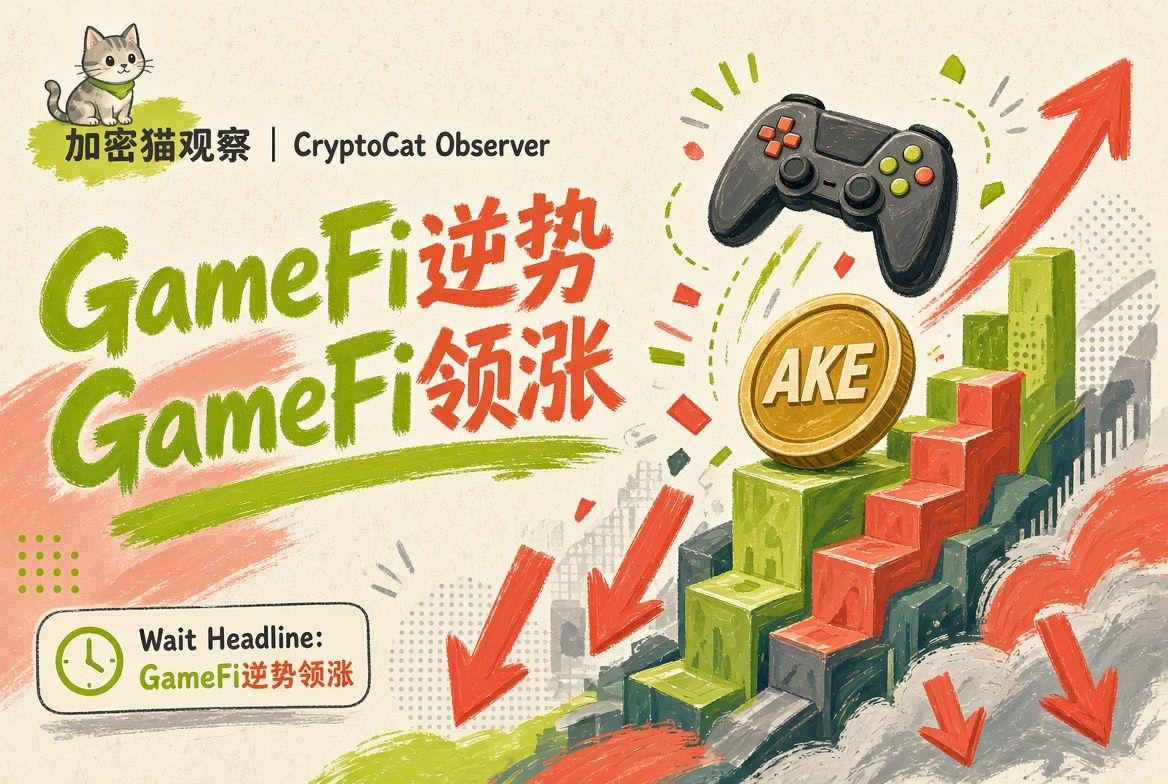
GameFi Leads the Rally Against the Trend
In the sector stats for September 16, most tracks fell along with the broader market. Over the past 24 hours, GameFi rose by about 9.65%. Among them, $AKE (Akedo) surged by more than 70% in the short term, becoming the elastic focal point for this window. In the same period, Memecoins, DeFi, and PayFi all recorded negative figures. The flow of capital looks less like it’s rotating within crowded themes and more like it’s moving toward thinner game-bet exposures.
Going against the trend does not necessarily mean fundamentals have suddenly improved. Trading in game tokens is often concentrated in just a few pools. A one-day volume spike can push prices very high, and the pullback can drop just as sharply. What it more likely indicates is this: amid the twin events of regulation and interest-rate hikes, there is still capital willing to bid up high-volatility narrative plays—not a collective step-up in revenue across the game chain.
When the core assets are digesting failed regulation and repricing of rate hikes, the thinnest segments are the easiest to use for relative trades—no because games are better, but because the float is smaller, there are fewer shorts, and you can generate “slope” within a single day. Names like AKE, which jumped 70% in one day, have pricing power determined by pool depth, not by daily active users or in-app purchases. If the trading activity cannot be sustained for two consecutive days, the leader will quickly turn into a laggard. Position sizing should be tighter than in mainstream coins. Rewriting “the sector is red” as a form of risk-hedging can cause rotation to be mistaken for a trend.
$AKE
#GameFi #板块轮动
Not investment advice
In the sector stats for September 16, most tracks fell along with the broader market. Over the past 24 hours, GameFi rose by about 9.65%. Among them, $AKE (Akedo) surged by more than 70% in the short term, becoming the elastic focal point for this window. In the same period, Memecoins, DeFi, and PayFi all recorded negative figures. The flow of capital looks less like it’s rotating within crowded themes and more like it’s moving toward thinner game-bet exposures.
Going against the trend does not necessarily mean fundamentals have suddenly improved. Trading in game tokens is often concentrated in just a few pools. A one-day volume spike can push prices very high, and the pullback can drop just as sharply. What it more likely indicates is this: amid the twin events of regulation and interest-rate hikes, there is still capital willing to bid up high-volatility narrative plays—not a collective step-up in revenue across the game chain.
When the core assets are digesting failed regulation and repricing of rate hikes, the thinnest segments are the easiest to use for relative trades—no because games are better, but because the float is smaller, there are fewer shorts, and you can generate “slope” within a single day. Names like AKE, which jumped 70% in one day, have pricing power determined by pool depth, not by daily active users or in-app purchases. If the trading activity cannot be sustained for two consecutive days, the leader will quickly turn into a laggard. Position sizing should be tighter than in mainstream coins. Rewriting “the sector is red” as a form of risk-hedging can cause rotation to be mistaken for a trend.
$AKE
#GameFi #板块轮动
Not investment advice