
周周1688
1.5k Posts

周周1688
 Square Verified+
1688品牌创始人 ‖ BNB布道者 ‖ 晚上19:00-22:00直播 ‖ KOL宣发&项目推广‖ 💗推特X:zzhou1688
High-Frequency Trader
9.1 Years
1.3K+ Following
100.3K+ Followers
155.9K+ Liked
Posts
All
Quotes
Videos
Live
PINNED

PINNED

Ahmed Ali Nizamani
·
--
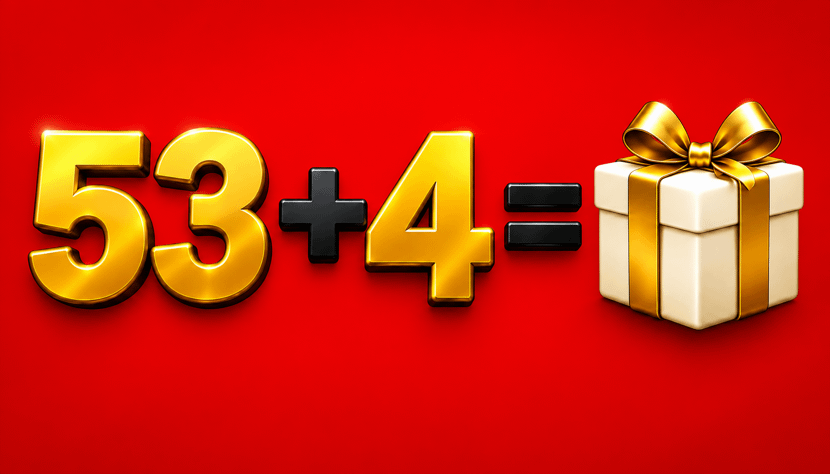
Solve this For 🎁🎁🎁🎁🎁🎁

Night King Official
·
--
Bullish⚡ No Time 🧧 3,000 Red Packets LIVE! 💥
Want a surprise gift? 👀
✅ Follow
🔁 Repost
💬 Comment YES
🎁 Claim your reward NOW!
Want a surprise gift? 👀
✅ Follow
🔁 Repost
💬 Comment YES
🎁 Claim your reward NOW!

Cryptology_7
·
--
𝙒𝙃𝙀𝙉 𝙏𝙃𝙀 𝙈𝘼𝙍𝙆𝙀𝙏 𝙂𝙀𝙏𝙎 𝙇𝙊𝙐𝘿, 𝙎𝙏𝘼𝙔 𝙌𝙐𝙄𝙀𝙏. 🤍🎀
𝘾𝙇𝘼𝙍𝙄𝙏𝙔 𝘾𝙊𝙈𝙀𝙎 𝙁𝙍𝙊𝙈 𝙋𝘼𝙏𝙄𝙀𝙉𝘾𝙀, 𝙉𝙊𝙏 𝙋𝙍𝙀𝙎𝙎𝙐𝙍𝙀. 🔥
#BinanceSquareFamily #CryptoPatience #Cryptology_7
$LSK
𝘾𝙇𝘼𝙍𝙄𝙏𝙔 𝘾𝙊𝙈𝙀𝙎 𝙁𝙍𝙊𝙈 𝙋𝘼𝙏𝙄𝙀𝙉𝘾𝙀, 𝙉𝙊𝙏 𝙋𝙍𝙀𝙎𝙎𝙐𝙍𝙀. 🔥
#BinanceSquareFamily #CryptoPatience #Cryptology_7
$LSK

king Gulfam
·
--
#FutureTradingSignals
$BULLA
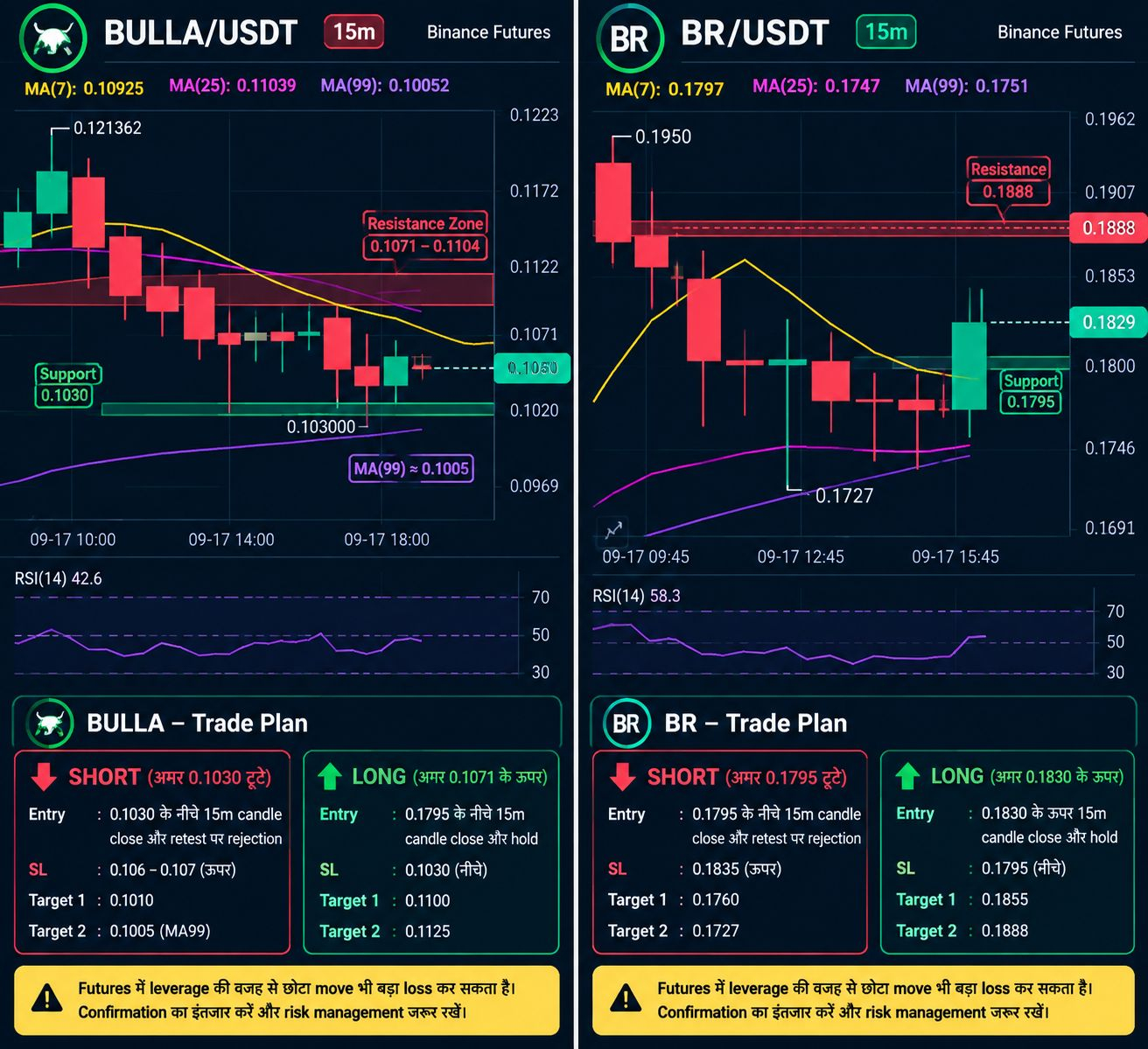
BULLA is showing bearish momentum on the 15m chart right now. Price is around 0.1050. 0.1030 support is important. If you get a candle close below it and a retest rejection, then you can look for a SHORT. Consider LONG only if there is a strong hold above 0.1071. Don’t rush into an entry right now, and please keep a stop-loss.
🔴 BULLA — SHORT
Entry: 0.1028–0.1030 below 15m close + retest
Stop Loss: 0.1060
Target 1: 0.1010
Target 2: 0.1005
$BR
In BR coin, bullish momentum is currently visible. Price is at 0.1829 and MA(7) is above. Take LONG only if there is a 15m candle close above 0.1830–0.1853. Keep stop-loss around 0.1795. If 0.1795 breaks, avoid LONG. Keep leverage low in futures and limit risk to your capital.
, A SHORT setup could form, but not immediately. The chart is showing a bounce around 0.1830.
Look for SHORT only when: there is a 15m candle close below 0.1795 and you get rejection on the retest.
SL: above 0.1835
Targets: 0.1760 → 0.1727
This is a confirmation-based setup; keep leverage low.
🟢 BR — LONG
Entry: 15m close + hold above 0.1830
Stop Loss: 0.1795
Target 1: 0.1855
Target 2: 0.1888
🔴 BR — SHORT POSITION
Entry: 15m candle close + retest below 0.1795
Stop Loss: 0.1835
Target 1: 0.1760
Target 2: 0.1727
Don’t take a short without breaking 0.1795. Keep leverage low in futures.
$SYN
$BULLA
BULLA is showing bearish momentum on the 15m chart right now. Price is around 0.1050. 0.1030 support is important. If you get a candle close below it and a retest rejection, then you can look for a SHORT. Consider LONG only if there is a strong hold above 0.1071. Don’t rush into an entry right now, and please keep a stop-loss.
🔴 BULLA — SHORT
Entry: 0.1028–0.1030 below 15m close + retest
Stop Loss: 0.1060
Target 1: 0.1010
Target 2: 0.1005
$BR
In BR coin, bullish momentum is currently visible. Price is at 0.1829 and MA(7) is above. Take LONG only if there is a 15m candle close above 0.1830–0.1853. Keep stop-loss around 0.1795. If 0.1795 breaks, avoid LONG. Keep leverage low in futures and limit risk to your capital.
, A SHORT setup could form, but not immediately. The chart is showing a bounce around 0.1830.
Look for SHORT only when: there is a 15m candle close below 0.1795 and you get rejection on the retest.
SL: above 0.1835
Targets: 0.1760 → 0.1727
This is a confirmation-based setup; keep leverage low.
🟢 BR — LONG
Entry: 15m close + hold above 0.1830
Stop Loss: 0.1795
Target 1: 0.1855
Target 2: 0.1888
🔴 BR — SHORT POSITION
Entry: 15m candle close + retest below 0.1795
Stop Loss: 0.1835
Target 1: 0.1760
Target 2: 0.1727
Don’t take a short without breaking 0.1795. Keep leverage low in futures.
$SYN

慢就是快Mike
·
--
$ETH Will the rate hike affect the bull market???
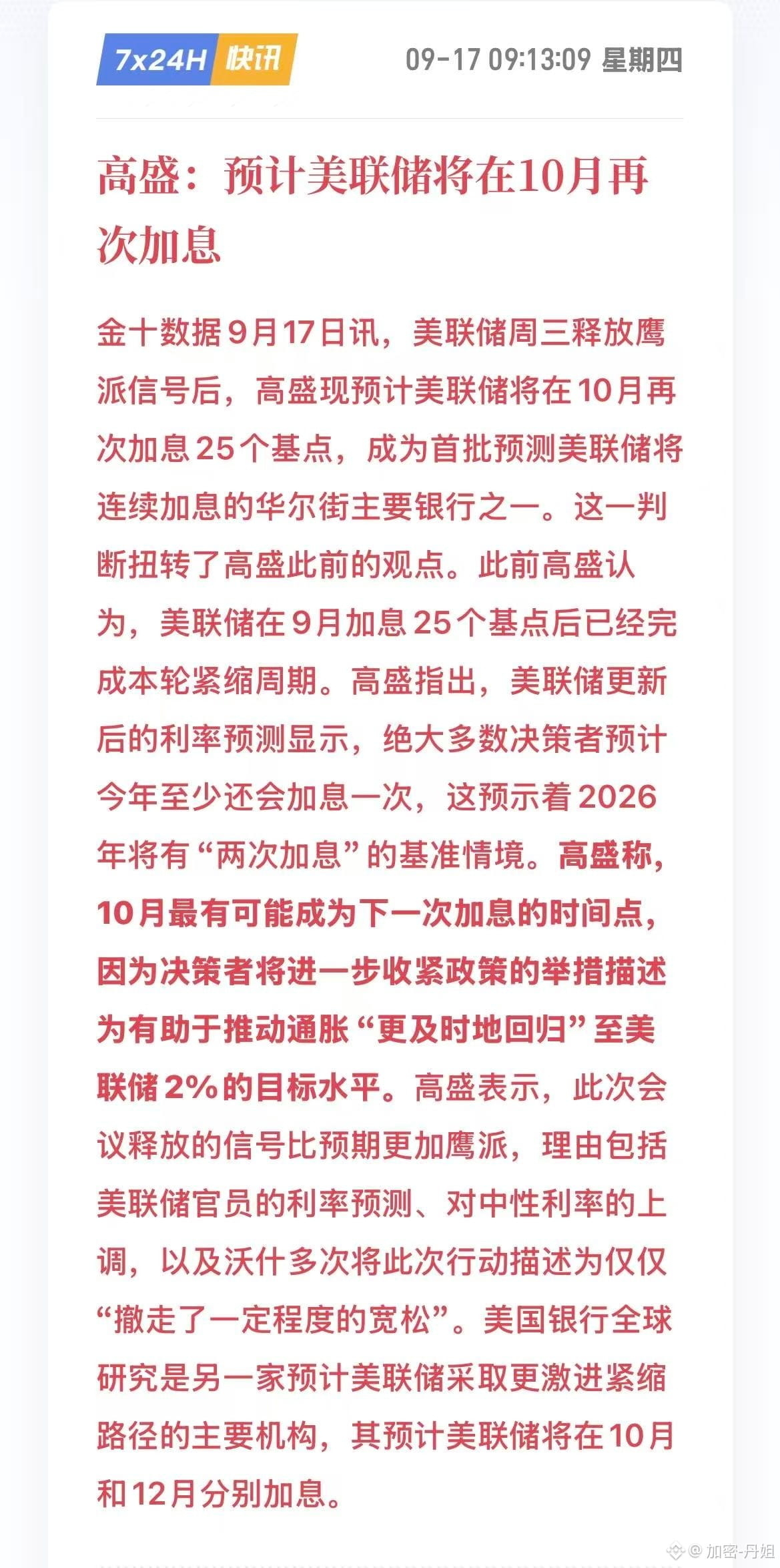
Last night, the Fed raised rates by 25 basis points as expected, bringing the federal funds rate to 3.75%–4%. After the news was released, BTC didn’t fall—rather, it rebounded, briefly reclaiming $76,000. ETH also followed with a bounce. But Dan Jie believes that what’s truly worth watching now isn’t the 25 basis points themselves, but what the Fed is planning to do next.
This time the hike was within expectations, and the market had already priced in the negative news in advance. So when the announcement landed, short-covering showed up, and it’s not surprising that BTC was pushed up.
However, judging from the policy signals, inflation is still on the high side, and the dot plot hasn’t fully shifted toward easing. By the end of 2026, the median rate is still around 3.9%.
Last night, the Fed raised rates by 25 basis points as expected, bringing the federal funds rate to 3.75%–4%. After the news was released, BTC didn’t fall—rather, it rebounded, briefly reclaiming $76,000. ETH also followed with a bounce. But Dan Jie believes that what’s truly worth watching now isn’t the 25 basis points themselves, but what the Fed is planning to do next.
This time the hike was within expectations, and the market had already priced in the negative news in advance. So when the announcement landed, short-covering showed up, and it’s not surprising that BTC was pushed up.
However, judging from the policy signals, inflation is still on the high side, and the dot plot hasn’t fully shifted toward easing. By the end of 2026, the median rate is still around 3.9%.

Muzamil Abbas⁷⁵ 穆扎米尔_阿巴斯
·
--
Bullish🚨 $DEXE COIN GIVEAWAY ALERT 🚨
🎁 $50 WORTH OF DEXE COIN GIVEAWAY 🎁
Today, I’m giving away $50 worth of DEXE Coin to my Binance community! 🔥❤️
Participating is super simple 👇
1️⃣ Follow me — Muzamil Abbas
2️⃣ Like this post ❤️
3️⃣ Repost this post 🔄
4️⃣ Comment “1” to claim 🎁
Good luck everyone! 🍀🔥
Stay connected and keep supporting ❤️
Trade Smart • Manage Risk • Stay Consistent
#MuzammilAbbas⁷⁵穆扎米拉巴斯
$BNB
$SOL

奋斗Hustle1688
·
--
[Replay] 🎙️ Build BNB together
03 h 37 m 09 s · 5.6k listens
·
--
🎙️ Crypto market trends discussion; answers to questions for newcomers ✅ build the Binance Plaza together 🦅 spread the spirit of freedom! maintain ecological balance!
End
03 h 11 m 41 s
9.1k
57


直上雲霄
·
--
Crypto Beginner 7-Day Starter Checklist
Day 1|First, understand what the crypto world is
• Learn about cryptocurrencies, blockchains, exchanges, and wallets
• Know the difference between spot and futures contracts—so you understand what you’re actually playing
• Build your first key concept: the crypto market is highly volatile; it’s not a guaranteed profit market
Day 2|Learn the basic terms
• First, get familiar with the most common tokens: BTC, ETH, and USDT.
• Understand private keys, recovery phrases (seed phrases), addresses, and gas fees.
• Learn what going long, going short, take profit, and stop loss mean.
Day 3|Learn the safety mindset
• Your private key and recovery phrase must never be shared with anyone.
• Don’t click links randomly, don’t sign approvals randomly, and don’t scan QR codes randomly.
• If you see “guaranteed profit,” “a teacher leading trades,” or “insider information,” raise your alert level immediately.
Day 4|Get familiar with the trading process
• Understand exchange registration, KYC, deposits, buying crypto, and withdrawing crypto.
• Practice with small amounts first—don’t start with a heavy position.
• Know how to check your asset balances and trading history.
Day 5|Learn how to read the market
• Read candlestick charts (K-lines), trading volume, and price change percentages
• First distinguish between news and price action—don’t blindly follow the crowd.
• Understand market sentiment and avoid chasing high and selling low.
Day 6|Build risk-control habits
• For every trade, decide in advance the maximum you can afford to lose.
• Don’t borrow money, don’t rush with random leverage, and don’t go all-in.
• Invest with spare money—first focus on staying alive.
Day 7|Write your own rules
• Write your entry conditions, stop-loss conditions, and take-profit conditions.
• Decide whether you’ll hold long-term or trade short-term.
• Create your own learning notes and keep updating them.
Day 1|First, understand what the crypto world is
• Learn about cryptocurrencies, blockchains, exchanges, and wallets
• Know the difference between spot and futures contracts—so you understand what you’re actually playing
• Build your first key concept: the crypto market is highly volatile; it’s not a guaranteed profit market
Day 2|Learn the basic terms
• First, get familiar with the most common tokens: BTC, ETH, and USDT.
• Understand private keys, recovery phrases (seed phrases), addresses, and gas fees.
• Learn what going long, going short, take profit, and stop loss mean.
Day 3|Learn the safety mindset
• Your private key and recovery phrase must never be shared with anyone.
• Don’t click links randomly, don’t sign approvals randomly, and don’t scan QR codes randomly.
• If you see “guaranteed profit,” “a teacher leading trades,” or “insider information,” raise your alert level immediately.
Day 4|Get familiar with the trading process
• Understand exchange registration, KYC, deposits, buying crypto, and withdrawing crypto.
• Practice with small amounts first—don’t start with a heavy position.
• Know how to check your asset balances and trading history.
Day 5|Learn how to read the market
• Read candlestick charts (K-lines), trading volume, and price change percentages
• First distinguish between news and price action—don’t blindly follow the crowd.
• Understand market sentiment and avoid chasing high and selling low.
Day 6|Build risk-control habits
• For every trade, decide in advance the maximum you can afford to lose.
• Don’t borrow money, don’t rush with random leverage, and don’t go all-in.
• Invest with spare money—first focus on staying alive.
Day 7|Write your own rules
• Write your entry conditions, stop-loss conditions, and take-profit conditions.
• Decide whether you’ll hold long-term or trade short-term.
• Create your own learning notes and keep updating them.


楠楠nannan势不可挡
·
--
🧧🧧🧧🧧🧧🧧🧧🧧🧧🧧🧧
Life isn’t a race—you don’t need to keep up with everyone’s pace. When you’re tired, slow down, take care of your emotions, and let ordinary days be warm enough. $BNB
Life isn’t a race—you don’t need to keep up with everyone’s pace. When you’re tired, slow down, take care of your emotions, and let ordinary days be warm enough. $BNB


圣克斯Lucky1688
·
--
🧧🎁🧧🎁🧧🎁
On September 17, the crypto industry saw multiple highly关注able sector updates and events. The core news mainly centered on regulatory roundtables, traditional financial giants entering the space, and industry summits, among other topics:
1. The U.S. SEC holds a 24-hour on-chain stock trading roundtable
On September 17, the U.S. Securities and Exchange Commission (SEC) hosted an important roundtable on “24-hour on-chain stock trading.” The meeting invited traditional financial giants such as BlackRock, Nasdaq, the New York Stock Exchange, and Robinhood, along with crypto industry participants and institutions.
Key agenda: The meeting aims to discuss the rule framework for enabling U.S. equities to settle on-chain 24/7.
Technology route competition: The market is currently focused on which blockchain—Ethereum or Solana—will take on the role of the primary underlying settlement infrastructure. Solana holds an advantage in terms of tokenized U.S. stock volume and low fees, while Ethereum is favored by traditional finance due to its deep institutional compliance foundation (such as BlackRock’s BUIDL fund).
2. The Fourth U.S. Crypto Banking, Compliance & Stablecoin Summit (CBC Summit USA) kicks off
The 4th annual CBC Summit USA was held on September 17 at the National Press Club in Washington, D.C.
Main focus: This summit brings together senior executives, regulators, and lawmakers across the industry. Key topics include crypto banking services, compliance frameworks, stablecoin development, and the deep integration of traditional finance with Web3.
3. Deeper cooperation between traditional industries and Web3 infrastructure
Hyundai explores the Avalanche ecosystem: After successfully completing a pilot project, Hyundai is considering further expanding its related business and applications on the Avalanche (Avalanche Protocol) blockchain.
Circle Arc mainnet goes live: Stablecoin issuer Circle’s Arc mainnet recently launched and has introduced support from payment giants such as Visa and Mastercard, injecting new momentum into the Web3 payments sector.
Overall, the Web3 industry updates on September 17 show that traditional financial regulators and Wall Street capital are accelerating the process of bringing assets on-chain and strengthening compliance.
Follow me—answer 1 will take away the $SOL red envelope.
🧧🎁🧧🎁🧧🎁
On September 17, the crypto industry saw multiple highly关注able sector updates and events. The core news mainly centered on regulatory roundtables, traditional financial giants entering the space, and industry summits, among other topics:
1. The U.S. SEC holds a 24-hour on-chain stock trading roundtable
On September 17, the U.S. Securities and Exchange Commission (SEC) hosted an important roundtable on “24-hour on-chain stock trading.” The meeting invited traditional financial giants such as BlackRock, Nasdaq, the New York Stock Exchange, and Robinhood, along with crypto industry participants and institutions.
Key agenda: The meeting aims to discuss the rule framework for enabling U.S. equities to settle on-chain 24/7.
Technology route competition: The market is currently focused on which blockchain—Ethereum or Solana—will take on the role of the primary underlying settlement infrastructure. Solana holds an advantage in terms of tokenized U.S. stock volume and low fees, while Ethereum is favored by traditional finance due to its deep institutional compliance foundation (such as BlackRock’s BUIDL fund).
2. The Fourth U.S. Crypto Banking, Compliance & Stablecoin Summit (CBC Summit USA) kicks off
The 4th annual CBC Summit USA was held on September 17 at the National Press Club in Washington, D.C.
Main focus: This summit brings together senior executives, regulators, and lawmakers across the industry. Key topics include crypto banking services, compliance frameworks, stablecoin development, and the deep integration of traditional finance with Web3.
3. Deeper cooperation between traditional industries and Web3 infrastructure
Hyundai explores the Avalanche ecosystem: After successfully completing a pilot project, Hyundai is considering further expanding its related business and applications on the Avalanche (Avalanche Protocol) blockchain.
Circle Arc mainnet goes live: Stablecoin issuer Circle’s Arc mainnet recently launched and has introduced support from payment giants such as Visa and Mastercard, injecting new momentum into the Web3 payments sector.
Overall, the Web3 industry updates on September 17 show that traditional financial regulators and Wall Street capital are accelerating the process of bringing assets on-chain and strengthening compliance.
Follow me—answer 1 will take away the $SOL red envelope.
🧧🎁🧧🎁🧧🎁



好运来Hawk
·
--
Bullish$Hawk 佛 only guides those who are destined/“fated” to it! #Hawk doesn’t expect everyone to understand it or be able to hold onto it!
#Hawk only guides those who have wisdom and are worthy of it❗️
#Hawk only guides those who have wisdom and are worthy of it❗️



Mira小白桃
·
--
Crude Oil Rises—Why Is Gold Under Pressure Instead?
Recently, the market has been influenced at the same time by geopolitical risks, energy prices, and expectations for Federal Reserve policy.
At present, Brent crude is around $107, while WTI is around $105. Oil prices have remained at elevated levels. What the market is most worried about is not crude oil itself, but its impact on inflation expectations.
The logic is simple:
Oil prices rise → inflation pressure increases → the Fed’s room to cut rates is constrained → U.S. Treasury yields rise → gold comes under pressure.
So right now, gold is being pulled by two forces:
On one hand, safe-haven demand driven by geopolitical conditions supports gold;
On the other hand, higher oil prices boost inflation and rate-expectation pressures that suppress gold.
That’s also why you can’t simply understand it as:
“Geopolitical risk rises = gold must rise.”
In reality, gold’s short-term price action still depends on the U.S. dollar and U.S. Treasury yields.
Currently, the 10-year Treasury yield is already around 5%. If yields continue to move higher, gold’s short-term downside pressure could increase further.
Next, I will focus on three variables:
First, crude oil.
If oil prices keep rising quickly, inflation expectations may heat up further.
Second, Treasury yields.
If the 10-year yield keeps moving higher, gold may continue to be weighed down.
Third, the Federal Reserve.
Today’s FOMC rate decision is only the first step; more important is the policy guidance/signals after the meeting.
If the Fed releases more hawkish signals:
A stronger dollar and firmer yields → gold faces pressure.
If the policy statement is not as hawkish as the market expected:
Yields fall back → gold receives support.
So my view on gold now won’t be based solely on geopolitical news.
Crude oil determines inflation expectations, interest rates determine the cost of capital, and risk-off/safe-haven sentiment determines how much support is underneath gold.
Only when all three factors move at the same time is the key to understanding this round of the gold market.
$XAU
$CL
$BZ
Recently, the market has been influenced at the same time by geopolitical risks, energy prices, and expectations for Federal Reserve policy.
At present, Brent crude is around $107, while WTI is around $105. Oil prices have remained at elevated levels. What the market is most worried about is not crude oil itself, but its impact on inflation expectations.
The logic is simple:
Oil prices rise → inflation pressure increases → the Fed’s room to cut rates is constrained → U.S. Treasury yields rise → gold comes under pressure.
So right now, gold is being pulled by two forces:
On one hand, safe-haven demand driven by geopolitical conditions supports gold;
On the other hand, higher oil prices boost inflation and rate-expectation pressures that suppress gold.
That’s also why you can’t simply understand it as:
“Geopolitical risk rises = gold must rise.”
In reality, gold’s short-term price action still depends on the U.S. dollar and U.S. Treasury yields.
Currently, the 10-year Treasury yield is already around 5%. If yields continue to move higher, gold’s short-term downside pressure could increase further.
Next, I will focus on three variables:
First, crude oil.
If oil prices keep rising quickly, inflation expectations may heat up further.
Second, Treasury yields.
If the 10-year yield keeps moving higher, gold may continue to be weighed down.
Third, the Federal Reserve.
Today’s FOMC rate decision is only the first step; more important is the policy guidance/signals after the meeting.
If the Fed releases more hawkish signals:
A stronger dollar and firmer yields → gold faces pressure.
If the policy statement is not as hawkish as the market expected:
Yields fall back → gold receives support.
So my view on gold now won’t be based solely on geopolitical news.
Crude oil determines inflation expectations, interest rates determine the cost of capital, and risk-off/safe-haven sentiment determines how much support is underneath gold.
Only when all three factors move at the same time is the key to understanding this round of the gold market.
$XAU
$CL
$BZ

北辰1688
·
--
BullishThe Fed hikes rates,
US stocks fall,
Treasury yields are still at high levels.
And somehow BTC still didn’t give the bears a clean knockout 😂
$75,000 gets dumped, then it turns right around and pokes back up to $76,000.
The more times the market is obvious enough for everyone to understand, the more likely surprises are.
Drop “888” in the comments; sis, send a few red packets to calm the nerves.
$BTC
US stocks fall,
Treasury yields are still at high levels.
And somehow BTC still didn’t give the bears a clean knockout 😂
$75,000 gets dumped, then it turns right around and pokes back up to $76,000.
The more times the market is obvious enough for everyone to understand, the more likely surprises are.
Drop “888” in the comments; sis, send a few red packets to calm the nerves.
$BTC


远方1688BNB
·
--
You don’t have to live as a “standard answer”
Keep going seriously
That’s your own answer
#定投BTC #定投BNB
Keep going seriously
That’s your own answer
#定投BTC #定投BNB


燕寶Melissa
·
--
Bearish🚀 ETF Store CEO: The Crypto Future Isn’t Determined by a Single Bill!
The “Clarity Act” will affect market sentiment for crypto, but it isn’t the only variable that determines the industry’s future.
ETF Store CEO Nate Geraci says:
Even if the “Clarity Act” can’t secure enough votes this week to move forward, the crypto industry’s progress won’t come to a halt.
The reason is simple—
The pace of market innovation is always faster than the pace of regulatory legislation.
Under the Trump administration’s environment, the SEC and CFTC may still use existing regulatory authority to drive the digital asset industry forward.
The real force that will change the financial system comes not only from policy documents, but from:
✅ Institutional capital continuing to flow in
✅ The capital bridge created by BTC ETFs
✅ Upgrades to on-chain financial infrastructure
✅ AI × Web3 fusion and innovation
✅ The global trend toward digitizing assets
The “Clarity Act” is more like an “accelerator” — boosting market confidence and helping the industry develop more smoothly.
But Crypto’s big-picture trajectory won’t pause because of a single bill.
As traditional finance gradually embraces blockchain, the upgrade to the future financial system may already be quietly underway.
#比特币下跌4%
$BTC
$ETH
$BNB
The “Clarity Act” will affect market sentiment for crypto, but it isn’t the only variable that determines the industry’s future.
ETF Store CEO Nate Geraci says:
Even if the “Clarity Act” can’t secure enough votes this week to move forward, the crypto industry’s progress won’t come to a halt.
The reason is simple—
The pace of market innovation is always faster than the pace of regulatory legislation.
Under the Trump administration’s environment, the SEC and CFTC may still use existing regulatory authority to drive the digital asset industry forward.
The real force that will change the financial system comes not only from policy documents, but from:
✅ Institutional capital continuing to flow in
✅ The capital bridge created by BTC ETFs
✅ Upgrades to on-chain financial infrastructure
✅ AI × Web3 fusion and innovation
✅ The global trend toward digitizing assets
The “Clarity Act” is more like an “accelerator” — boosting market confidence and helping the industry develop more smoothly.
But Crypto’s big-picture trajectory won’t pause because of a single bill.
As traditional finance gradually embraces blockchain, the upgrade to the future financial system may already be quietly underway.
#比特币下跌4%
$BTC
$ETH
$BNB


CJ_GraceWang1688
·
--
🎁🎁
Watching others eat meat~#Zcash上涨6%
$ZEC
Are you on board?
Watching others eat meat~#Zcash上涨6%
$ZEC
Are you on board?
Log in to explore more content