

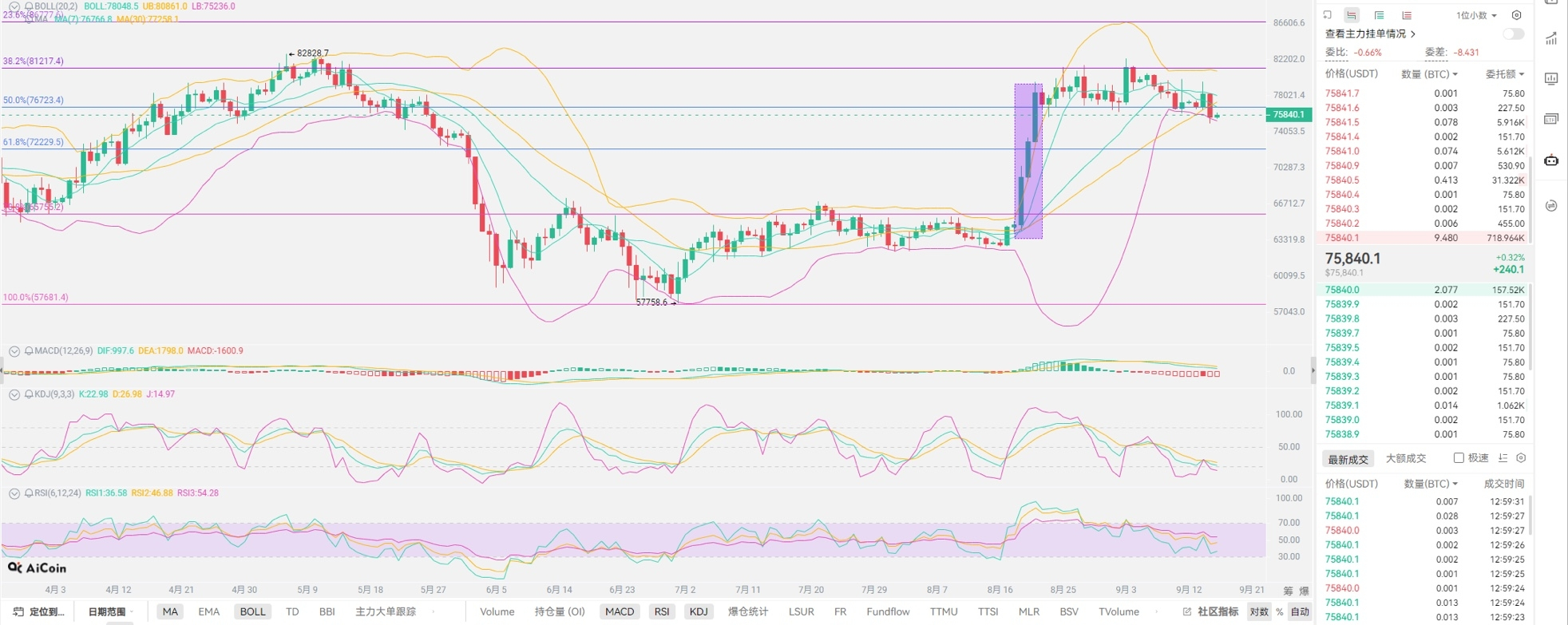

The market has once again returned to the bearish range, making its first dip below the 75,000 mark and reaching around 74,900. The current price is 75,798. From the data: yesterday, net outflows from U.S. spot BTC ETFs totaled $450 million, the highest single-day net outflow since August 4. Among them, the largest outflow was from FBTC, at $215 million; followed by IBIT, with outflows of $162 million. Bitcoin outflows are still relatively notable. At present, only large “whale” users have been closing positions; there hasn’t been any general liquidation or panic sell-off. More participants are still waiting and watching for the upcoming FOMC meeting. What matters is not whether the final outcome is a rate hike, a rate cut, or a decision to keep rates unchanged. Rather, it’s the remarks after the decision. In the current situation, Hasett directly stated that: “Trump and I respect any decision made by the Fed Chair, Kevin Warsh.” Lao Cui’s interpretation is that the outcome is already set—Trump has recognized the current financial predicament facing the U.S. While a rate hike is not something to fear, what’s truly concerning is entering a rate-hiking cycle.
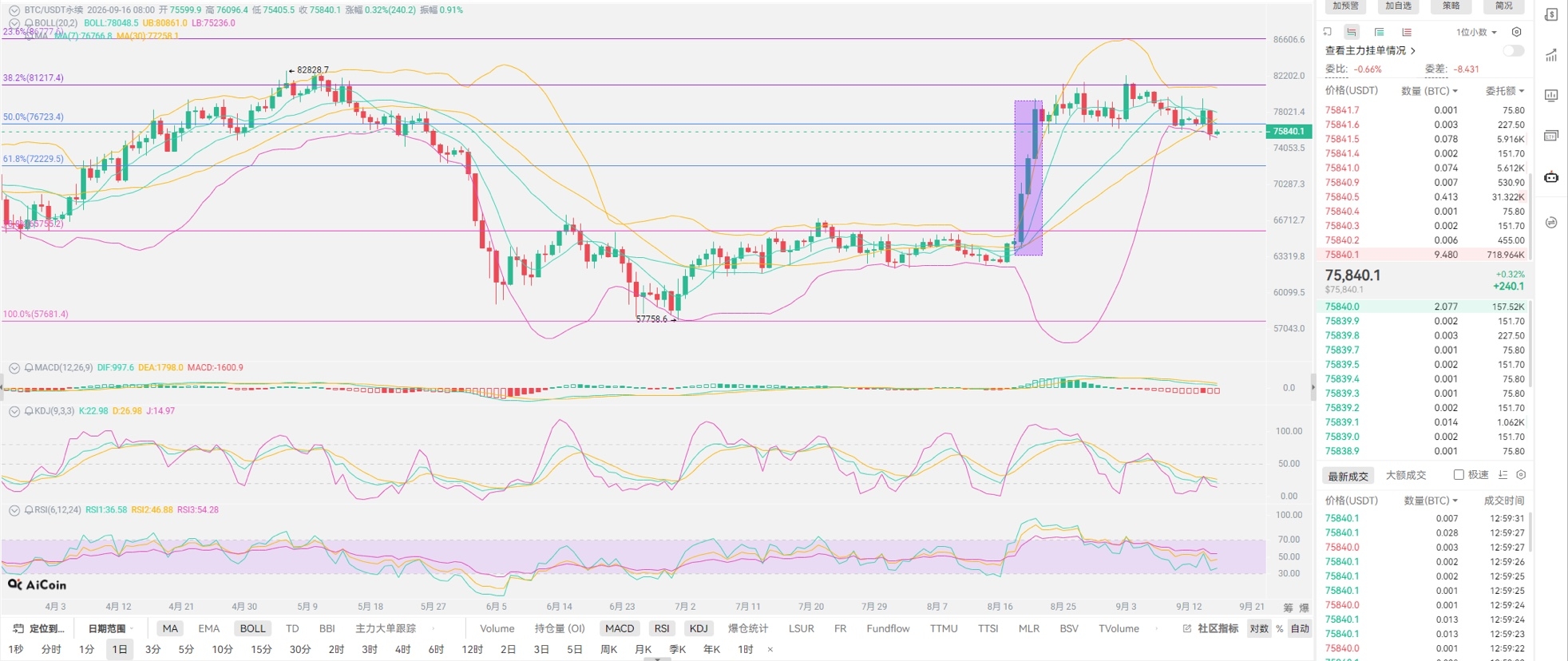
No matter what, the short-term downtrend for the bears cannot be changed. Once we enter the rate-hiking cycle, the depth (extent) is hard to predict—the core is to observe the final tone of the statements. Everyone’s thinking must be ready to change at any time. Last year, Lao Cui predicted that this year should reach new highs, but after Trump took action against Venezuela and Iran, domestic inflation rose sharply, and Lao Cui’s thinking shifted accordingly. It’s very normal for a bull market to arrive during a rate-cut cycle. But once we step into a rate-hiking cycle, the probability of a bear market is extremely high—especially because in the crypto market, the asset class belongs to the technology sector, so the impact is likely to be even bigger. On top of that, there was the issue with yesterday’s treasury notes. With this situation, no capital is willing to keep buying into the crypto sector. Given this broader backdrop, you still shouldn’t be thinking about whether there will be a bull-market rebound—this is a bit too naive. In this FOMC meeting, if Waller doesn’t address the problem of the rate-hiking cycle directly, then declines will likely follow. Lao Cui’s expectation is at least a 1,000–3,000 point drop.
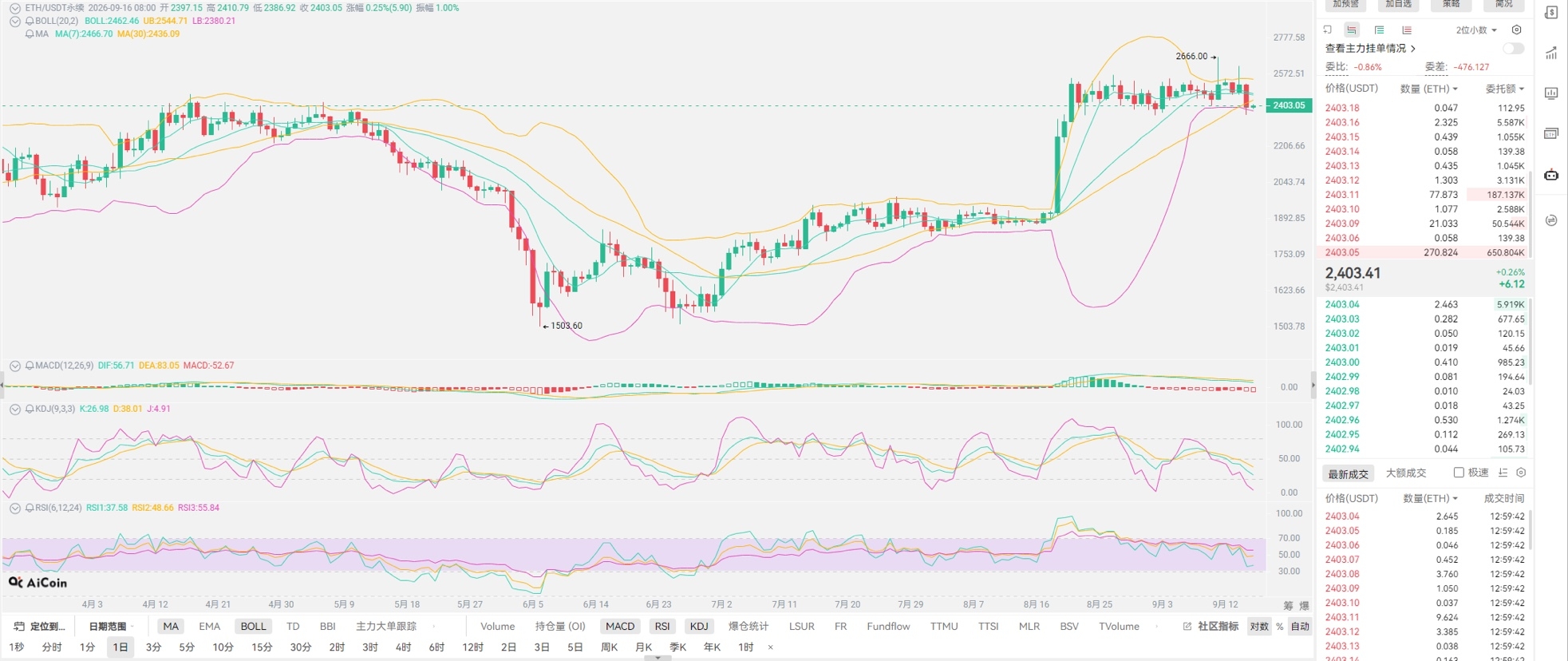
Amid the many bearish headlines, today also brings some bullish news: the U.S. House of Representatives will hold an official vote today on the Bitcoin strategic reserve bill. This news won’t cause capital to flow in. Even if the reserve bill passes, it would only fix and store illicit proceeds—that is, the previously seized BTC. The commitment is merely not to sell the BTC within the specified period. Compared with Bitcoin’s price action, this won’t have much impact. It’s a long-term bullish development, with no major effects in the short term. If it’s rejected, it could deepen the downside range for Bitcoin again. This is not really a reference-level catalyst; the market’s attention is basically being drawn to the FOMC meeting. Relative to the FOMC meeting, what Lao Cui cares about more is the “liquidity flood” (i.e., easing). While the FOMC meeting can affect the liquidity strategy, the only thing that can rescue the financial markets strategy right now is liquidity flooding—only that can extend the cycle of a bull market. Clearly, that’s a bit of wishful thinking, and short-term conditions won’t bring about that kind of scenario.
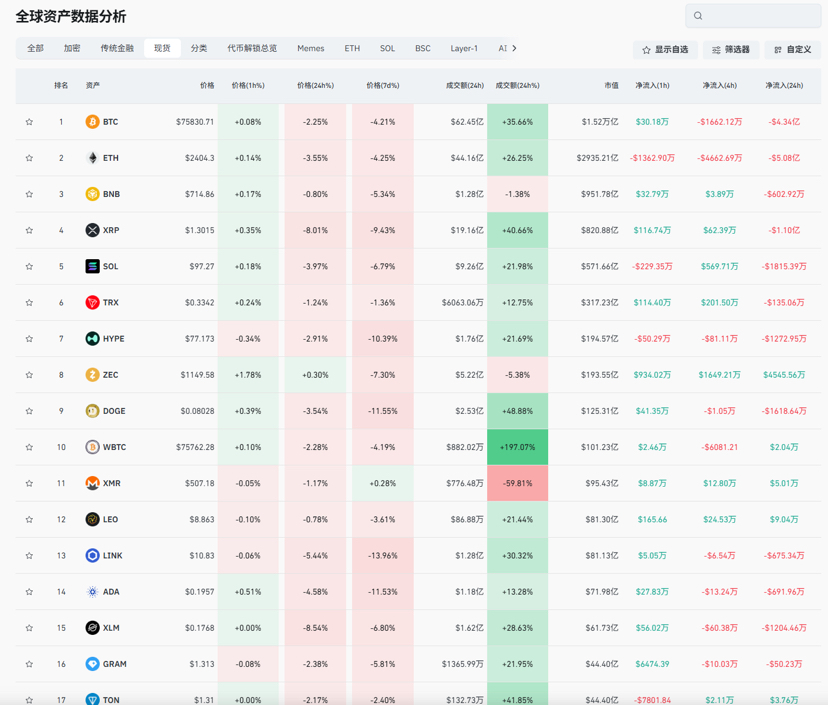
Lao Cui’s summary: Overall, at this stage, the market trend matches our earlier predictions almost exactly. As for the FOMC meeting, the depth we analyzed beforehand has already been sufficient. The core focus remains on short-term positioning. Bitcoin’s near-term pressure level is around 76,500. Today’s rebound strength is insufficient. Constrained by the results of the near-term meeting, it’s likely that price movement won’t be too large. However, the closer you get to the time the announcement is released, the more volatile the market will become. The risks you need to avoid are basically the whipsaws that happen around the speeches. As long as your stop-loss level can be kept above 5,000 points, this trade is fairly solid, and there will generally be some profit. The exit timing hasn’t changed: as long as price breaks below the key level of 75,000, the 73,000 area should be tested within no more than three days. For short positions, there’s no need to worry too much. For users who were trapped in earlier longs/positions, remember: if you have gains, exit; even if you have losses, it’s okay to close and flatten—don’t treat this trade as being in the “profit” category unless you plan to add more. That’s all for today’s explanation. Today, Lao Cui will also be laying out entry positions. If you have any ideas, you can chat with Lao Cui too!