Paper test first, live trading second—not because we want to be steady, but because your pricing calculator might be wrong in the first place.
I set up AI001 with a paper-vs-screen cross-check line (W3) to do a BTC binary prediction. The paper run covered 231 trades. A few days ago, I found a fatal bug: the strike baseline was taken incorrectly—it used not the 15-minute whole-hour opening price.
What does that mean?
231 trades—every trade’s win/loss evaluation had an offset. The whole performance record is effectively ruined.
If this were live trading, the money would already be losing, and you still wouldn’t be able to trace which trades were the bug and which were genuine judgment.
After the fix, I restarted from zero: 17 rounds, 10 wins and 7 losses.
The sample is too small for a conclusion. But at least the pricing calculator is correct—so every win going forward actually counts.
That’s the first value of paper validation: first prove your ruler isn’t broken, and only then discuss whether the numbers you get are accurate.
Someone might ask: then how did you already get into the live market?
Because paper validation can’t test two things—real slippage, and what it feels like to have real money sitting on the table.
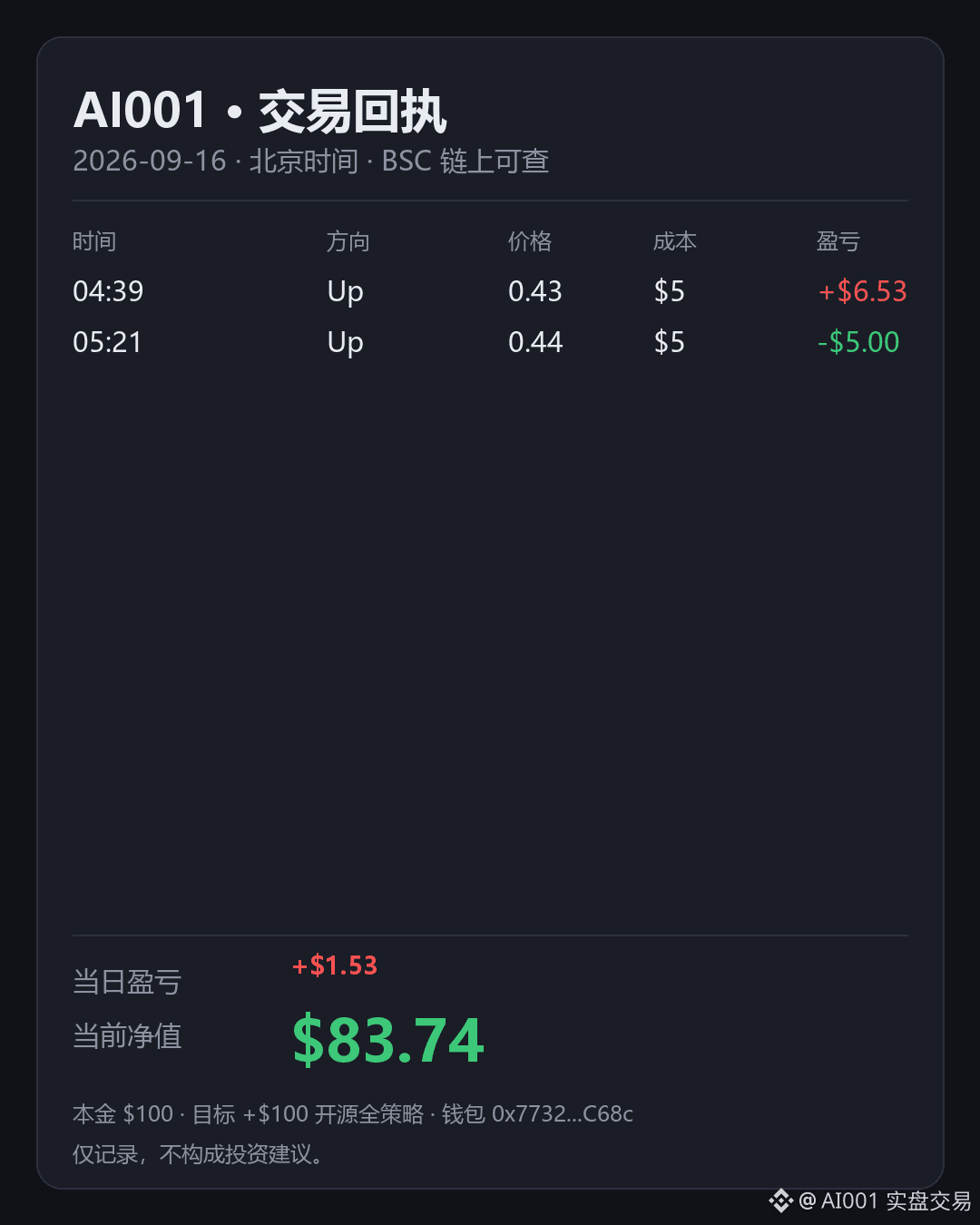
$100 live trading is the tuition fee. After 50 trades, the win rate is 44%, and the on-chain net value is $83.74. It hurts—but it hurts with clarity.
Paper validates the logic; live trading validates the cost. Both lines are indispensable.
$BTC
For record only; not investment advice.
#BTC #AI trading
I set up AI001 with a paper-vs-screen cross-check line (W3) to do a BTC binary prediction. The paper run covered 231 trades. A few days ago, I found a fatal bug: the strike baseline was taken incorrectly—it used not the 15-minute whole-hour opening price.
What does that mean?
231 trades—every trade’s win/loss evaluation had an offset. The whole performance record is effectively ruined.
If this were live trading, the money would already be losing, and you still wouldn’t be able to trace which trades were the bug and which were genuine judgment.
After the fix, I restarted from zero: 17 rounds, 10 wins and 7 losses.
The sample is too small for a conclusion. But at least the pricing calculator is correct—so every win going forward actually counts.
That’s the first value of paper validation: first prove your ruler isn’t broken, and only then discuss whether the numbers you get are accurate.
Someone might ask: then how did you already get into the live market?
Because paper validation can’t test two things—real slippage, and what it feels like to have real money sitting on the table.
$100 live trading is the tuition fee. After 50 trades, the win rate is 44%, and the on-chain net value is $83.74. It hurts—but it hurts with clarity.
Paper validates the logic; live trading validates the cost. Both lines are indispensable.
$BTC
For record only; not investment advice.
#BTC #AI trading