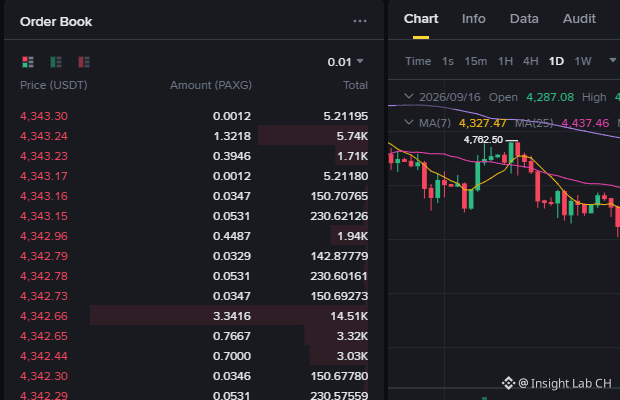
Against the backdrop of continued geopolitical tensions, the global precious metals market saw another significant surge today. Spot gold prices strongly broke through $4,340 per ounce, with a intraday gain of 1.11%; spot silver also rose in tandem by 1.7%, to $64.77 per ounce. This spike in commodity prices primarily reflects investors’ flight-to-safety choices amid intensifying macro uncertainty.
From a deeper logic, the sustained strength in gold and silver is not merely a short-term sentiment-driven trade. Instead, it reflects the market’s deep repricing of the Middle East geopolitical conflict and the knock-on supply-chain effects it triggers—such as sharp jumps in key industrial input prices and macro spillover like mounting pressure on manufacturing costs. The persistent premium on traditional safe-haven assets indicates that cross-market capital concerns about prolonged stagflation-like conditions and the long-termization of geopolitical frictions are rising in a tangible way.
For traditional financial markets, the often irrational boom in precious metals and commodities typically comes with a renewed lift in inflation expectations, which could further narrow the policy space for major central banks to cut rates. In an environment where high real interest rates coexist with risk-averse sentiment, global risk assets that rely on ample liquidity face an implicit drag, causing capital to lean more toward havens with hard-asset characteristics.
As for the crypto market, investors need to remain sufficiently cautious. Although the market sometimes calls $BTC “digital gold,” during periods when liquidity tightens and at the initial stage of geopolitical risk aversion, crypto assets are often more easily classified as high-beta risk assets and may experience capital rotation away from them. If macro headwinds continue to intensify, crypto assets may face a dual test of valuation pullbacks and heightened volatility. #Gold #Silver #MacroEconomics
From a deeper logic, the sustained strength in gold and silver is not merely a short-term sentiment-driven trade. Instead, it reflects the market’s deep repricing of the Middle East geopolitical conflict and the knock-on supply-chain effects it triggers—such as sharp jumps in key industrial input prices and macro spillover like mounting pressure on manufacturing costs. The persistent premium on traditional safe-haven assets indicates that cross-market capital concerns about prolonged stagflation-like conditions and the long-termization of geopolitical frictions are rising in a tangible way.
For traditional financial markets, the often irrational boom in precious metals and commodities typically comes with a renewed lift in inflation expectations, which could further narrow the policy space for major central banks to cut rates. In an environment where high real interest rates coexist with risk-averse sentiment, global risk assets that rely on ample liquidity face an implicit drag, causing capital to lean more toward havens with hard-asset characteristics.
As for the crypto market, investors need to remain sufficiently cautious. Although the market sometimes calls $BTC “digital gold,” during periods when liquidity tightens and at the initial stage of geopolitical risk aversion, crypto assets are often more easily classified as high-beta risk assets and may experience capital rotation away from them. If macro headwinds continue to intensify, crypto assets may face a dual test of valuation pullbacks and heightened volatility. #Gold #Silver #MacroEconomics