**INDONESIA’S FISCAL CREDIBILITY IS ON TRIAL.**
Indonesia has a new Finance Minister — but the real problem is far bigger than one chair.
**Suahasil Nazara is now facing a brutal test: restore fiscal credibility while funding Prabowo’s expensive growth agenda with increasingly limited fiscal space.**
This is not just about replacing a minister.
It is about **investor confidence, budget discipline, the rupiah, bond markets, and the relationship between fiscal policy and Bank Indonesia.**
The warning signs are already visible.
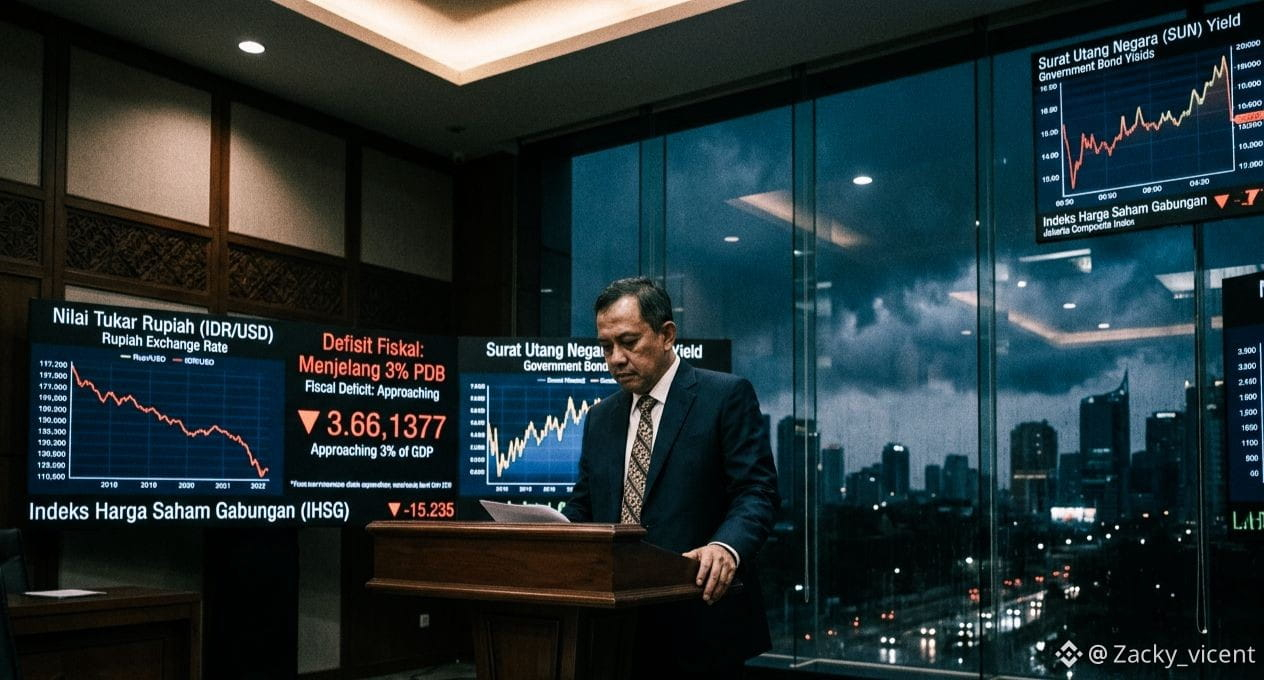
A volatile year has put Indonesia’s fiscal framework under intense scrutiny. Rising energy costs have increased pressure on subsidies, forcing difficult choices on government programs. Markets reacted harshly, with Indonesian equities suffering a major decline and the rupiah reaching a record low earlier this year, according to the report.
The fiscal deficit is projected at **2.85% of GDP in 2026** — dangerously close to the government’s **3% ceiling**.
And that is where the shit gets real.
Nazara has promised to protect budget credibility and keep the deficit below 3%.
But promises are cheap.
**Numbers are not.**
Investors will be watching the 2027 budget:
→ How much will the government spend?
→ Where will the money come from?
→ Which programs will be cut or delayed?
→ Will revenue assumptions remain realistic?
→ Will fiscal expansion continue?
→ And how independent will monetary policy remain?
The pressure is enormous.
Indonesia wants faster economic growth.
Prabowo wants to push an ambitious development agenda.
But every rupiah spent has a cost.
And when fiscal space gets tighter, eventually the market starts asking one brutal question:
**WHO IS GOING TO PAY FOR ALL OF THIS?**
The Bank Indonesia dimension makes the situation even more sensitive.
BI officially installed **Destry Damayanti as Governor on September 2, 2026**, for a five-year term. Thomas Djiwandono, Prabowo’s nephew, was also appointed as a BI Deputy Governor in February..
$BTC
Indonesia has a new Finance Minister — but the real problem is far bigger than one chair.
**Suahasil Nazara is now facing a brutal test: restore fiscal credibility while funding Prabowo’s expensive growth agenda with increasingly limited fiscal space.**
This is not just about replacing a minister.
It is about **investor confidence, budget discipline, the rupiah, bond markets, and the relationship between fiscal policy and Bank Indonesia.**
The warning signs are already visible.
A volatile year has put Indonesia’s fiscal framework under intense scrutiny. Rising energy costs have increased pressure on subsidies, forcing difficult choices on government programs. Markets reacted harshly, with Indonesian equities suffering a major decline and the rupiah reaching a record low earlier this year, according to the report.
The fiscal deficit is projected at **2.85% of GDP in 2026** — dangerously close to the government’s **3% ceiling**.
And that is where the shit gets real.
Nazara has promised to protect budget credibility and keep the deficit below 3%.
But promises are cheap.
**Numbers are not.**
Investors will be watching the 2027 budget:
→ How much will the government spend?
→ Where will the money come from?
→ Which programs will be cut or delayed?
→ Will revenue assumptions remain realistic?
→ Will fiscal expansion continue?
→ And how independent will monetary policy remain?
The pressure is enormous.
Indonesia wants faster economic growth.
Prabowo wants to push an ambitious development agenda.
But every rupiah spent has a cost.
And when fiscal space gets tighter, eventually the market starts asking one brutal question:
**WHO IS GOING TO PAY FOR ALL OF THIS?**
The Bank Indonesia dimension makes the situation even more sensitive.
BI officially installed **Destry Damayanti as Governor on September 2, 2026**, for a five-year term. Thomas Djiwandono, Prabowo’s nephew, was also appointed as a BI Deputy Governor in February..
$BTC