

Everyone in crypto was waiting for September 15.
For days, the market had been watching one question:
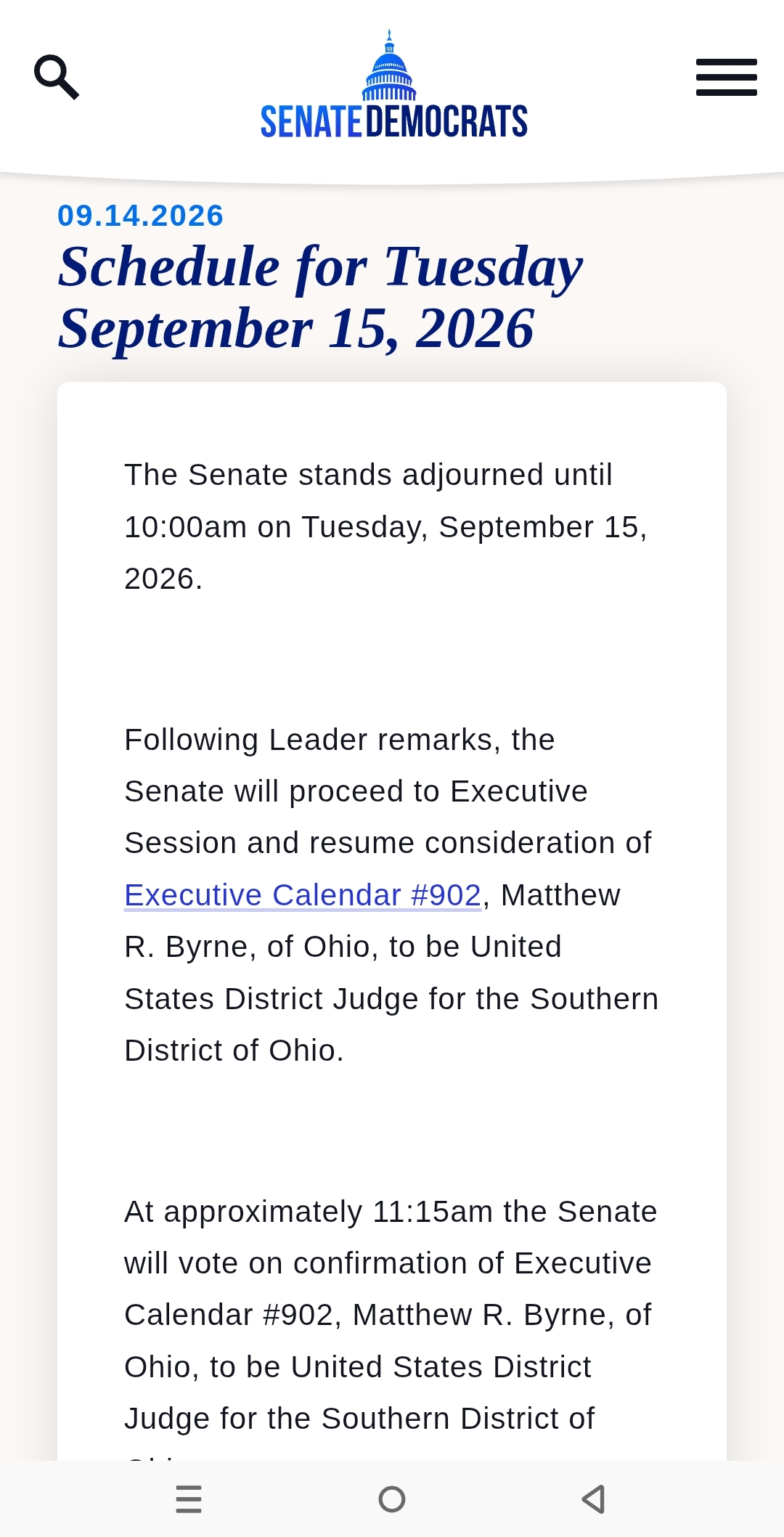
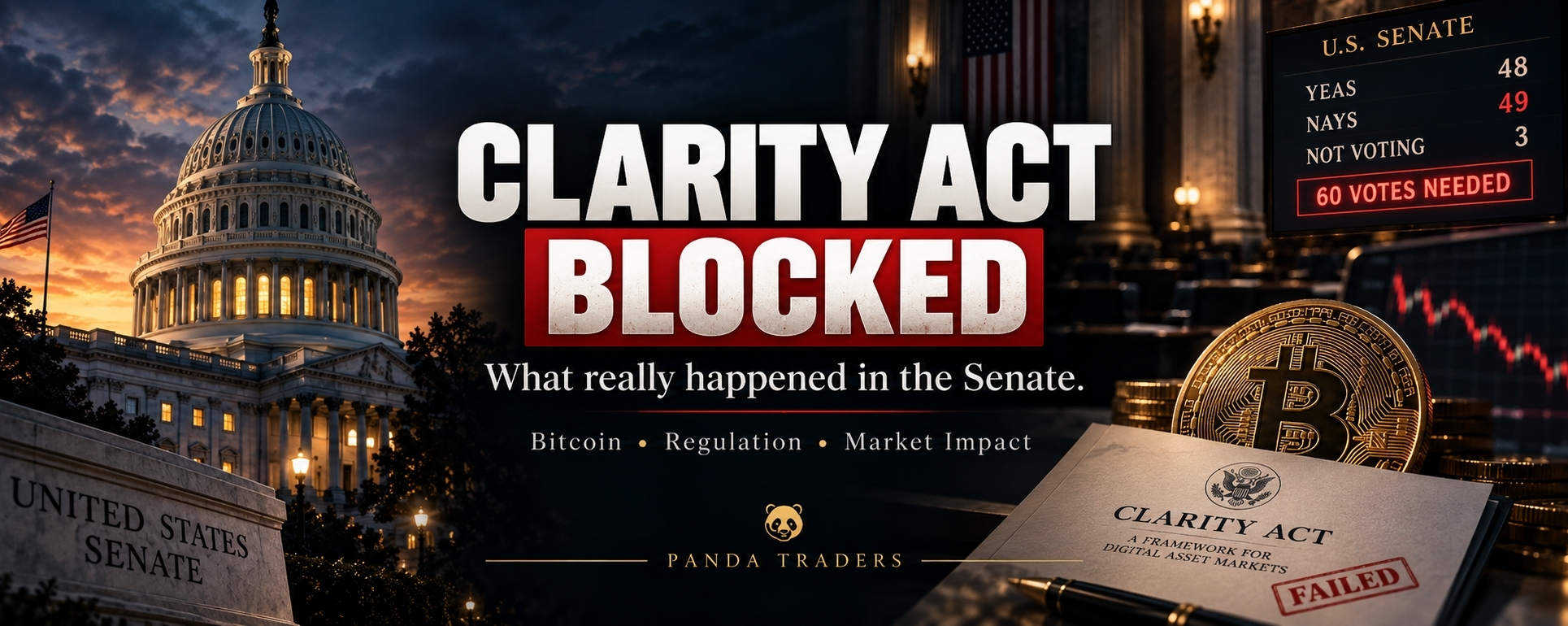
Will the CLARITY Act get the 60 votes it needs?
Now we have the answer.
It didn’t.
But before you read another headline saying “CLARITY Act rejected” or “Crypto regulation is dead,” there is something extremely important you need to understand.
The Senate did not vote yesterday on whether the CLARITY Act should finally become U.S. law.
The vote was on whether the Senate should overcome a procedural hurdle and move forward with consideration of the legislation.
And once you understand what happened before that vote the last-minute negotiations, 126 changes to the bill, the fight over political ethics, stablecoins, banks and DeFi the story becomes much more interesting than a simple PASS or FAIL.
Let’s break it down.
FIRST- WHAT ACTUALLY HAPPENED ON SEPTEMBER 15?
The Senate held a cloture vote connected to the motion to proceed to H.R. 3633 — the Digital Asset Market Clarity Act.
In simple
Senators were deciding whether the bill could clear the procedural barrier necessary to move further through the Senate.
It needed 60 affirmative votes.
It didn’t get them.
Reuters reported the vote as 50–49 in favor, meaning supporters were still 10 votes short of the required 60. Four Republicans — Jerry Moran, Rand Paul, Josh Hawley and Thom Tillis — joined all voting Democrats in opposing the motion.
That distinction matters.
CLARITY was not voted down in a final passage vote.
CLARITY failed to clear the procedural gate needed to advance.
That is still a major setback.
But it is not the same thing as saying:
“The CLARITY Act can never become law.”
HOW DID WE EVEN GET HERE?
This bill has already travelled much further through Congress than many people realize.
The U.S. House passed the CLARITY Act on July 17, 2025.
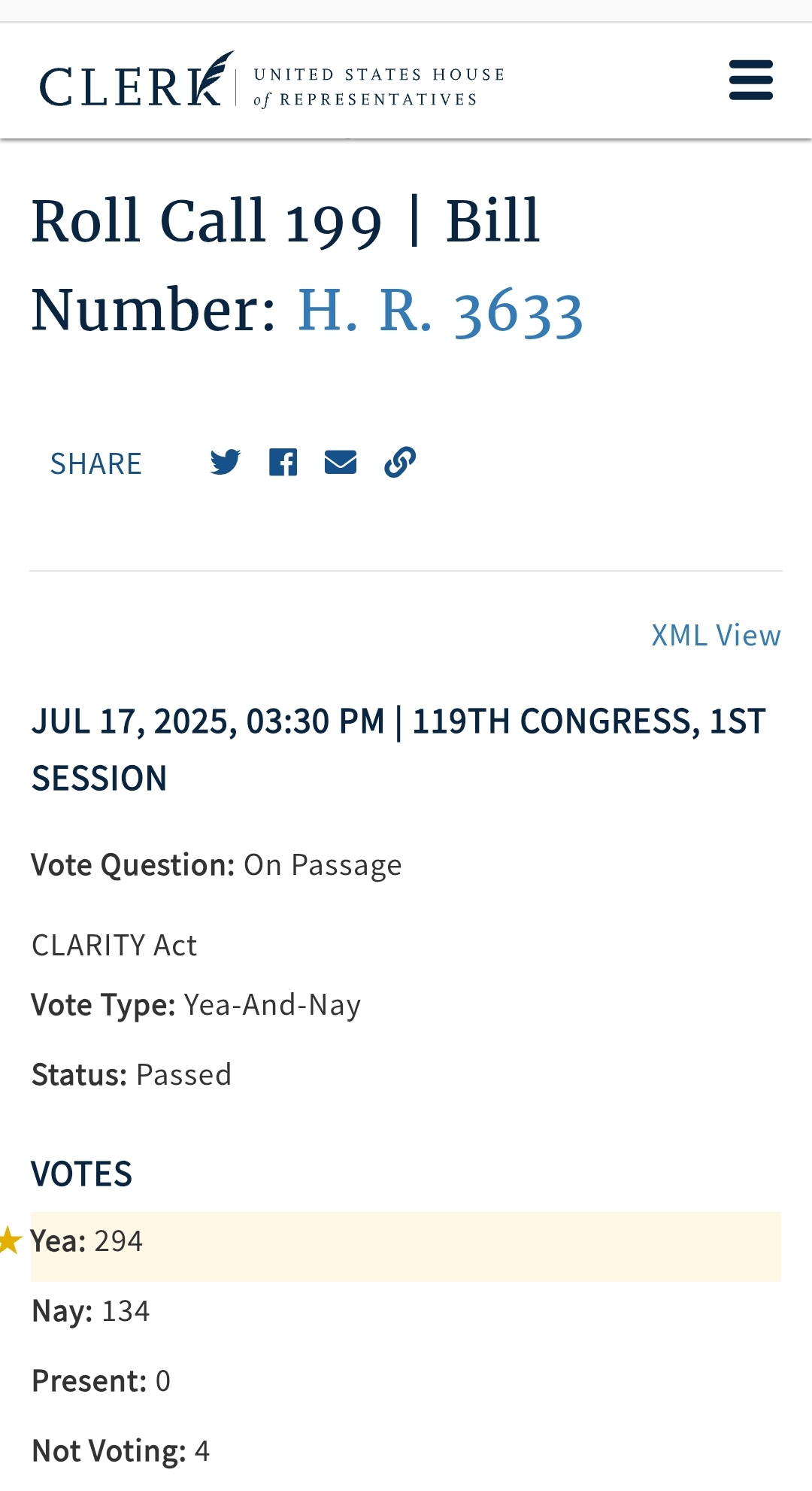
And it wasn't close.
The result was:
294 YES
134 NO
Even more importantly, the support was bipartisan.
216 Republicans and 78 Democrats voted for it.
Then the legislation moved into the Senate process.
On May 14, 2026, the Senate Banking Committee advanced CLARITY by 15–9, again after months of negotiations between senators from both parties.
At that point, the question was no longer simply:
“Will America regulate crypto?”
The fight became much more complicated:
That exactly should those regulations look like?
And that is where the negotiations started becoming extremely difficult.
WHAT DOES THE CLARITY ACT ACTUALLY DO?
This is where many traders misunderstand the bill.
CLARITY is not simply a law designed to “make Bitcoin bullish.”
It is a huge crypto market-structure framework.
One of the biggest problems in U.S. crypto regulation for years has been uncertainty.
Who regulates a particular digital asset?
The SEC?
The CFTC?
When is a token considered a security?
When is it treated as a digital commodity?
What rules should exchanges follow?
What happens with DeFi?
What protections should customers receive?
How should crypto companies register?
CLARITY tries to create clearer answers to these questions and establish a more defined regulatory framework for digital-asset businesses.
That is why its significance extends far beyond Bitcoin.
It could affect:
Altcoins. Exchanges. Token issuers. DeFi protocols. Stablecoins. Brokers. Dealers. Banks. Institutional investors.
This is much bigger than one BTC candle.
BUT HERE’S WHERE THE STORY CHANGED
For months, Republicans and Democrats negotiated over the Senate version.
Then something remarkable happened.
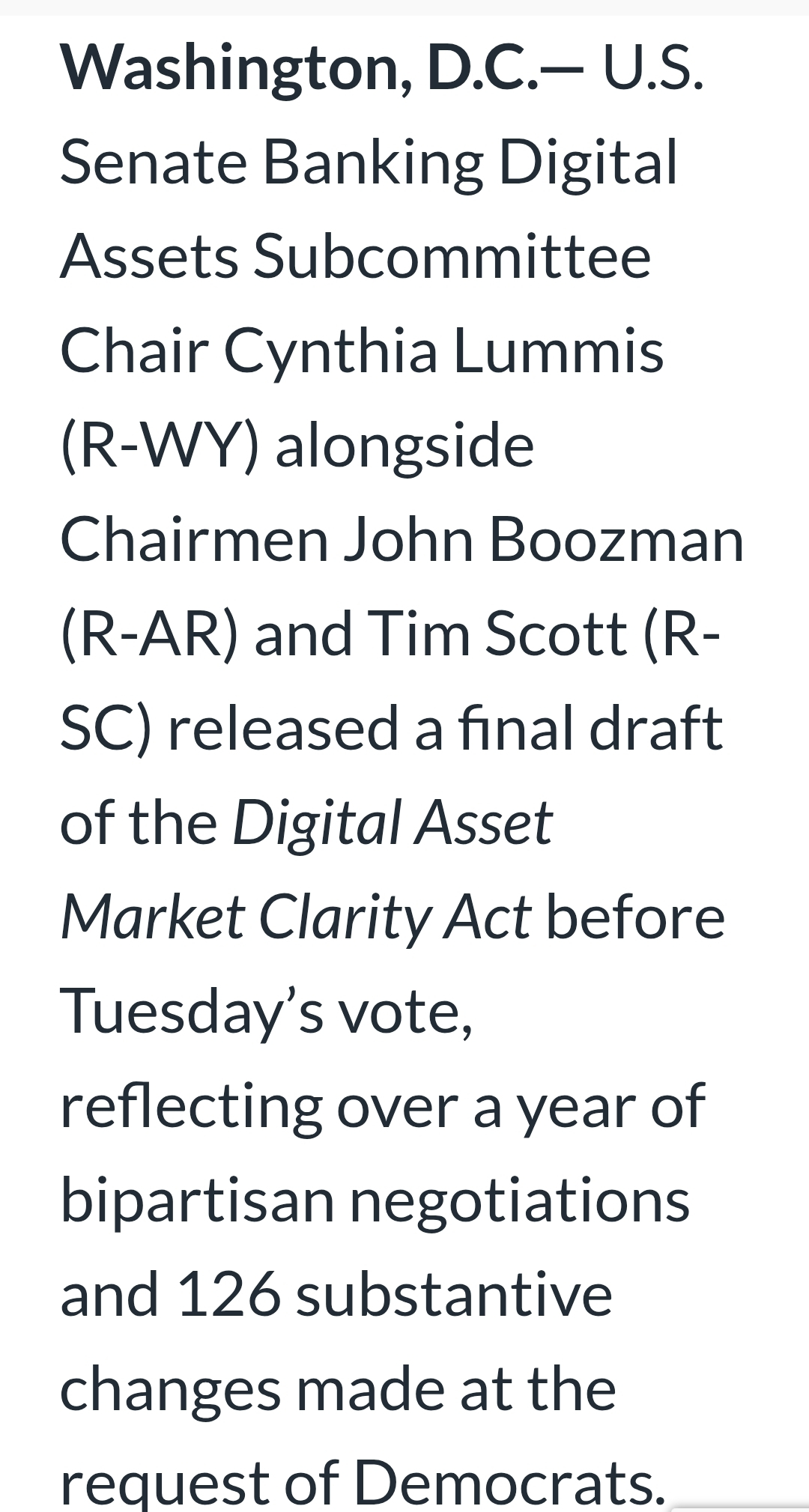
On September 14 literally one day before the vote ...senators released another final draft.
According to Senators Cynthia Lummis, John Boozman and Tim Scott, the new text contained 126 substantive changes requested by Democrats.
Read that again.
126 changes.
One day before the Senate vote.
That tells you how intense the negotiations had become.
The sponsors said the new version strengthened political-ethics provisions, expanded the enforcement role of state attorneys general, addressed concerns about stablecoin-related bank-deposit flight and changed protections for blockchain developers.
Yet the changes were still not enough to produce 60 votes.
Why?
There wasn't just one disagreement.
There were several.
THE FIRST BIG FIGHT: POLITICAL ETHICS
This became one of the biggest obstacles in the final negotiations.
Several Democratic senators said they supported creating crypto regulation but wanted stronger rules preventing elected officials from financially benefiting from digital-asset businesses while simultaneously influencing government crypto policy.
President Donald Trump's family's crypto interests became central to that argument.
Republicans agreed to new ethics language.
The final draft incorporated much of a proposal developed by Republican Senator Thom Tillis and Democratic Senator Ruben Gallego and gave state attorneys general a larger role in enforcement.
But Democrats said the safeguards were still insufficient.
AP reported that Democrats sent another counterproposal Monday night calling for stricter enforcement and requirements for a president to divest certain crypto holdings above specified thresholds. No final agreement was reached before the vote.
This is important because both sides described the same negotiations very differently.
Supporters of the final bill argued that they had already accepted extensive Democratic demands.
Opponents argued that significant ethics loopholes remained.
And ultimately, no Democrats supported advancing the measure.
BUT THERE WAS ANOTHER FIGHT THAT CRYPTO TRADERS SHOULD UNDERSTAND
BANKS VS STABLECOINS.
This issue received much less attention than the political drama.
But economically, it is extremely important.
The argument revolves partly around yield and rewards on stablecoins.
Think about it.
If somebody can hold dollar-backed stablecoins and potentially receive rewards through crypto platforms, some banking groups worry that customers may move money away from ordinary bank deposits.
Why does that matter?
Banks use deposits as an important funding source for lending.
So banking groups have argued that widespread stablecoin rewards could pull deposits out of traditional banks.
The crypto industry has pushed back against restrictions that it sees as shielding banks from competition.
The Senate's section-by-section framework included Section 404 — Prohibiting Interest and Yield on Payment Stablecoins.
Under that provision, covered digital-asset providers would be prohibited from paying passive, deposit-like yield to U.S. customers merely for holding payment stablecoins, while legitimate activity- or transaction-based rewards could remain possible under future rules.
This is why the CLARITY fight isn't simply:
Crypto vs Washington.
Traditional finance has something at stake too.
THEN CAME ANOTHER ISSUE: DeFi
Decentralized finance creates another regulatory problem.
What actually counts as decentralized?
Suppose a project calls itself “DeFi.”
But a small team can still block users.
Change important rules.
Control privileged keys.
Or substantially influence how the protocol operates.
Should that project receive the same regulatory treatment as genuinely decentralized software?
That question matters enormously.
On September 10, lawmakers released updated language addressing when non-decentralized DeFi protocols would have to register with the CFTC and comply with Bank Secrecy Act requirements.
The changes also specified that certain DeFi provisions would apply to spot and cash digital-commodity transactions.
Meanwhile, developers have argued that simply writing decentralized software should not automatically turn someone into a financial intermediary.
The final September 14 version therefore also included Blockchain Regulatory Certainty Act language intended to protect qualifying developers from money-transmission registration requirements and establish a civil safe harbor.
This is the kind of detail that disappears when social media reduces the entire bill to:
“CLARITY = bullish.”
NOW LOOK AT THE VOTE MATH
This is where everything ultimately came apart.
The Senate has 100 seats.
Republicans hold 53.
But cloture required 60 votes.
So Republican support alone was never enough.
They needed Democrats.
Instead, every voting Democrat opposed advancing the measure.
And four Republicans also voted against it.
But there is another small detail worth understanding.
Senator Thom Tillis, who had participated in the ethics negotiations, switched his vote from yes to no as a procedural move.
Reuters reports that this preserves his ability to bring the measure back for reconsideration later.
That is very important.
Because it means:
THE DOOR IS NOT TECHNICALLY CLOSED.
But the road forward has become much more difficult
SO… IS THE CLARITY ACT DEAD?
No.
Not technically.
But saying nothing changed yesterday would also be wrong.
This was a serious setback.
Lawmakers had spent months negotiating toward exactly this Senate moment.
Supporters introduced last-minute changes.
Negotiations continued almost until the vote.
And they still couldn't reach 60.
The next major problem is the calendar.
Congress is preparing to leave Washington ahead of the November midterm elections, and Reuters reported that the failed vote effectively puts the legislation on ice for the near term.
Could negotiations resume?
Yes.
Could the Senate reconsider the vote?
Procedurally, yes.
Could CLARITY eventually become law?
Yes.
But after September 15, the path is clearly more difficult than it was before the vote.
NOW LET'S TALK ABOUT WHAT HAPPENED TO BITCOIN
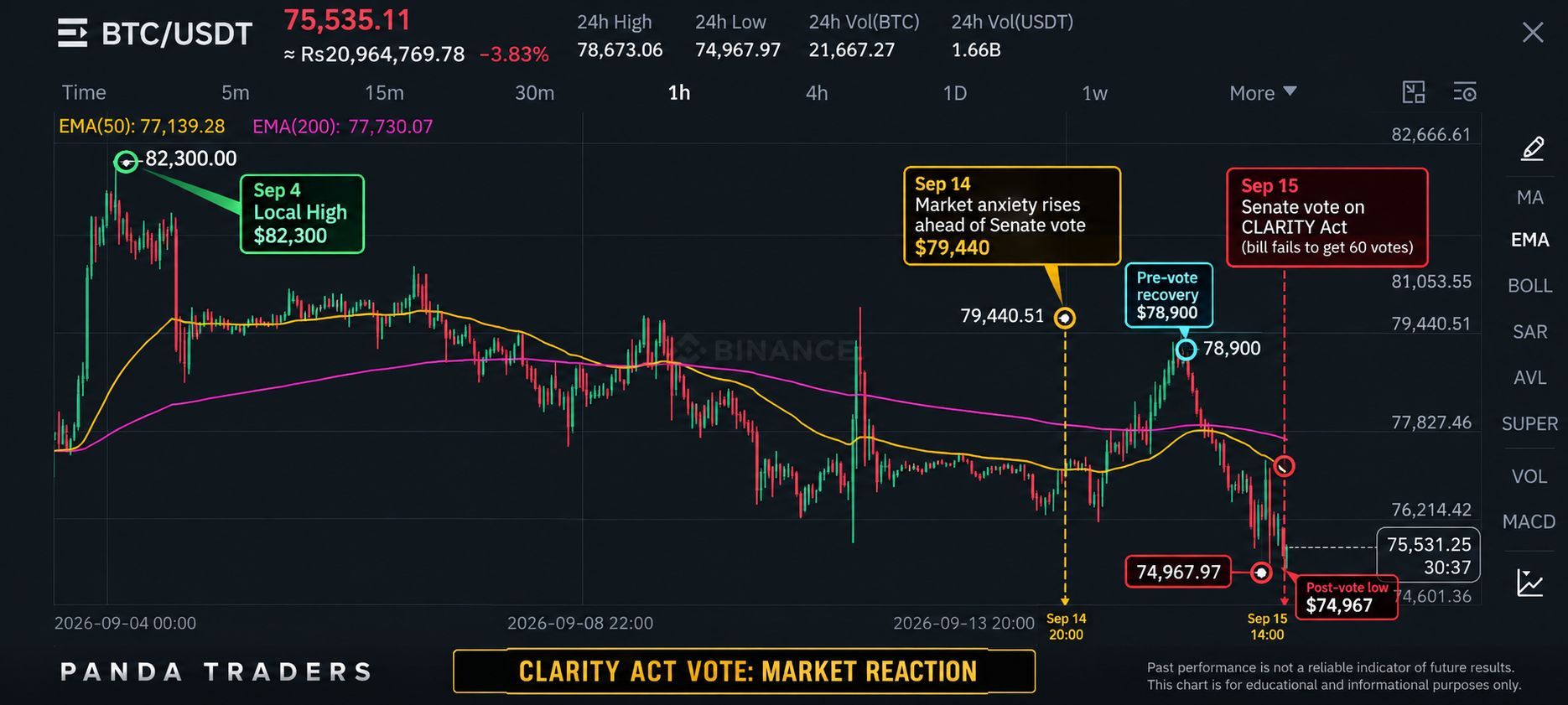
This is where traders need to be careful.
As expectations around CLARITY deteriorated, crypto prices weakened.
Reuters reported that Bitcoin fell more than 5% as the vote appeared headed toward failure, while shares of Coinbase and stablecoin issuer Circle fell as much as 10% during the session.
That shows the market was clearly paying attention to Washington.
But I would NOT say:
“CLARITY failed, therefore Bitcoin crashed 5%.”
That's too simple.
Bitcoin was already trading inside an extremely sensitive macro environment.
Oil prices were rising.
Treasury yields were under pressure.
And the market was preparing for the Federal Reserve decision on September 16.
So the Senate result was another major risk event hitting a market that was already nervous.
That distinction matters.
When several major catalysts happen together, assigning an entire move to one headline can mislead traders.
SOMETHING INTERESTING HAPPENED BEFORE THE VOTE TOO
Prediction markets had already started becoming pessimistic.
The CoinDesk chart circulating before the vote showed Bitcoin weakening as market expectations for CLARITY becoming law in 2026 declined sharply.

That tells us something about how markets work.
Prices often begin reacting before the official event.
Traders reposition.
Institutions hedge.
Prediction markets adjust.
Liquidity changes.
And by the time the headline finally arrives, part of the information may already be reflected in price.
This is exactly why blindly buying or shorting the first news candle is dangerous.
WHAT HAPPENS TO CRYPTO REGULATION NOW?
This may be the most important question.
Congress is not the only institution capable of affecting crypto policy.
The SEC and CFTC can continue using rulemaking, guidance and enforcement policy to shape the market.
AP reported that the White House indicated after the failed vote that the administration would turn toward agencies to implement parts of its crypto agenda.
But there is a difference between:
Regulatory policy created by agencies
and
A framework passed by Congress and written into federal law.
Agency rules may change more easily between administrations and can face court challenges.
A statute passed by Congress can provide a more durable framework.
That is one reason the crypto industry has pushed so aggressively for legislation instead of relying only on regulators.
WHY ALTCOINS MAY CARE EVEN MORE THAN BITCOIN
This is one of the most misunderstood parts of CLARITY.
Bitcoin already faces less uncertainty around its basic regulatory classification than many other digital assets.
For altcoins, things can be much more complicated.
Is the token a security?
Is it a digital commodity?
Can a U.S. exchange comfortably list it?
Does the project's level of decentralization matter?
What disclosures are required?
Which regulator has jurisdiction?
These questions can affect entire business models.
So while BTC gets the headline reaction, market-structure legislation may have much deeper long-term implications for altcoins, exchanges and DeFi.
That's why yesterday's vote matters beyond Bitcoin.
AND HERE IS THE BIGGEST THING PEOPLE ARE MISSING
September 15 does not show that Congress has rejected crypto regulation.
Look at the history.
The House already passed CLARITY 294–134.
Seventy-eight House Democrats voted for it.
The Senate Banking Committee then advanced the legislation 15–9.
And even after yesterday's failed vote, several Democratic senators told AP they remained open to further negotiations.
So the disagreement has increasingly become less about:
“Should crypto have rules?”
and more about:
“Exactly what should those rules be?”
Who should regulate the industry?
How strict should consumer protections be?
How should political conflicts of interest be handled?
What happens to stablecoin rewards?
How much protection should developers receive?
When is a DeFi project genuinely decentralized?
How much authority should the SEC and CFTC each receive?
Those are now the real battles.
SO WHAT SHOULD CRYPTO TRADERS WATCH NEXT?
First, watch whether Senate leaders attempt to reconsider the motion.
Tillis's procedural vote preserved that possibility.
Second, watch for renewed negotiations over ethics provisions.
That appears to be one of the clearest political obstacles.
Third, watch the SEC and CFTC.
If Congress remains stuck, agencies may become even more important in shaping U.S. crypto rules.
And finally, watch Bitcoin itself.
Good news is not automatically bullish if price refuses to respond.
Bad news is not automatically bearish if sellers cannot push price lower.
Sometimes the most useful signal is not the headline.
It is how price reacts after everyone has read the headline.
FINAL THOUGHTS
Don't remember September 15 simply as:
“The CLARITY Act failed.”
That leaves out most of the story.
A major crypto market-structure bill had already passed the House with bipartisan support.
It had already cleared the Senate Banking Committee.
Its sponsors made 126 substantive last-minute changes requested by Democrats.
Negotiations continued over political ethics.
Banks and crypto companies were still fighting over stablecoin economics.
DeFi provisions were still being adjusted.
The bill then reached the Senate floor and needed 60 votes to clear its procedural hurdle.
It couldn't get them. That is a major setback.
But it is not necessarily the final chapter.
The legislation can still return.
Negotiations can continue.
Regulators can continue acting even without Congress.
And the larger political fight over how America regulates crypto is clearly not finished.
So now the question has changed.
It is no longer simply:
“Will CLARITY pass?”
The real question is:
Can lawmakers find a version of crypto regulation that 60 senators are willing to support — before politics and the election calendar make that even harder?
Because yesterday did not end America's crypto-regulation debate.
It showed us exactly where the battle lines still are.
🐼 PANDA TRADERS ADVICE
This article is for educational and market-analysis purposes only. Political negotiations, legislation and cryptocurrency markets can change rapidly. Always verify breaking developments and manage risk carefully.
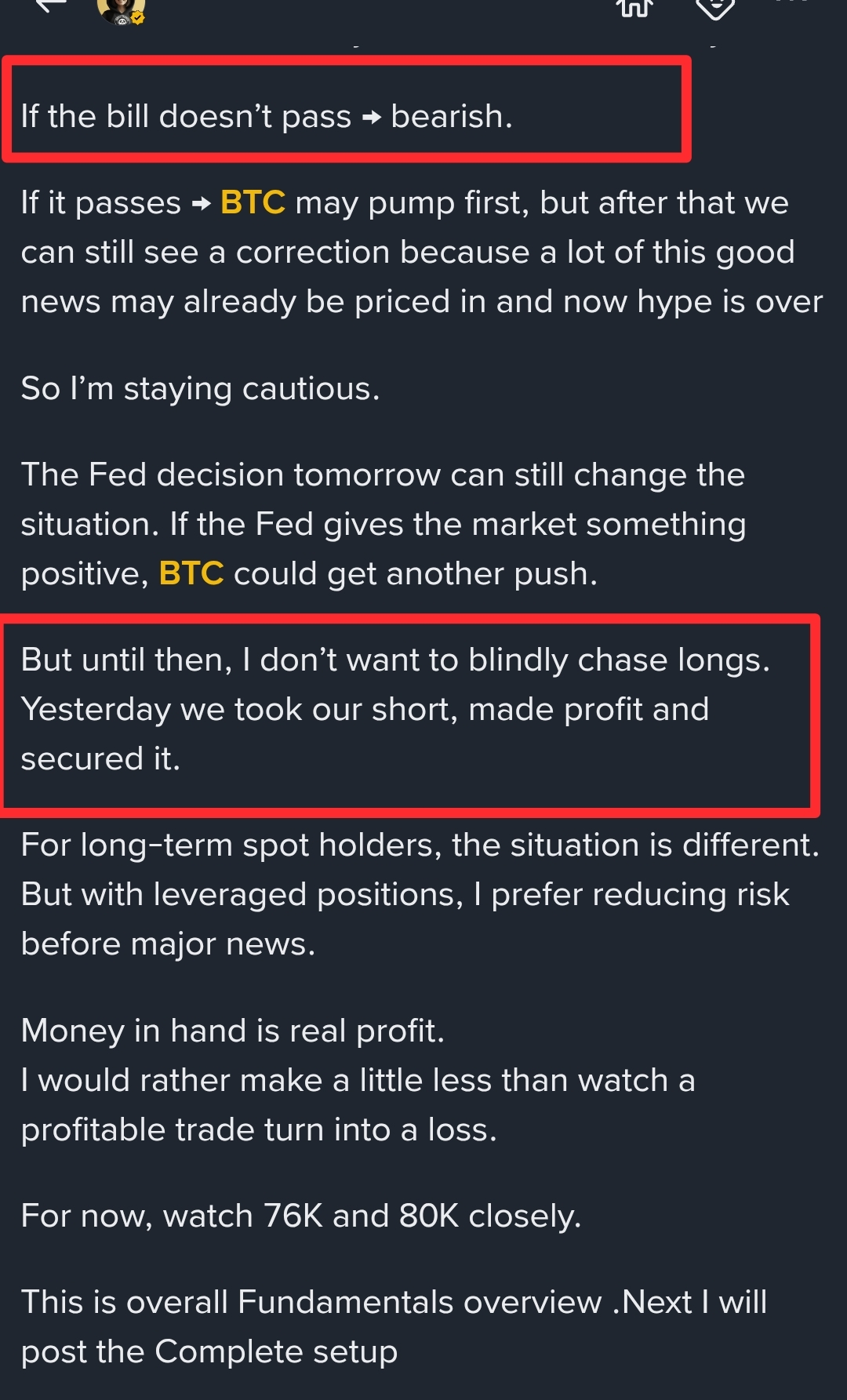
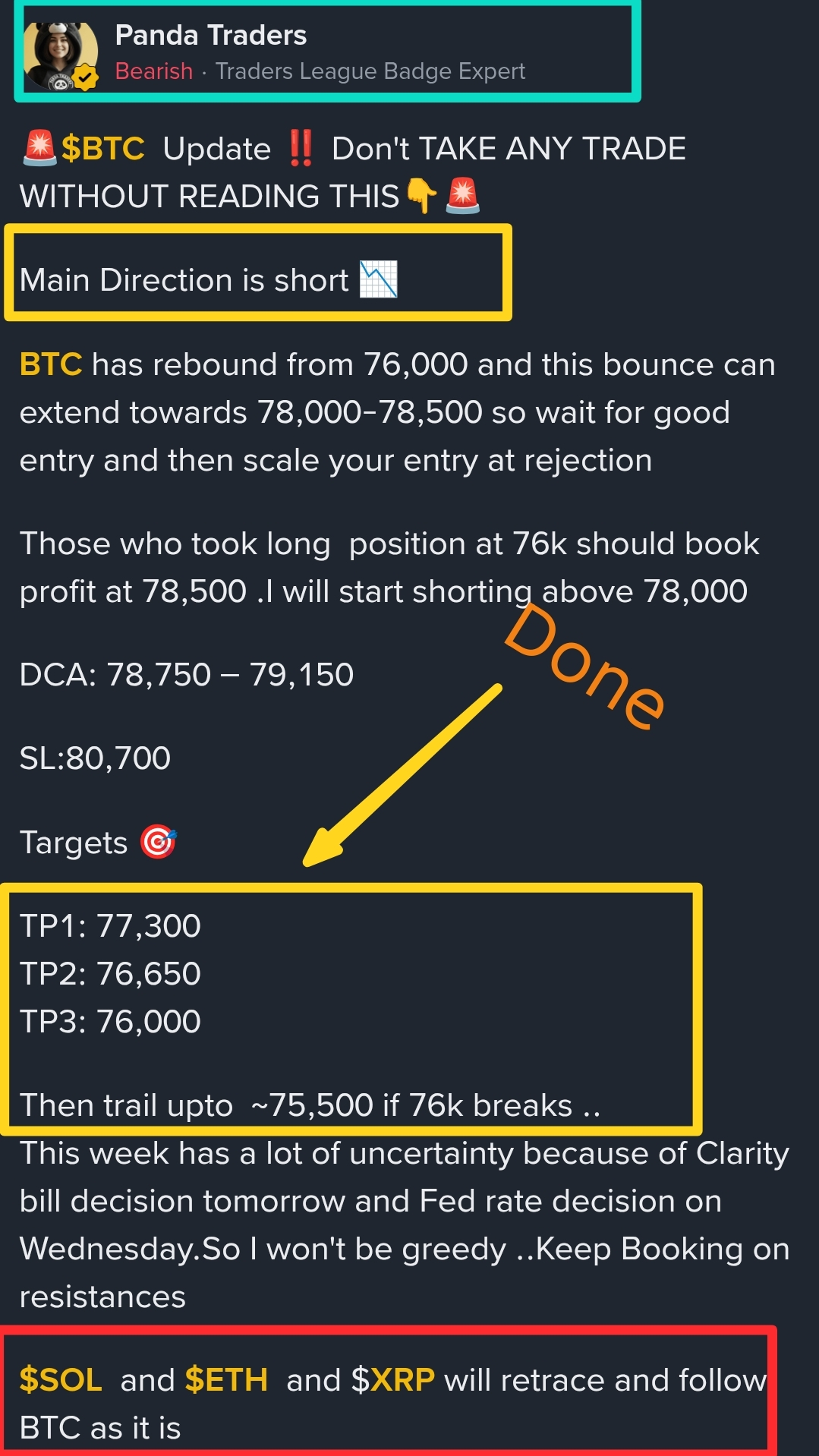
PandaTraders always predict the big pump or dump before.We already told many houses ago that Decision will be bearish for market check this 👇