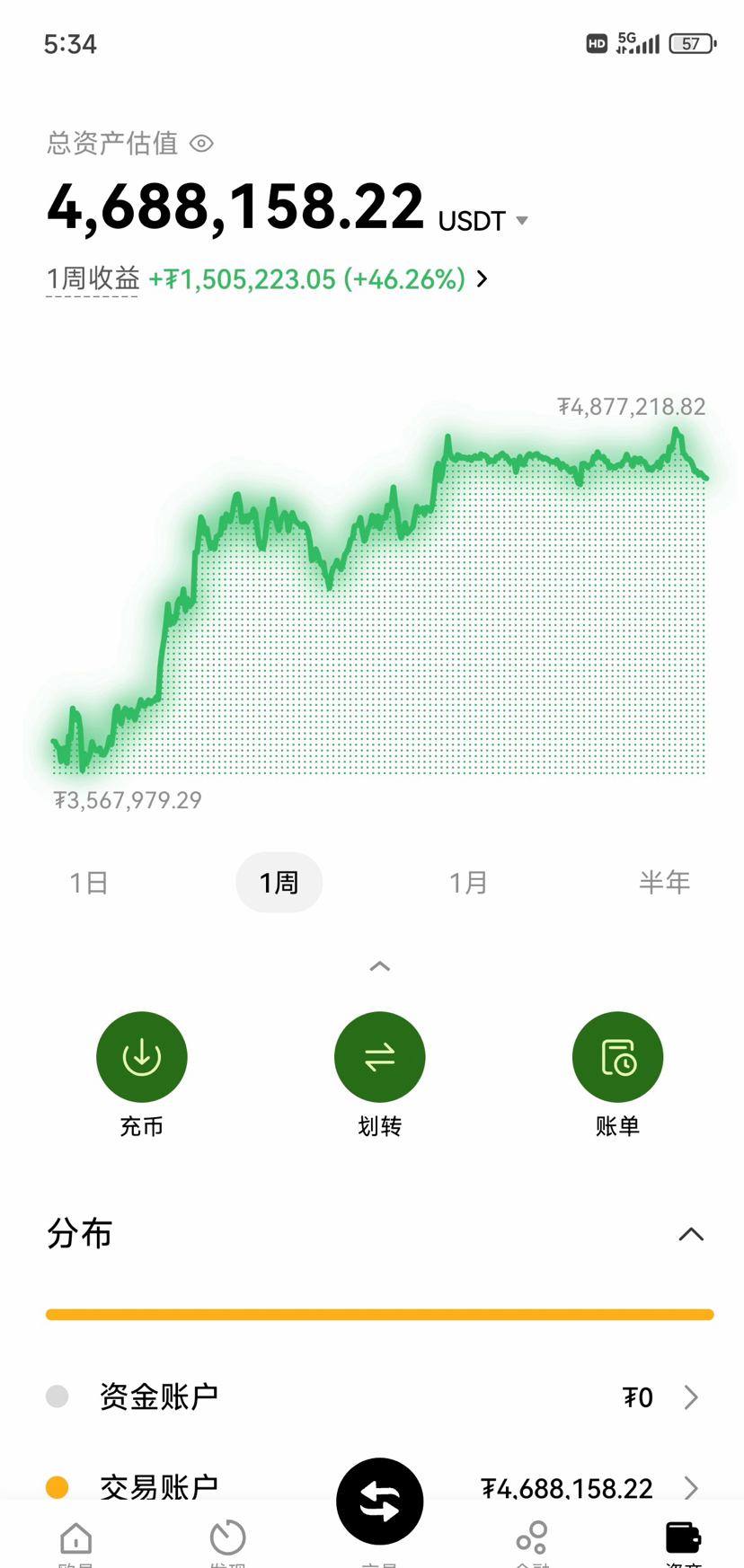

After streaming contract trading live for so long, my biggest takeaway is: it’s exhausting, but it also means growth.
Before going live each day, I review everything: the big pie, Ethereum, the news backdrop, draw lines, find support and resistance, calculate my position size, and figure out my stop-loss. On the screen, one K-line after another—like knives, but also like a teacher, teaching me to respect the market. After going live, I still have to push through and stay energized; I can’t pass my anxiety on to the audience. But the truth is, my own account is also in floating losses, and the margin is even triggering alarms—my heartbeat follows the mark price. Still, I know this is part of trading, and part of livestreaming. I choose to face it, not to run away.
There are tons of questions in the barrage: Can I open it? Where should the stop-loss be placed? If I follow and it explodes, who’s responsible? How are rebates calculated? Why am I still losing? I answer them one by one. The others didn’t open my rebate, and I’m still replying. For months, I haven’t even managed to invite a single person. I didn’t earn a cent, but the free customer service part—I did it clearly and properly. But from another angle, this is also about building trust, training patience, and improving professionalism. Every question is an opportunity to make me understand trading—and people—better. No one opened a rebate today doesn’t mean there won’t be one tomorrow. Not earning money today doesn’t mean I won’t be able to in the future. I’ll first do the service well, the content well, and the risk control well—then the rest is up to time.
Sometimes I even want to laugh at myself. What am I doing? Streaming? Charity? An emotional trash bin? A scapegoat? Then I figured it out: I’m doing something valuable. When others make money, I’m happy for them; when they lose, I remind myself and everyone to put risk control first. The strategy is something they choose themselves; the position size is something they open themselves; the stop-loss is something they execute themselves. I open rebates to help everyone save a bit on fees, and I can also have a little income—mutual benefit and reciprocity. Since nobody is opening it now, that’s fine. It only means the缘分 hasn’t arrived yet. I’ll first do people well, do things well.
The hardest part isn’t the market—it’s people’s hearts. But people’s hearts also have a warm side. Some people watch quietly, some people learn in secret, and some people just say, “Thank you.” When you help others answer questions, someone thinks you’re doing it for rebates. When you don’t make money, someone mocks you for not doing well. When you get a little better, someone hopes you’ll die. But that’s only a minority. This circle has rotten people, and it also has good people. I choose to see the good, remember those who support me, and be grateful to those willing to stay. When I meet misunderstanding, I choose tolerance; when I meet doubt, I choose to respond with professionalism. I no longer let other people’s voices decide my mood.
After I end the stream, I’m even more tired. Others think that once you shut off the stream, it’s over—but actually you still have to review the trades, check the account, calculate liabilities, and think about where tomorrow’s margin will come from. I can’t sleep; when I close my eyes, all I see are candlestick charts, liquidations, funding rates, and people cursing in the barrage. But I’m also learning how to adjust: sleep earlier, exercise more, control position sizes, reduce leverage, and leave myself a bit of breathing room. My body is tired, but my heart can’t break. As long as my heart doesn’t give up, there’s still a chance.
I know that 99% of people who trade contracts lose money—I do too. I’ve also thought about streaming properly, running the account seriously, and handling the rebates diligently, so that everyone benefits each other. But later I found that most people don’t actually want me to live well—no, I used to think they did. In truth, most people either don’t understand, or they’re struggling while losing money. So in the past few months I haven’t streamed much; I’ve kept myself alive in this market by trading on my own. Even when I crash with my head bleeding, I still accept it—at least it doesn’t drag anyone else into it. This experience made me more independent and stronger, and it also made me clearer: the path I want to take, I can only walk it step by step myself.
Now I want to start over. No more complaining, no more running away. Even if I haven’t invited a single person for months— even if I’m poor—I still believe: as long as I’m still learning, still reviewing and analyzing after the fact, still controlling risk, and still treating people sincerely, then I have a chance. I may not end up rich and glorious in this lifetime, but I can slowly get better. I can become a more professional, calmer, and warmer person. I can turn streaming into something meaningful, turn trading into something long-term, and live a life that’s worth it.
So this reflection doesn’t have much practical know-how, and it certainly isn’t some feel-good “chicken soup.” It’s just something from someone who does live contract trading streams: after being worn out, choosing to keep believing. Contract risk is extremely high—don’t touch it lightly. Streaming isn’t something people can do just because they feel like it. But if you ask me whether I regret it, I’ll say: no. Because I’m doing what I want to do, and becoming the kind of person I want to be.
Today, I just want to tell myself one thing: I’m tired, but I’m still here. I’ll keep going—slowly, step by step—toward the light.
If you’re also on the road of trading, keep going together. The market has risks, but life has hope.