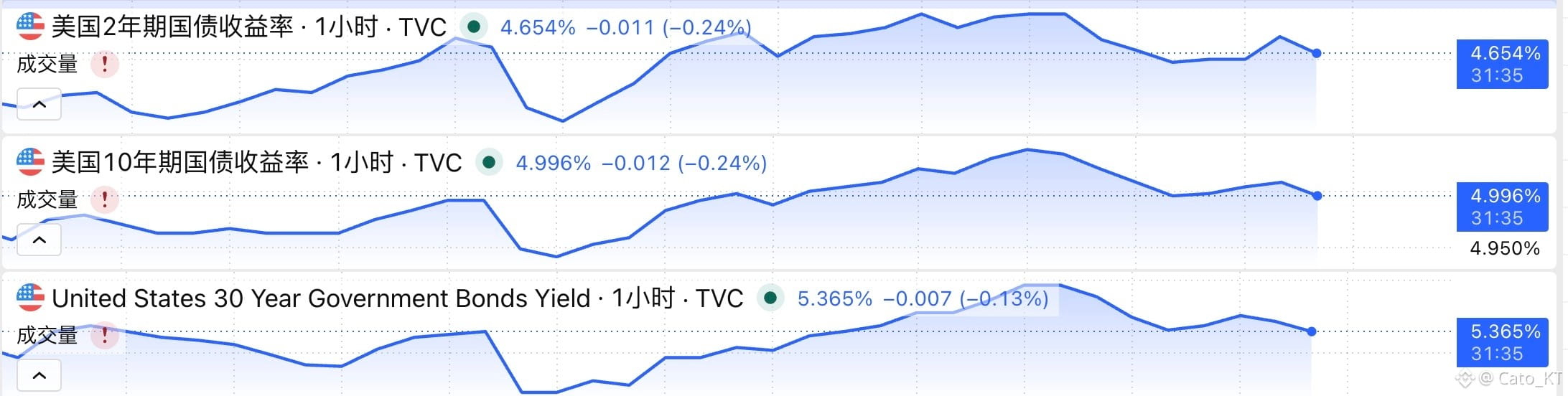
Besant’s remarks are over. Tonight’s speech, in terms of how binding it is on the bond market, is very limited. As mentioned earlier, of the scenarios described, only the last one appeared—the most useless of them all: emphasizing U.S. economic resilience + shifting the bond-market problem to the Middle East.
On the other hand, the fiscal consolidation plan did not provide an immediate, actionable answer. The market’s real concerns—whether Besant is increasing the expected share buyback amounts and reducing long-term bond issuance—were also not given clear guidance.
Judging by the market reaction as well, tonight Besant’s speech was basically ineffective in terms of intervention in the bond market. Of course, whether the Besant policy is truly ineffective cannot be confirmed 100% yet.
For one thing, energy prices rebound in the short term, and inflation pressure could push yields on the long-end higher, potentially offsetting bond-market effects. For another, rate hikes have not been implemented yet, and whether there will be rate hikes in the future remains uncertain—so the bond market has not yet priced this in clearly.
Next, the pressure shifts to Waller: we’ll see the dot plot tomorrow and how Waller explains this rate hike and whether there will be more in the future. At present, with bond yields elevated, both the Fed and Besant have limited room to maneuver.
However, it’s not all without benefits. The bond market’s crisis may force Trump to compromise on the Iran issue, which could ease energy prices. And right now, the only short-term “correct solution” for the bond market is a pullback in energy prices!#美联储加息是否已成定局
On the other hand, the fiscal consolidation plan did not provide an immediate, actionable answer. The market’s real concerns—whether Besant is increasing the expected share buyback amounts and reducing long-term bond issuance—were also not given clear guidance.
Judging by the market reaction as well, tonight Besant’s speech was basically ineffective in terms of intervention in the bond market. Of course, whether the Besant policy is truly ineffective cannot be confirmed 100% yet.
For one thing, energy prices rebound in the short term, and inflation pressure could push yields on the long-end higher, potentially offsetting bond-market effects. For another, rate hikes have not been implemented yet, and whether there will be rate hikes in the future remains uncertain—so the bond market has not yet priced this in clearly.
Next, the pressure shifts to Waller: we’ll see the dot plot tomorrow and how Waller explains this rate hike and whether there will be more in the future. At present, with bond yields elevated, both the Fed and Besant have limited room to maneuver.
However, it’s not all without benefits. The bond market’s crisis may force Trump to compromise on the Iran issue, which could ease energy prices. And right now, the only short-term “correct solution” for the bond market is a pullback in energy prices!#美联储加息是否已成定局