
灼见
924 Posts
灼见
灼见|K线只是表象,人心才是博弈的终点。
13年实战沉淀,拒绝废话,只做最硬核的技术拆解与宏观透视。帮你看清下一步。如果你厌倦了噪音,这里是你的最后一站。
Open Trade

BTC Holder
Occasional Trader
8.5 Years
419 Following
24.8K+ Followers
7.6K+ Liked
Posts
Portfolio
All
Quotes
Videos
Live



Anna-汤圆
·
--
[Replay] 🎙️ Finally Monday is here—will the US stock market open and we can feast on big gains today?
02 h 15 m 05 s · 9.3k listens

金叉FORK
·
--
Elonmusk's Art-A Fork in the Road
Elon Musk's artwork: life's crossroads,
key choices in life, turning point of fate👍👍
Elon Musk's artwork: life's crossroads,
key choices in life, turning point of fate👍👍


直上雲霄
·
--
With everyday-unnoticed extra money, chase trends that will matter in the future.
Understanding mainstream long-term value is steadier than blindly following the small coins that surge and crash.
Risk control is the bottom line of a long journey; time is the best friend for profits.
Establish a solid foundation with mainstream spot trading, and explore interesting community consensus with a very small capital amount.$BNB
Understanding mainstream long-term value is steadier than blindly following the small coins that surge and crash.
Risk control is the bottom line of a long journey; time is the best friend for profits.
Establish a solid foundation with mainstream spot trading, and explore interesting community consensus with a very small capital amount.$BNB


SabTheTrader
·
--
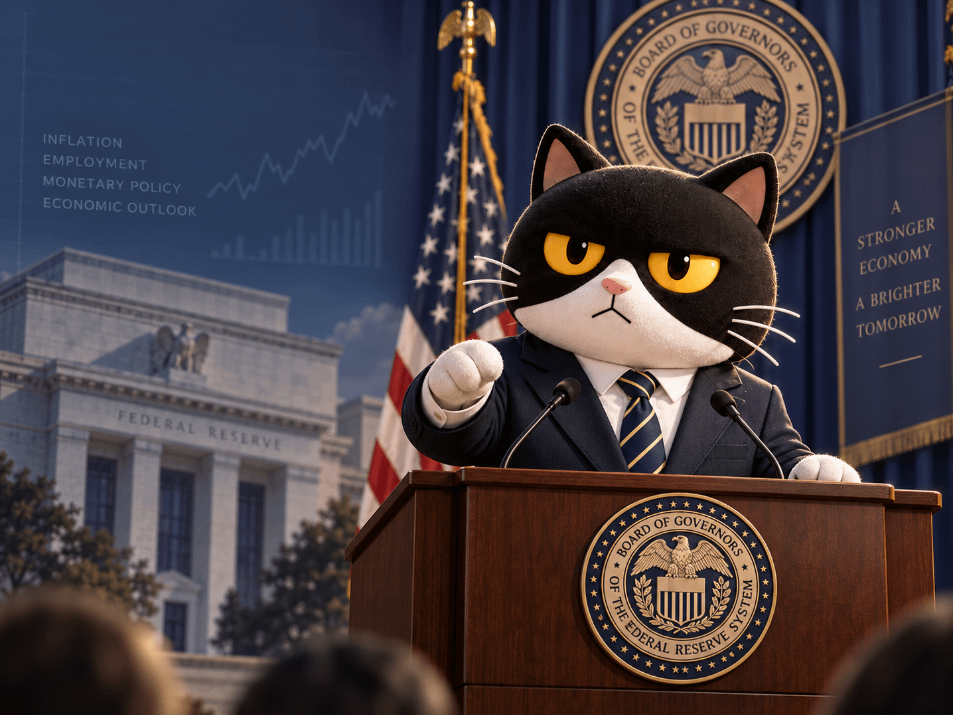
#美联储加息是否已成定局 ? I choose not to guess 😂
It’s that time of every month again—FOMC (Federal Reserve interest rate decision).
Whenever this happens, you’ll see all kinds of analysis: whether they’ll raise or cut rates, 25 bps or keep steady, whether the Fed chair is more hawkish or dovish, and whether BTC, gold, and the US stock market will go up or down.
But honestly, those usually aren’t the things I care about most when trading. 🙈
My habit has always been simple:
Price action has the final say.
Before the news is released, the market can have a hundred expectations; even after it’s released, it doesn’t mean the asset will definitely move in the direction described by textbooks.
So-called “good news” can still make price drop, and “bad news” can still lead to a rise when it hits.
Especially for major events like the FOMC—right before and after the release, you often get sudden spikes, wicks/pins, and reversals. Even if your final directional call is correct, you can still be swept out by that initial volatility.
So the most practical trading strategy I have for tonight is actually: don’t guess. 😂
If it’s $BTC , NQ $QQQB , or gold, I’ll do my best to avoid trading around the interest rate announcement and before/after the press conference—especially I won’t enter early just to gamble on a direction.
After the first round of volatility is over, once the market shows a structure I can understand again, then I’ll decide whether there’s a trading opportunity.
Making a little less for a while doesn’t matter.
I’d rather wait for the price to spell out the answer than try to guess the Fed.
Because in the end, what determines whether I hit Buy / Sell isn’t the news headline—it’s the behavior of price in the moment.
It’s that time of every month again—FOMC (Federal Reserve interest rate decision).
Whenever this happens, you’ll see all kinds of analysis: whether they’ll raise or cut rates, 25 bps or keep steady, whether the Fed chair is more hawkish or dovish, and whether BTC, gold, and the US stock market will go up or down.
But honestly, those usually aren’t the things I care about most when trading. 🙈
My habit has always been simple:
Price action has the final say.
Before the news is released, the market can have a hundred expectations; even after it’s released, it doesn’t mean the asset will definitely move in the direction described by textbooks.
So-called “good news” can still make price drop, and “bad news” can still lead to a rise when it hits.
Especially for major events like the FOMC—right before and after the release, you often get sudden spikes, wicks/pins, and reversals. Even if your final directional call is correct, you can still be swept out by that initial volatility.
So the most practical trading strategy I have for tonight is actually: don’t guess. 😂
If it’s $BTC , NQ $QQQB , or gold, I’ll do my best to avoid trading around the interest rate announcement and before/after the press conference—especially I won’t enter early just to gamble on a direction.
After the first round of volatility is over, once the market shows a structure I can understand again, then I’ll decide whether there’s a trading opportunity.
Making a little less for a while doesn’t matter.
I’d rather wait for the price to spell out the answer than try to guess the Fed.
Because in the end, what determines whether I hit Buy / Sell isn’t the news headline—it’s the behavior of price in the moment.

路人1688luren
·
--
#美联储加息是否已成定局
$BTC Make a bold prediction. If the clear bill is not passed tonight, and then the Fed rate hike is implemented as well, things will get extremely hawkish—double bearish pressure! Bitcoin will fall straight back into the 60s. $ETH Will directly break below 2000! Bear market, start!
$BTC Make a bold prediction. If the clear bill is not passed tonight, and then the Fed rate hike is implemented as well, things will get extremely hawkish—double bearish pressure! Bitcoin will fall straight back into the 60s. $ETH Will directly break below 2000! Bear market, start!



BLOCK Rayne
·
--
🎁🎁Reply today to receive the red envelope 🎁🎁$SOL
🌹Thank you for helping to share and spread the word THS🌹
🌹Thank you for helping to share and spread the word THS🌹


橙子Joyce
·
--
BullishWill the Federal Reserve raise rates as expected this week? Wall Street is debating: will it end the U.S. stock bull market?
After an unexpectedly strong U.S. CPI report came out last Friday, traders generally expect the Federal Reserve to begin raising rates at this week’s policy meeting—marking the first rate hike in more than three years.
Historically, previous rounds of rate hikes have offered a reference point for today’s market. Based on past experience (though history of course can’t guarantee the future), U.S. stocks may first weaken, then rebound.
Among the six tightening cycles since 1994, during the first four months after the rate-hike cycle began, the S&P 500’s average return was negative.
This suggests that once the “rate-hike shoe” drops, U.S. stocks may look lackluster through the beginning of next year.
As of the close last Friday, the benchmark U.S. equity index, the S&P 500, is up nearly 12% year to date. Strong corporate earnings and a fairly resilient economy have provided solid support for bulls in the stock market.
If you extend the time horizon, the S&P 500’s performance tends to improve gradually: in the 12 months after the start of a rate-hiking cycle, the index’s average return is close to 7%, with a median return of about 11%. (Using median-based statistics helps remove distortions from extreme outliers—for example, the index surged more than 40% after hikes began in March 1997.)
If the Federal Reserve implements a rate hike this Wednesday, it will be the first hike since July 2023—when the Fed raised rates to a range of 5.25% to 5.50%.
Currently, the federal funds rate in the U.S. is at 3.50% to 3.75%. According to the CME Group’s FedWatch tool, futures traders currently assign an 86% probability to a 25-basis-point hike this week.
One positive factor for the market is that mega-scale cloud service providers are still driving growth in excess returns through large-scale AI spending. The S&P 500 component stocks’ forecast for earnings growth in 2027 is expected to reach double digits. If the outlook for AI spending remains unchanged, it may be enough to offset any cooling in optimistic sentiment caused by the rate hikes.
Another bright spot for equities is that although inflation remains sticky, it appears to be slowing. The inflation rate has fallen from a May peak of 4.2%. This should allow the Federal Reserve to take a more gradual approach, and the data shows that the pace of rate hikes is crucial for stock performance—slower pacing gives investors more time to absorb policy changes!
$BZ
$CL
Energy
After an unexpectedly strong U.S. CPI report came out last Friday, traders generally expect the Federal Reserve to begin raising rates at this week’s policy meeting—marking the first rate hike in more than three years.
Historically, previous rounds of rate hikes have offered a reference point for today’s market. Based on past experience (though history of course can’t guarantee the future), U.S. stocks may first weaken, then rebound.
Among the six tightening cycles since 1994, during the first four months after the rate-hike cycle began, the S&P 500’s average return was negative.
This suggests that once the “rate-hike shoe” drops, U.S. stocks may look lackluster through the beginning of next year.
As of the close last Friday, the benchmark U.S. equity index, the S&P 500, is up nearly 12% year to date. Strong corporate earnings and a fairly resilient economy have provided solid support for bulls in the stock market.
If you extend the time horizon, the S&P 500’s performance tends to improve gradually: in the 12 months after the start of a rate-hiking cycle, the index’s average return is close to 7%, with a median return of about 11%. (Using median-based statistics helps remove distortions from extreme outliers—for example, the index surged more than 40% after hikes began in March 1997.)
If the Federal Reserve implements a rate hike this Wednesday, it will be the first hike since July 2023—when the Fed raised rates to a range of 5.25% to 5.50%.
Currently, the federal funds rate in the U.S. is at 3.50% to 3.75%. According to the CME Group’s FedWatch tool, futures traders currently assign an 86% probability to a 25-basis-point hike this week.
One positive factor for the market is that mega-scale cloud service providers are still driving growth in excess returns through large-scale AI spending. The S&P 500 component stocks’ forecast for earnings growth in 2027 is expected to reach double digits. If the outlook for AI spending remains unchanged, it may be enough to offset any cooling in optimistic sentiment caused by the rate hikes.
Another bright spot for equities is that although inflation remains sticky, it appears to be slowing. The inflation rate has fallen from a May peak of 4.2%. This should allow the Federal Reserve to take a more gradual approach, and the data shows that the pace of rate hikes is crucial for stock performance—slower pacing gives investors more time to absorb policy changes!
$BZ
$CL
Energy

阿婧1688
·
--
Chase the wind and ride the waves, heading for the azure sea. Take the helm of a jet ski and race across the water’s surface—let the sea breeze brush through your hair, watch the splashing waves bloom at your side, cast your worries into the blue, and fully enjoy a free and passionate time.


楠楠nannan势不可挡
·
--
🧧🧧🧧🧧🧧🧧🧧🧧🧧🧧
The burdens of life often make it hard to breathe. Confusion and setbacks don’t mean you should doubt yourself. Everything has its own process—there’s no need to force results. Time will slowly heal everything. $BNB
The burdens of life often make it hard to breathe. Confusion and setbacks don’t mean you should doubt yourself. Everything has its own process—there’s no need to force results. Time will slowly heal everything. $BNB


心月势不可挡
·
--
In the early hours of September 16, Beijing time, the U.S. Senate delivered its result on a procedural vote regarding the “Clarity Act” for the digital assets market. The bill failed to clear the 60-vote threshold, so it cannot move on to the next stage of formal consideration. The highly anticipated crypto regulatory legislation—one that the industry had pinned great hopes on—has, for now, been stalled.
One point needs to be clarified: this time, the bill was not directly rejected. Instead, it failed at the procedural step required to advance. The bill remains on the congressional calendar, and in theory there is still a possibility of being brought back for reconsideration. However, given the pace of congressional proceedings, the likelihood of it being enacted again within 2026 has become extremely low.
What problem the bill was originally meant to address
The bill is widely seen as a landmark piece of legislation in the crypto industry. Its core goal is to clarify regulatory authority and responsibilities: to define the jurisdictional boundaries between the SEC and the CFTC; to lay out a federal-level compliance path for crypto exchanges and stablecoin projects; and to put an end to the long-standing situation where “regulation relies on enforcement actions and the rules are unclear.”
For a long time, the biggest pain point for the crypto industry has been vague and ambiguous rules. Institutional capital wants to enter the market but lacks a unified legal benchmark. Ordinary investors also face the risk of platform blowups and having no clear path to seek redress. Industry stakeholders from multiple sides have spent significant effort lobbying and negotiating, hoping that this bill could end the regulatory gray area.
Why it ultimately failed to clear the threshold
The bill was stalled due to irreconcilable disagreements between the two parties.
On the Democratic side, the view is that the existing version does not provide sufficient strength on consumer protection, anti-money laundering, and risk controls. They worry that the bill would give the industry overly relaxed space, sowing hidden financial risk vulnerabilities. Some Republican lawmakers, meanwhile, are concerned that expanding regulatory authority would raise compliance costs for businesses and dampen the innovative momentum of digital asset development.
Even though the legislative team revised the provisions multiple times and added patches such as interest-constraint measures for public officials, the core conflict still could not be bridged. In the end, the vote margin was clearly insufficient, and it failed to meet the Senate’s hard requirements to advance the bill.
One point needs to be clarified: this time, the bill was not directly rejected. Instead, it failed at the procedural step required to advance. The bill remains on the congressional calendar, and in theory there is still a possibility of being brought back for reconsideration. However, given the pace of congressional proceedings, the likelihood of it being enacted again within 2026 has become extremely low.
What problem the bill was originally meant to address
The bill is widely seen as a landmark piece of legislation in the crypto industry. Its core goal is to clarify regulatory authority and responsibilities: to define the jurisdictional boundaries between the SEC and the CFTC; to lay out a federal-level compliance path for crypto exchanges and stablecoin projects; and to put an end to the long-standing situation where “regulation relies on enforcement actions and the rules are unclear.”
For a long time, the biggest pain point for the crypto industry has been vague and ambiguous rules. Institutional capital wants to enter the market but lacks a unified legal benchmark. Ordinary investors also face the risk of platform blowups and having no clear path to seek redress. Industry stakeholders from multiple sides have spent significant effort lobbying and negotiating, hoping that this bill could end the regulatory gray area.
Why it ultimately failed to clear the threshold
The bill was stalled due to irreconcilable disagreements between the two parties.
On the Democratic side, the view is that the existing version does not provide sufficient strength on consumer protection, anti-money laundering, and risk controls. They worry that the bill would give the industry overly relaxed space, sowing hidden financial risk vulnerabilities. Some Republican lawmakers, meanwhile, are concerned that expanding regulatory authority would raise compliance costs for businesses and dampen the innovative momentum of digital asset development.
Even though the legislative team revised the provisions multiple times and added patches such as interest-constraint measures for public officials, the core conflict still could not be bridged. In the end, the vote margin was clearly insufficient, and it failed to meet the Senate’s hard requirements to advance the bill.


CHU CHU 53
·
--
🎁 USDT RED PACKET GIVEAWAY! 🎁
Want a chance to grab some FREE USDT? 💰🔥
I’m giving away a USDT Red Packet to lucky participants! 🚀
👇 How to participate: 💬 Comment “99” below
❤️ Like this post
🔔 Follow for more giveaways
That’s it! 😎
🎯 Comment 99 and stay ready! Good luck everyone
Want a chance to grab some FREE USDT? 💰🔥
I’m giving away a USDT Red Packet to lucky participants! 🚀
👇 How to participate: 💬 Comment “99” below
❤️ Like this post
🔔 Follow for more giveaways
That’s it! 😎
🎯 Comment 99 and stay ready! Good luck everyone


白鲨观点
·
--
I checked the news after getting up this morning—the Clarity Act didn’t pass in the Senate.
Unexpected, but in a way, it makes sense.
In fact, everyone who’s been following this bill knows that the two parties have never been able to agree on many key issues—conflicts of interest, stablecoin regulation, anti–money laundering… We’ve been dragging this out for almost two years. This time, the vote failing is, at bottom, the result of political maneuvering, not really related to the crypto industry itself.
But the market doesn’t care. As soon as the news broke, BTC and ETH both dumped together, and Coinbase’s stock price dropped 10 points. All kinds of characters come out again—calling for a bear market, predicting a collapse, saying regulators should “crush” the crypto space. It’s exactly the same script as every time there’s a bad piece of news.
I don’t think there’s anything to panic about.
First, this isn’t a rejection—it's just that it didn’t pass a procedural vote. There’s still room to revise it and vote again later. Second, even if the bill dies, the sky isn’t falling. Crypto has not been living on day one in an uncertain regulatory environment; over the years, hasn’t it managed to get through all this?
Besides, what truly affects crypto’s long-term trajectory has never been a specific bill or policy, but the development of the technology itself and people’s demand for it. The ones who need to use it will still use it, and the ones who want to buy will still buy. Short-term emotional swings, viewed over a longer horizon, are just small waves.
Of course, the risks you should avoid in the short term still need to be avoided.
Reduce positions a bit if you’re heavily allocated, lower leverage a bit if it’s high,
don’t try to fight the market.
At 4:00 p.m. I’ll chat about this bill in the chat room—what it actually is, and what impact it may have on the future行情. If you’re interested, come sit in.
$BTC $ETH #BinanceSquare #加密监管 #行情分析📈
Unexpected, but in a way, it makes sense.
In fact, everyone who’s been following this bill knows that the two parties have never been able to agree on many key issues—conflicts of interest, stablecoin regulation, anti–money laundering… We’ve been dragging this out for almost two years. This time, the vote failing is, at bottom, the result of political maneuvering, not really related to the crypto industry itself.
But the market doesn’t care. As soon as the news broke, BTC and ETH both dumped together, and Coinbase’s stock price dropped 10 points. All kinds of characters come out again—calling for a bear market, predicting a collapse, saying regulators should “crush” the crypto space. It’s exactly the same script as every time there’s a bad piece of news.
I don’t think there’s anything to panic about.
First, this isn’t a rejection—it's just that it didn’t pass a procedural vote. There’s still room to revise it and vote again later. Second, even if the bill dies, the sky isn’t falling. Crypto has not been living on day one in an uncertain regulatory environment; over the years, hasn’t it managed to get through all this?
Besides, what truly affects crypto’s long-term trajectory has never been a specific bill or policy, but the development of the technology itself and people’s demand for it. The ones who need to use it will still use it, and the ones who want to buy will still buy. Short-term emotional swings, viewed over a longer horizon, are just small waves.
Of course, the risks you should avoid in the short term still need to be avoided.
Reduce positions a bit if you’re heavily allocated, lower leverage a bit if it’s high,
don’t try to fight the market.
At 4:00 p.m. I’ll chat about this bill in the chat room—what it actually is, and what impact it may have on the future行情. If you’re interested, come sit in.
$BTC $ETH #BinanceSquare #加密监管 #行情分析📈


Ahli Hidaya
·
--
Bullish🚨 Bitcoin Holding Strong Near $77K: What’s Next for the Market? 📈🔥
The crypto market is currently navigating a crucial phase as Bitcoin trades steady around the $77,000 zone, digesting recent macro pressures and massive leverage flushes.
Here is a quick snapshot of what’s driving the market right now:
Macro Pressure & Fed Watch: Investors are closely eyeing upcoming central bank policy decisions, keeping risk appetite cautious while volatility kicks in.
Key Levels to Watch: BTC is defending critical support around $76,000 – $76,600, while the $80,000 – $82,000 range remains the ultimate resistance zone to break for the next major leg up.
Market Sentiment: Despite minor pullbacks and ETF flow fluctuations, the overall sentiment remains resilient in the "Greed" zone, showing that long-term believers are refusing to panic.
Are you accumulating the dip or waiting for a clearer breakout before making your next move? Let’s discuss in the comments below! 👇💬
#Bitcoin #Crypto #BinanceSquare #BTC #Trading #CryptoNews #HODL $BTC $USDC
#dyor $RENDER
The crypto market is currently navigating a crucial phase as Bitcoin trades steady around the $77,000 zone, digesting recent macro pressures and massive leverage flushes.
Here is a quick snapshot of what’s driving the market right now:
Macro Pressure & Fed Watch: Investors are closely eyeing upcoming central bank policy decisions, keeping risk appetite cautious while volatility kicks in.
Key Levels to Watch: BTC is defending critical support around $76,000 – $76,600, while the $80,000 – $82,000 range remains the ultimate resistance zone to break for the next major leg up.
Market Sentiment: Despite minor pullbacks and ETF flow fluctuations, the overall sentiment remains resilient in the "Greed" zone, showing that long-term believers are refusing to panic.
Are you accumulating the dip or waiting for a clearer breakout before making your next move? Let’s discuss in the comments below! 👇💬
#Bitcoin #Crypto #BinanceSquare #BTC #Trading #CryptoNews #HODL $BTC $USDC
#dyor $RENDER


Dream Spicer 梦想家
·
--
30,000 followers on Binance Square… honestly, this feels much bigger than just a number.
I’ve met some amazing people here, learned a lot, shared countless thoughts and most importantly, built a community that feels like family. ❤️
And today made it even more special.
Everyone joined the live and celebrated 30K together, which genuinely made my day. 🥹
And a special shoutout to @Prince-7³ Bhai and @Coin--King Bhai ❤️
These two legends even made a special song for me to celebrate 30K. 😂🎶
Thank You Again My All Community.
I honestly didn’t expect that, and I’ll remember it for a long time. It’s moments like these that make this journey worth it.
So, this $ETH Red Packet 🧧 is for my entire Square family as a small way of saying.
THANK YOU ❤️
Thank you for every follow, like, comment, share and all the support you’ve given me.
30K achieved.
The journey continues.
I’ve met some amazing people here, learned a lot, shared countless thoughts and most importantly, built a community that feels like family. ❤️
And today made it even more special.
Everyone joined the live and celebrated 30K together, which genuinely made my day. 🥹
And a special shoutout to @Prince-7³ Bhai and @Coin--King Bhai ❤️
These two legends even made a special song for me to celebrate 30K. 😂🎶
Thank You Again My All Community.
I honestly didn’t expect that, and I’ll remember it for a long time. It’s moments like these that make this journey worth it.
So, this $ETH Red Packet 🧧 is for my entire Square family as a small way of saying.
THANK YOU ❤️
Thank you for every follow, like, comment, share and all the support you’ve given me.
30K achieved.
The journey continues.




光明社区-阿波罗
·
--
Riding the waves to迎光, embarking on new horizons, together we reach far, and open a brilliant new chapter.
Ride the waves, embrace light, and stride toward a brilliant future.
Ride the waves, embrace light, and stride toward a brilliant future.


Hawk自由哥
·
--
[Replay] 🎙️ Crypto market updates交流;Newcomer Q&A ✅坚持社区建设🦅Spread the idea of free dissemination! Maintain ecological balance!
03 h 26 m 35 s · 13.2k listens

Anya_X
·
--
claim reward from Anya_X
🌟🌟
Just comment and earn rewards. 💰
simple answer
🌸💕
type 7.. win rewards
🌟🌟
Just comment and earn rewards. 💰
simple answer
🌸💕
type 7.. win rewards


悠哉独自在
·
--
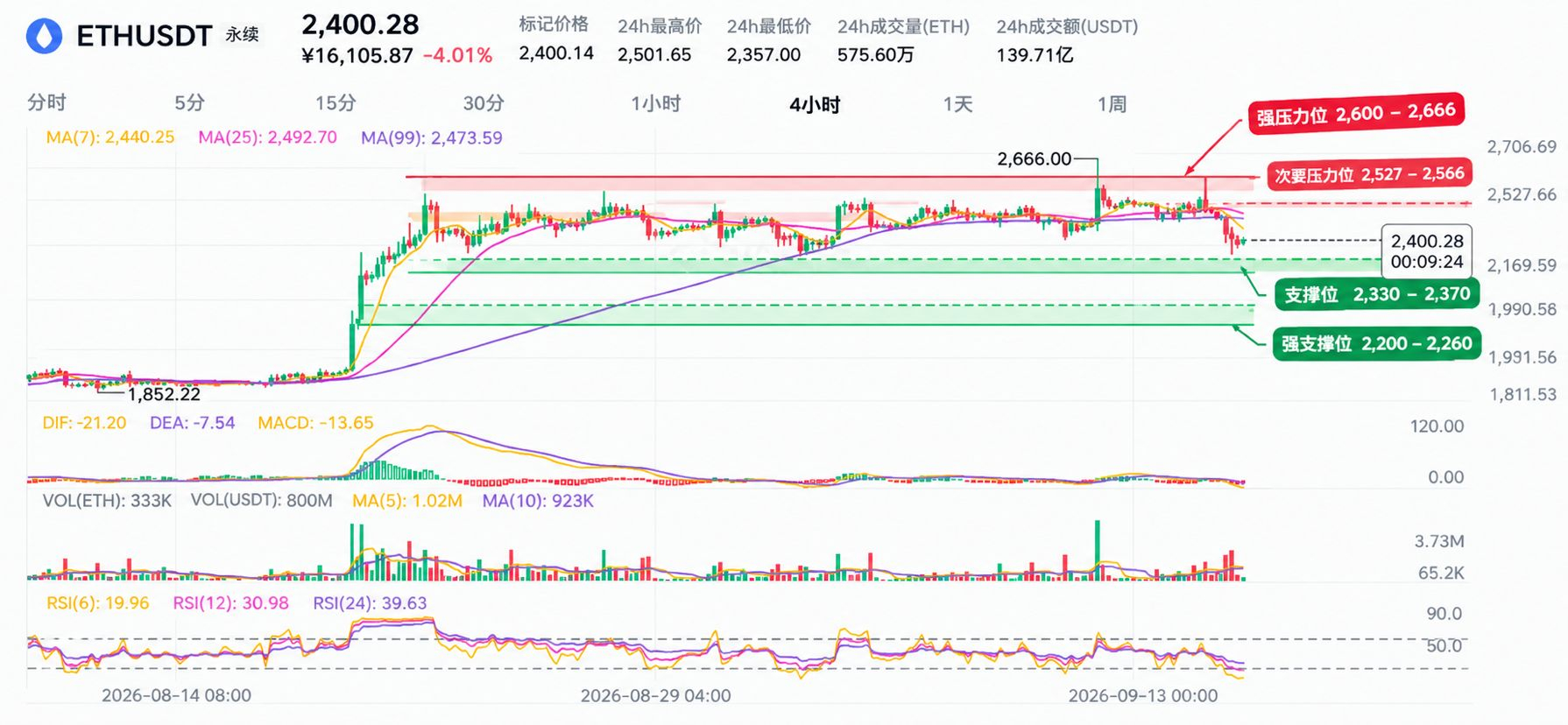
Bearish$ETH The CLARITY Act vote did not pass, with 49 votes in favor and 50 against — it was 11 votes short of the 60-vote threshold.
As soon as the news came out, the overnight market got slammed. BTC briefly fell below 75,000, ETH dipped to 2,358 at its lowest, and is now barely holding around 2,400, down 4% over the past 24 hours.
Looking at ETH’s current data, both bulls and bears are in a pretty awkward spot.
Combined with the liquidation map, there’s a heavy cluster of short liquidation orders above 2,500 to 2,550, while below 2,300 to 2,350 there’s also a big pile of long positions. With the price at 2,400 now, it’s right in the middle. No matter which way it moves, there are liquidation orders waiting to be triggered, so neither side has it easy.
On top of that, the Fed’s FOMC meeting is tonight, and the Bank of Japan is on Friday. There are major risks all around. The fact that the CLARITY Act didn’t pass has clearly hurt market sentiment in the short term, and crypto-related stocks in the U.S. stock market also got hit hard across the board.
Right now, I absolutely won’t buy the dip, and I also won’t chase the short. Both going long and going short are easy ways to get whipsawed here. I’m keeping my spot holdings and doing nothing, staying flat on futures, waiting for the Fed news tonight to land and seeing how the market digests it. If ETH can climb back above 2,450, that would mean the bearish news has mostly been priced in. If it breaks below 2,350 outright, then 2,300 below really becomes dangerous.
Did you get stopped out by last night’s sharp drop? Are you staying flat and waiting, or are you planning to gamble on the FOMC?
#ETH #When will the Fed cut interest rates?
As soon as the news came out, the overnight market got slammed. BTC briefly fell below 75,000, ETH dipped to 2,358 at its lowest, and is now barely holding around 2,400, down 4% over the past 24 hours.
Looking at ETH’s current data, both bulls and bears are in a pretty awkward spot.
Combined with the liquidation map, there’s a heavy cluster of short liquidation orders above 2,500 to 2,550, while below 2,300 to 2,350 there’s also a big pile of long positions. With the price at 2,400 now, it’s right in the middle. No matter which way it moves, there are liquidation orders waiting to be triggered, so neither side has it easy.
On top of that, the Fed’s FOMC meeting is tonight, and the Bank of Japan is on Friday. There are major risks all around. The fact that the CLARITY Act didn’t pass has clearly hurt market sentiment in the short term, and crypto-related stocks in the U.S. stock market also got hit hard across the board.
Right now, I absolutely won’t buy the dip, and I also won’t chase the short. Both going long and going short are easy ways to get whipsawed here. I’m keeping my spot holdings and doing nothing, staying flat on futures, waiting for the Fed news tonight to land and seeing how the market digests it. If ETH can climb back above 2,450, that would mean the bearish news has mostly been priced in. If it breaks below 2,350 outright, then 2,300 below really becomes dangerous.
Did you get stopped out by last night’s sharp drop? Are you staying flat and waiting, or are you planning to gamble on the FOMC?
#ETH #When will the Fed cut interest rates?
Log in to explore more content