The biggest lesson from this trade isn’t that I made 7U—it’s that I once again verified something:
Going heavy really has no point.
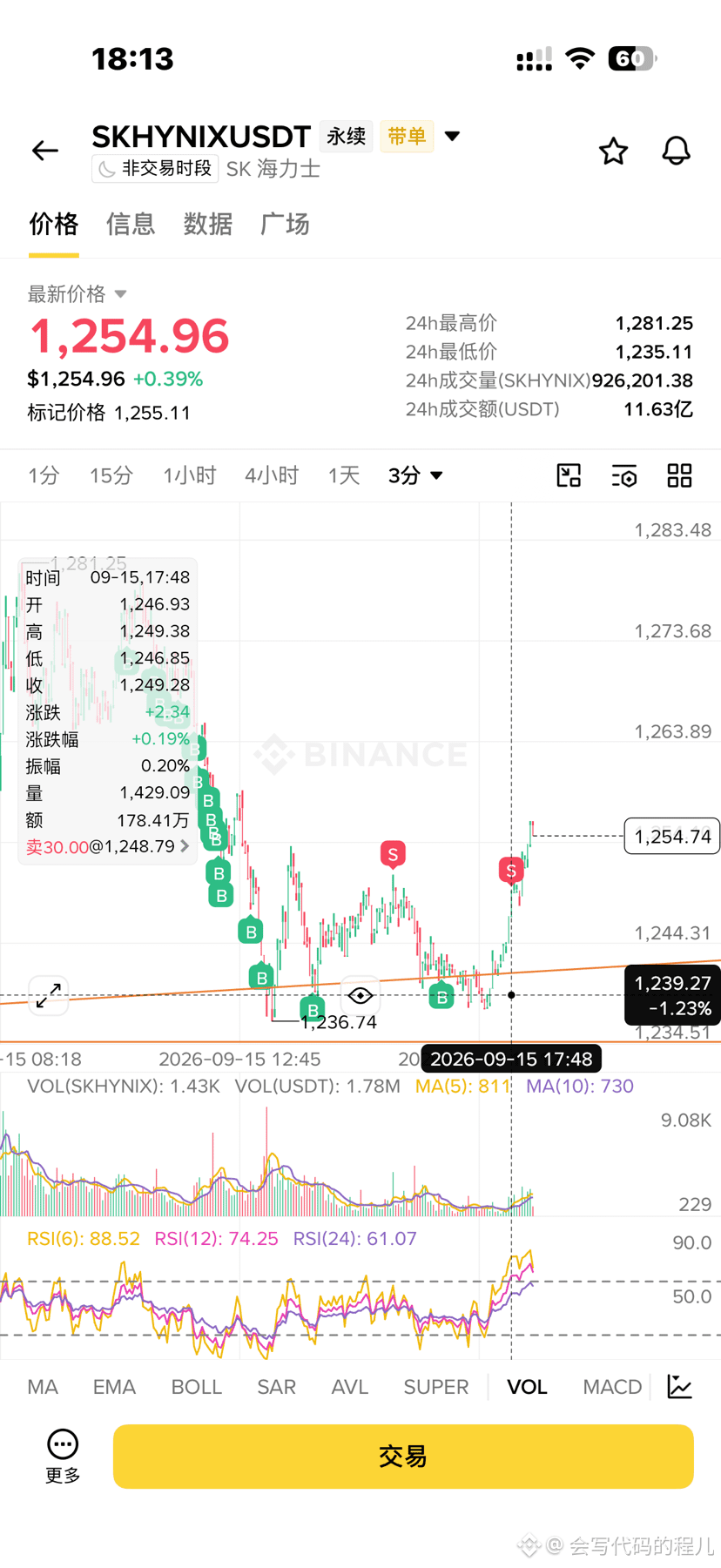
After opening this trade, I floated in losses all the way; my mindset slowly started to get distorted. Then the classic plot unfolded—adding to the position while in drawdown, wanting to “go all in” as it kept dropping, thinking that as long as it bounced a little, I’d break even.
Luckily, the price eventually pulled back near my entry cost. I went from being in floating losses back to break-even. But my first reaction wasn’t to keep fantasizing about huge profits—it was: run.
In the end:
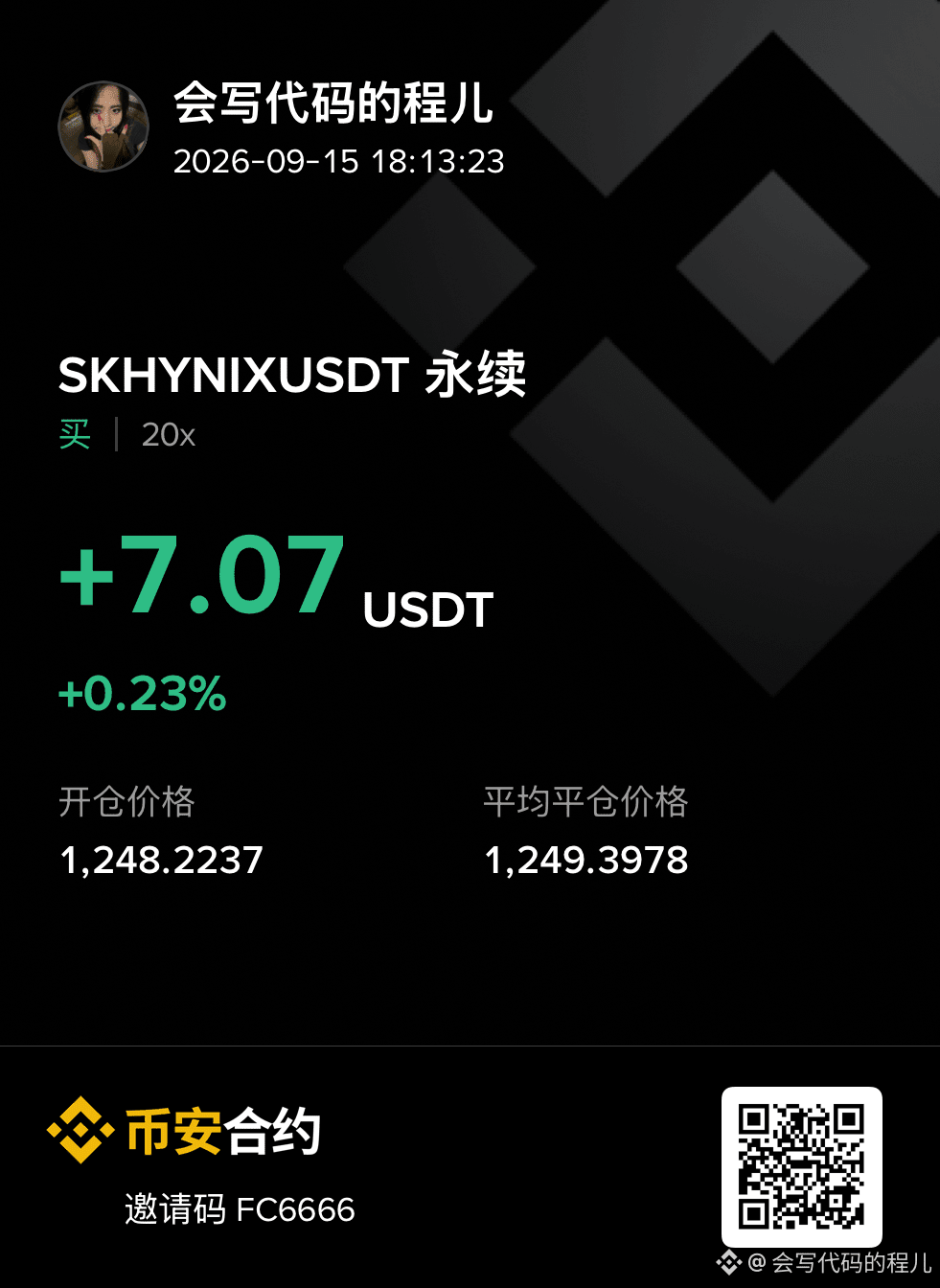
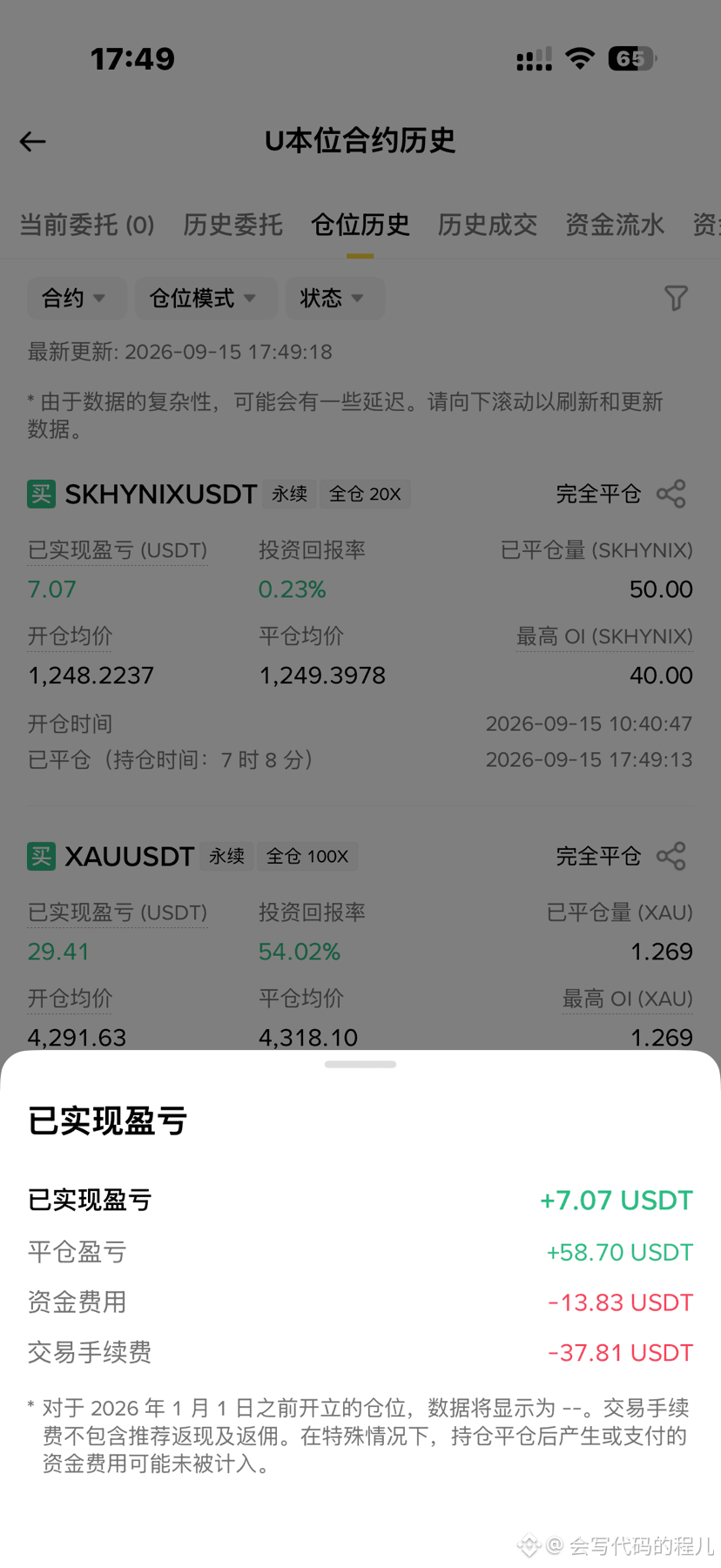
Average entry: 1248.22
Average exit: 1249.40
Realized: +7.07U
Position holding time: 7 hours 8 minutes
It looks like I profited, but the process was actually pretty humiliating.
The feeling that “gamblers” are most familiar with is this: when you’re losing, you want to desperately go all in to recover; the moment you get back to even, you just want to run as fast as you can.
So now I increasingly believe: your position size must not be too heavy.
Because once a heavy position goes into floating loss, a person’s trading logic can easily turn into:
Loss → add more → hold on → pray → break even → immediately run away.
If you’re only willing to run back to break-even in the end, then why go heavy in the first place?
What trading truly needs to control isn’t how much you can make—but whether you can stay calm when you’re in floating losses.
Smaller position sizes let you stay alive longer.$SKHYNIX
Going heavy really has no point.
After opening this trade, I floated in losses all the way; my mindset slowly started to get distorted. Then the classic plot unfolded—adding to the position while in drawdown, wanting to “go all in” as it kept dropping, thinking that as long as it bounced a little, I’d break even.
Luckily, the price eventually pulled back near my entry cost. I went from being in floating losses back to break-even. But my first reaction wasn’t to keep fantasizing about huge profits—it was: run.
In the end:
Average entry: 1248.22
Average exit: 1249.40
Realized: +7.07U
Position holding time: 7 hours 8 minutes
It looks like I profited, but the process was actually pretty humiliating.
The feeling that “gamblers” are most familiar with is this: when you’re losing, you want to desperately go all in to recover; the moment you get back to even, you just want to run as fast as you can.
So now I increasingly believe: your position size must not be too heavy.
Because once a heavy position goes into floating loss, a person’s trading logic can easily turn into:
Loss → add more → hold on → pray → break even → immediately run away.
If you’re only willing to run back to break-even in the end, then why go heavy in the first place?
What trading truly needs to control isn’t how much you can make—but whether you can stay calm when you’re in floating losses.
Smaller position sizes let you stay alive longer.$SKHYNIX