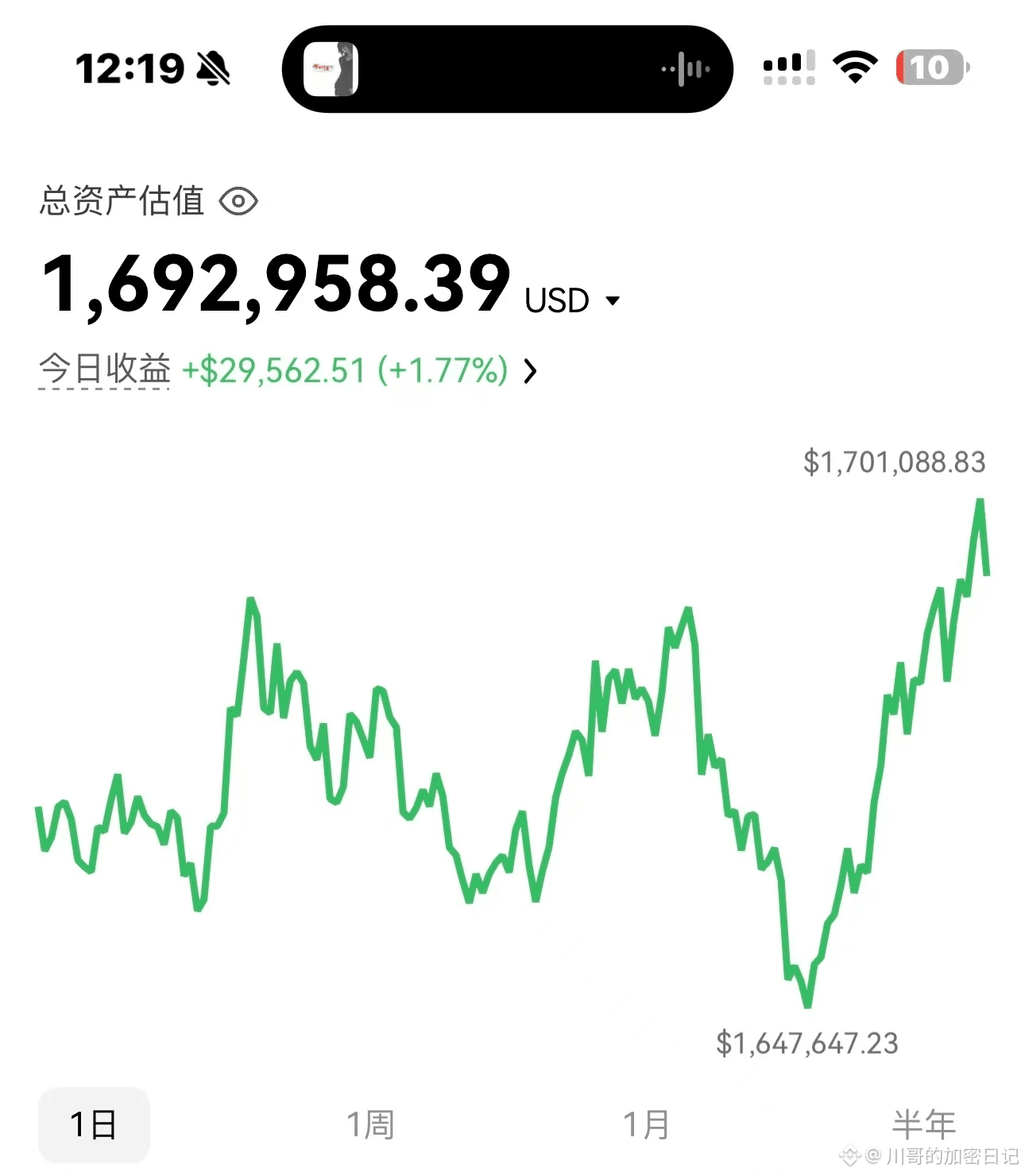
I was able to turn 10,000 yuan a day into 80,000, and while it sounds exaggerated, I really have experienced it. But just because I did it once doesn’t mean I can replicate it every time.
In this trading craft, you have to repeatedly watch the charts and review them—practice the rules for when to enter, when to exit, and when to hold until you’re fully familiar with them. Today I’ll share six chart-watching takeaways, all of which are easy to misread and easy to suffer losses from.
First: When the rise is fast and the pullback is slow, focus on support.
After a quick rally, if the price gradually falls and the trading volume shrinks along with it, you can observe whether this is normal consolidation. The key is whether support has held. If it actually breaks through, don’t keep comforting yourself with the idea of “a washout.”
Second: After a crash, if the bounce can’t get going, don’t rush to pick up bargains.
When the decline happened with heavy volume, but the rebound has little volume—and even the prior broken levels can’t be reclaimed, meaning strength hasn’t really been confirmed—don’t assume that since it has already dropped so much, it must only go up next.
Third: Risk in high positions can’t be judged only by “volume is big.”
After an increase in volume, if the price still can’t be pushed up and repeatedly surges and then falls back, I become more alert. A rise on decreasing volume should also make you pay attention to whether there will be follow-through capital afterward. Having volume doesn’t mean you can safely exit whenever you want.
Fourth: When volume suddenly spikes at low levels, first check whether it can be followed through.
A single high-volume bullish candle doesn’t prove the market is already at the bottom. I care more about whether price holds after it’s pushed up, and whether any pullback keeps key levels intact. Things look lively on the day, but if it drops back the next day to where it started, don’t be in a hurry to call it takeoff.
Fifth: Volume matters, but it has to be considered together with price.
High-volume rallies and high-volume selloffs mean completely different things. Volume shows how active trading is, but judging direction still depends on where price is relative to levels and the prevailing trend. Don’t see the volume bars grow longer and automatically conclude that the main force is accumulating.
Sixth: When you can’t read it clearly, keep your hands off.
If there’s no opportunity, stay in cash; when conditions are met, then act. Before entering, think through your position size, your stop-loss, and your exit criteria. Don’t chase when it’s already up, or hold on when it’s down—otherwise you end up changing the whole plan at the end.
There are many opportunities in the crypto market, so there’s no need to participate in every single wave.
At the beginning, not understanding is totally normal. Use these ideas to review the charts, and ask yourself two questions: Why am I entering? If I misread it, how do I exit?
Once you’ve thought those two things through, then you can discuss how big a move you should aim to capture. @交易员林总 $AIN
In this trading craft, you have to repeatedly watch the charts and review them—practice the rules for when to enter, when to exit, and when to hold until you’re fully familiar with them. Today I’ll share six chart-watching takeaways, all of which are easy to misread and easy to suffer losses from.
First: When the rise is fast and the pullback is slow, focus on support.
After a quick rally, if the price gradually falls and the trading volume shrinks along with it, you can observe whether this is normal consolidation. The key is whether support has held. If it actually breaks through, don’t keep comforting yourself with the idea of “a washout.”
Second: After a crash, if the bounce can’t get going, don’t rush to pick up bargains.
When the decline happened with heavy volume, but the rebound has little volume—and even the prior broken levels can’t be reclaimed, meaning strength hasn’t really been confirmed—don’t assume that since it has already dropped so much, it must only go up next.
Third: Risk in high positions can’t be judged only by “volume is big.”
After an increase in volume, if the price still can’t be pushed up and repeatedly surges and then falls back, I become more alert. A rise on decreasing volume should also make you pay attention to whether there will be follow-through capital afterward. Having volume doesn’t mean you can safely exit whenever you want.
Fourth: When volume suddenly spikes at low levels, first check whether it can be followed through.
A single high-volume bullish candle doesn’t prove the market is already at the bottom. I care more about whether price holds after it’s pushed up, and whether any pullback keeps key levels intact. Things look lively on the day, but if it drops back the next day to where it started, don’t be in a hurry to call it takeoff.
Fifth: Volume matters, but it has to be considered together with price.
High-volume rallies and high-volume selloffs mean completely different things. Volume shows how active trading is, but judging direction still depends on where price is relative to levels and the prevailing trend. Don’t see the volume bars grow longer and automatically conclude that the main force is accumulating.
Sixth: When you can’t read it clearly, keep your hands off.
If there’s no opportunity, stay in cash; when conditions are met, then act. Before entering, think through your position size, your stop-loss, and your exit criteria. Don’t chase when it’s already up, or hold on when it’s down—otherwise you end up changing the whole plan at the end.
There are many opportunities in the crypto market, so there’s no need to participate in every single wave.
At the beginning, not understanding is totally normal. Use these ideas to review the charts, and ask yourself two questions: Why am I entering? If I misread it, how do I exit?
Once you’ve thought those two things through, then you can discuss how big a move you should aim to capture. @交易员林总 $AIN