Practical Tips|Two Breakout Entry Methods—Stop Falling into Entry Mistakes
Many people trade like this: when price breaks upward through a resistance level, they immediately chase the order. But after entering, the market reverses downward, and they end up hitting a false breakout—getting stopped out and repeatedly suffering losses.
Using chart examples, here are two common structures and the correct logic for entering:
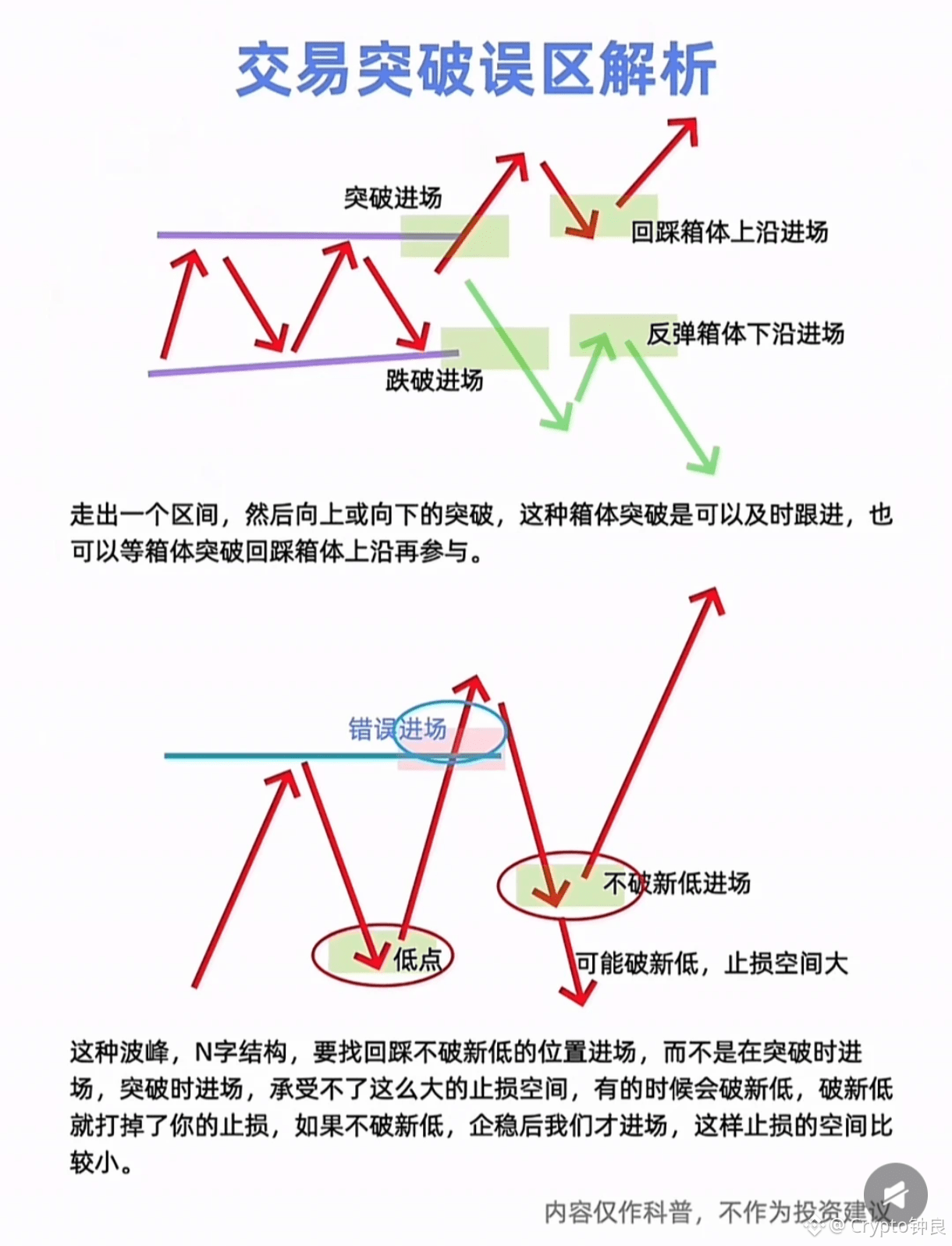
1、Range (Box) Breakout
Price has been oscillating back and forth within a range for a long time. After breaking above the box, there’s no need to rush to chase immediately.
The safer approaches are twofold: enter immediately to follow the breakout in the same direction, or wait for a pullback to the upper boundary of the box and only go long once it stabilizes there. If there is a valid breakdown to the downside, then after the rebound returns to the lower boundary of the box, go short—this usually has a higher tolerance.
2、N-shaped Swing Peak Structure
This is the easiest pattern to fall into a trap—never enter right at the moment of the breakout.
After the N-shaped surge, if you chase higher and the market then pulls back and breaks out to form a new low, the stop-loss distance becomes large, making it easy to be shaken out during the oscillation.
The standard approach: wait for a pullback, confirm that price will not make a new low, and only enter once it stabilizes. This greatly compresses the stop-loss space and improves the risk-reward ratio.
Quick summary:
For a box breakout: follow through on the breakout, but prioritize waiting for a pullback confirmation;
For an N-shaped surge: refuse to chase at the breakout—wait for the pullback to avoid making a new low before planning your entry.
Entry timing determines the risk-reward ratio. Blindly chasing breakouts is essentially handing over chips to the shakeout. Learn to wait for confirmation signals, and your trading will be more stable.
#比特币现货ETF净流入1.6亿美元
Many people trade like this: when price breaks upward through a resistance level, they immediately chase the order. But after entering, the market reverses downward, and they end up hitting a false breakout—getting stopped out and repeatedly suffering losses.
Using chart examples, here are two common structures and the correct logic for entering:
1、Range (Box) Breakout
Price has been oscillating back and forth within a range for a long time. After breaking above the box, there’s no need to rush to chase immediately.
The safer approaches are twofold: enter immediately to follow the breakout in the same direction, or wait for a pullback to the upper boundary of the box and only go long once it stabilizes there. If there is a valid breakdown to the downside, then after the rebound returns to the lower boundary of the box, go short—this usually has a higher tolerance.
2、N-shaped Swing Peak Structure
This is the easiest pattern to fall into a trap—never enter right at the moment of the breakout.
After the N-shaped surge, if you chase higher and the market then pulls back and breaks out to form a new low, the stop-loss distance becomes large, making it easy to be shaken out during the oscillation.
The standard approach: wait for a pullback, confirm that price will not make a new low, and only enter once it stabilizes. This greatly compresses the stop-loss space and improves the risk-reward ratio.
Quick summary:
For a box breakout: follow through on the breakout, but prioritize waiting for a pullback confirmation;
For an N-shaped surge: refuse to chase at the breakout—wait for the pullback to avoid making a new low before planning your entry.
Entry timing determines the risk-reward ratio. Blindly chasing breakouts is essentially handing over chips to the shakeout. Learn to wait for confirmation signals, and your trading will be more stable.
#比特币现货ETF净流入1.6亿美元