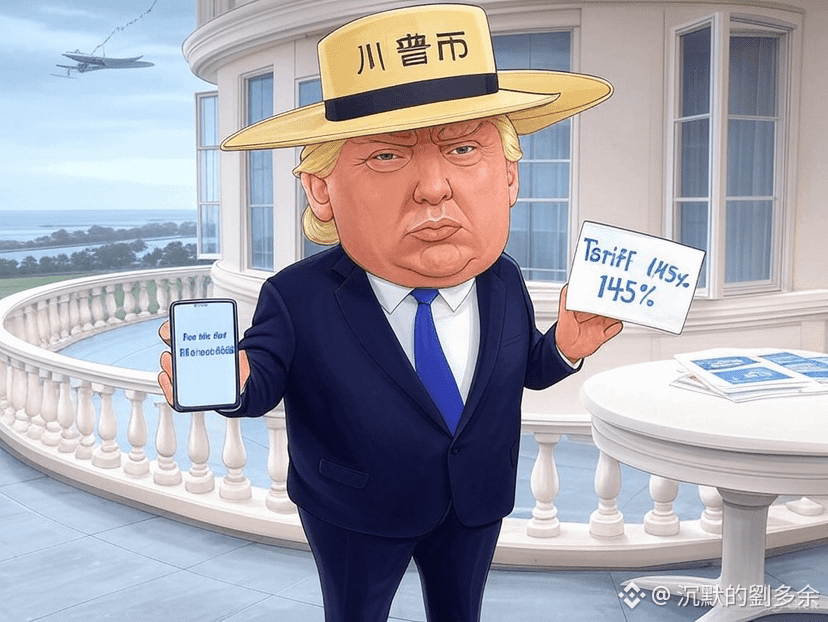
The Clear Act puts pressure on exchanges, market makers, and project teams that’s no less than a nuclear bomb.
What’s truly terrifying isn’t that the U.S. wants to regulate the whole world.
Rather, no matter where the exchange, market maker, or project team is registered, once they voluntarily enter the U.S. market, serve U.S. users, or conduct business through market infrastructure that’s regulated in the U.S., they may fall within the U.S. regulatory system.
Exchanges will have to meet requirements such as protecting clients’ assets, market surveillance, managing conflicts of interest, and information disclosure;
Project teams will have to deal with issues such as token issuance, disclosure, control rights, market manipulation, and conflicts of interest;
Market makers also are no longer just the “invisible party” behind the project team—related-party relationships, market manipulation, and conflicts of interest will all come into the regulator’s spotlight.
This means the old playbook that used to make crypto most comfortable—highly binding the project team, market makers, and exchanges, registering offshore, then obtaining liquidity and exit opportunities through the U.S. market—has completely come to an end.
If anyone wants to enter the world’s largest capital market, whether they’re an exchange, a project team, or a market maker, and wants to tap U.S. liquidity, U.S. users, U.S. exchanges, or institutional capital, they must accept the game rules set by the U.S.
In particular, projects invested by exchanges will receive especially close regulatory attention. After the Clear Act is released, some projects that are tightly linked to certain exchanges and market makers and have a solid base in the U.S. market will very likely be targeted by global law enforcement.
The entire law can extend liability outward through any token purchased by U.S. users…
$BTC $ETH #特朗普就CLARITY法案条款存疑
What’s truly terrifying isn’t that the U.S. wants to regulate the whole world.
Rather, no matter where the exchange, market maker, or project team is registered, once they voluntarily enter the U.S. market, serve U.S. users, or conduct business through market infrastructure that’s regulated in the U.S., they may fall within the U.S. regulatory system.
Exchanges will have to meet requirements such as protecting clients’ assets, market surveillance, managing conflicts of interest, and information disclosure;
Project teams will have to deal with issues such as token issuance, disclosure, control rights, market manipulation, and conflicts of interest;
Market makers also are no longer just the “invisible party” behind the project team—related-party relationships, market manipulation, and conflicts of interest will all come into the regulator’s spotlight.
This means the old playbook that used to make crypto most comfortable—highly binding the project team, market makers, and exchanges, registering offshore, then obtaining liquidity and exit opportunities through the U.S. market—has completely come to an end.
If anyone wants to enter the world’s largest capital market, whether they’re an exchange, a project team, or a market maker, and wants to tap U.S. liquidity, U.S. users, U.S. exchanges, or institutional capital, they must accept the game rules set by the U.S.
In particular, projects invested by exchanges will receive especially close regulatory attention. After the Clear Act is released, some projects that are tightly linked to certain exchanges and market makers and have a solid base in the U.S. market will very likely be targeted by global law enforcement.
The entire law can extend liability outward through any token purchased by U.S. users…
$BTC $ETH #特朗普就CLARITY法案条款存疑