


This is my own observation.
Due to the rapid development of technology in the modern era, a new chapter has begun in people’s economic system. Once, people used gold and silver as currency. Later, paper money became widespread. And in today’s age, the world has been introduced to digital assets (Digital Asset) and cryptocurrencies, among which the most discussed name is Bitcoin.
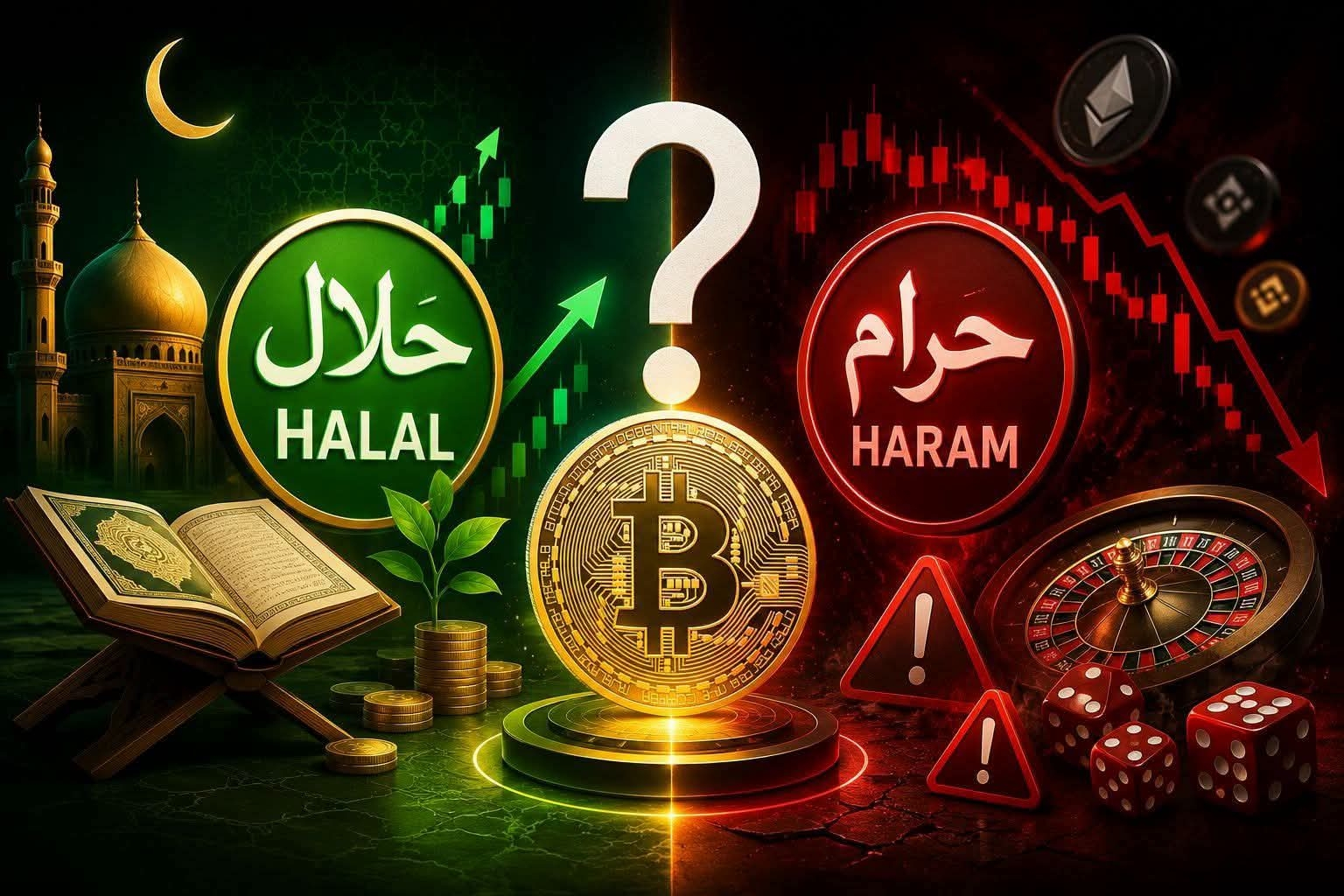
Ever since Bitcoin was invented, questions have arisen among economists, technologists, and Islamic jurists (fuqaha) around the world: “Is Bitcoin a lawful asset in the view of Sharia, or unlawful?”
There is still no unanimous answer to this question. There is disagreement among contemporary scholars. Some consider it permissible under certain conditions, while others consider it unlawful—or at least extremely risky—in the current situation. One of the reasons for this disagreement is that Bitcoin is not directly discussed in the Qur’an or hadith. Therefore, scholars are making ijtihad on this matter based on the general principles of the Qur’an, Sunnah, ijma‘, qiyas, and fiqh. Disagreement in ijtihadi matters is nothing new in Islamic history; rather, in many new issues there have also been such disagreements in the past.
In the history of Islam, there are many matters that were disputed at first; later, extensive research was conducted on them, and in many cases most scholars leaned toward one view. Yet some matters still remain within disagreements today. One of the notable examples is paper money. In the time of the Messenger ﷺ, the currency was gold dinars and silver dirhams. In later times, when paper money was introduced, many scholars raised questions—paper itself has no intrinsic (intrinsic) value; it is neither gold nor silver.
Then how would it become currency from the perspective of Sharia?
On the other hand, many scholars argue: if a state, society, and people’s general custom (ʿUrf) accept something as a means of exchange and it fulfills people’s financial needs, then it may be considered currency in Sharia discussions.
Over time, paper money gained worldwide recognition, and most contemporary Islamic fiqh academies accept paper money as a legitimate means of transactions. However, it is not that it is free from interest (riba) or outside all the rules of Sharia; rather, riba, zakat, buying and selling, and other Sharia rulings also apply to it.
From this historical incident, one thing becomes clear: in cases of new technology or a new financial system, fiqhi discussion can evolve over time.
In Islamic fiqh, several basic characteristics have been mentioned for a thing to be considered “mal” (مال) or property. Although there are some differences in wording among different madhhabs and contemporary faqihs, the core principles are almost the same.
1. It must be valuable to people (له قيمة عند الناس)
Something becomes “mal” only when common people consider it valuable and are willing to give other property in exchange for it.
In the case of Bitcoin: today, millions of people worldwide buy and sell Bitcoin. Many institutions accept it, and people spend real money for it. Therefore, from this perspective, Bitcoin has a market value.
2. There must be lawful benefit (منفعة مباحة)
According to Islamic fiqh, an asset must have a lawful use that Sharia has not prohibited.
In the case of Bitcoin: through Bitcoin, international funds can be transferred, assets can be stored, and investments can be made. However, if it is used for haram purposes, then that use would be haram; but the possibility of lawful use cannot be denied. Assessment: from the perspective of lawful use, this condition is fulfilled.
3. It must be possible to establish ownership (إمكان التملك)
It must be possible to determine who owns something.
In the case of Bitcoin: the Private Key of the Bitcoin Wallet belongs to whoever has it; they have control and ownership over that Bitcoin.
Assessment: this condition is fulfilled.
4. It must be transferable (قابل للنقل والتداول)
It must be possible to transfer an asset to another person, give it as a gift, or transfer it through inheritance.
In the case of Bitcoin: Bitcoin can easily be transferred from one wallet to another and can be bought and sold.
Assessment: this condition is fulfilled.
5. Acceptability in society (العرف)
In Islamic jurisprudence, “urf” (customary practice) or commonly established social norms are given importance in many cases. If something is widely accepted in society as a means of exchange or as property, then it becomes an important consideration in fiqhi discussions.
In the case of Bitcoin: Bitcoin is a well-known digital asset worldwide. Although not all states recognize it as legal tender, in many countries it is used lawfully as an asset for buying and selling and for investment.
Assessment: partially fulfills this condition; because its acceptability varies from country to country.
But those who do not consider Bitcoin lawful generally do not raise objections about these conditions. Rather, their main objection is:
1. Excessive price fluctuation (Volatility)
2, gharar (Gharar) or excessive uncertainty.
3, speculation (Speculation)—in some cases there is a risk of behaving like gambling.
4. The question of economic stability.
Recently, Mufti Muhammad Taqi Usmani (D.B.)—a renowned Pakistani Islamic jurist and former judge of the Sharia court—stated in a fatwa that purchasing and selling goods by means of cryptocurrency is, from the perspective of Sharia, unlawful (najayez). In addition to him, several scholars of Darul Uloom Karachi also signed that fatwa.
In the main discussion of the fatwa, he mentioned a few important reasons.
1. Is cryptocurrency “mal” (property) in the view of Sharia?
According to Mufti Taqi Usmani, based on current research and the opinions of specialists, sufficient grounds have not yet been established to consider cryptocurrency as “mal” (مال) in the view of Sharia. He refers to it mainly as a numerical record existing in digital accounts. Therefore, he is of the view that buying and selling through it is not lawful.
2. Excessive speculation (Speculation)
He says that currently most people do not buy and sell goods using Bitcoin or other crypto; rather, they buy and sell with the purpose of profiting from price fluctuations. In his view, this tendency is a matter of concern from the perspective of Sharia.
3. Extreme volatility (Volatility)
Bitcoin’s value fluctuates widely in a short period of time. In his view, such volatility can create excessive uncertainty (غرر) in transactions.
4. Limited use in the real economy
Mufti Taqi Usmani has also said in various statements of the past that if, one day, cryptocurrency is widely used as a means of exchange in the real economy and is not merely an object of speculation, then there could be an opportunity to review the matter again. That is, he did not completely close the door of ijtihad in the future.
Mufti Taqi Usmani’s fatwa is an ijtihadi fatwa. In the history of Islam, ijtihadi differences regarding new financial matters, new technology, or new methods of transactions are not new. There is also a long history of research and differences of opinion on paper currency, banking, insurance, and various modern economic issues.
Conclusion
Today, there is still no single and unanimous answer among scholars of the Muslim world to the question of whether Bitcoin is halal or haram. Many contemporary faqihs and Islamic economics experts are researching this matter. Some have said it is not permissible (najayez) in the present reality, while others have accepted it as a lawful asset under certain conditions. Therefore, the issue is currently considered an ijtihadi (اجتهادي) matter.
The history of Islam teaches us that, in the early period, disagreements often arose regarding new technologies, new financial systems, and new ways of conducting transactions. Later, after reality became clear, research increased, and widespread acceptance was created in society, new juristic (fiqhi) assessments developed on many matters.
A notable example is paper money. When paper money was first introduced, many scholars raised questions about its Sharia status. Because it was not gold or silver and had no intrinsic value of its own. On the other hand, many scholars consider it a legitimate means of transactions in light of society’s practice (urf), people’s acceptability, and economic need. Over time, most Islamic fiqh academies accept paper money as a lawful currency and apply zakat, riba, and other Sharia rulings upon it.
In light of this history, it can be said that fiqhi discussion on new matters can evolve over time. However, that does not mean that Bitcoin will necessarily be declared lawful or unlawful in the future. There is no certain Sharia or historical basis to make such a claim.
Therefore, for a Muslim, it would be appropriate to show respect toward scholars who hold differing opinions on this matter, not to belittle any side, and to make one’s practice decisions in the light of reliable scholars and fiqh research. Because disagreement in ijtihadi matters is a recognized part of Islamic tradition, and it is best for Muslim society to accept such differences with mutual respect and knowledge.