Castle Securities: The worst of the U.S. stock market is yet to be over; the AI sector will lead in October
Castle Securities strategist Scott Rubner believes that the AI sector selloff has already priced in a valuation bubble; meanwhile, the prevailing bearish sentiment could serve as a reversal catalyst. Based on historical data from backtests, during mid-term election years the average S&P 500 gain from late September to year-end is 5.6%. He also noted that technical conditions and supply-demand dynamics remain unfavorable for the stock market before the end of the month, and that U.S. stocks still have further downside potential over the next two weeks. Castle Securities strategist Scott Rubner believes that the U.S. stock market is at a temporary low point, and that the market structure is beginning to improve. Investors should take advantage of the additional pullback window before the end of the month and add to core assets on dips.

Castle Securities: The worst of the U.S. stock market is yet to be over; the AI sector will lead in October
Castle Securities strategist Scott Rubner believes that the AI sector selloff has already priced in a valuation bubble; meanwhile, the prevailing bearish sentiment could serve as a reversal catalyst. Based on historical data from backtests, during mid-term election years the average S&P 500 gain from late September to year-end is 5.6%. He also noted that technical conditions and supply-demand dynamics remain unfavorable for the stock market before the end of the month, and that U.S. stocks still have further downside potential over the next two weeks. Castle Securities strategist Scott Rubner believes that the U.S. stock market is at a temporary low point, and that the market structure is beginning to improve. Investors should take advantage of the additional pullback window before the end of the month and add to core assets on dips.

Castle Securities: The worst of the U.S. stock market is yet to be over; the AI sector will lead in October
Castle Securities strategist Scott Rubner believes that the AI sector selloff has already priced in a valuation bubble; meanwhile, the prevailing bearish sentiment could serve as a reversal catalyst. Based on historical data from backtests, during mid-term election years the average S&P 500 gain from late September to year-end is 5.6%. He also noted that technical conditions and supply-demand dynamics remain unfavorable for the stock market before the end of the month, and that U.S. stocks still have further downside potential over the next two weeks. Castle Securities strategist Scott Rubner believes that the U.S. stock market is at a temporary low point, and that the market structure is beginning to improve. Investors should take advantage of the additional pullback window before the end of the month and add to core assets on dips.

Castle Securities: The worst of the U.S. stock market is yet to be over; the AI sector will lead in October
Castle Securities strategist Scott Rubner believes that the AI sector selloff has already priced in a valuation bubble; meanwhile, the prevailing bearish sentiment could serve as a reversal catalyst. Based on historical data from backtests, during mid-term election years the average S&P 500 gain from late September to year-end is 5.6%. He also noted that technical conditions and supply-demand dynamics remain unfavorable for the stock market before the end of the month, and that U.S. stocks still have further downside potential over the next two weeks. Castle Securities strategist Scott Rubner believes that the U.S. stock market is at a temporary low point, and that the market structure is beginning to improve. Investors should take advantage of the additional pullback window before the end of the month and add to core assets on dips.
Castle Securities: The worst of the U.S. stock market is yet to be over; the AI sector will lead in October
Castle Securities strategist Scott Rubner believes that the AI sector selloff has already priced in a valuation bubble; meanwhile, the prevailing bearish sentiment could serve as a reversal catalyst. Based on historical data from backtests, during mid-term election years the average S&P 500 gain from late September to year-end is 5.6%. He also noted that technical conditions and supply-demand dynamics remain unfavorable for the stock market before the end of the month, and that U.S. stocks still have further downside potential over the next two weeks. Castle Securities strategist Scott Rubner believes that the U.S. stock market is at a temporary low point, and that the market structure is beginning to improve. Investors should take advantage of the additional pullback window before the end of the month and add to core assets on dips.

Castle Securities: The worst of the U.S. stock market is yet to be over; the AI sector will lead in October
Castle Securities strategist Scott Rubner believes that the AI sector selloff has already priced in a valuation bubble; meanwhile, the prevailing bearish sentiment could serve as a reversal catalyst. Based on historical data from backtests, during mid-term election years the average S&P 500 gain from late September to year-end is 5.6%. He also noted that technical conditions and supply-demand dynamics remain unfavorable for the stock market before the end of the month, and that U.S. stocks still have further downside potential over the next two weeks. Castle Securities strategist Scott Rubner believes that the U.S. stock market is at a temporary low point, and that the market structure is beginning to improve. Investors should take advantage of the additional pullback window before the end of the month and add to core assets on dips.
It’s not simply about recreating another Layer 1. Instead, it directly sets its sights on institutional settlement, stablecoin payments, tokenized assets, and an always-on financial market.
More importantly, the first batch of validators includes traditional financial institutions such as BlackRock, DTCC, Visa, Mastercard, and ICE.
The list of 11 institutions that Circle previously released.
I think the real change worth studying here is this: In the past, traditional finance was using blockchain.
Now, traditional finance is starting to participate in running blockchain. These two are completely different concepts.
If in the future stocks, funds, payments, and settlement gradually move onto the chain, then blockchain may no longer be just the infrastructure of Crypto.
It may slowly become financial infrastructure itself.
With Arc going live today, I’d rather treat it as a signal: Wall Street is moving from “researching Crypto” to “building Crypto”.
Lao Huang truly lives up to the title of the universe’s No. 1 mass-marketing pitchman, putting on a big show together with the universe’s No. 1 president.
What did Huang Renxun say are the advantages of AI in the United States? It’s Donald Trump!
To be honest, many things Trump does are to pander to populism, but when it comes to grand strategy, he’s absolutely not sloppy. The only way for the United States of America to maintain its competitive edge is to concentrate resources to take on big tasks—policies and resources (including capital) must escort the building of AI infrastructure.
The “exception” story about the beautiful country is never outdated!
Last night, when Huang Renxun was going All-in and delivering a speech on stage to thousands, Trump called in. Huang put the call on speaker so the whole room could hear the conversation. Trump said: The AI doomsday risk is a hoax, and the argument against building data centers is also a hoax. He insists that they cannot let opposition in some places prevent the expansion of America’s computing-power infrastructure. A really badass live counterattack performance art—during last night’s intraday trading, the U.S. stock market recovered a lot of losses. This phone call certainly made no small contribution.
AI Bubble “Final-Stage” Alarm Escalates—US Stocks May Face a 30%+ Pullback
On September 15, warnings such as “crazy market moves” and the “irrational season” appeared recently on Wall Street, as concerns about the bursting of the AI bubble intensified. Capital Economics believes that several market indicators are already nearing historical bubble-top levels, and expects the S&P 500 to begin falling next year, eventually pulling back by at least 30% from its peak.
Recent sharp divergence in the market has further heightened worries: on July 30, Microsoft’s market cap increased by $450 billion in a single day; the next day, Apple’s market cap fell by $360 billion, while Amazon’s rose by $388 billion. Data from Acadian Asset Management shows that the degree of divergence in individual stock volatility in the US has climbed to the third-highest level in nearly 2,850 trading days, surpassed only by the 2020 vaccine rally and the 2025 DeepSeek shock.
Meanwhile, the Federal Reserve may raise rates by 25 basis points this Wednesday for the first time since July 2023. UBS expects the Fed’s final rate hike decision to pass 10 to 2, though two officials may oppose. If the Fed tightens policy further, Capital Economics says this would make the current AI rally more similar to the internet bubble around the early 2000s. It points out that capital expenditure at hyperscale cloud-computing firms continues to surge, and it expects the four major hyperscale cloud service providers’ free cash flow to turn negative by 2027, as AI bubble risks continue to build.
AI leaders collectively call for “pushing the brakes”—saying “slow down” out loud, while secretly thinking “surpass them” “Whoever wins Al wins everything”
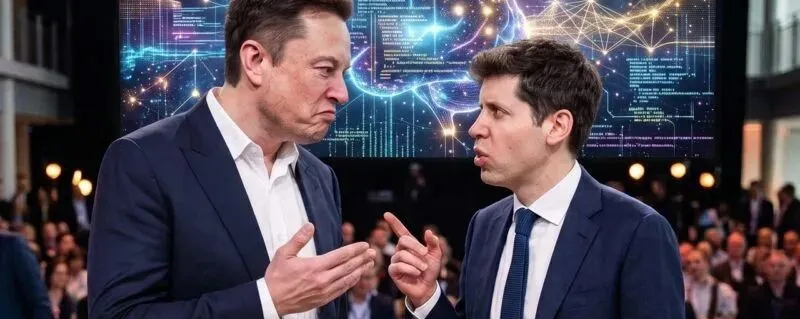
AI quick news: As concerns about AI safety heat up, Anthropic CEO Dario Amodei has recently called on the U.S. government to push the industry to slow down AI development, and to allow AI companies to jointly set safety standards without violating antitrust laws. The proposal has received support from OpenAI CEO Sam Altman, Tesla CEO Elon Musk, and others, and Microsoft CEO Satya Nadella has also urged controlling the pace of AI development. However, the Trump administration has taken a cautious stance toward slowing down AI development. David Sacks, co-chair of the President’s Council of Advisors on Science and Technology, said that if AI companies believe the risks of new models are too high, they can choose to slow down on their own, but should not use that as an excuse to ask the government to suspend antitrust laws. Trump, meanwhile, stressed that the United States is currently ahead of China in AI, “whoever wins AI wins everything,” and therefore wants to maintain its lead.
Elon Musk on how to make AI safer and truly for people:
“AI will be smarter than the smartest human. At that point, any invention will become possible.”
But AI also has a small chance of killing all of us.
So the most important thing is how we train it.
• Make AI as realistic as possible • Make it maximally curious • Train it to stay honest even if the truth isn’t popular
Because if AI truly pursues the truth and is full of curiosity, he believes it will naturally want to promote human development, rather than fight against it.
Anthropic-Contract-Pool Meme Coins Launch Double Strike: FRONTIER Races to $10 Million, ANTHROPIG Jumps 67% in the Short Term
On September 12, tonight, Robinhood sees more on-chain drama. Launched on the meme coin FRONTIER, which uses a tokenized Anthropic 1x contract as its liquidity pool, it surged to a market cap of $10 million within half an hour, but has since fallen to $7.04 million. In addition, the ANTHROPIG launched this morning also briefly surpassed $10 million in market cap, before falling to $9.15 million; its increase over the past hour reached 78%. Inspired by Anthropic CEO Dario Amodei’s latest article (We Must Pace the Frontier), FRONTIER explains to the public why the AI industry should slow down and proposes a three-part plan to achieve this.
Jensen Huang: Cybersecurity could become AI’s next big breakout point
And he admits, “Creating problems is creating demand.”
At the Goldman Sachs tech conference, NVIDIA CEO Jensen Huang identified cybersecurity as AI’s next major use case, and said that AI automation of computer programming is changing the pace of cyber offense and defense from the ground up. On Thursday, at a Goldman Sachs tech conference in San Francisco, Jensen Huang told the audience: Cybersecurity is very likely to become AI’s next major use case. He explained that AI models’ automation of computer programming is disrupting the cybersecurity industry because code is being exploited, and the speed at which fixes are needed has become extremely fast. NVIDIA recently issued a strong long-term sales outlook last month, leading Wall Street to believe that massive AI data center spending will continue. Still, the market keeps demanding that the company prove these capital expenditures are creating real economic value. By pointing to cybersecurity at this time, Huang is effectively finding a new high-value outlet for AI computing power.
Top-tier dominance from the safest side!
Exclusive RWA perpetual, 50% share, $159.1B!
$4Stock direct RWA, IPOs moving onto the blockchain, and access transactions between private and public markets becoming more global, transparent, and efficient. $Uponly 10% of the funds are used for buybacks—every 10% dip counts! Paired with $BNC4 10% treasury reserve 📉 Whenever the price pulls back by 10%, the treasury conducts a buyback. 🛡️ Ongoing buybacks to build stronger support for the price. 📈 Long-term goal: continuously raise the price floor. Looks like the stock that the big boss said would never go down is going to happen.
Oh no, it’s over—everyone goes their own way. A trader lost more than $190,000 from chasing LAPTOP
September 9, according to Lookonchain monitoring, a trader chased higher prices for a token related to Hunter Biden, LAPTOP, and lost $200,000, leaving only about $3,000. The trader withdrew $250,000 from Binance in advance, planning to buy immediately after LAPTOP goes live. In the end, he spent $200,000 to buy 919 LAPTOP at a high price of $218 per token; currently, this position is worth only about $3,000.
4Stock’s Market Cap Briefly Surges Past $40 Million, Continuing to Set New Highs
On September 8, according to GMGN data, 4Stock’s market cap briefly broke above $32 million and continued setting new highs. It is now reported at $24.79 million, and within less than 3 hours of going live, trading volume reached $22.9 million. 4Stock is the “Stock Meme” narrative introduced by Four.meme. It first launches a 4Stock underlying asset linked to stock assets, and then allows the community to issue Memes using that asset as the pool. BNC4 is the first 4Stock, (theoretically) 1:1 anchoring the corresponding stock asset. The path difference of MEME on the 4Stock and Robinhood Chain lies in the issuance base: the former is built on the BSC launchpad of Four.meme, using 4Stock as the underlying asset to enable community pairing and issuance; the latter uses tokenized U.S. stocks directly as the liquidity pool. As the first 4Stock, BNC4 theoretically 1:1 anchors the stock, and in essence it expands the “stock Meme” narrative from a single AMC target into a replicable infrastructure layer.
Elon Musk’s Starlink has found a competitor: How much chance do the three major telecom operators have if they team up?
European telecom giant mulls satellite-to-phone alliance, seeking to compete with Musk’s Starlink According to people familiar with the matter, Deutsche Telekom, Orange, Vodafone, and Telefonica are in preliminary discussions to form an alliance to jointly bid for EU satellite spectrum and provide “satellite-to-phone” services to compete with Musk’s Starlink. No final decision has been made yet. The EU is considering new rules for a 2 GHz satellite spectrum. After existing licenses expire in 2027, about one-third of the spectrum will be reserved for locally owned operators controlled by European companies to strengthen Europe’s independent satellite communications capabilities; another one-third is intended for the sovereign communications services provided by Europe’s IRIS² satellite constellation; and the remaining one-third will be open to international firms to bid.
Bitcoin and U.S. stocks are significantly decoupling, similar to the prelude to the 2017 Bitcoin bull market
On September 6, crypto analyst Willy Woo posted that Bitcoin's trend is significantly decoupling from that of U.S. stocks. The last time such a degree of decoupling occurred was in 2015, which was the prelude to the 2017 Bitcoin bull market.
In 2014, the stock market was still in a bull market, while BTC experienced a bear market unrelated to stock market trends. From 2015 to 2016, the stock market fluctuated weakly for two consecutive years, but BTC entered a bull market; then in 2017, when the stock market also turned bullish, BTC rose further and sharply.
Willy Woo believes the current market structure is similar to that time: BTC liquidity continues to strengthen, while the stock market is beginning to show signs of fragility.
True bridge-free trading has arrived The competition facing public chains has been redefined
When cross-chain is compressed into a single click, the standard traders use to choose a public chain changes accordingly. “The best market conditions” usually means the strongest wealth effect, the most concentrated liquidity, and the most intense social discussion. The Fomo and Pump.fun app put these three signals into the same information flow, allowing capital to quickly pour into the hottest chain and leave just as quickly once the heat shifts. The early activity on Robinhood Chain has already revealed this capital structure. On-chain activity statistics from Blockworks Research show that Robinhood Wallet contributed only 2% of activity, while 86% came from cross-chain terminals and multi-chain wallets. The main force supporting the market is still crypto-native capital, which migrates to new venues through existing entry points such as Fomo. New funds brought in by the main Robinhood app have not yet become the core.
Behind the thousandfold star-coin stock MEME: AMC CEO attacks Robinhood’s illegal tokenized U.S. stocks and has involved securities lawyers
September 4, today’s widely soaring meme coin project MEME, a star-coin token that reportedly surged by a thousand times, is paired with a tokenized U.S. stock: AMC Entertainment (U.S. cinema company, stock code AMC), using the latter as the pool pairing. Earlier this morning, AMC’s CEO posted a criticism of Robinhood, saying Robinhood is promoting tokenized stocks, including AMC, that purportedly cover more than 190 companies, but these products have not been registered in accordance with U.S. securities laws. This is an unauthorized linkage to the AMC name and its underlying real shares. AMC has nothing to do with it and does not recognize it. The CEO also strongly condemned Robinhood’s actions as “disgusting, absurd, nauseating, despicable, unforgivable, and beneath contempt,” and said external securities attorneys have already been engaged to investigate.