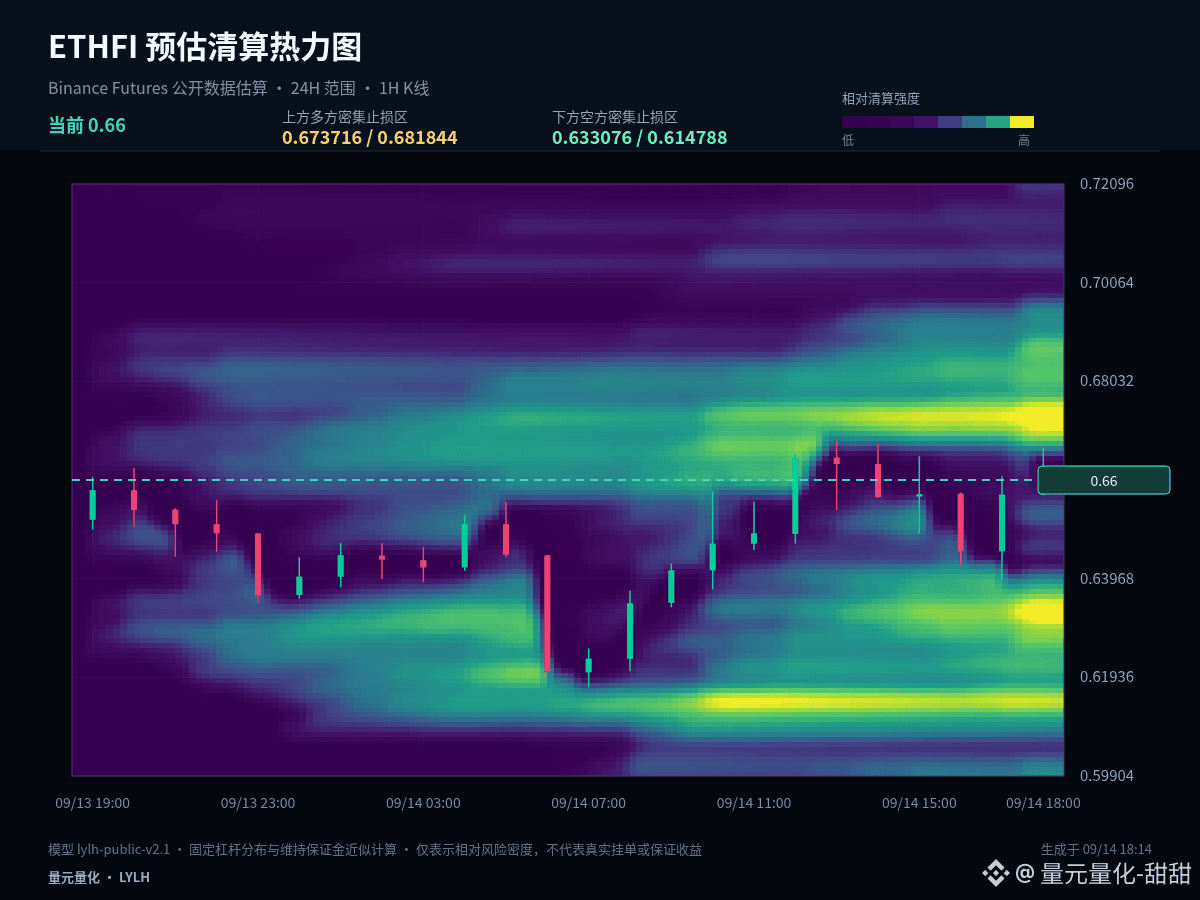
$ETHFI #ETHFI Do a structural review. Current price 0.6609, 1 hour +0.44%, 24 hours -1.43%, and the recent 24-hour range is about 7.7%.
The current price is close to the upper bound of the past 24 hours’ volatility: 1 hour +0.44%, 24 hours -1.43%. The most important thing at the highs is to confirm the market’s acceptance after a breakout. If price can stay above the upper bound, it shows the market recognizes a higher range; if it briefly pierces through and quickly snaps back, you need to guard against a false breakout.
Key levels to review: 0.64375 determines short-term initiative; 0.6691 is used to confirm upside space; 0.6184 is for observing downside defense. After this, you don’t need to guess every step—just check whether the original judgment still holds as price passes through these levels.
If the market matches expectations, manage profits in stages and continue to move the stop to protect. If it doesn’t match, promptly acknowledge the change in conditions. Professional trading isn’t about always being right—it’s about staying consistent in execution after new information updates.
In position management, distinguish between spot and contracts. If you already have spot holdings, manage them in segments around key levels and don’t frequently flip direction due to a single 1-hour candlestick. If you’re flat, wait for confirmation before entering in batches—it’s more comfortable. Contracts put more emphasis on entry location and invalidation conditions. When volatility amplifies, actively reduce position size to avoid turning a short-term call into passive holding.
Next, I’ll focus on tracking the gains/losses around 0.64375. Do you lean more toward testing 0.6691 first, or first retreating to 0.6184? Feel free to share your judgment and reasoning.
#BitcoinThirdSingleBlockReorgInFourWeeks
The current price is close to the upper bound of the past 24 hours’ volatility: 1 hour +0.44%, 24 hours -1.43%. The most important thing at the highs is to confirm the market’s acceptance after a breakout. If price can stay above the upper bound, it shows the market recognizes a higher range; if it briefly pierces through and quickly snaps back, you need to guard against a false breakout.
Key levels to review: 0.64375 determines short-term initiative; 0.6691 is used to confirm upside space; 0.6184 is for observing downside defense. After this, you don’t need to guess every step—just check whether the original judgment still holds as price passes through these levels.
If the market matches expectations, manage profits in stages and continue to move the stop to protect. If it doesn’t match, promptly acknowledge the change in conditions. Professional trading isn’t about always being right—it’s about staying consistent in execution after new information updates.
In position management, distinguish between spot and contracts. If you already have spot holdings, manage them in segments around key levels and don’t frequently flip direction due to a single 1-hour candlestick. If you’re flat, wait for confirmation before entering in batches—it’s more comfortable. Contracts put more emphasis on entry location and invalidation conditions. When volatility amplifies, actively reduce position size to avoid turning a short-term call into passive holding.
Next, I’ll focus on tracking the gains/losses around 0.64375. Do you lean more toward testing 0.6691 first, or first retreating to 0.6184? Feel free to share your judgment and reasoning.
#BitcoinThirdSingleBlockReorgInFourWeeks