Hormuz is the main route, and for a long time it has been the gateway for Middle Eastern oil to leave. Over such a long period, it has basically become paralyzed.
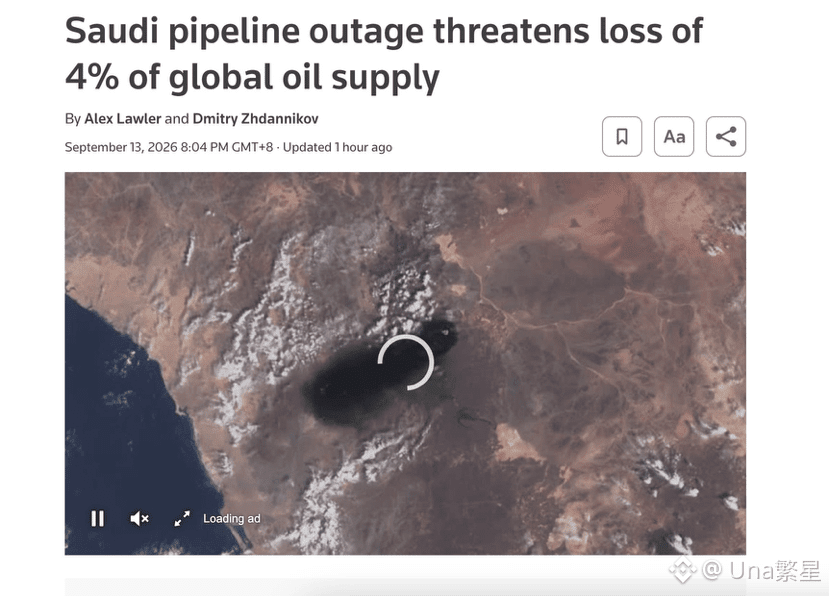
Besides the main route, there is also an alternative route: Saudi set up a pipeline from its eastern oil fields to export to the Red Sea. When the main route is paralyzed, this backup route can be used.
But now the backup route has been blown up. Ships can’t get through anymore, but the oil in the warehouses can still be sold for a few days for now. Reuters says Yanbu can probably hold out for about 5 to 7 days.
At that time, if the oil runs out and the pipeline still hasn’t been repaired, this export outlet becomes a big problem.
What the market calls “global supply” of about 4% refers to the amount recently being transshipped per day through this backup pipeline.
I think this week is a turning point.
If over the next few days Saudi says some restoration of deliveries has resumed, then oil prices will likely bounce back—this would be a risk premium.
If a week passes and work still hasn’t restarted, and loading at Yanbu starts to drop off, then the nature of the situation changes. At that point, it’s truly a shortage of oil, and the circumstances are completely different.
The problem now is that as long as the authorities don’t say anything, the market will assume it could be down for a long time, and the price will reflect that quickly.
The more troublesome issue now is that if oil doesn’t come down from its high level, diesel is also expensive, transporting goods costs more, inflation keeps rising, and the Fed is even less willing to ease. Yields on U.S. Treasuries are pushed higher.
Besides the main route, there is also an alternative route: Saudi set up a pipeline from its eastern oil fields to export to the Red Sea. When the main route is paralyzed, this backup route can be used.
But now the backup route has been blown up. Ships can’t get through anymore, but the oil in the warehouses can still be sold for a few days for now. Reuters says Yanbu can probably hold out for about 5 to 7 days.
At that time, if the oil runs out and the pipeline still hasn’t been repaired, this export outlet becomes a big problem.
What the market calls “global supply” of about 4% refers to the amount recently being transshipped per day through this backup pipeline.
I think this week is a turning point.
If over the next few days Saudi says some restoration of deliveries has resumed, then oil prices will likely bounce back—this would be a risk premium.
If a week passes and work still hasn’t restarted, and loading at Yanbu starts to drop off, then the nature of the situation changes. At that point, it’s truly a shortage of oil, and the circumstances are completely different.
The problem now is that as long as the authorities don’t say anything, the market will assume it could be down for a long time, and the price will reflect that quickly.
The more troublesome issue now is that if oil doesn’t come down from its high level, diesel is also expensive, transporting goods costs more, inflation keeps rising, and the Fed is even less willing to ease. Yields on U.S. Treasuries are pushed higher.