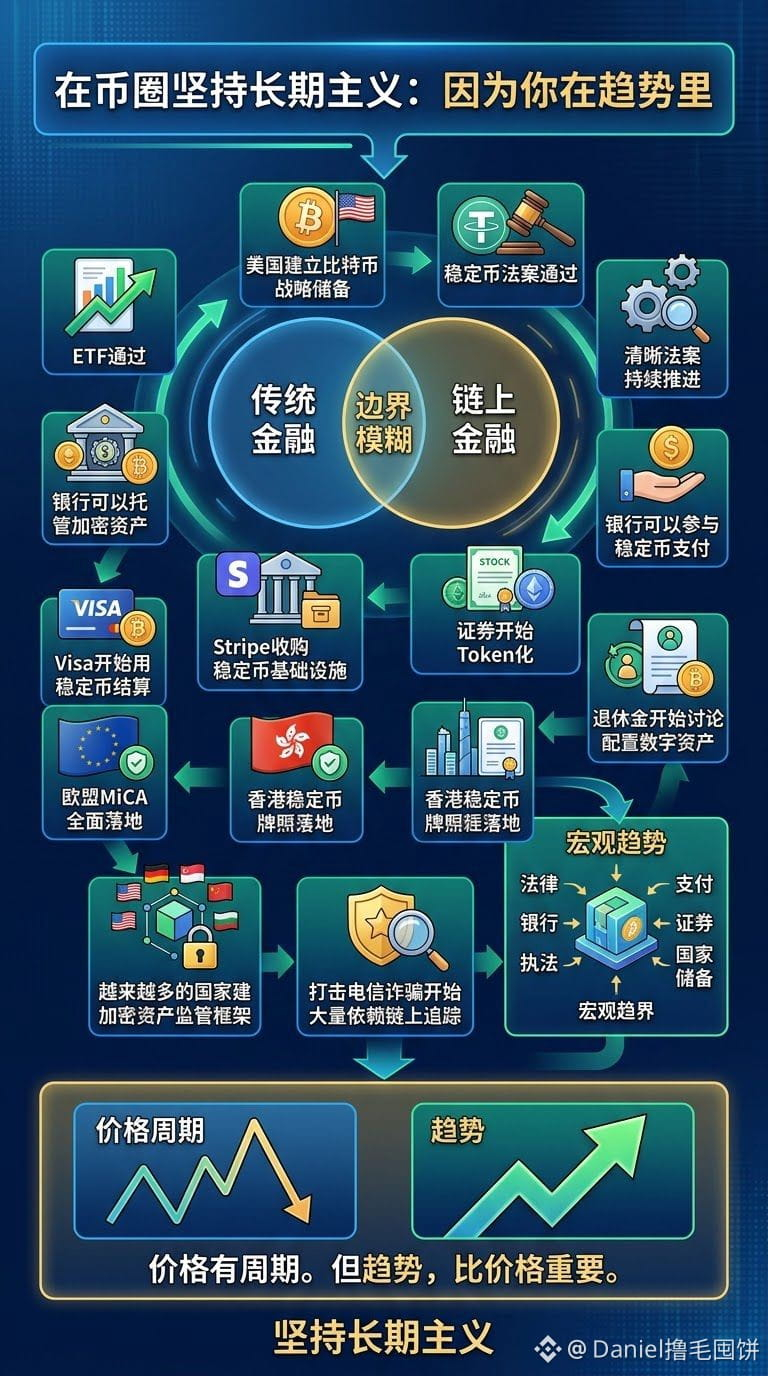
Why should you practice long-termism in the crypto market? Because you’re in a trend. The ETF has been approved, the U.S. has established a Bitcoin strategic reserve, the stablecoin bill has passed, clear legislation continues to be推进, banks can custody crypto assets, banks can participate in stablecoin payments, Visa has started using stablecoin settlement, Stripe acquired stablecoin infrastructure, securities are beginning to be tokenized, pensions are starting to discuss allocating to digital assets, the EU’s MiCA is fully rolling out, Hong Kong’s stablecoin licensing is being implemented, more and more countries are starting to build regulatory frameworks for crypto assets, and efforts to combat telecom fraud are increasingly relying on on-chain tracking—fraud funds, money-laundering addresses, and illicit funds can be directly traced and frozen… The boundary between traditional finance and on-chain finance is becoming increasingly blurred. What you see isn’t just how much a particular coin has risen. It’s that laws, banks, ETFs, payments, stablecoins, securities, law enforcement, and national reserves are all gradually entering this world. Prices have cycles. But the trend is more important than the price $BTC

Post

--Bearish