
橙子Joyce
347 Posts

橙子Joyce
 Square Verified+
价值投资者:以十年为单位投资美股及BTC.ETH.BNB.SOL.推特X:@Joyce88ai

SOL Holder
Frequent Trader
8.7 Years
795 Following
34.6K+ Followers
42.8K+ Liked
Posts
All
Quotes
Videos
Live
PINNED

杨乐-光明社区
·
--
I have my own sharp edge—when I hold it back, it’s refinement; when I show it, it becomes power.
Those who respect me, I repay with peaches and plums;
Those who wrong me, I return their color with interest.
Those who respect me, I repay with peaches and plums;
Those who wrong me, I return their color with interest.


灰s1688
·
--
$BTC is currently hovering around $78,000. As for the Federal Reserve interest rate decision early Thursday morning this week, the market has already regarded it as the biggest variable determining the near-term direction.
🧧🧧🧧
BTC is currently trading at around $78,000. Over the weekend, it saw a slow drift lower and sideways consolidation, with overall volatility narrowing.
The main overhead resistance is concentrated in the $80,000—$82,000 area. Key supports below are around $76,500 and $75,000.
On the daily timeframe, price is in the rebound phase following a pullback. However, volume and price are showing a certain divergence, so the sustainability of the short-term rebound remains in question.
In the past few days, BTC has pulled back from the $82,300 high to around $76,000. Rate-hike expectations have already been heavily priced in; after the data was released, short-covering appeared instead.
🧧🧧🧧
BTC is currently trading at around $78,000. Over the weekend, it saw a slow drift lower and sideways consolidation, with overall volatility narrowing.
The main overhead resistance is concentrated in the $80,000—$82,000 area. Key supports below are around $76,500 and $75,000.
On the daily timeframe, price is in the rebound phase following a pullback. However, volume and price are showing a certain divergence, so the sustainability of the short-term rebound remains in question.
In the past few days, BTC has pulled back from the $82,300 high to around $76,000. Rate-hike expectations have already been heavily priced in; after the data was released, short-covering appeared instead.

唯一 Bruce
·
--
$LSK
$LTC
$LIT
#AnthropicCEOCallsForAISlowdown
#WhiteHouseRejectsAISlowdownCalls
$LTC
$LIT
#AnthropicCEOCallsForAISlowdown
#WhiteHouseRejectsAISlowdownCalls


路人1688luren
·
--
$BTC #比特币涨1.64%突破78000美元 Just surged above 780,000 USD; over on Trump’s side, they also reached a compromise in negotiations on the conflict-of-interest provisions in the CLARITY Act. This round of volatility in the crypto market has completely broken many people’s mindset.
Actually, you don’t need to look at those complicated call-outs and analyses—the truth is only two things:
First, the underlying logic of the bill negotiations is that the U.S. is redefining the jurisdiction boundaries between the SEC and the CFTC. Once jurisdiction is put in place, the biggest concern for compliance-driven capital to enter the market is cut off.
Second, price pumping higher doesn’t mean the risk has disappeared. During the period of policy games, every fluctuation is essentially big money using regulatory expectation gaps to reshuffle liquidity.
At moments like this, don’t let yourself be led around by short-term K-line charts. Pay attention to the final bill’s specific amendments regarding stablecoin yield and developer-related provisions—it's far more important than blindly chasing higher prices. The clear line toward compliance has already been drawn; the real show is only just beginning.
Where will $BTC ’s next move be—leave a comment and save it for the record. Time will tell everything. And for correct comments, rewards and tips are appreciated.
Actually, you don’t need to look at those complicated call-outs and analyses—the truth is only two things:
First, the underlying logic of the bill negotiations is that the U.S. is redefining the jurisdiction boundaries between the SEC and the CFTC. Once jurisdiction is put in place, the biggest concern for compliance-driven capital to enter the market is cut off.
Second, price pumping higher doesn’t mean the risk has disappeared. During the period of policy games, every fluctuation is essentially big money using regulatory expectation gaps to reshuffle liquidity.
At moments like this, don’t let yourself be led around by short-term K-line charts. Pay attention to the final bill’s specific amendments regarding stablecoin yield and developer-related provisions—it's far more important than blindly chasing higher prices. The clear line toward compliance has already been drawn; the real show is only just beginning.
Where will $BTC ’s next move be—leave a comment and save it for the record. Time will tell everything. And for correct comments, rewards and tips are appreciated.




只会呐喊的尖刀手
·
--
【Product Name】Today’s Limited Edition·You
【Production Date】The moment you wake up this morning
【Ingredients】Sunlight, a gentle breeze, and a little stubbornness
【Indications】Specifically treats being unhappy, having no spirit, and wanting to just lie down and do nothing
【Directions】Use anytime, all day long—refill your “good mood” whenever you need it
【Precautions】Avoid using it together with “negative energy.” Do not suppress your frustrations on an empty stomach
【Shelf Life】Only valid for today. Please switch to the new version tomorrow
—Please store it properly; you are the limited edition.🏷️💖
【Production Date】The moment you wake up this morning
【Ingredients】Sunlight, a gentle breeze, and a little stubbornness
【Indications】Specifically treats being unhappy, having no spirit, and wanting to just lie down and do nothing
【Directions】Use anytime, all day long—refill your “good mood” whenever you need it
【Precautions】Avoid using it together with “negative energy.” Do not suppress your frustrations on an empty stomach
【Shelf Life】Only valid for today. Please switch to the new version tomorrow
—Please store it properly; you are the limited edition.🏷️💖


Virus九公子
·
--
🧧🧧🧧Web3 The most valuable thing is never the coin—it’s reputation
In the world of Web3, prices fluctuate, assets rise and fall, and opportunities rotate.
Money is a flowing resource—you can always start over; but reputation is an on-chain asset that can’t be tampered with or reversed.
Everything on the chain is transparent and verifiable. Speculation may win for a moment, but being reliable is what lets you make it all the way through.
The resources we truly lack are never the principal, but rather time, effort, insight, connections, and reputation.
In Web3, in the end you don’t compete on burst power—you compete for long-termism.
Put your limited energy into reliable tracks, sincere collaboration, and continuous accumulation.
Don’t consume trust, don’t overdraw your character, and don’t chase short-term bubbles.
What you earn from market movements is luck; what you build with reputation is the future.
Deepen your efforts, hold steadily, stay reliable, think long-term—
meet your character on-chain, and let time reveal the truth ✨
In the world of Web3, prices fluctuate, assets rise and fall, and opportunities rotate.
Money is a flowing resource—you can always start over; but reputation is an on-chain asset that can’t be tampered with or reversed.
Everything on the chain is transparent and verifiable. Speculation may win for a moment, but being reliable is what lets you make it all the way through.
The resources we truly lack are never the principal, but rather time, effort, insight, connections, and reputation.
In Web3, in the end you don’t compete on burst power—you compete for long-termism.
Put your limited energy into reliable tracks, sincere collaboration, and continuous accumulation.
Don’t consume trust, don’t overdraw your character, and don’t chase short-term bubbles.
What you earn from market movements is luck; what you build with reputation is the future.
Deepen your efforts, hold steadily, stay reliable, think long-term—
meet your character on-chain, and let time reveal the truth ✨



九千金-融易挣乾
·
--
Going with the flow is not chasing.
It is moving along with fate.
When you meet obstacles, stop; when there is emptiness, flow.
Don’t force it, don’t resist it.
Freedom is no longer pushing with effort.
It is moving along with fate.
When you meet obstacles, stop; when there is emptiness, flow.
Don’t force it, don’t resist it.
Freedom is no longer pushing with effort.


艾琳irene
·
--
The cup is empty 😊
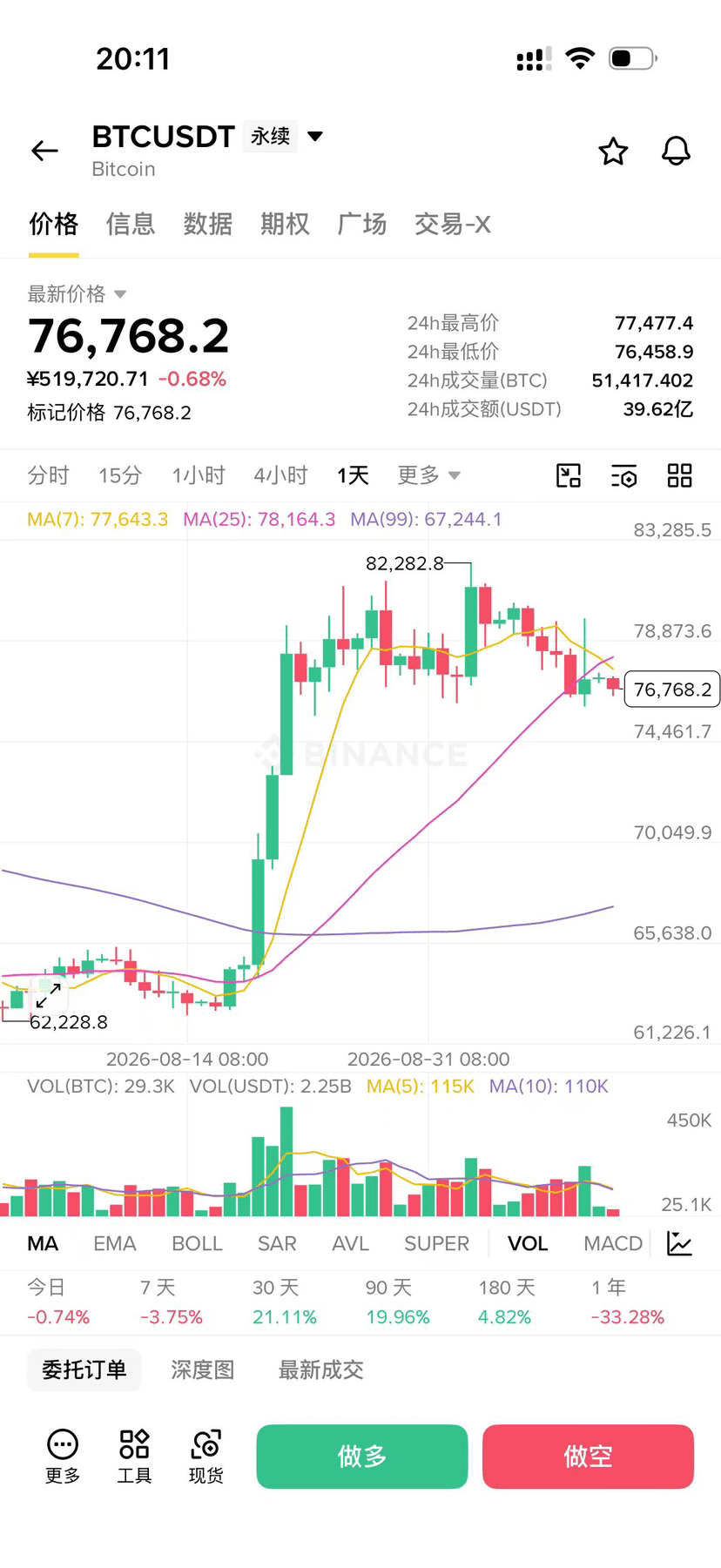
Take a sip of red wine, not chasing drunkenness, only seeking a moment of ease. The market has its own cycles, and for now, everything belongs to this single streak of red in the glass. #币圈 #k线 $BTC
Take a sip of red wine, not chasing drunkenness, only seeking a moment of ease. The market has its own cycles, and for now, everything belongs to this single streak of red in the glass. #币圈 #k线 $BTC




圣克斯Lucky1688
·
--
🧧🔥🧧🔥🧧🔥 The recent market action is genuinely a back-and-forth probing. Here are 3 supporting indicators to help you verify a true breakout:
Spot CVD (Cumulative Volume Delta): Check whether the breakout is driven by spot active buying or by leveraged futures. If spot CVD and the contract price both make new highs at the same time, the odds of a real breakout are extremely high. If only the contracts pump while spot CVD stays flat, it’s often a false breakout.
SR-Flip (Resistance-to-Support confirmation): After a breakout, wait for the first pullback on the 5M/15M timeframe. If, when price retests the prior high resistance zone, it shows reduced volume and does not break down, it confirms that resistance has successfully flipped into support—an excellent right-side entry point with relatively low risk.
Liquidation Heatmap: If a large short liquidation pool (Liquidation Pool) has accumulated above key highs, then after price pierces through that area, if OI drops sharply, it indicates the liquidation has been completed and short-term momentum has largely been exhausted.
Follow me—answer 1 and take the $SOL red envelope.
🧧🔥🧧🔥🧧🔥
Spot CVD (Cumulative Volume Delta): Check whether the breakout is driven by spot active buying or by leveraged futures. If spot CVD and the contract price both make new highs at the same time, the odds of a real breakout are extremely high. If only the contracts pump while spot CVD stays flat, it’s often a false breakout.
SR-Flip (Resistance-to-Support confirmation): After a breakout, wait for the first pullback on the 5M/15M timeframe. If, when price retests the prior high resistance zone, it shows reduced volume and does not break down, it confirms that resistance has successfully flipped into support—an excellent right-side entry point with relatively low risk.
Liquidation Heatmap: If a large short liquidation pool (Liquidation Pool) has accumulated above key highs, then after price pierces through that area, if OI drops sharply, it indicates the liquidation has been completed and short-term momentum has largely been exhausted.
Follow me—answer 1 and take the $SOL red envelope.
🧧🔥🧧🔥🧧🔥



生蚝哥Oyster
·
--
BullishAI giants collectively shout “hit the brakes”! U.S. stock storage sector plunges before the bell
On September 14, the U.S. stock storage chip sector saw a collective drop before the opening bell.
SK Hynix ADR fell 7.13%, Seagate STX fell 6.17%, Micron MU fell 5.82%, SanDisk SNDK fell 5.73%, and Western Digital WDC fell 5.64%.
The spark came from an AI safety controversy: Anthropic CEO Dario Amodei called on the U.S. to push for slowing down AI development, urging AI companies to work together to set safety standards that would not be constrained by antitrust laws. The proposal was supported by Sam Altman, Musk, and Microsoft’s Nadella.
However, the White House takes the opposite stance. Trump’s team believes leadership in AI is crucial and advocates maintaining the U.S.’s competitive edge in AI; they have no plans to force the industry to hit the brakes.
Market concerns: If AI research slows down, it will directly weigh on storage and HBM demand, putting pressure on the storage sector.
On September 14, the U.S. stock storage chip sector saw a collective drop before the opening bell.
SK Hynix ADR fell 7.13%, Seagate STX fell 6.17%, Micron MU fell 5.82%, SanDisk SNDK fell 5.73%, and Western Digital WDC fell 5.64%.
The spark came from an AI safety controversy: Anthropic CEO Dario Amodei called on the U.S. to push for slowing down AI development, urging AI companies to work together to set safety standards that would not be constrained by antitrust laws. The proposal was supported by Sam Altman, Musk, and Microsoft’s Nadella.
However, the White House takes the opposite stance. Trump’s team believes leadership in AI is crucial and advocates maintaining the U.S.’s competitive edge in AI; they have no plans to force the industry to hit the brakes.
Market concerns: If AI research slows down, it will directly weigh on storage and HBM demand, putting pressure on the storage sector.


520龙行天下
·
--
Three things in the crypto world today: BTC breaks below 77,000, and the market is still digesting rate-hike expectations
LSK surged 500%+ the past two days—whether the chain is shut or not, it can still be traded
Tomorrow: the Federal Reserve meeting + the Senate voting on the CLARITY bill
Macroeconomics, regulation, and wild-card coins all on the table at the same time.
Whoever survives this week is the winner. First have some tea, then watch the charts. #币圈热点
LSK surged 500%+ the past two days—whether the chain is shut or not, it can still be traded
Tomorrow: the Federal Reserve meeting + the Senate voting on the CLARITY bill
Macroeconomics, regulation, and wild-card coins all on the table at the same time.
Whoever survives this week is the winner. First have some tea, then watch the charts. #币圈热点

520龙行天下
·
--
[Ended] 🎙️ What will happen to the cryptocurrency market next? Can tomorrow’s meeting decide it?
10.3k listens


燕寶Melissa
·
--
Bearish🔥 Arthur Hayes: I basically don’t look at Bitcoin technical indicators!
Many people trading BTC watch every day: 📈 MA200 📉 RSI 🔴 MACD 📊 candlestick patterns.
But the approach of Arthur Hayes, co-founder of BitMEX, is completely different.
He has said outright that he basically doesn’t do technical analysis of Bitcoin.
What he really focuses on are three things👇
1️⃣ US stocks He believes BTC largely follows the logic of US stocks. If that logic breaks down and the market calls for additional margin, investors will prioritize selling assets with better liquidity—BTC could be hit first.
2️⃣ Macros + market sentiment He doesn’t like waiting until market sentiment has gone completely crazy before entering. Instead, he tends to: place a bet early when sentiment is just beginning to form.
3️⃣ Finding assets that are “unloved by the market” This is also one of the reasons he’s bullish on ETH.
As for the BTC price? In his view, the key levels are $60,000, $100,000, and the prior historical high around $125,000–$126,000.
But between those key ranges, he won’t rely on technical indicators to trade frequent swings.
💡 Behind this are two entirely different trading mindsets:
Typical investors: price → indicators → buy/sell
Arthur Hayes: macro → liquidity → US stocks → sentiment → asset allocation
The real big money may never be trying to guess the next candlestick.
Instead, they’re deciding: “Where will the next round of capital go?”
#SEC收到灰度莱特币信托转ETF申请
$BTC
$ETH
$BNB
Many people trading BTC watch every day: 📈 MA200 📉 RSI 🔴 MACD 📊 candlestick patterns.
But the approach of Arthur Hayes, co-founder of BitMEX, is completely different.
He has said outright that he basically doesn’t do technical analysis of Bitcoin.
What he really focuses on are three things👇
1️⃣ US stocks He believes BTC largely follows the logic of US stocks. If that logic breaks down and the market calls for additional margin, investors will prioritize selling assets with better liquidity—BTC could be hit first.
2️⃣ Macros + market sentiment He doesn’t like waiting until market sentiment has gone completely crazy before entering. Instead, he tends to: place a bet early when sentiment is just beginning to form.
3️⃣ Finding assets that are “unloved by the market” This is also one of the reasons he’s bullish on ETH.
As for the BTC price? In his view, the key levels are $60,000, $100,000, and the prior historical high around $125,000–$126,000.
But between those key ranges, he won’t rely on technical indicators to trade frequent swings.
💡 Behind this are two entirely different trading mindsets:
Typical investors: price → indicators → buy/sell
Arthur Hayes: macro → liquidity → US stocks → sentiment → asset allocation
The real big money may never be trying to guess the next candlestick.
Instead, they’re deciding: “Where will the next round of capital go?”
#SEC收到灰度莱特币信托转ETF申请
$BTC
$ETH
$BNB


易琳Ten
·
--
True growth in trading comes from slowly growing small capital
Practicing with small capital, step by step to grow it—
in essence, this is a process of honing your mindset and truly understanding compounding.
Many people always want to get rich overnight,
thinking that they can earn A8, A9 by just one deal.
But from the underlying logic of trading, this directly goes against trading principles.
Why do many people who suddenly get rich end up back where they started?
Because they received a huge unexpected windfall,
but they never built the mindset, discipline, and understanding that match their wealth.
The power of compounding never comes from extreme returns,
but from having a long enough period of “not bad” performance.
What really matters isn’t how much you make in a single year,
but whether you can survive through repeated market swings and always stay at the table.
A strategy that makes you anxious every night and constantly changes your plan,
no matter how excellent it may be in theory,
is difficult to execute consistently over the long term.
Trading isn’t about who can earn the most in one night,
but about who can last long enough—
so that time turns “not bad” gains into astonishing results.
It’s okay to go slowly.
Stability is the real starting point of compounding.
Practicing with small capital, step by step to grow it—
in essence, this is a process of honing your mindset and truly understanding compounding.
Many people always want to get rich overnight,
thinking that they can earn A8, A9 by just one deal.
But from the underlying logic of trading, this directly goes against trading principles.
Why do many people who suddenly get rich end up back where they started?
Because they received a huge unexpected windfall,
but they never built the mindset, discipline, and understanding that match their wealth.
The power of compounding never comes from extreme returns,
but from having a long enough period of “not bad” performance.
What really matters isn’t how much you make in a single year,
but whether you can survive through repeated market swings and always stay at the table.
A strategy that makes you anxious every night and constantly changes your plan,
no matter how excellent it may be in theory,
is difficult to execute consistently over the long term.
Trading isn’t about who can earn the most in one night,
but about who can last long enough—
so that time turns “not bad” gains into astonishing results.
It’s okay to go slowly.
Stability is the real starting point of compounding.


静姐6888
·
--
Borrow peace from the mountains, and meet the gentleness of the world.
English translation: Borrow peace from the mountains, and meet the gentleness of the world.
English translation: Borrow peace from the mountains, and meet the gentleness of the world.


阿婧1688
·
--
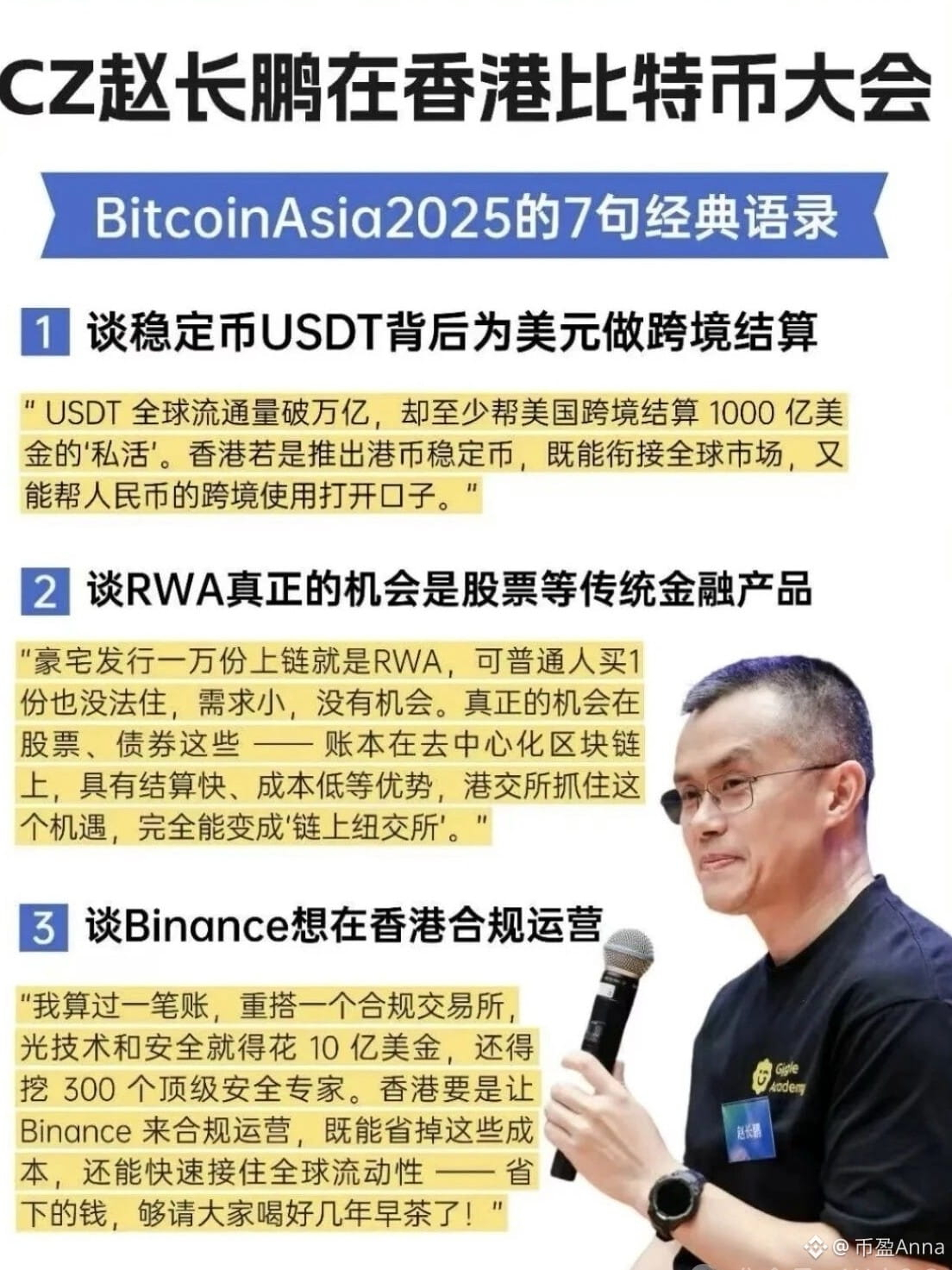
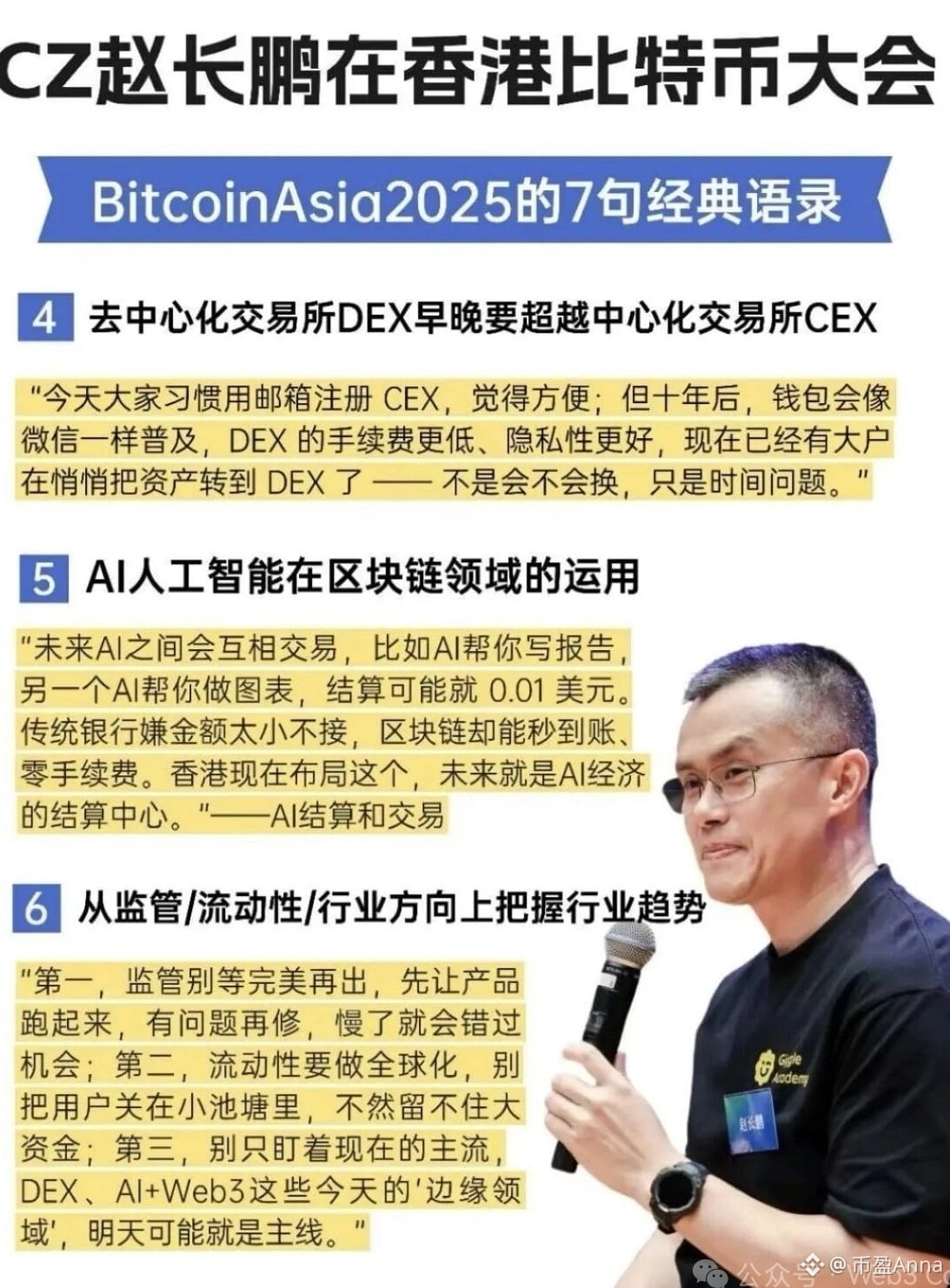
📢CZ Zhao Changpeng: 7 key quotes from the Hong Kong Bitcoin Conference
✅ Stablecoin cross-border settlement
✅ RWA on-chain with traditional finance
✅ DEX will surpass CEX in the future
✅ AI + blockchain economics sector
✅ Hong Kong compliance and a global liquidity layout
Industry insiders point the way—edge-track opportunities may become the main theme going forward. Let’s unpack the major industry trends!
Big shots are laying it out clearly—raise your understanding and seize the trend!
✅ Stablecoin cross-border settlement
✅ RWA on-chain with traditional finance
✅ DEX will surpass CEX in the future
✅ AI + blockchain economics sector
✅ Hong Kong compliance and a global liquidity layout
Industry insiders point the way—edge-track opportunities may become the main theme going forward. Let’s unpack the major industry trends!
Big shots are laying it out clearly—raise your understanding and seize the trend!


光明社区-阿波罗
·
--
Rushing to mountains and seas, collecting every inch of light, letting beauty happen naturally in the scenery.
Chase mountains and shores, capture every ray, let beauty unfold naturally.
Chase mountains and shores, capture every ray, let beauty unfold naturally.

Log in to explore more content