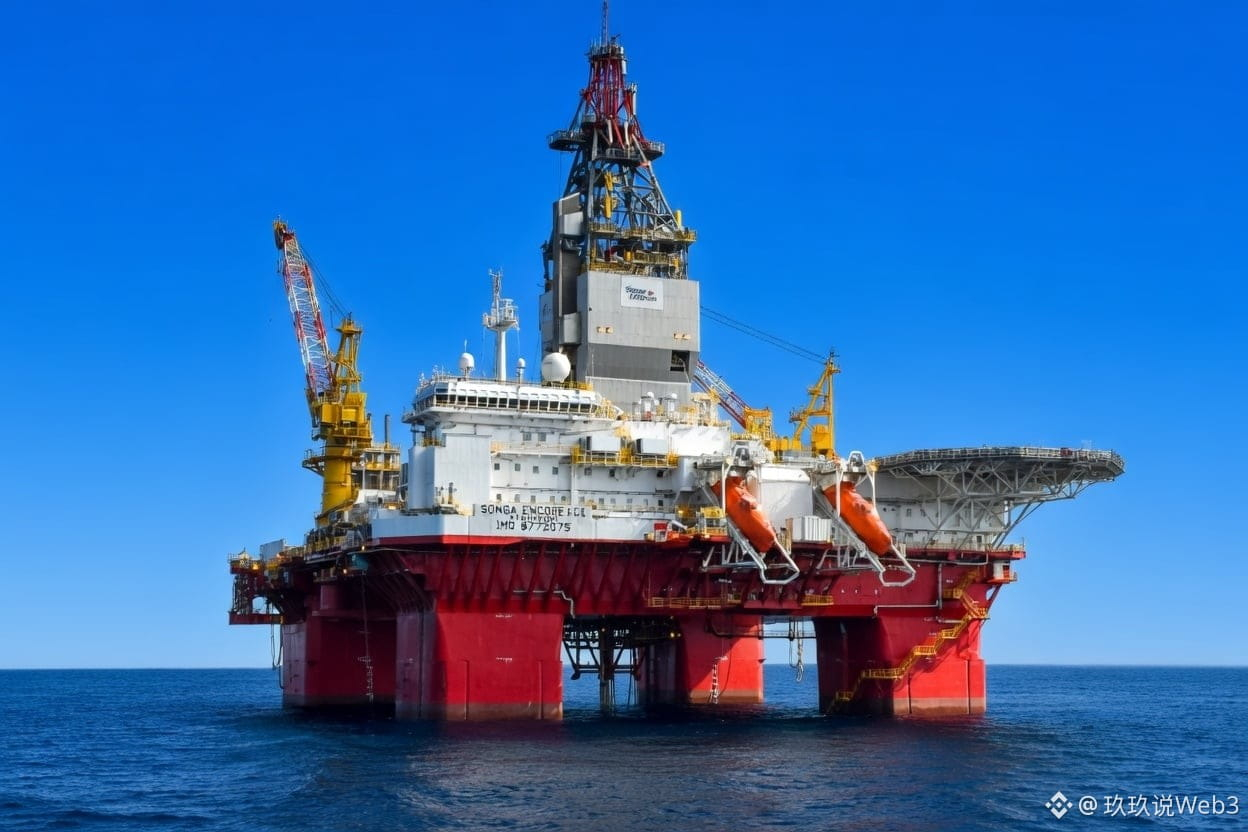
🚨 Brent crude oil jumped 3.46% at the open, breaking through $108—one ship in the Strait of Hormuz was hit and caught fire. Why you should be most nervous are the people holding Bitcoin?
Group: 点击进入玖玖的粉丝群
👀 One-sentence update: This weekend, Yemen’s Houthi forces launched attacks on a civilian target in Saudi Arabia’s Jazan province in the south. A ship in the Strait of Hormuz was hit by shelling, caught fire, and the crew abandoned ship; the UK Maritime Trade Operations office (UKMTO) has confirmed. Separately, another Iranian-linked merchant vessel also suffered an incident, with 1 death and 4 injuries.
📊 Putting numbers in context: Brent rose 3.46% to $108.23, while U.S. WTI climbed 3.15% to $103.20. Saudi Arabia’s east–west crude pipelines were shut down after drone attacks, with a daily throughput capacity as high as 7 million barrels. Analysts warn that if disruptions to transport continue, oil prices could surge again toward the March high of $119.48.
🔥 What’s behind the numbers: Oil is the mother of inflation. When oil prices rise, inflation expectations strengthen too—making it harder for the Fed to pivot. Last week, markets already pushed the probability of a September rate hike above 57%. History has also offered a reminder: in 2022, Brent briefly surged above $120, and that same year Bitcoin slid from $47,000 down to $16,000. Energy shocks have never been good news for risk assets.
💡 What’s really worth watching isn’t just how many dollars oil prices gained today, but whether this round of “geopolitics + energy” shock will collide head-on with the Fed’s upcoming policy meeting. This week is FOMC—higher oil prices will make policy decisions even more of a tightrope. Meanwhile, crypto valuations are, at their core, “fed” by liquidity.
⚠️ A bucket of cold water: Geopolitical conflicts often come quickly and can fade quickly too. Oil prices might spike and then rapidly give back gains. But if shipping through the strait remains disrupted, risk-asset valuations can be repriced in minutes—don’t focus only on day-to-day price movement.
One camp says this is the strong return of the crypto “anti-inflation narrative,” while the other says liquidity tightening is the real problem. Which side are you on? Let’s discuss in the comments.
Click the avatar to watch the livestream + join the Jiǔjiǔ chat group to get daily strategy 🚀
#原油 #美联储 #比特币 #BTC
Group: 点击进入玖玖的粉丝群
👀 One-sentence update: This weekend, Yemen’s Houthi forces launched attacks on a civilian target in Saudi Arabia’s Jazan province in the south. A ship in the Strait of Hormuz was hit by shelling, caught fire, and the crew abandoned ship; the UK Maritime Trade Operations office (UKMTO) has confirmed. Separately, another Iranian-linked merchant vessel also suffered an incident, with 1 death and 4 injuries.
📊 Putting numbers in context: Brent rose 3.46% to $108.23, while U.S. WTI climbed 3.15% to $103.20. Saudi Arabia’s east–west crude pipelines were shut down after drone attacks, with a daily throughput capacity as high as 7 million barrels. Analysts warn that if disruptions to transport continue, oil prices could surge again toward the March high of $119.48.
🔥 What’s behind the numbers: Oil is the mother of inflation. When oil prices rise, inflation expectations strengthen too—making it harder for the Fed to pivot. Last week, markets already pushed the probability of a September rate hike above 57%. History has also offered a reminder: in 2022, Brent briefly surged above $120, and that same year Bitcoin slid from $47,000 down to $16,000. Energy shocks have never been good news for risk assets.
💡 What’s really worth watching isn’t just how many dollars oil prices gained today, but whether this round of “geopolitics + energy” shock will collide head-on with the Fed’s upcoming policy meeting. This week is FOMC—higher oil prices will make policy decisions even more of a tightrope. Meanwhile, crypto valuations are, at their core, “fed” by liquidity.
⚠️ A bucket of cold water: Geopolitical conflicts often come quickly and can fade quickly too. Oil prices might spike and then rapidly give back gains. But if shipping through the strait remains disrupted, risk-asset valuations can be repriced in minutes—don’t focus only on day-to-day price movement.
One camp says this is the strong return of the crypto “anti-inflation narrative,” while the other says liquidity tightening is the real problem. Which side are you on? Let’s discuss in the comments.
Click the avatar to watch the livestream + join the Jiǔjiǔ chat group to get daily strategy 🚀
#原油 #美联储 #比特币 #BTC