The intersection of $SOL and robotic AI is not about letting the chain judge the robot’s actions, but about recording “who contributed what data, and how it should be settled.”
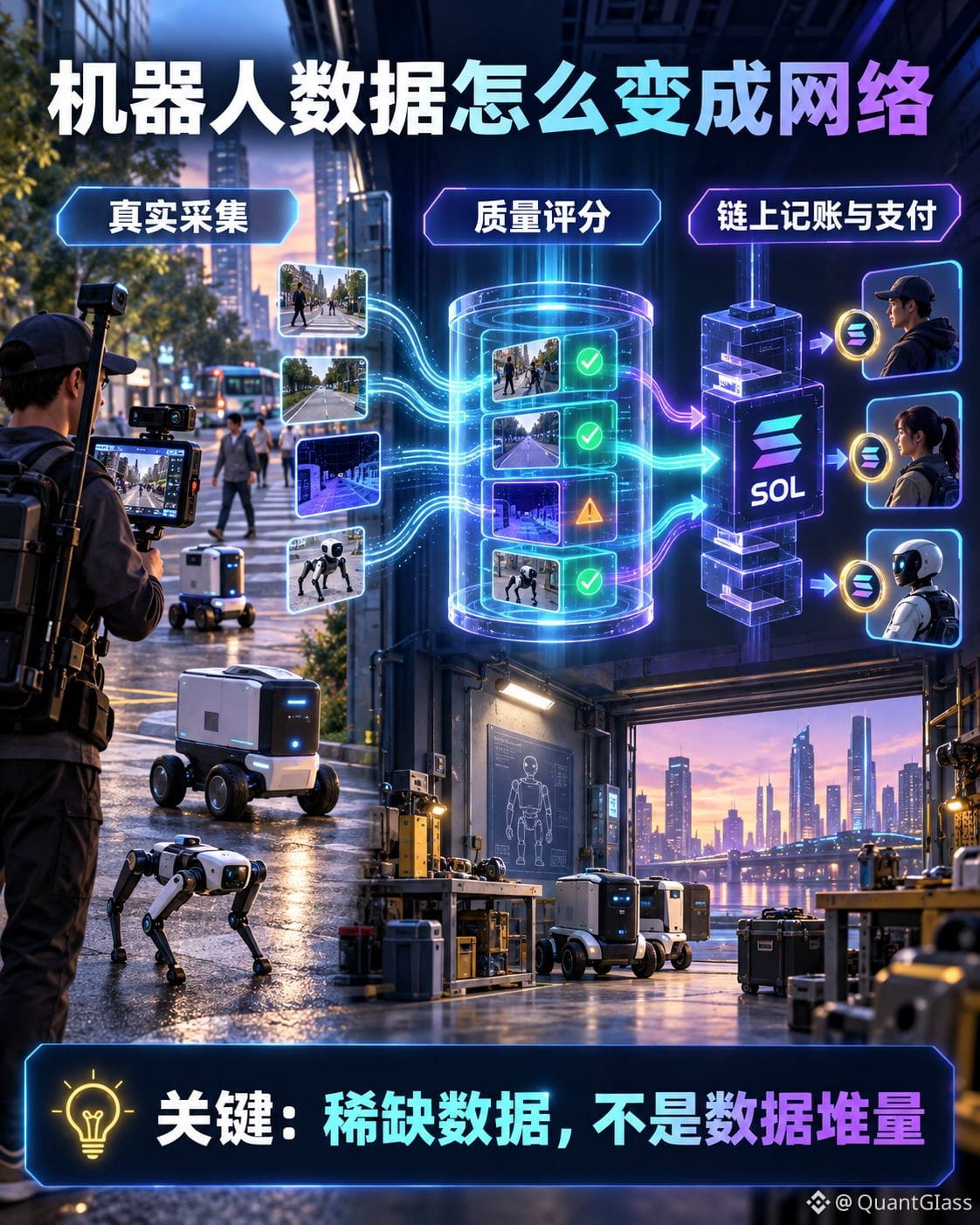
On September 7, Solana officially introduced BitRobot: it builds on and open-sources about 2,000 hours of city-robot navigation data accumulated from the FrodoBots project. Now it plans to collect data such as navigation, object grabbing, and first-person video using different sub-networks. Solana’s role is to handle bookkeeping and payments.
The most commonly misunderstood boundary is this: on-chain tracking can trace contributions and payments, but it cannot automatically prove that the original data is valuable. What’s truly scarce are the long-tail scenarios in the real world. The platform still needs to anonymize data, apply quality scoring, and first find AI labs willing to buy data.
Next, look at paid contracts, the proportion of effective data, and the size of contributors—not just the number of upload hours. #机器人数据网络
On September 7, Solana officially introduced BitRobot: it builds on and open-sources about 2,000 hours of city-robot navigation data accumulated from the FrodoBots project. Now it plans to collect data such as navigation, object grabbing, and first-person video using different sub-networks. Solana’s role is to handle bookkeeping and payments.
The most commonly misunderstood boundary is this: on-chain tracking can trace contributions and payments, but it cannot automatically prove that the original data is valuable. What’s truly scarce are the long-tail scenarios in the real world. The platform still needs to anonymize data, apply quality scoring, and first find AI labs willing to buy data.
Next, look at paid contracts, the proportion of effective data, and the size of contributors—not just the number of upload hours. #机器人数据网络