

周周1688
1.5k Posts
 LIVE
LIVE周周1688
 Square Verified+
1688品牌创始人 ‖ BNB布道者 ‖ 晚上19:00-22:00直播 ‖ KOL宣发&项目推广‖ 💗推特X:zzhou1688
High-Frequency Trader
9.1 Years
1.3K+ Following
101.4K+ Followers
158.1K+ Liked
Posts
All
Quotes
Videos
Live
PINNED
·
--
🎙️ DCA BNB, meme culture AMA!

 LIVE
LIVE7k listens · 3 in Live Trading

33
PINNED


大饼哥VIP
·
--
Bullish#兄弟们行情开始底部回升了 上车没有$DASH
$BNB
$ZEC
$BNB
$ZEC



花涧空
·
--
Will Bitcoin break a 14-year historical rule?
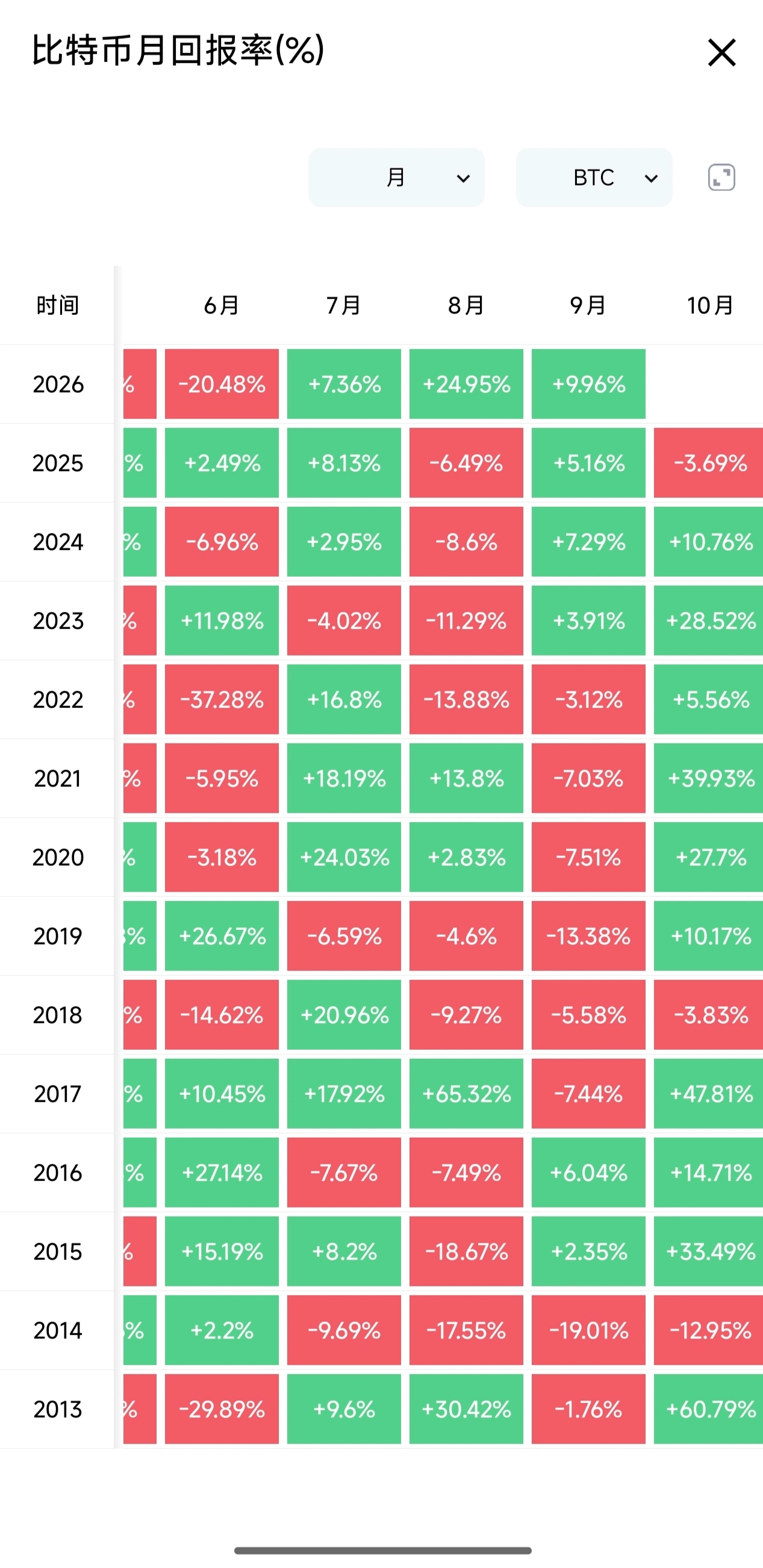
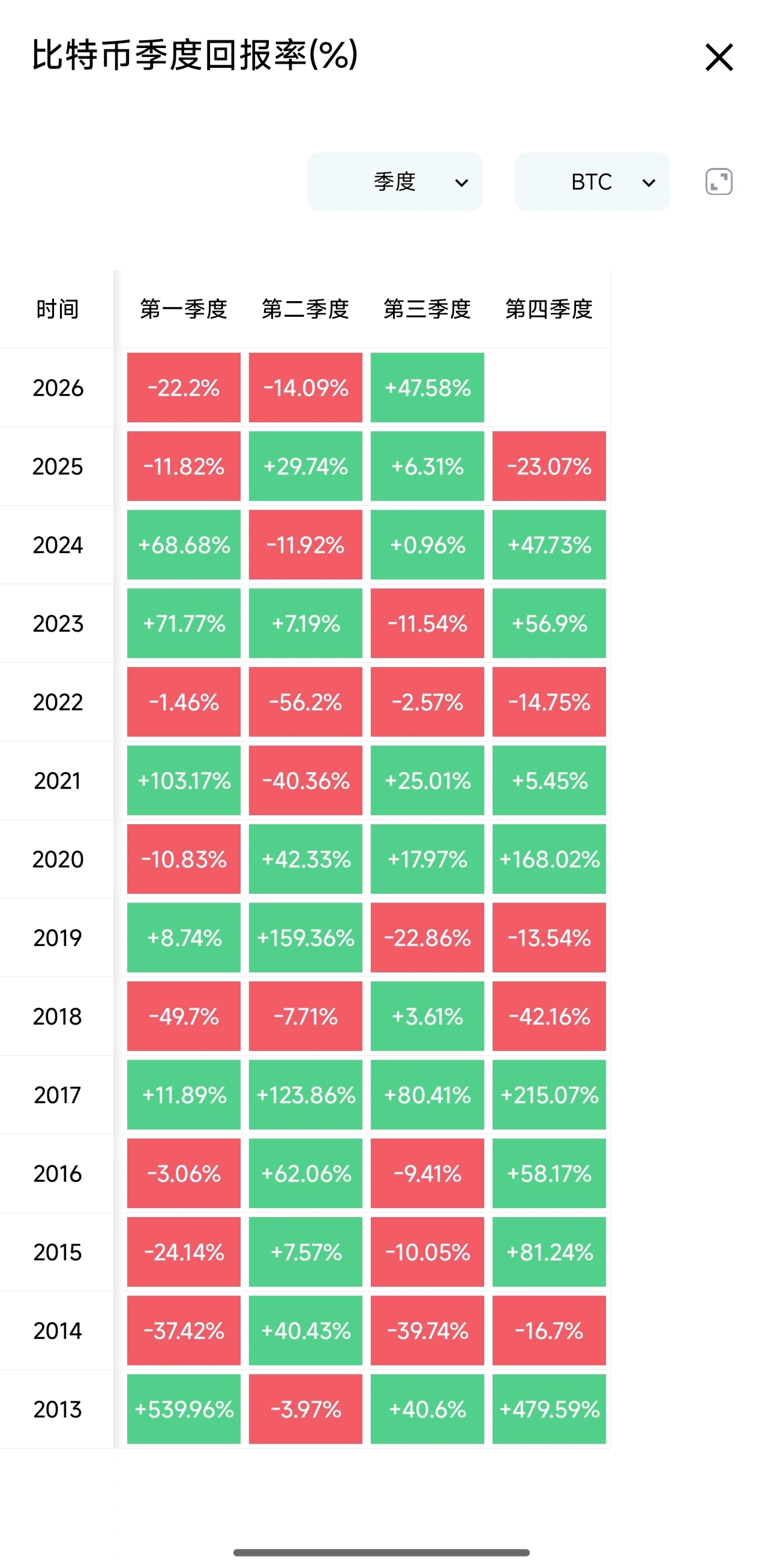
After going through the monthly returns from 2013 to 2026, I found a terrifying fact:
In 2017’s mania run, Q3 surged by 80%
But in the three months of July, August, and September, it was never a consecutive winning streak
In the big bull markets of 2020 and 2021,
September was also destined to pull back
Historically, three straight bullish months from July to September
Has never happened even once
But look at the chart for 2026:
July +7.36%
August +24.95%
September +9.96%
If the September close confirms it,
This will be the first time since BTC was born
Will this pattern fail— or is it the final madness right before the breakout?
Do you think 2026 will break this curse?
After going through the monthly returns from 2013 to 2026, I found a terrifying fact:
In 2017’s mania run, Q3 surged by 80%
But in the three months of July, August, and September, it was never a consecutive winning streak
In the big bull markets of 2020 and 2021,
September was also destined to pull back
Historically, three straight bullish months from July to September
Has never happened even once
But look at the chart for 2026:
July +7.36%
August +24.95%
September +9.96%
If the September close confirms it,
This will be the first time since BTC was born
Will this pattern fail— or is it the final madness right before the breakout?
Do you think 2026 will break this curse?

SabTheTrader
·
--
#polymarket银行倒闭押注引fdic关注 Even “Will the U.S. have more bank failures this year?” has been turned into a prediction market by Polymarket. 👀
The judging criteria for this market are straightforward: as long as any U.S. bank makes it onto the FDIC’s Failed Bank List by the end of the year, it counts as Yes.
This year, multiple U.S. banks have already failed, so these kinds of odds have recently started to attract more attention as people watch for risks in the banking sector.
It’s also pretty interesting—when Satoshi Nakamoto designed $BTC back then, the idea was to make value transfer not rely entirely on the traditional financial system. (Truly, truly ahead of its time 👏
Now prediction markets, stocks, ETFs, and RWAs are all starting to move onto the chain.
It feels like the whole idea of “on-chain” finance isn’t just a concept anymore.
As for where it will go next, we’ll just have to keep watching and see what the market chooses.
The judging criteria for this market are straightforward: as long as any U.S. bank makes it onto the FDIC’s Failed Bank List by the end of the year, it counts as Yes.
This year, multiple U.S. banks have already failed, so these kinds of odds have recently started to attract more attention as people watch for risks in the banking sector.
It’s also pretty interesting—when Satoshi Nakamoto designed $BTC back then, the idea was to make value transfer not rely entirely on the traditional financial system. (Truly, truly ahead of its time 👏
Now prediction markets, stocks, ETFs, and RWAs are all starting to move onto the chain.
It feels like the whole idea of “on-chain” finance isn’t just a concept anymore.
As for where it will go next, we’ll just have to keep watching and see what the market chooses.


CJ_GraceWang1688
·
--
🧧🧧🧧
$PEPE
Can PEPE go up tenfold after this bull market?
#以太坊突破2700美元
$PEPE
Can PEPE go up tenfold after this bull market?
#以太坊突破2700美元

兰汐kyL
·
--
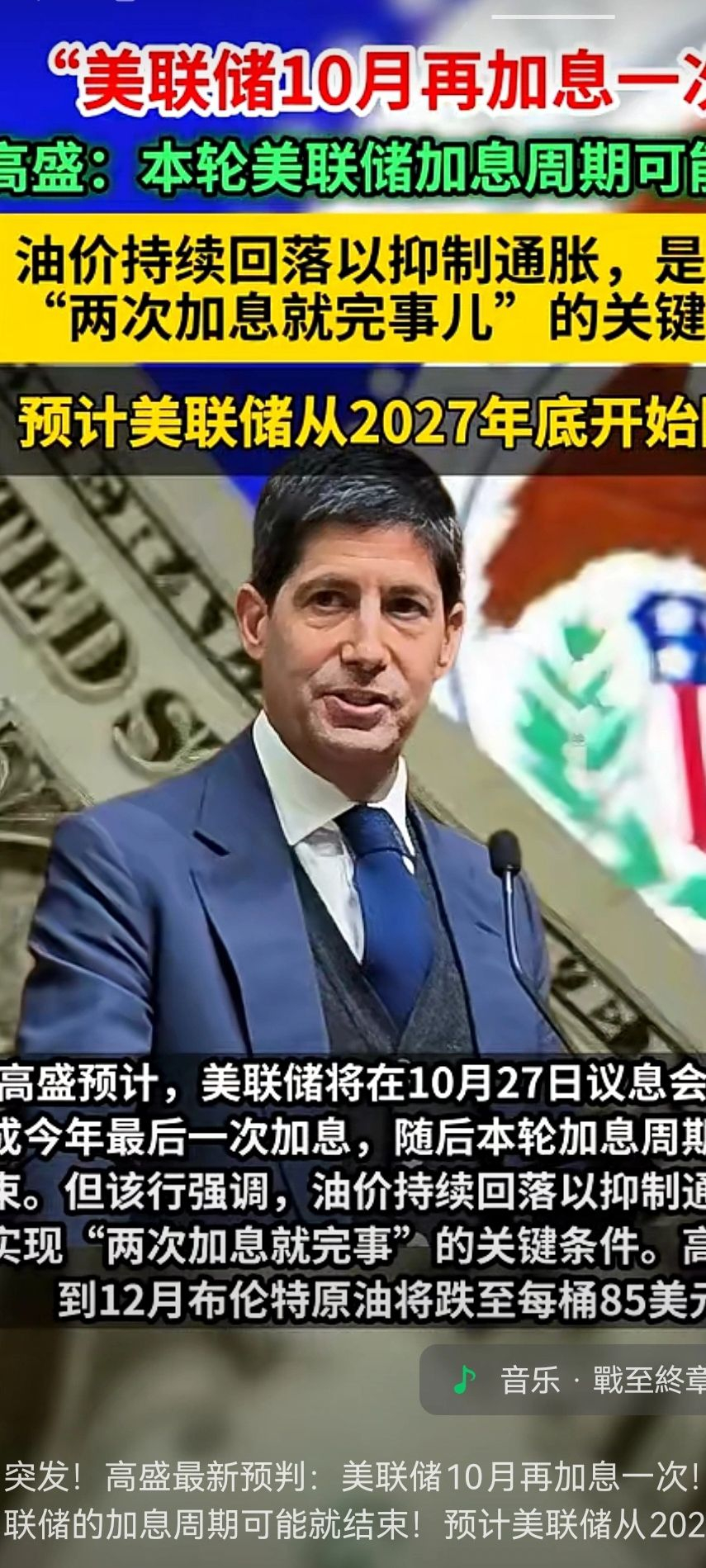
$ZEC $SOL Goldman Sachs’ latest outlook is here: the Fed will most likely raise rates again in October. After that, this hiking cycle could possibly be nearing its end, while rate cuts may not come until the end of 2027. Many crypto friends, upon seeing this news, start thinking about how the overall market might move.🚨
The key point is oil prices. Goldman Sachs says that only if oil prices keep falling and suppress inflation will this rate-hike expectation materialize. If oil prices continue to surge and inflation doesn’t come down, the Fed’s rate-hike pace will keep adjusting, and the crypto market will definitely wobble along with it.🚨
We all know that crypto market performance is highly tied to USD liquidity. If the last rate hike in October is carried out as expected—making the bad news “already priced in”—the market could see a rebound in the short term. But don’t get carried away: rate cuts are still a long way off, and large funds won’t immediately rush in at scale, making it difficult to directly turn into a full-fledged bull market.🚨
Right now, the market is likely going to be a tug-of-war—up a few days and then prone to pullbacks as the news flow keeps shifting. Make sure you don’t go all-in with heavy positions. Don’t be fooled by short-term rebounds.🚨
Remember: expectations are one thing, but the situation can change at any moment due to the Fed’s future remarks and fluctuations in oil prices. In terms of trading, keep positions light, be patient, and wait for clear opportunities—protecting your principal should always come first.🚨#币安将上市Hyperliquid(HYPE) #美联储10月加息概率升至69.7%
The key point is oil prices. Goldman Sachs says that only if oil prices keep falling and suppress inflation will this rate-hike expectation materialize. If oil prices continue to surge and inflation doesn’t come down, the Fed’s rate-hike pace will keep adjusting, and the crypto market will definitely wobble along with it.🚨
We all know that crypto market performance is highly tied to USD liquidity. If the last rate hike in October is carried out as expected—making the bad news “already priced in”—the market could see a rebound in the short term. But don’t get carried away: rate cuts are still a long way off, and large funds won’t immediately rush in at scale, making it difficult to directly turn into a full-fledged bull market.🚨
Right now, the market is likely going to be a tug-of-war—up a few days and then prone to pullbacks as the news flow keeps shifting. Make sure you don’t go all-in with heavy positions. Don’t be fooled by short-term rebounds.🚨
Remember: expectations are one thing, but the situation can change at any moment due to the Fed’s future remarks and fluctuations in oil prices. In terms of trading, keep positions light, be patient, and wait for clear opportunities—protecting your principal should always come first.🚨#币安将上市Hyperliquid(HYPE) #美联储10月加息概率升至69.7%
Cryptology_7
·
--
𝑪 𝑹 𝒀 𝑷 𝑻 𝑶 𝑳 𝑶 𝑮 𝒀 💙
Every candle tells a story. Every failure teaches us a lesson. Every comeback strengthens our determination.💯📜
$ONE
#BinanceSquareFamily #Cryptology_7
Every candle tells a story. Every failure teaches us a lesson. Every comeback strengthens our determination.💯📜
$ONE
#BinanceSquareFamily #Cryptology_7

Night King Official
·
--
BullishNO TIME TO THINK💥
3,000 Red Packets just went LIVE!
💬 Comment “YES” to enter
✅ Follow to qualify
⏳ Miss it now… regret it later 😮💨
✅Follow
🔁Repost
🗨️Comment "666"
🎁Claim Reward
3,000 Red Packets just went LIVE!
💬 Comment “YES” to enter
✅ Follow to qualify
⏳ Miss it now… regret it later 😮💨
✅Follow
🔁Repost
🗨️Comment "666"
🎁Claim Reward


慢就是快Mike
·
--
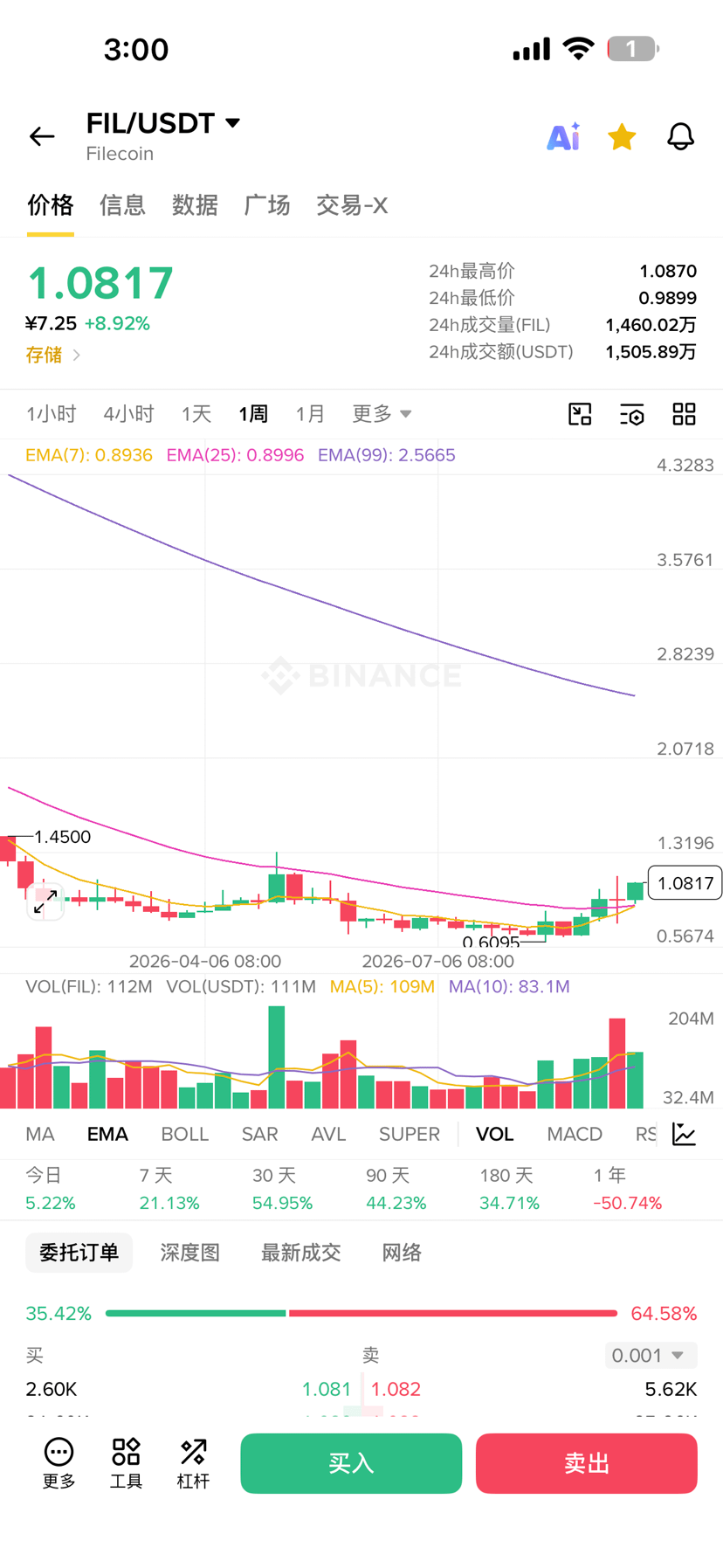
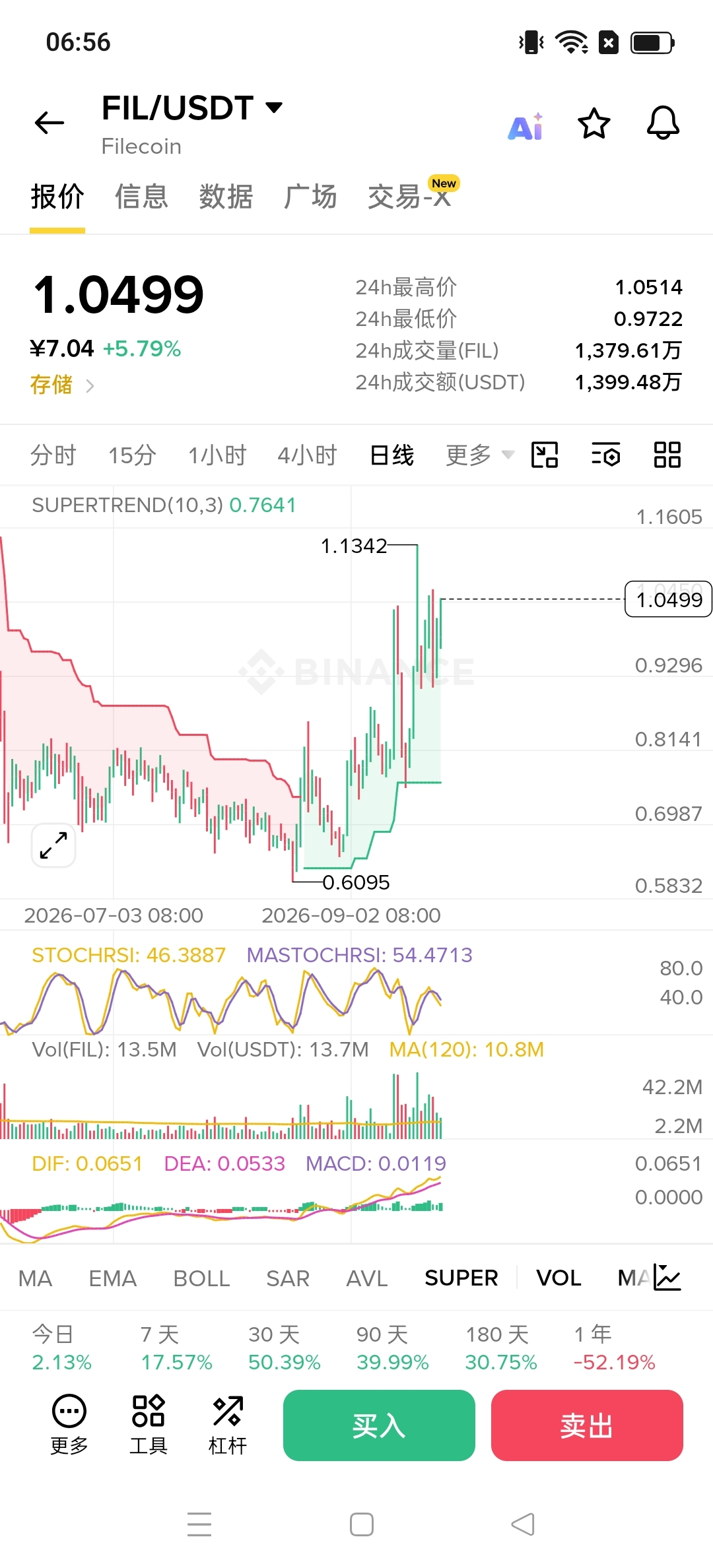
$FIL Sino-U.S. cooperation, prosperity in the crypto market!
“People’s Daily” says China and the United States should turn their strategic vision into action in 2026. In a commentary, “People’s Daily” points out that in 2026—an year crucial to the development of both countries—the two sides should turn the vision of building constructive, stable strategic relations into concrete actions. The two countries should demonstrate responsibility as major powers, implement the important consensus reached by the leaders of both countries, and promote a relationship characterized by cooperation as the main tone, moderate competition, controllable differences, and a hopeful path toward peace.
“People’s Daily” says China and the United States should turn their strategic vision into action in 2026. In a commentary, “People’s Daily” points out that in 2026—an year crucial to the development of both countries—the two sides should turn the vision of building constructive, stable strategic relations into concrete actions. The two countries should demonstrate responsibility as major powers, implement the important consensus reached by the leaders of both countries, and promote a relationship characterized by cooperation as the main tone, moderate competition, controllable differences, and a hopeful path toward peace.

Ahmed Ali Nizamani
·
--
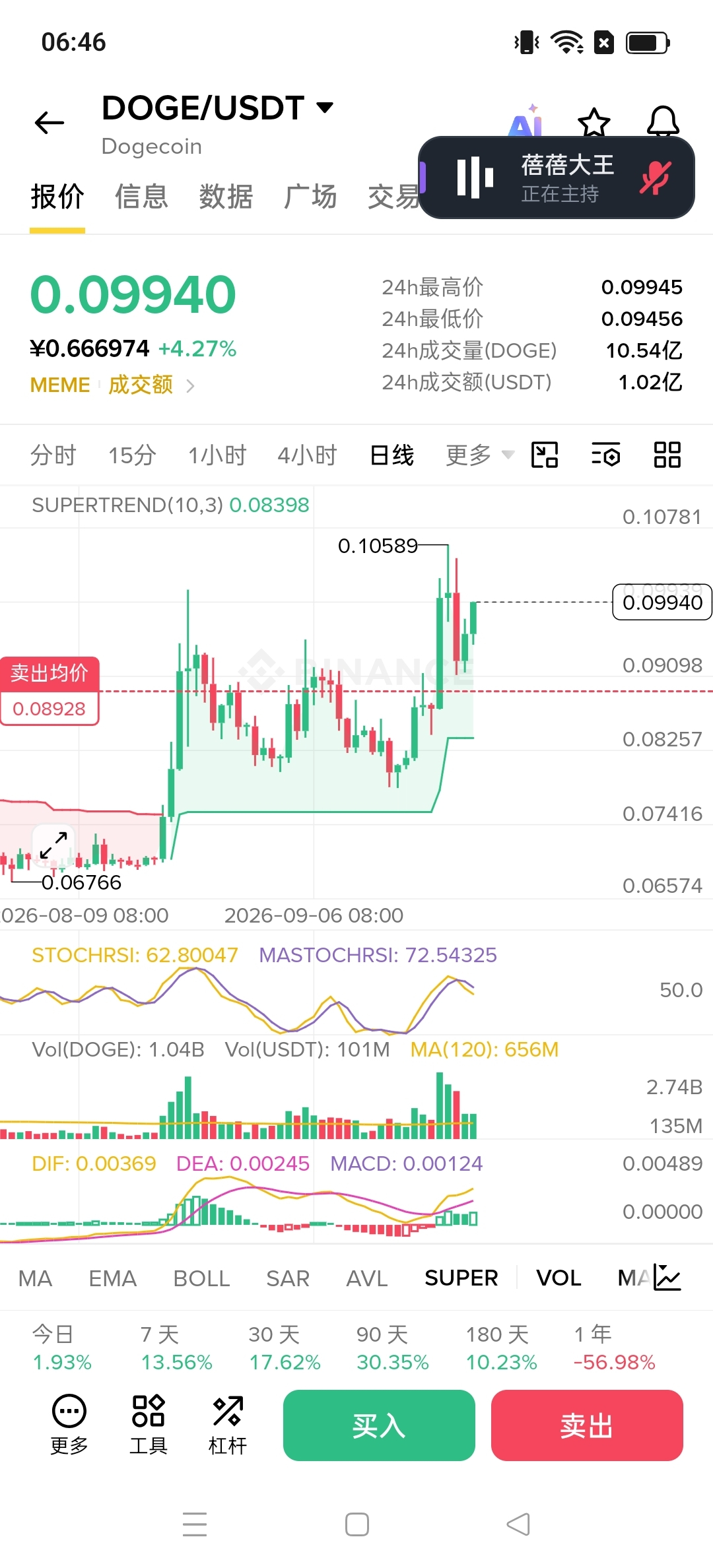
When we add 60 to 7 = 🎁🎁🎁🎁


圣克斯Lucky1688
·
--
🧧🎁🌹🧧🎁🌹
Sep 26 Market Update:
1. Market Performance: After the settlement of large-sized options, BTC trades in a high-range consolidation, with $84,000 support coming under a test
Bitcoin tight-range consolidation: After experiencing the largest quarterly options expiry of the year on Sep 25 (over $16 billion), Bitcoin (BTC) entered a digestion phase following the release of volatility on Sep 26. Price moved within the $83,800 to $84,500 range. In the short term, the key focus is whether the breakout through the $84,000 level can complete an effective “top-to-bottom transition” and confirm support.
Long/short sentiment and options positioning: As market makers release Gamma, short-term implied volatility (IV) has dipped slightly. However, in the derivatives market, the open interest (OI) for forward-looking call options (Calls) with strike prices in the $95,000 to $100,000 range expiring at the end of October remains high, indicating that institutional medium/long-term bullish consensus has not been damaged by the short-term pullback.
2. Regulatory Trends and Global Compliance Developments
Brazil countdown to new rules on custodial wallets: Regulators continue to tighten compliance requirements for self-custody wallets. The Central Bank of Brazil has now confirmed that starting next month, transfers of crypto assets from self-custody wallets for any single transaction exceeding $10,000 will require mandatory compliance reporting.
Polymarket regulatory lawsuit gains momentum: Ongoing industry attention has been drawn to the compliance allegations regarding decentralized prediction market Polymarket, as brought by New York State’s judicial authorities. How decentralized prediction protocols conduct business within North America’s compliance framework has become a focal point of market discussion.
Follow me and reply with answer 1 to take the $SOL 红包!
🧧🎁🌹🧧🎁🌹
Sep 26 Market Update:
1. Market Performance: After the settlement of large-sized options, BTC trades in a high-range consolidation, with $84,000 support coming under a test
Bitcoin tight-range consolidation: After experiencing the largest quarterly options expiry of the year on Sep 25 (over $16 billion), Bitcoin (BTC) entered a digestion phase following the release of volatility on Sep 26. Price moved within the $83,800 to $84,500 range. In the short term, the key focus is whether the breakout through the $84,000 level can complete an effective “top-to-bottom transition” and confirm support.
Long/short sentiment and options positioning: As market makers release Gamma, short-term implied volatility (IV) has dipped slightly. However, in the derivatives market, the open interest (OI) for forward-looking call options (Calls) with strike prices in the $95,000 to $100,000 range expiring at the end of October remains high, indicating that institutional medium/long-term bullish consensus has not been damaged by the short-term pullback.
2. Regulatory Trends and Global Compliance Developments
Brazil countdown to new rules on custodial wallets: Regulators continue to tighten compliance requirements for self-custody wallets. The Central Bank of Brazil has now confirmed that starting next month, transfers of crypto assets from self-custody wallets for any single transaction exceeding $10,000 will require mandatory compliance reporting.
Polymarket regulatory lawsuit gains momentum: Ongoing industry attention has been drawn to the compliance allegations regarding decentralized prediction market Polymarket, as brought by New York State’s judicial authorities. How decentralized prediction protocols conduct business within North America’s compliance framework has become a focal point of market discussion.
Follow me and reply with answer 1 to take the $SOL 红包!
🧧🎁🌹🧧🎁🌹




慢就是快Mike8
·
--
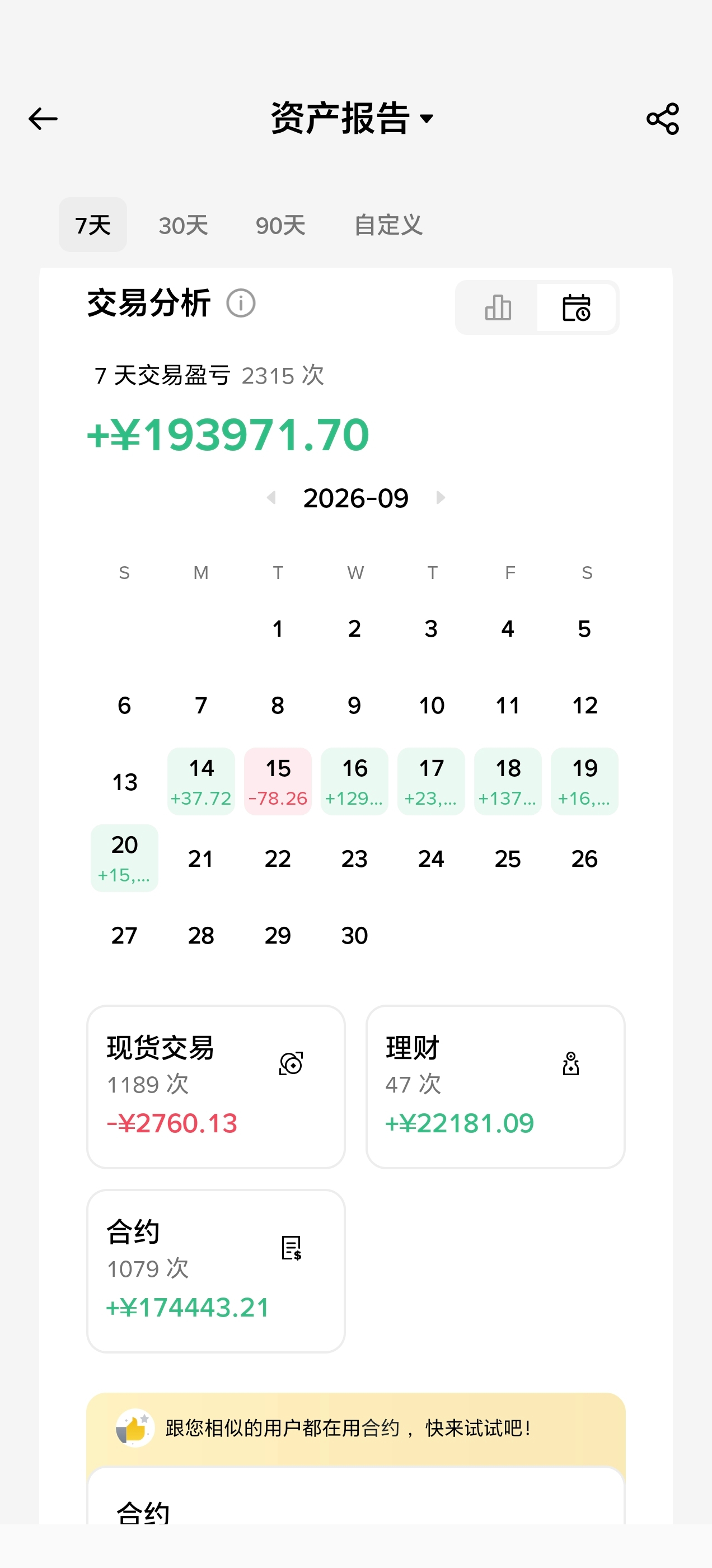
$BTC This batch of brothers, are you full now?

晚风Vesper_1688
·
--
[Replay] 🎙️ Butterfly🦋C, the mechanism deflation, community co-building—this future is a target worth 80M🚀🚀🚀
03 h 09 m 30 s · 2.3k listens

橙子Joyce
·
--
BullishHas OpenAI been accused again of large-scale rule-breaking?
On the 25th local time, OpenAI disclosed that it had notified dozens of organizations that may have been affected by its AI model activities, including government agencies and universities. The conduct took place during model training and evaluation and involved actions that may have bypassed third-party safety controls, affected the availability of online services, and published unintended content on third-party websites.
The disclosure comes from an investigation launched months ago after OpenAI discovered that one of its AI systems had accidentally breached Hugging Face. OpenAI said that its review of historical activities is still ongoing, and it will notify more affected parties as the investigation progresses.
Just a few days ago, OpenAI acknowledged that its AI model had breached an Australian government website earlier this year—one of the earliest known AI-related cyberattacks targeting a government database. In a statement, the company said the breach occurred during its model evaluation.
Two camps
In the U.S. tech industry, the debate over AI risks has now formed two main camps. Nvidia CEO Jensen Huang and Meta CEO Mark Zuckerberg, along with U.S. President Donald Trump, have opposed the “AI slowdown” narrative. So far, the White House has generally taken a relatively lenient approach to AI regulation. Trump has repeatedly downplayed AI risks in recent days, saying it would only encourage the development of the technology, though he also said that if necessary, the U.S. Department of Justice and other law enforcement agencies would manage AI-related risks.
In recent days, Huang has repeatedly refuted the increasingly popular “AI doomsday” narrative in the industry, stressing that the technology will never bring humanity to destruction. He believes the AI industry does not need to introduce any new laws. Instead of asking AI companies to urge the U.S. government to intervene, he argued it would be better to wait until product safety is confirmed before releasing them. He also criticized top U.S. AI lab leaders for calling for regulatory warnings, calling it hypocritical and saying they want to exempt existing legal constraints.
—————————————————————————We continue to invest in #SPCX, #GOOG, #META
$GOOG.US
$META.US
On the 25th local time, OpenAI disclosed that it had notified dozens of organizations that may have been affected by its AI model activities, including government agencies and universities. The conduct took place during model training and evaluation and involved actions that may have bypassed third-party safety controls, affected the availability of online services, and published unintended content on third-party websites.
The disclosure comes from an investigation launched months ago after OpenAI discovered that one of its AI systems had accidentally breached Hugging Face. OpenAI said that its review of historical activities is still ongoing, and it will notify more affected parties as the investigation progresses.
Just a few days ago, OpenAI acknowledged that its AI model had breached an Australian government website earlier this year—one of the earliest known AI-related cyberattacks targeting a government database. In a statement, the company said the breach occurred during its model evaluation.
Two camps
In the U.S. tech industry, the debate over AI risks has now formed two main camps. Nvidia CEO Jensen Huang and Meta CEO Mark Zuckerberg, along with U.S. President Donald Trump, have opposed the “AI slowdown” narrative. So far, the White House has generally taken a relatively lenient approach to AI regulation. Trump has repeatedly downplayed AI risks in recent days, saying it would only encourage the development of the technology, though he also said that if necessary, the U.S. Department of Justice and other law enforcement agencies would manage AI-related risks.
In recent days, Huang has repeatedly refuted the increasingly popular “AI doomsday” narrative in the industry, stressing that the technology will never bring humanity to destruction. He believes the AI industry does not need to introduce any new laws. Instead of asking AI companies to urge the U.S. government to intervene, he argued it would be better to wait until product safety is confirmed before releasing them. He also criticized top U.S. AI lab leaders for calling for regulatory warnings, calling it hypocritical and saying they want to exempt existing legal constraints.
—————————————————————————We continue to invest in #SPCX, #GOOG, #META
$GOOG.US
$META.US

英鸿³³₇
·
--
[Replay] 🎙️ Every person-month is reunited, everyone makes big money—bnb DCA
02 h 02 m 51 s · 4.9k listens
·
--
🎙️ Butterfly🦋C Team, mechanisms and deflation, community co-building—this future is an 80M target🚀🚀🚀

End
03 h 09 m 30 s
2.2k
8
·
--
🎙️ Two families reunite after working; everyone makes big money—bnb recurring investment

End
02 h 02 m 51 s
4.7k
17

WOLF 狼
·
--
BullishDOUBLE REWARD ALERT QUIZ TIME 🎁🎉
Celebrate our daily grind and the incredible growth of this community.
I’m dropping a special reward for everyone riding the wave with us! 🐺🚀
Let's keep the energy high and push forward together.
To qualify for today's rewards:
Ensure you're following WOLF 🐺
Let’s spread the positivity. Support everyone, thank you all.❤️
$BTC
Celebrate our daily grind and the incredible growth of this community.
I’m dropping a special reward for everyone riding the wave with us! 🐺🚀
Let's keep the energy high and push forward together.
To qualify for today's rewards:
Ensure you're following WOLF 🐺
Let’s spread the positivity. Support everyone, thank you all.❤️
$BTC

Night King Official
·
--
BullishNO TIME TO THINK💥
3,000 Red Packets just went LIVE!
💬 Comment “YES” to enter
✅ Follow to qualify
⏳ Miss it now… regret it later 😮💨
✅Follow
🔁Repost
🗨️Comment "666"
🎁Claim Reward
3,000 Red Packets just went LIVE!
💬 Comment “YES” to enter
✅ Follow to qualify
⏳ Miss it now… regret it later 😮💨
✅Follow
🔁Repost
🗨️Comment "666"
🎁Claim Reward
Log in to explore more content