
静心1688
2.6k Posts

静心1688
 Square Verified+
SHIB Holder
Occasional Trader
5.5 Years
270 Following
52.5K+ Followers
46.6K+ Liked
Posts
All
Quotes
Live
PINNED

PINNED


@Hawk自由哥
is speaking[LIVE] 🎙️ Crypto market trends discussion; answers to questions from newcomers ✅ Building the Binance Plaza🦅 spreading the concept of freedom! Maintain ecological balance!
4.4k listens


@奋斗Hustle1688
is speaking[LIVE] 🎙️ Build BNB together
2.3k listens

路飞社区糖宝Luffy
·
--
[Replay] 🎙️ Welcome to Tangbao’s Live Stream—come chat and discover the Web3 wealth secrets
03 h 37 m 40 s · 3.2k listens

最佳第6人
·
--
💰Sunk at Jinzhao Mountain, get rich you will see💰


帮帮Bonnie
·
--
Big News Delivered | The Federal Reserve Restarts Rate Hikes
Big news, delivered! After three years, the Federal Reserve has once again raised rates by 25 basis points. The benchmark interest rate is adjusted to 3.75%-4.00%, and the dot plot releases a signal: it’s likely there will be one more rate hike within this year.
Many friends wonder: when the US raises interest rates, why do the Bitcoin and crypto markets get hit as well? Below, I’ll explain the logic in plain language.
How exactly does a rate hike affect the crypto market?
1. The opportunity cost of holding coins increases
Mainstream cryptocurrencies like Bitcoin and Ethereum do not generate interest on their own.
After the rate hike, US Treasuries and dollar deposits can yield solid risk-free returns. Institutional funds do the math: you can reliably earn interest by holding government bonds—why take risks to rush into a high-volatility crypto market? So some risk capital chooses to withdraw from the crypto market.
Many friends wonder: when the US raises interest rates, why do the Bitcoin and crypto markets get hit as well? Below, I’ll explain the logic in plain language.
How exactly does a rate hike affect the crypto market?
1. The opportunity cost of holding coins increases
Mainstream cryptocurrencies like Bitcoin and Ethereum do not generate interest on their own.
After the rate hike, US Treasuries and dollar deposits can yield solid risk-free returns. Institutional funds do the math: you can reliably earn interest by holding government bonds—why take risks to rush into a high-volatility crypto market? So some risk capital chooses to withdraw from the crypto market.


Lily雪莉呀
·
--
Everything turns back in its own way; when we feel the aftertaste is bitter, please believe that everything will eventually become sweet.


超人不会飞2020
·
--
[Ended] 🎙️ Day 34 of investing in BTC via the Superman 100U DCA plan
6.2k listens

英鸿³³₇
·
--
[Replay] 🎙️ The number of people in the square suddenly decreased—are you still there? bnb
02 h 22 m 56 s · 5.3k listens

520龙行天下
·
--
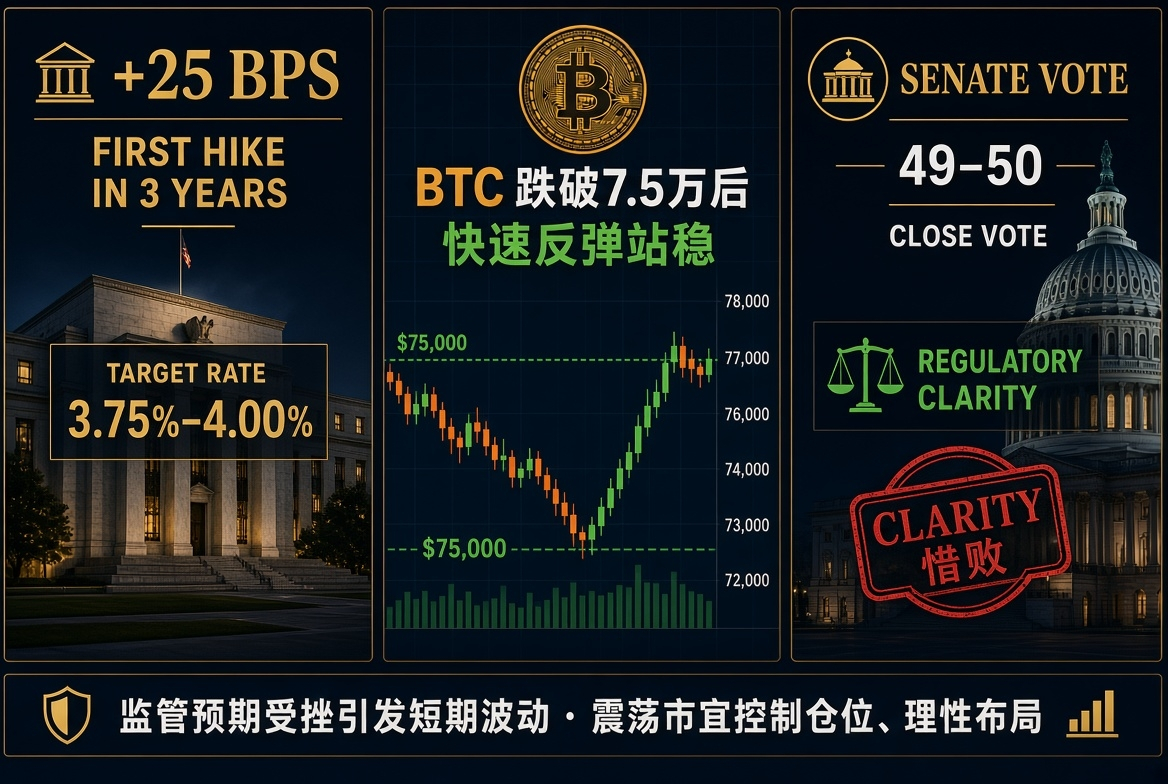
The Federal Reserve delivered its first 25-basis-point rate hike in three years after implementation; after BTC broke below 75,000, it quickly rebounded and held steady, showing strong resilience. The CLARITY Act narrowly lost in the Senate vote, 49:50; regulatory expectations were dealt a setback, triggering near-term volatility. Watch the SEC’s 24-hour trading discussion and ETF fund flows; in a choppy market, it’s best to control position size and build a rational layout.
英鸿³³₇
·
--
[Replay] 🎙️ The number of people in the square suddenly decreased—are you still there? bnb
02 h 22 m 56 s · 5.3k listens

燕寶Melissa
·
--
Bearish🚀 ETF Store CEO: The Crypto Future Isn’t Determined by a Single Bill!
The “Clarity Act” will affect market sentiment for crypto, but it isn’t the only variable that determines the industry’s future.
ETF Store CEO Nate Geraci says:
Even if the “Clarity Act” can’t secure enough votes this week to move forward, the crypto industry’s progress won’t come to a halt.
The reason is simple—
The pace of market innovation is always faster than the pace of regulatory legislation.
Under the Trump administration’s environment, the SEC and CFTC may still use existing regulatory authority to drive the digital asset industry forward.
The real force that will change the financial system comes not only from policy documents, but from:
✅ Institutional capital continuing to flow in
✅ The capital bridge created by BTC ETFs
✅ Upgrades to on-chain financial infrastructure
✅ AI × Web3 fusion and innovation
✅ The global trend toward digitizing assets
The “Clarity Act” is more like an “accelerator” — boosting market confidence and helping the industry develop more smoothly.
But Crypto’s big-picture trajectory won’t pause because of a single bill.
As traditional finance gradually embraces blockchain, the upgrade to the future financial system may already be quietly underway.
#比特币下跌4%
$BTC
$ETH
$BNB
The “Clarity Act” will affect market sentiment for crypto, but it isn’t the only variable that determines the industry’s future.
ETF Store CEO Nate Geraci says:
Even if the “Clarity Act” can’t secure enough votes this week to move forward, the crypto industry’s progress won’t come to a halt.
The reason is simple—
The pace of market innovation is always faster than the pace of regulatory legislation.
Under the Trump administration’s environment, the SEC and CFTC may still use existing regulatory authority to drive the digital asset industry forward.
The real force that will change the financial system comes not only from policy documents, but from:
✅ Institutional capital continuing to flow in
✅ The capital bridge created by BTC ETFs
✅ Upgrades to on-chain financial infrastructure
✅ AI × Web3 fusion and innovation
✅ The global trend toward digitizing assets
The “Clarity Act” is more like an “accelerator” — boosting market confidence and helping the industry develop more smoothly.
But Crypto’s big-picture trajectory won’t pause because of a single bill.
As traditional finance gradually embraces blockchain, the upgrade to the future financial system may already be quietly underway.
#比特币下跌4%
$BTC
$ETH
$BNB

·
--
🎙️ The number of people in the square suddenly decreased—are you still there? bnb

End
02 h 22 m 56 s
5.2k
32

AbdullRauf
·
--
Assalamu Alaikum, Square Family! 💐🧧🎉
Your support means everything to us. To show our heartfelt gratitude, we’re excited to launch a special giveaway — we’re giving away 2000 Giveaway!
🎁 How to Enter:
1. ✅ Follow our page
2. ✅ Share this post with your community
3. ✅ Comment “222!” below
Winners will be chosen randomly — don’t miss your chance to be one of them!
Thank you for being an amazing part of our journey. Let’s celebrate together! 🎊
#GIVEAWAY #Crypto #Airdrop #squarecommunity
Your support means everything to us. To show our heartfelt gratitude, we’re excited to launch a special giveaway — we’re giving away 2000 Giveaway!
🎁 How to Enter:
1. ✅ Follow our page
2. ✅ Share this post with your community
3. ✅ Comment “222!” below
Winners will be chosen randomly — don’t miss your chance to be one of them!
Thank you for being an amazing part of our journey. Let’s celebrate together! 🎊
#GIVEAWAY #Crypto #Airdrop #squarecommunity


正乾商学--四条2
·
--
Are you really suited to make a living by trading?
Serial [5]
⑤ Only after you solve the first four questions will you truly stand at the starting line of trading
Pay attention.
What I covered earlier—
income sources, daily routine, time you can trade, trading instruments, your personal character, your trading style…
All of it is just to help you reach: the starting line.
Not the finish line.
Only after you’ve truly reached the starting line do you begin the part everyone is most familiar with:
learning.
And not learning one or two indicators;
not stopping once you know what support and resistance are.
You must first gain broad understanding of:
Scalping—very short-term trading / scalp trading: frequent trades within a very short time (seconds to minutes) to profit from small price fluctuations
Day Trading: opening and closing positions on the same day, without holding overnight
Swing Trading: capturing market swings over several days to a few weeks, aiming to profit from swing trends
Trend Following: trading in line with the market’s main direction—for example, going long in an uptrend and short in a downtrend
Breakout Trading: entering the market when price breaks through a key resistance or support level
Mean Reversion: trading that assumes when price deviates from normal levels, it will return to the average value, seeking opportunities from that
Technical Analysis: analyzing the market through candlesticks, indicators, volume, and price structure
Fundamental Analysis: studying a project’s value—such as the team, economic data, industry development, and more
Macro: macroeconomic analysis studying how the global economic environment (interest rates, inflation, the US dollar, policies, etc.) affects the market
Risk Management: controlling trading risk, including stop-losses, position sizes, and capital protection
Position Sizing: position management—deciding how much capital to risk or allocate to each trade based on your account size and risk
Trading Psychology: managing emotions, discipline, and execution ability to prevent fear and greed from affecting your trading
Then test them one by one.
You must personally know:
what suits you.
what doesn’t suit you.
This is not something others can tell you directly.
If you’re interested in trading, feel free to leave a comment in the comment section or join the chat room to exchange ideas—learn together and grow together!
#美联储加息25基点美股收跌
Serial [5]
⑤ Only after you solve the first four questions will you truly stand at the starting line of trading
Pay attention.
What I covered earlier—
income sources, daily routine, time you can trade, trading instruments, your personal character, your trading style…
All of it is just to help you reach: the starting line.
Not the finish line.
Only after you’ve truly reached the starting line do you begin the part everyone is most familiar with:
learning.
And not learning one or two indicators;
not stopping once you know what support and resistance are.
You must first gain broad understanding of:
Scalping—very short-term trading / scalp trading: frequent trades within a very short time (seconds to minutes) to profit from small price fluctuations
Day Trading: opening and closing positions on the same day, without holding overnight
Swing Trading: capturing market swings over several days to a few weeks, aiming to profit from swing trends
Trend Following: trading in line with the market’s main direction—for example, going long in an uptrend and short in a downtrend
Breakout Trading: entering the market when price breaks through a key resistance or support level
Mean Reversion: trading that assumes when price deviates from normal levels, it will return to the average value, seeking opportunities from that
Technical Analysis: analyzing the market through candlesticks, indicators, volume, and price structure
Fundamental Analysis: studying a project’s value—such as the team, economic data, industry development, and more
Macro: macroeconomic analysis studying how the global economic environment (interest rates, inflation, the US dollar, policies, etc.) affects the market
Risk Management: controlling trading risk, including stop-losses, position sizes, and capital protection
Position Sizing: position management—deciding how much capital to risk or allocate to each trade based on your account size and risk
Trading Psychology: managing emotions, discipline, and execution ability to prevent fear and greed from affecting your trading
Then test them one by one.
You must personally know:
what suits you.
what doesn’t suit you.
This is not something others can tell you directly.
If you’re interested in trading, feel free to leave a comment in the comment section or join the chat room to exchange ideas—learn together and grow together!
#美联储加息25基点美股收跌

蒋雅琪1368
·
--
Bitcoin rebounds—will it continue to rise further?
✅ Reasons for the rebound: Price pulled back to support above the 75,000 level that has been confirmed multiple times in the past, triggering the rebound.
Rebound targets: First target at 78,500; next resistance at 80,500. For more cautious investors, take profit around 78,500; spot holdings can take profits in batches.
✅ My view: The market is highly uncertain right now, so it’s not suitable for long-term holding. Tomorrow’s bill, Wednesday’s interest rate hike, and officials’ remarks are all unknown variables. The priority is to lock in existing profits, then re-enter with a heavier position once the market becomes clearer.
During yesterday’s sharp sell-off, I advised setting up spot positions around 76,000; it has now risen nearly 2,000 points. Strategy logic: Buy at support to catch the rebound; take profit at resistance. Do not open positions unless support is reached; if the price continues to surge and approaches the resistance zone, you can try shorting.
Strong resistance is at 81,000–82,000. Attempt shorts in this range; the expected win rate is about 70%. Swing trade based on support and resistance—if the price breaks out, cut losses. In complex market conditions, I’ll keep digging for opportunities and synchronize my real-time trading mindset every day.
✅ Reasons for the rebound: Price pulled back to support above the 75,000 level that has been confirmed multiple times in the past, triggering the rebound.
Rebound targets: First target at 78,500; next resistance at 80,500. For more cautious investors, take profit around 78,500; spot holdings can take profits in batches.
✅ My view: The market is highly uncertain right now, so it’s not suitable for long-term holding. Tomorrow’s bill, Wednesday’s interest rate hike, and officials’ remarks are all unknown variables. The priority is to lock in existing profits, then re-enter with a heavier position once the market becomes clearer.
During yesterday’s sharp sell-off, I advised setting up spot positions around 76,000; it has now risen nearly 2,000 points. Strategy logic: Buy at support to catch the rebound; take profit at resistance. Do not open positions unless support is reached; if the price continues to surge and approaches the resistance zone, you can try shorting.
Strong resistance is at 81,000–82,000. Attempt shorts in this range; the expected win rate is about 70%. Swing trade based on support and resistance—if the price breaks out, cut losses. In complex market conditions, I’ll keep digging for opportunities and synchronize my real-time trading mindset every day.

慢就是快Mike
·
--
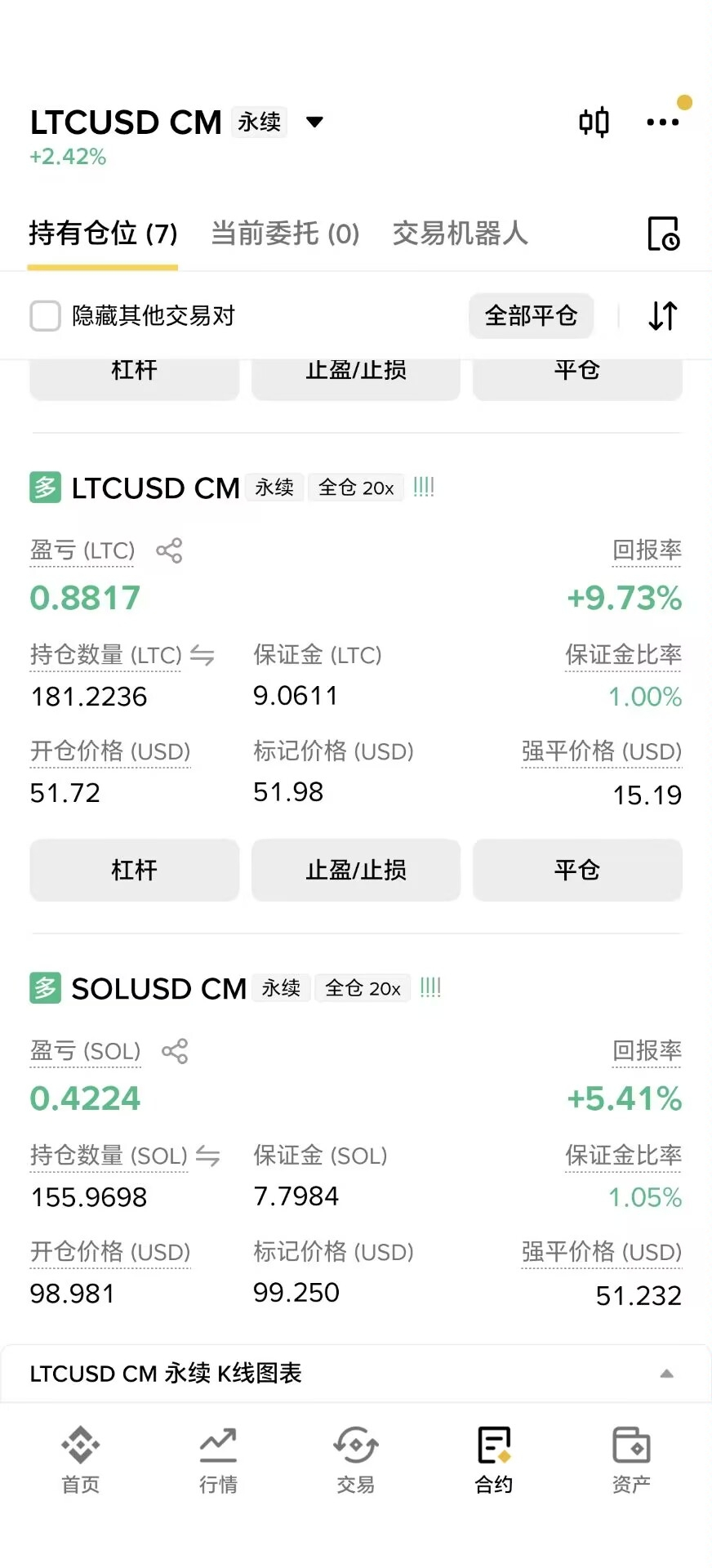
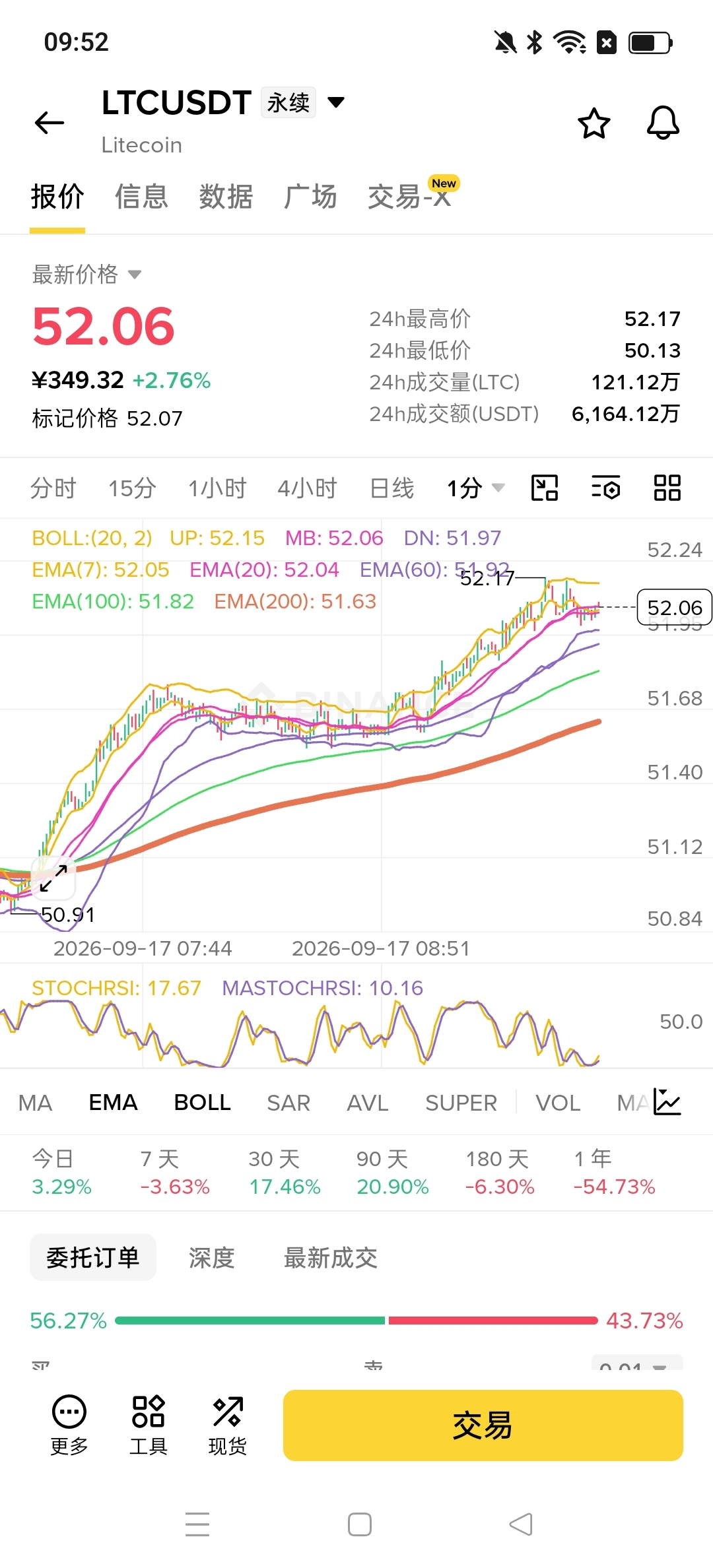
$LTC I don’t care whether you raise rates or whatever—if the bulls are coming, then whatever bad news there is won’t matter. Just do it, brothers—more of it!

灰s1688
·
--
$ETH is currently in a battle between bulls and bears at the crucial $2,400 threshold. In mid-September, under a dual squeeze—both the Fed’s interest-rate decision and competing capital flows—the market saw violent fluctuations. Sentiment is cautious, with investors waiting on the sidelines.
🧧🧧🧧
In the early hours of September 16, the price spiked (took a quick dip) to around $2,357 due to news, then rebounded. It is now stabilizing above $2,400, but the rebound has been weak; even the MA10 moving average has not been fully regained.
Since September, ETH has mostly been trading in the $2,387–$2,615 range. The main overhead pressure is concentrated around $2,410–$2,440. Support lies at $2,370–$2,335.
After breaking below the lower bound of the consolidation range dating back to August 22 on the daily chart, downside room has opened in the short term. The sharp drop is accompanied by a significant increase in trading volume, showing a volume-expansion selloff pattern.
🧧🧧🧧
In the early hours of September 16, the price spiked (took a quick dip) to around $2,357 due to news, then rebounded. It is now stabilizing above $2,400, but the rebound has been weak; even the MA10 moving average has not been fully regained.
Since September, ETH has mostly been trading in the $2,387–$2,615 range. The main overhead pressure is concentrated around $2,410–$2,440. Support lies at $2,370–$2,335.
After breaking below the lower bound of the consolidation range dating back to August 22 on the daily chart, downside room has opened in the short term. The sharp drop is accompanied by a significant increase in trading volume, showing a volume-expansion selloff pattern.
·
--
🎙️ Welcome to the Tangbao Livestream Room—come chat and discover the Web3 wealth code

End
03 h 37 m 40 s
3.1k
72
Log in to explore more content