
#revolutconfirmsfakegovemaildatabreach
🚨📩 REVOLUT’S “GOVERNMENT EMAIL” BREACH WAS FAKE 📩🚨
One trusted address can open a door,
and sometimes the most dangerous key looks completely official.
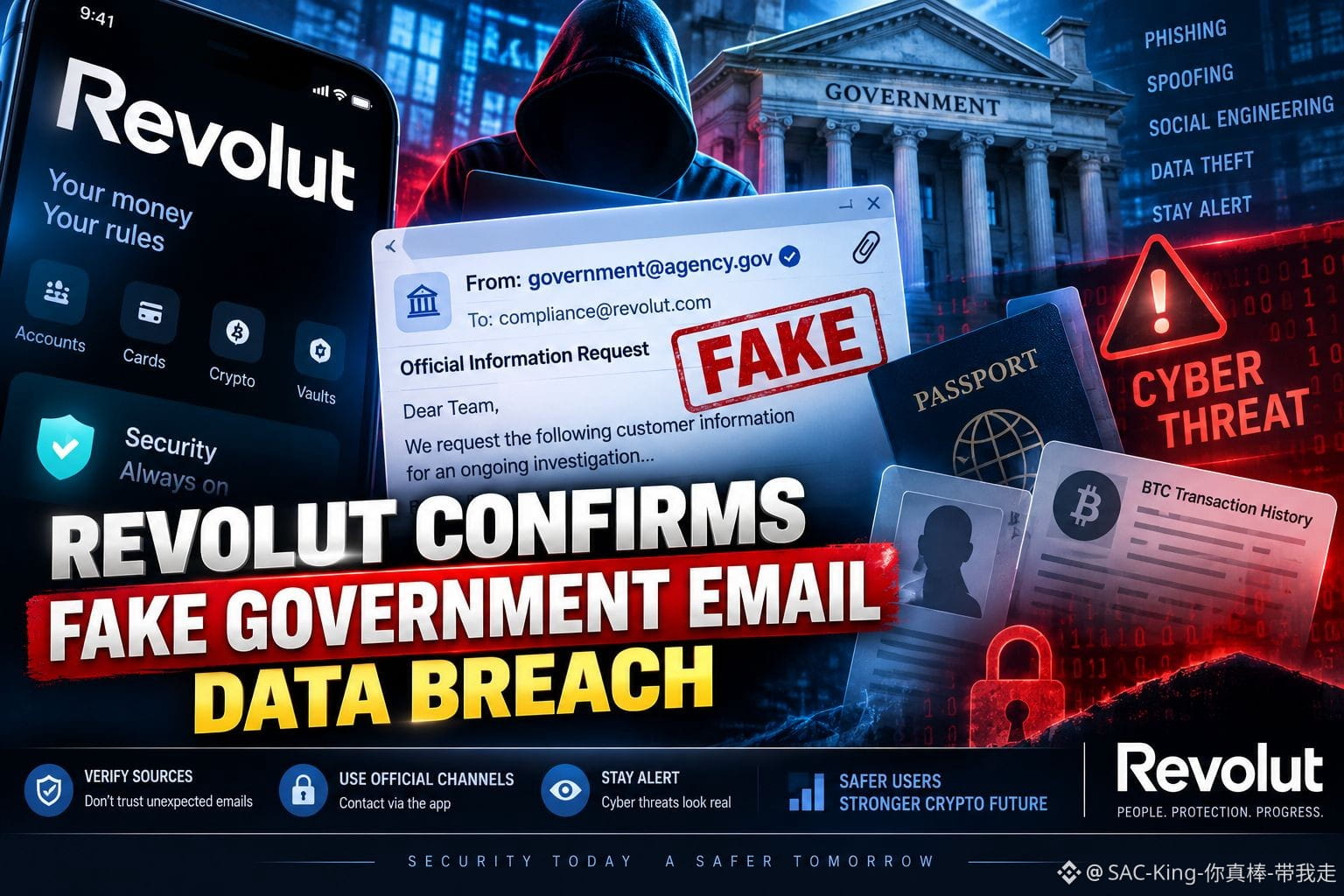
Revolut has confirmed that it responded to an information request that appeared to come from a government agency, but the email account was later identified as unauthorized. The account operated within the agency’s domain infrastructure and carried valid authentication credentials, making the request appear legitimate.
The exposed information reportedly included customer KYC images and Bitcoin transaction histories. Revolut said it later blocked the unauthorized address, notified regulators, and applied precautionary measures for affected customers.
My Take: The frightening part is not simply that an email was fake. It is that normal security signals can still be manipulated when attackers exploit trust between institutions.
This also shows why crypto platforms cannot treat cybersecurity as only a wallet or blockchain problem. Identity data, transaction histories, internal verification processes, and human judgment can all become attack surfaces.
Revolut itself advises customers to verify suspicious communications through its secure in-app support rather than trusting unexpected requests.
In digital finance, the strongest-looking identity can still hide the wrong person.
❓Should financial institutions require independent verification for every sensitive government data request?
Disclaimer: Informational only, not financial or security advice.
#CyberSecurity #DataBreach #GrowWithSAC $LSK $MINA $TREE
#RevolutConfirmsFakeGovEmailDataBreach
🚨📩 REVOLUT’S “GOVERNMENT EMAIL” BREACH WAS FAKE 📩🚨
One trusted address can open a door,
and sometimes the most dangerous key looks completely official.
Revolut has confirmed that it responded to an information request that appeared to come from a government agency, but the email account was later identified as unauthorized. The account operated within the agency’s domain infrastructure and carried valid authentication credentials, making the request appear legitimate.
The exposed information reportedly included customer KYC images and Bitcoin transaction histories. Revolut said it later blocked the unauthorized address, notified regulators, and applied precautionary measures for affected customers.
My Take: The frightening part is not simply that an email was fake. It is that normal security signals can still be manipulated when attackers exploit trust between institutions.
This also shows why crypto platforms cannot treat cybersecurity as only a wallet or blockchain problem. Identity data, transaction histories, internal verification processes, and human judgment can all become attack surfaces.
Revolut itself advises customers to verify suspicious communications through its secure in-app support rather than trusting unexpected requests.
In digital finance, the strongest-looking identity can still hide the wrong person.
❓Should financial institutions require independent verification for every sensitive government data request?
Disclaimer: Informational only, not financial or security advice.
#CyberSecurity #DataBreach #GrowWithSAC $LSK $MINA $TREE
#RevolutConfirmsFakeGovEmailDataBreach