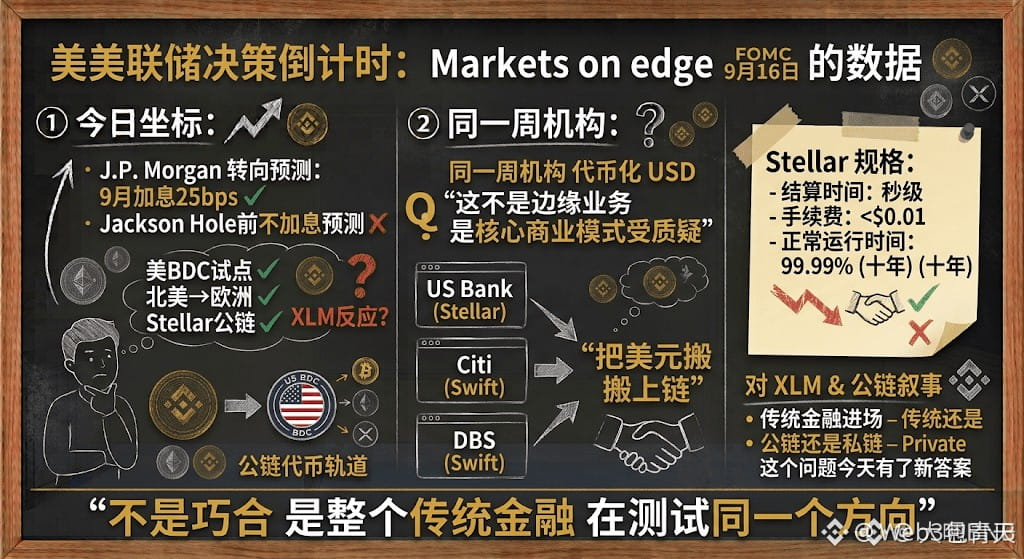
#美国合众银行完成stellar跨境支付试点
👉 链上跨境支付,群里聊落地
United States' Union Bank (U.S.) has managed to run a cross-border payment end-to-end, with settlement using the Stellar network🔗
The bank itself transfers assets on-chain—its significance outweighs the amount.
First, let’s look at what it did. Fiat in-and-out stays in the bank’s own hands; tokens are just interim vouchers. The pilot used a USD token, and the on-chain time was only a few seconds.
The tricky part is the counterparty side. A cross-border payment requires both ends to follow the same set of standards. If the receiving bank doesn’t participate, then even if the on-chain process is fast, it’s all for nothing. The pilot is a closed loop—there’s still a long way to go before commercialization.
For crypto, cross-border payments are the most solid on-chain use case. The payer is real, and performance can be verified. Token prices on public chains may not necessarily rise in tandem; demand first lands with stablecoins. Stablecoin issuers get revenue earlier than public-chain networks, and this chain’s fee structure is also simpler. It’s more practical to look at use cases than concepts.
Which part of business do you think on-chain cross-border payments will replace first? Let’s discuss in the comments.
👉 链上跨境支付,群里聊落地
United States' Union Bank (U.S.) has managed to run a cross-border payment end-to-end, with settlement using the Stellar network🔗
The bank itself transfers assets on-chain—its significance outweighs the amount.
First, let’s look at what it did. Fiat in-and-out stays in the bank’s own hands; tokens are just interim vouchers. The pilot used a USD token, and the on-chain time was only a few seconds.
The tricky part is the counterparty side. A cross-border payment requires both ends to follow the same set of standards. If the receiving bank doesn’t participate, then even if the on-chain process is fast, it’s all for nothing. The pilot is a closed loop—there’s still a long way to go before commercialization.
For crypto, cross-border payments are the most solid on-chain use case. The payer is real, and performance can be verified. Token prices on public chains may not necessarily rise in tandem; demand first lands with stablecoins. Stablecoin issuers get revenue earlier than public-chain networks, and this chain’s fee structure is also simpler. It’s more practical to look at use cases than concepts.
Which part of business do you think on-chain cross-border payments will replace first? Let’s discuss in the comments.