

Since 2025, Ripple has bought a treasury platform for $1 billion, obtained a MiCA license, moved RLUSD to Japan, and connected Ripple Prime to Coinbase’s futures. Despite this, XRP has declined by more than a quarter over the same period and briefly fell below $1 in August.
Now a seemingly reasonable question arises: what does Ripple’s business consist of today, where does the money go, which institutions have come to the XRPL, and why the infrastructure growth has not yet translated into the asset’s price.
The year’s main gap
Ripple in 2026 is no longer just a company associated with XRP and cross-border payments. Its business spans prime brokerage, payments, digital asset storage, corporate treasury, tokenization, and the stablecoin RLUSD.
In June, Ripple CEO Brad Garlinghouse said the company’s goal is to reach $1 billion in annual operating revenue by the end of 2026—excluding XRP sales.
However, market participants are looking not at operational metrics, but at the token’s price. By September 1, XRP was down about 27% since the start of the year, and Standard Chartered analysts had already cut their forecast from $8 to $2.8 back in February.
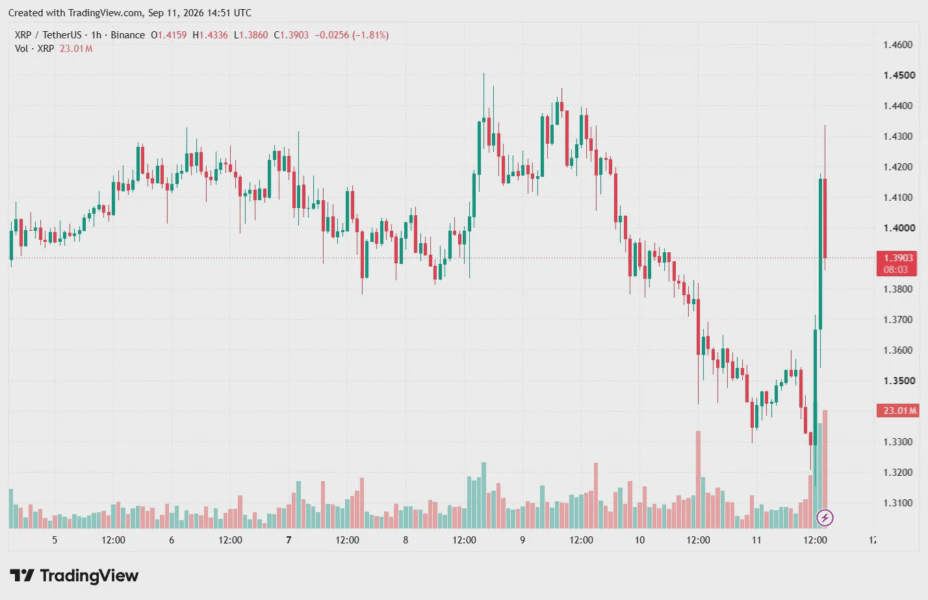
Expanding Ripple’s business does not automatically mean an increase in demand for XRP. A significant portion of the company’s new products is related to brokerage services, corporate treasury, RLUSD, and asset tokenization. The token remains part of the ecosystem, but it is used in far from all of these areas.
Investments: where the money goes
In early 2026, Ripple expanded the GSmart system integrated into Ripple Treasury by acquiring, for $1 billion, the corporate treasury software provider GTreasury.
The solution enables finance directors to perform settlements in RLUSD in 3–5 seconds, providing around-the-clock access to REPO markets, as well as instant exchange of shares in tokenized funds (including BlackRock BUIDL) through Securitize infrastructure.
On September 10, Ripple updated Ripple Treasury by implementing the concept of Governed AI. The new technology automates treasury operations strictly in line with restrictions and rules set by the client itself.
On August 3, Ripple announced strategic investments in the UK fintech companies ZILO and Licuido, developing infrastructure for tokenized funds and digital asset management. These deals will help build a full institutional infrastructure based on the XRP Ledger (XRPL). On this platform, companies will be able to issue RWAs, maintain accounting for them, and manage liquidity.
Ripple’s investment initiative followed right after the launch of Aviva Investors’ tokenized liquidity fund on XRPL, in the rollout of which ZILO and Licuido played a direct role. The parties did not disclose the financial terms and the exact amount of the redeemed shares.
On August 18, Ripple Prime’s division closed a private placement of senior unsecured notes totaling $275 million. The raised funds will be directed toward replenishing working capital and expanding the U.S. business in multi-asset clearing, prime brokerage, and institutional financing. According to the press release, the debt obligations received an investment-grade rating of BBB from KBRA, officially moving them into the Investment Grade category.
A separate story is Evernorth, a treasury company in the digital assets space. Ripple acted as an anchor investor in the project by transferring a large amount of XRP from its own reserves to the treasury’s balance sheet. In August, the SEC announced that the registration statement on Form S-4 for Evernorth’s merger with Armada Acquisition Corp. II (a SPAC company) had become effective. This is the document the company files with the commission before issuing securities for the deal: it discloses financial performance, the structure of the combined company, merger risks, and the merger terms.
Armada shareholders will vote on the deal on September 30. If approved and closed, the combined firm expects to list on Nasdaq under the ticker XRPN. Evernorth will hold XRP on its balance sheet and manage the treasury, offering the public market another regulated way to gain XRP exposure. Unlike a spot ETF, Evernorth plans to actively manage the treasury and seek to increase the number of XRP per share.
Business: brokerage, payments, treasury
On March 5, the Ripple Prime platform integrated the entire lineup of Coinbase Derivatives futures regulated by the CFTC. Institutional clients gained the ability to clear, finance, and hedge risks through a single regulated broker.
On August 27, Ripple Prime launched a Delta One offering with total return swaps (swaps on total return) on U.S. stocks, indices, and digital assets. Such instruments are in demand among hedge funds and family offices, for whom it is legally and operationally easier to hold derivatives than to set up custodial token storage.
The payments business expanded through partnerships. On March 31, one of the largest non-bank cross-border payments operators, Convera, connected to the Ripple blockchain network. On June 11, Ripple and Bitso announced a new stage of their partnership aimed at accelerating cross-border settlements in Latin America using stablecoins. On August 18, Jeonbuk became the first regional bank in South Korea to deploy Ripple Payments for cross-border transfers.
Over the past year, Ripple’s treasury segment has evolved from an M&A deal into a platform with its own AI module. The product logic is transparent: the company sells corporations not volatile digital assets, but reduced settlement time and access to the yield of tokenized instruments. Here, a stablecoin serves purely as a settlement unit, not as a speculation instrument.
Institutionalization: banks and licenses
February became the strongest month in terms of institutional inflows. Deutsche Bank, Aviva Investors, and Dubai’s digital bank Zand began actively implementing Ripple solutions. On February 18, SG-FORGE, a division of Société Générale, added XRPL to the networks where the euro stablecoin EURCV is issued. Previously, the asset had already been operating on Ethereum and Solana. Ripple Custody is used to deploy on XRPL.
In summer, Asia was added. On June 24, RLUSD officially launched on the Japanese market through SBI VC Trade (a subsidiary of SBI Group) after approval by the local regulator, the JFSA.
Ripple’s global expansion and its fight for legal status are entering a decisive phase. On June 23, the company received preliminary approval, and on July 6 it received a full crypto-services provider license from the Luxembourg regulator. This gave Ripple the right to operate under the “single passport” principle across all EU member countries.
In the U.S., one of the key regulatory issues remains the CLARITY Act, designed to delineate the powers of the SEC and the CFTC. As of September 15, a key procedural vote on the bill is scheduled in the Senate.
Despite its history with the SEC, Ripple’s leadership is actively engaging with U.S. authorities. Garlinghouse positively assessed the August meeting of crypto industry leaders at the White House, attended by Donald Trump.
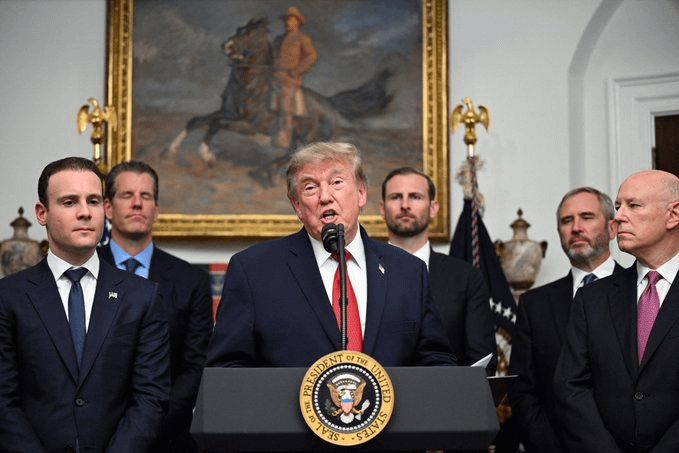
In the opinion of Ripple’s CEO, the goal of making the U.S. the world’s crypto capital is absolutely achievable now.
Assets: XRP, RLUSD, and XRPL
XRP. The year for the token ran in a downward trend with one sharp reversal. By May, the price had fallen to $1.34. On August 15, XRP broke above $1.
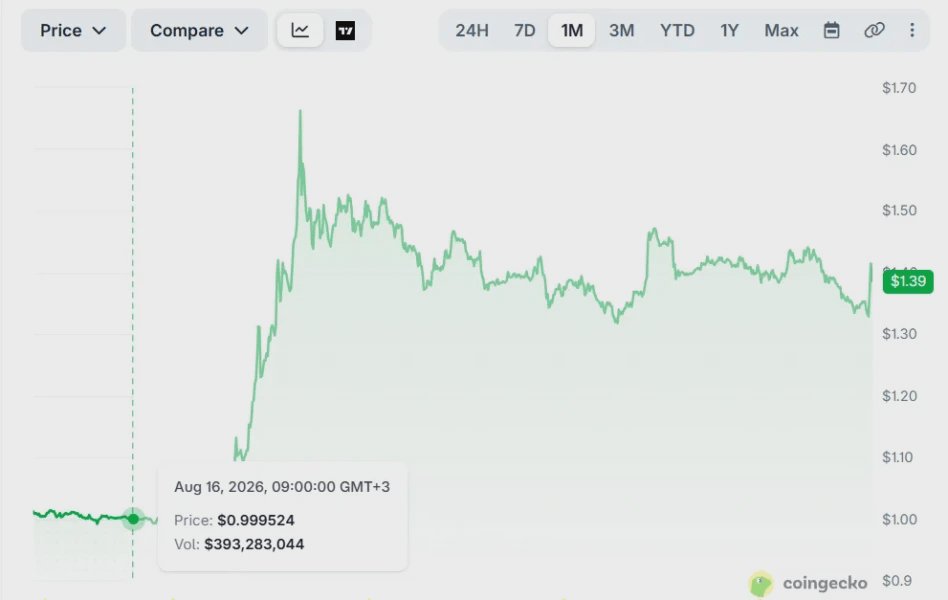
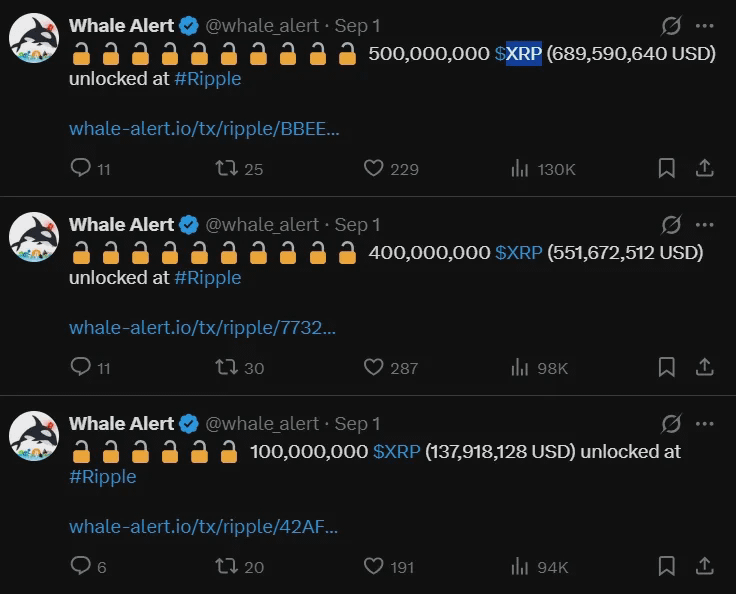
Then, over the following week, XRP rose by about 70%—to $1.7 by August 22. On September 1, the company conducted a monthly unlock of 1 billion XRP from escrow—according to a schedule that has been in effect since 2017.
Spot XRP ETFs, meanwhile, remain a source of demand. According to SoSoValue, on September 10 the total net inflow into these products amounted to $5.14 million. This is the third consecutive “green” session for the segment.
RLUSD. Over the year, the stablecoin has significantly increased in scale: by early September, its market capitalization reached approximately $2.4 billion. Drivers: integration into Ripple Treasury, expansion into Japan, and use in Ripple Prime calculations. In terms of volume, RLUSD is still far from USDT and USDC. The token is issued by a trust company under NYDFS oversight; reserves are held in U.S. dollars and short-term U.S. Treasury bills, with monthly attestations published for them.
XRPL. In the second quarter, the average value of tokenized assets on XRPL reached $3.72 billion. Together with the average RLUSD balance of $539 million, the total value of these assets was about $4.26 billion. On June 30, Ripple released the final specification for the XRPL Lending Protocol—protocol-level lending, operating without the usual smart contracts. The initiative is now undergoing validator voting for launch on the mainnet.
So what’s the bottom line
Ripple and XRP have finally stopped being synonymous. Over the past two years, the company has significantly expanded its business beyond operations directly related to the token: it acquired the prime broker Hidden Road and the treasury platform GTreasury, moved into payments and custody, promoted RLUSD and infrastructure for tokenized assets.
Meanwhile, XRP remains part of the company’s ecosystem and the XRP Ledger, even though not every new product implies its use.
In 2026, the gap became especially noticeable: Ripple continued expanding its regulated financial infrastructure, while XRP has remained in the red since the start of the year. This suggests that the fintech company’s business and XRP’s current dynamics should be considered separately.
With us (in this group !), usually remain precisely those (! subscribers) who are looking for fresh and relevant news, don’t want to scroll through dozens of different websites and news outlets, and can afford to read everything most interesting in a single news feed!!! 😉
Enjoy your viewing !!! 😊
And for now, we’ll keep searching for fresh and interesting news. 🤫