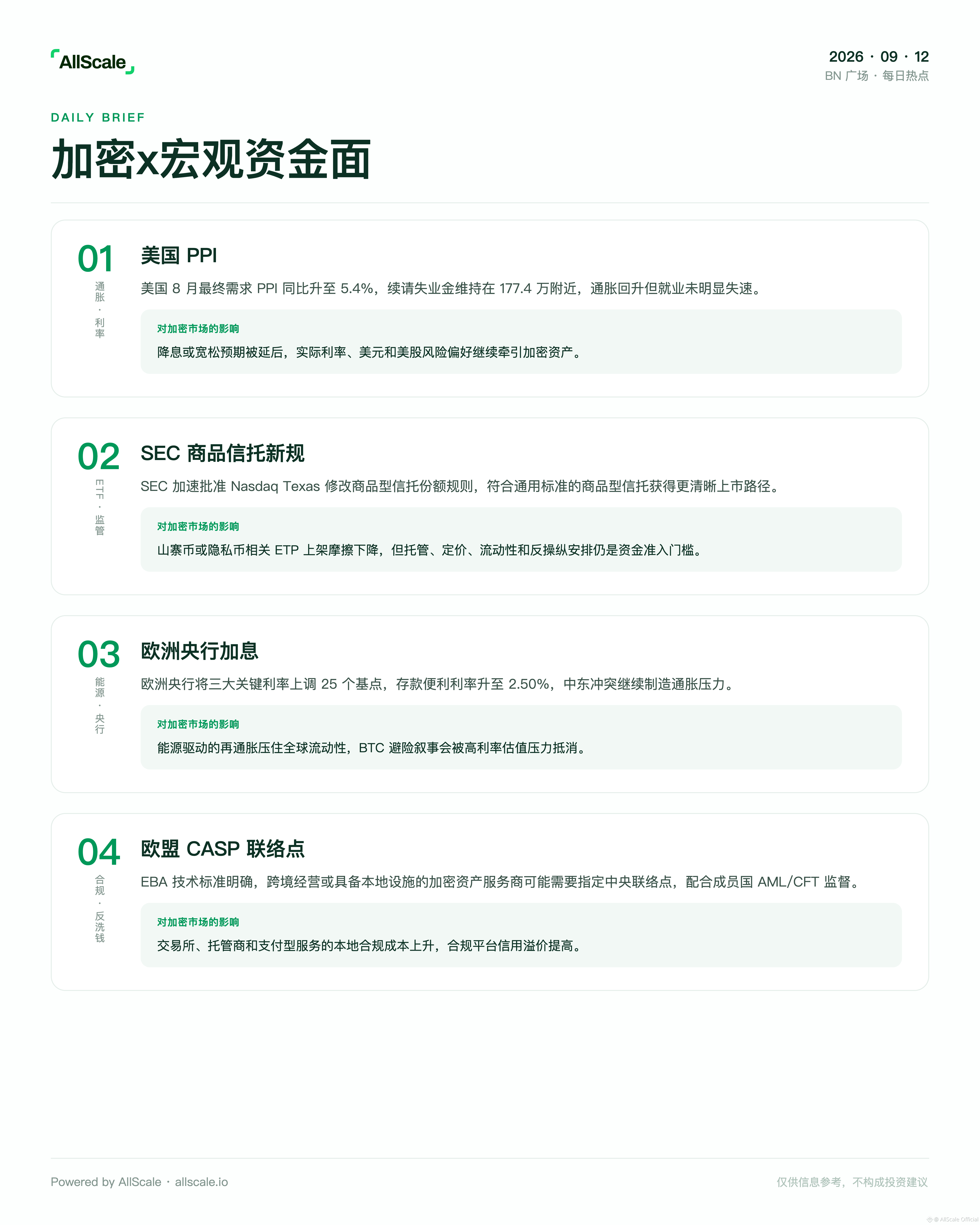

AllScale 2026-09-12 Encrypted Macro Daily Report
1. US PPI pulls rate trading back to data dependence
The U.S. Bureau of Labor Statistics reported that August final-demand PPI rose 0.4% month over month and climbed to 5.4% year over year; initial continuing claims for unemployment stayed around 1.774 million. Inflation at the corporate end is re-accelerating, while the labor market has not yet shown clear signs of slowing. This suggests the Fed will find it difficult to pivot to easing in the near term. The implication is that real yields and the dollar will continue to weigh on risk-asset valuations. Even if the crypto market has a narrative around BTC breaking integer levels, it still needs to once again accept rate-pricing constraints.
2. SEC’s new rules for commodity trusts reduce friction for the ETF path
The SEC has sped up approval for Nasdaq Texas to revise the rules for commodity trust share listings. Commodity trusts that meet common standards will have a clearer path to being listed. The background is that U.S. digital-asset ETF approvals are shifting from single-asset, case-by-case decisions toward exchange rule sets and a framework of general standards. The impact is that institutional friction for ETPs related to altcoins or privacy coins may decrease, but custody, pricing, liquidity, and anti-manipulation arrangements will remain the real thresholds before capital can enter.
3. ECB rate hikes strengthen pressure from energy-driven inflation
On September 10, the ECB raised its three key policy rates by 25 basis points. The deposit facility rate was increased to 2.50%, and it also noted that ongoing Middle East conflicts are continuing to generate inflationary pressure. AP and FT also mentioned that risks related to the Strait of Hormuz and the Red Sea continue to disrupt energy transportation. The impact is that an energy-driven reflation will push up bond yields and expectations for U.S. dollar interest rates. BTC’s safe-haven narrative may be offset by valuation pressure from higher rates.
4. The EU’s CASP liaison points increase local compliance costs
EBA technical standards clarify that crypto-asset service providers may need to designate a central liaison point for cross-border operations, when they have local facilities, or when they face higher money-laundering risks—so they can support member-state supervision of anti–money laundering and counter-terrorist financing. The background is that after MiCA takes effect, EU regulation has moved from license-approval entry to ongoing supervision. The impact is that exchanges, custodians, and payment-type crypto services will need to invest more resources into local compliance. Compliance-platform credit premia will rise, and the customer-acquisition space for small offshore platforms will be squeezed.
The above content is compiled from publicly available information only and does not constitute any investment advice.
1. US PPI pulls rate trading back to data dependence
The U.S. Bureau of Labor Statistics reported that August final-demand PPI rose 0.4% month over month and climbed to 5.4% year over year; initial continuing claims for unemployment stayed around 1.774 million. Inflation at the corporate end is re-accelerating, while the labor market has not yet shown clear signs of slowing. This suggests the Fed will find it difficult to pivot to easing in the near term. The implication is that real yields and the dollar will continue to weigh on risk-asset valuations. Even if the crypto market has a narrative around BTC breaking integer levels, it still needs to once again accept rate-pricing constraints.
2. SEC’s new rules for commodity trusts reduce friction for the ETF path
The SEC has sped up approval for Nasdaq Texas to revise the rules for commodity trust share listings. Commodity trusts that meet common standards will have a clearer path to being listed. The background is that U.S. digital-asset ETF approvals are shifting from single-asset, case-by-case decisions toward exchange rule sets and a framework of general standards. The impact is that institutional friction for ETPs related to altcoins or privacy coins may decrease, but custody, pricing, liquidity, and anti-manipulation arrangements will remain the real thresholds before capital can enter.
3. ECB rate hikes strengthen pressure from energy-driven inflation
On September 10, the ECB raised its three key policy rates by 25 basis points. The deposit facility rate was increased to 2.50%, and it also noted that ongoing Middle East conflicts are continuing to generate inflationary pressure. AP and FT also mentioned that risks related to the Strait of Hormuz and the Red Sea continue to disrupt energy transportation. The impact is that an energy-driven reflation will push up bond yields and expectations for U.S. dollar interest rates. BTC’s safe-haven narrative may be offset by valuation pressure from higher rates.
4. The EU’s CASP liaison points increase local compliance costs
EBA technical standards clarify that crypto-asset service providers may need to designate a central liaison point for cross-border operations, when they have local facilities, or when they face higher money-laundering risks—so they can support member-state supervision of anti–money laundering and counter-terrorist financing. The background is that after MiCA takes effect, EU regulation has moved from license-approval entry to ongoing supervision. The impact is that exchanges, custodians, and payment-type crypto services will need to invest more resources into local compliance. Compliance-platform credit premia will rise, and the customer-acquisition space for small offshore platforms will be squeezed.
The above content is compiled from publicly available information only and does not constitute any investment advice.