
乘风Sunshine
409 Posts

乘风Sunshine
币安合约现货永久八折返佣码:CFCF888 |X推特@KeShiqing57753|接KOL宣发&项目推广|
Frequent Trader
1.7 Years
367 Following
25.8K+ Followers
10.2K+ Liked
Posts
All
Quotes
Videos
PINNED



慢就是快Mike
·
--
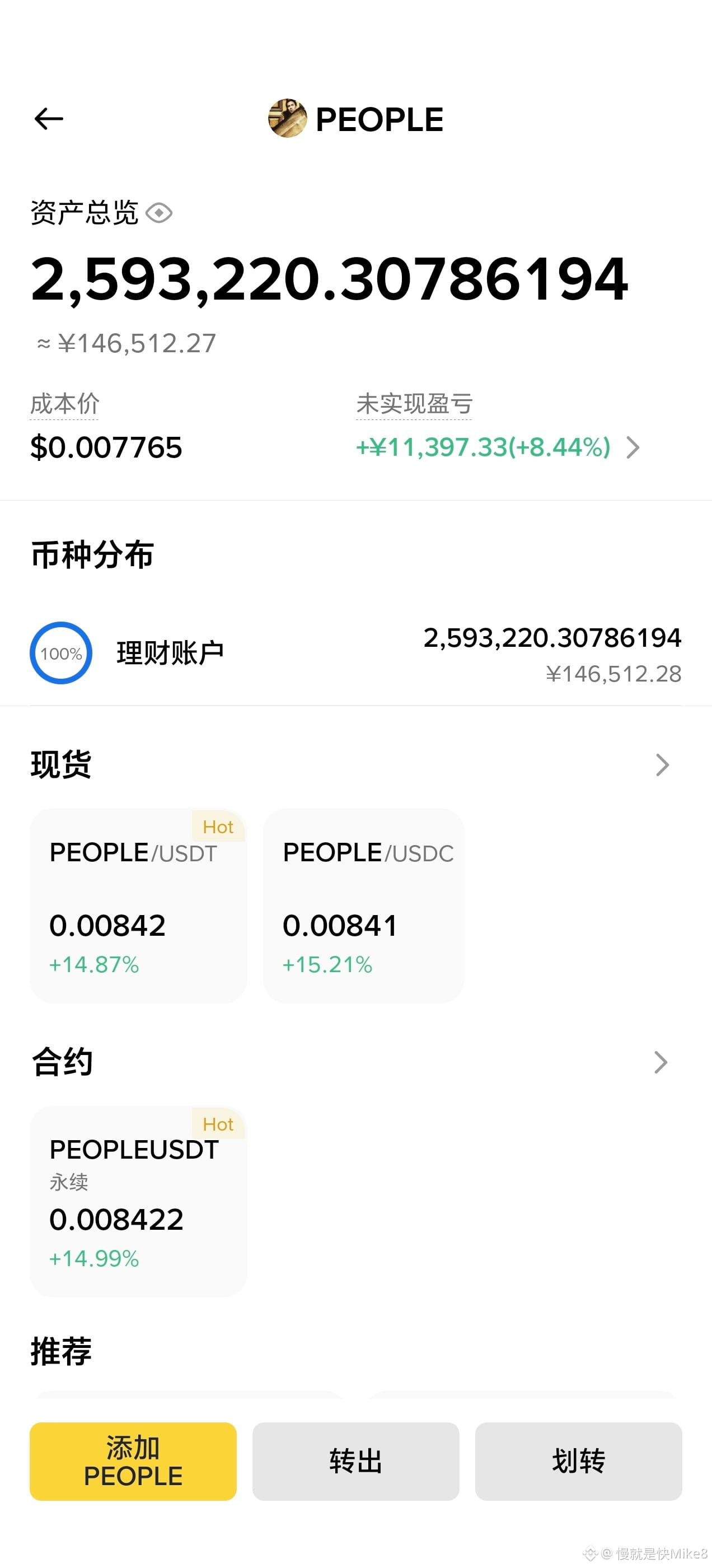
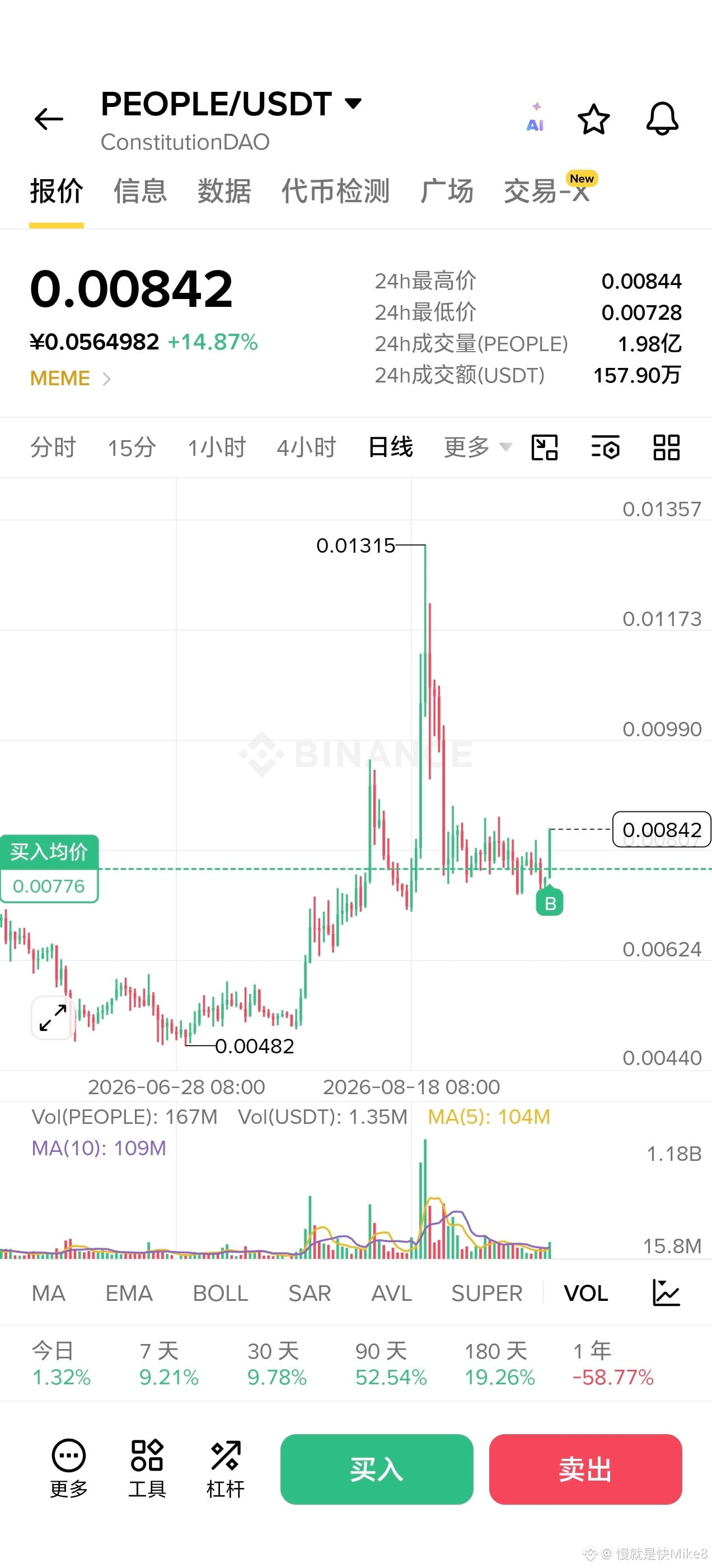
$PEOPLE Every year during the U.S. presidential election, this coin will have market action. “By the people, for the people” — you can stake a position in advance!

紫月湾湾_91391
·
--
This week’s crypto market enters **the “Super Central Bank Week”**
In the early hours of Thursday (9/17), the U.S. Federal Reserve (Fed) will release the latest interest-rate decision and economic projections. Throughout the week, the market is expected to follow a pattern of “low-volume, wait-and-see action in the first half, with the decision unleashing a directional move in the second half.”
1. Key logic for this week
“Before the rate decision is finalized, it suppresses sentiment and encourages caution. After the decision is announced, direction is revealed through pin-like reactions from above and below.”
From Monday to Wednesday (accumulation period): Market risk-hedging sentiment is strong. The broader market is expected to trade in a range with low volume and narrow fluctuations, and neither bulls nor bears are willing to take an aggressive, heavy position.
From Thursday to the weekend (positioning period): The Fed’s rate decision and Powell’s remarks will set the tone for year-end liquidity. This often leads to “false breakouts / false breakdowns” followed by a quick reversal—i.e., a washout行情.
2. Bull/Bear scenario walkthrough for this week
Scenario A: Dips followed by rebound (high probability; mainly range-building and bottoming)
Path: In the first half of the week, price weakly tests support (BTC retests $76,000 / ETH retests $2,380–$2,400). If the decision signals that the “rate-hike cycle is close to ending,” or is less hawkish than expected, it may trigger short-covering and buyers stepping in, pulling price up with a long lower wick rebound.
Scenario B: Break down lower (medium probability; more hawkish than expected)
Path: If the Fed shows a strongly tightening stance, and ETH breaks below $2,330 and BTC breaks below $75,500, leveraged long positions will be further liquidated. Then price may retrace to $2,200 to seek stronger support.
3. Key ETH levels to watch this week
Overhead rebound resistance:
$2,480 – $2,500 (primary checkpoint: resistance from short-term moving averages on the daily)
$2,550 – $2,600 (strength/weakness line: only a breakout with volume can reverse this daily downtrend)
Downside defense supports:
$2,400 – $2,420 (short-term psychological level: breaking below may trigger stop-losses for short-term longs)
$2,330 – $2,350 (swing “lifeline”: once the real body breaks below, the structure is likely to shift into a deeper pullback)
4. Trading recommendations for this week
Tone: Stay conservative and wait for signals
Strategy:
1. Do less before Wednesday; observe more: Avoid blindly guessing direction or adding leverage during low-volume, range-bound volatility.
2. Closely track the key needle-points (pin reactions): If before/around Thursday, near $2,400 or $2,350 there is a stop-the-bleeding signal such as a high-volume close with a long lower wick, that’s a higher-probability “right-side” entry timing. Until price stands above $2,550, treat all rebounds as weak corrective moves first.
$BTC $ETH
In the early hours of Thursday (9/17), the U.S. Federal Reserve (Fed) will release the latest interest-rate decision and economic projections. Throughout the week, the market is expected to follow a pattern of “low-volume, wait-and-see action in the first half, with the decision unleashing a directional move in the second half.”
1. Key logic for this week
“Before the rate decision is finalized, it suppresses sentiment and encourages caution. After the decision is announced, direction is revealed through pin-like reactions from above and below.”
From Monday to Wednesday (accumulation period): Market risk-hedging sentiment is strong. The broader market is expected to trade in a range with low volume and narrow fluctuations, and neither bulls nor bears are willing to take an aggressive, heavy position.
From Thursday to the weekend (positioning period): The Fed’s rate decision and Powell’s remarks will set the tone for year-end liquidity. This often leads to “false breakouts / false breakdowns” followed by a quick reversal—i.e., a washout行情.
2. Bull/Bear scenario walkthrough for this week
Scenario A: Dips followed by rebound (high probability; mainly range-building and bottoming)
Path: In the first half of the week, price weakly tests support (BTC retests $76,000 / ETH retests $2,380–$2,400). If the decision signals that the “rate-hike cycle is close to ending,” or is less hawkish than expected, it may trigger short-covering and buyers stepping in, pulling price up with a long lower wick rebound.
Scenario B: Break down lower (medium probability; more hawkish than expected)
Path: If the Fed shows a strongly tightening stance, and ETH breaks below $2,330 and BTC breaks below $75,500, leveraged long positions will be further liquidated. Then price may retrace to $2,200 to seek stronger support.
3. Key ETH levels to watch this week
Overhead rebound resistance:
$2,480 – $2,500 (primary checkpoint: resistance from short-term moving averages on the daily)
$2,550 – $2,600 (strength/weakness line: only a breakout with volume can reverse this daily downtrend)
Downside defense supports:
$2,400 – $2,420 (short-term psychological level: breaking below may trigger stop-losses for short-term longs)
$2,330 – $2,350 (swing “lifeline”: once the real body breaks below, the structure is likely to shift into a deeper pullback)
4. Trading recommendations for this week
Tone: Stay conservative and wait for signals
Strategy:
1. Do less before Wednesday; observe more: Avoid blindly guessing direction or adding leverage during low-volume, range-bound volatility.
2. Closely track the key needle-points (pin reactions): If before/around Thursday, near $2,400 or $2,350 there is a stop-the-bleeding signal such as a high-volume close with a long lower wick, that’s a higher-probability “right-side” entry timing. Until price stands above $2,550, treat all rebounds as weak corrective moves first.
$BTC $ETH


@帮帮Bonnie
is speaking[LIVE] 🎙️ Is ZEC trying to reach the sky?
2.2k listens


花涧空
·
--
“The Clear Bill’s failure is extremely detrimental to cryptocurrencies.”
“No, that’s not the case. Have you read this bill?”
“No. Have you?”
“No.”
“No, that’s not the case. Have you read this bill?”
“No. Have you?”
“No.”

道之为
·
--
$LSK $牛来 $AKE Shan Sai coins, the King of Kings, one day in heaven, one minute in hell; who will rise and who will fall? Big multiples, low position, high explosive prices. Follow the trend—be sure to go with the trend, either long or short. Retrace to the support or resistance level, halve to protect capital, and score another win.


黄泳程8023
·
--
One autumn rain brings a chill, and time moves hurriedly. Next Friday is the Mid-Autumn Festival already. With some hesitation, I’ll ask: how much money have you saved this year? It’s still three or four months until 2027—have you met your goal?


楠楠nannan势不可挡
·
--
🧧🧧🧧🧧🧧🧧🧧🧧🧧🧧🧧
The market rises and falls, yet people’s hearts remain steady. It’s okay to go slower—long-term thinking, and time will deliver the answer. $BNB
The market rises and falls, yet people’s hearts remain steady. It’s okay to go slower—long-term thinking, and time will deliver the answer. $BNB


白鲨观点
·
--
Early this morning, the Fed’s rate hike has landed: 25 basis points, 3.75%–4%, passed unanimously.
To be honest, the hike itself was already expected by the market, with a 93% probability—there wasn’t much suspense. But the truly surprising part was the dot plot—of the 18 officials, 16 believe there will be another rate hike this year. By the end of the year, the median rate hit 4.1%, and it stays at 4.1% in 2027. The message is very clear: rate hikes are not a one-off; high rates need to be maintained for a long time.
Earlier, the market was still fantasizing that after this round, they’d cut rates. Now that fantasy is shattered. When Waller (Wosh) stepped up, he went straight for the first fire—burning pretty intensely, leaving Trump with no face at all. Trump had previously said rates should be cut to below 1%, but the Fed directly raised rates, and also hinted that more hikes may follow.
Back to the crypto world: these past two days, the drop has been truly brutal. The Clear Act didn’t pass, and the Fed turned more hawkish again—double whammy. BTC fell from 79,000 to 75,000. ETH dropped even more, with 120,000 liquidations.
But I actually think this kind of concentrated release of bad news isn’t necessarily a bad thing. Everything that needed to drop has dropped; everything that needed to get liquidated has been liquidated. Once the market digests it, it should enter the next phase with a lighter load. Now BTC is holding around 75,000, which suggests there are buyers stepping in at this level.
Of course, I’m not saying a rally is coming immediately. Short-term pressure will definitely remain. The macro environment is poor, and regulation is still uncertain—so we may need to grind through the base for a while. But if you look further ahead, these are just interludes.
The rate-hike cycle will eventually end, and regulation will eventually become clear.
These things don’t change Bitcoin’s underlying value.
At 4 p.m., I’ll chat in the group about “After the rate hike lands, how do we go from here?”—I’ll share my outlook and my trading plan. If you’re interested, come join.
To be honest, the hike itself was already expected by the market, with a 93% probability—there wasn’t much suspense. But the truly surprising part was the dot plot—of the 18 officials, 16 believe there will be another rate hike this year. By the end of the year, the median rate hit 4.1%, and it stays at 4.1% in 2027. The message is very clear: rate hikes are not a one-off; high rates need to be maintained for a long time.
Earlier, the market was still fantasizing that after this round, they’d cut rates. Now that fantasy is shattered. When Waller (Wosh) stepped up, he went straight for the first fire—burning pretty intensely, leaving Trump with no face at all. Trump had previously said rates should be cut to below 1%, but the Fed directly raised rates, and also hinted that more hikes may follow.
Back to the crypto world: these past two days, the drop has been truly brutal. The Clear Act didn’t pass, and the Fed turned more hawkish again—double whammy. BTC fell from 79,000 to 75,000. ETH dropped even more, with 120,000 liquidations.
But I actually think this kind of concentrated release of bad news isn’t necessarily a bad thing. Everything that needed to drop has dropped; everything that needed to get liquidated has been liquidated. Once the market digests it, it should enter the next phase with a lighter load. Now BTC is holding around 75,000, which suggests there are buyers stepping in at this level.
Of course, I’m not saying a rally is coming immediately. Short-term pressure will definitely remain. The macro environment is poor, and regulation is still uncertain—so we may need to grind through the base for a while. But if you look further ahead, these are just interludes.
The rate-hike cycle will eventually end, and regulation will eventually become clear.
These things don’t change Bitcoin’s underlying value.
At 4 p.m., I’ll chat in the group about “After the rate hike lands, how do we go from here?”—I’ll share my outlook and my trading plan. If you’re interested, come join.


作手Trader
·
--
Bullish🔥 Tonight 02:00 Fed decision! Rate hikes could dip first then rise; an unexpected hold could lead to a big surge. Where will $BTC go tonight? #美联储加息是否已成定局
At 2:00 a.m. Beijing time on September 17, the Fed will release its interest rate decision and the dot plot, with speeches by Warsh at 2:30.
Currently the market is pricing in a 25bp rate hike of about 92%—93%, with the target rate expected to rise to around 3.75%—4.00%. So I think the hike itself has already been largely priced in by the market.
In the past stretch, PPI has been stronger than expected, core CPI came in above forecasts, oil prices are up, and U.S. Treasury yields have been at high levels. On top of that, yesterday’s CLARITY Act procedural vote failed to move forward, and the market has been continuously digesting negative news.
So tonight I’m mainly watching two scenarios.
First: Hike 25bp as expected.
I actually think BTC’s first move could be a drop.
If the dot plot doesn’t show a clearly more hawkish surprise, after the market completes the emotional release, it may return to trading the idea of “is this the last hike?”, and combined with Warsh’s remarks not further strengthening hawkish expectations, BTC could rebound.
Second: Unexpectedly no rate hike.
Since the market has already priced in a 92%—93% chance of a hike, the biggest change would be the “expectations gap.”
If the market believes inflation pressure is easing and policy will turn more accommodative in the future, BTC and U.S. stocks could rally quickly.
But if the market interprets “no hike” as new risks appearing in the economy or financial markets, it could also see a first wave of sharp volatility.
So tonight you can’t only look at whether there is a hike—what really matters is:
What the dot plot says, and what Warsh says.
My trading plan:
A small-position long can continue to be observed, but I don’t plan to add heavily before the decision.
If BTC sharply drops after a hike as expected, I would rather wait for an opportunity.
What I’d like to see is:
Sharp drop → longs get liquidated and releases pressure → price stops falling → second retest holds and doesn’t break → OI stabilizes.
Once this kind of structure appears, then consider adding on the right-side.
If price keeps making new lows while OI rises again, I won’t just blindly buy the dip just because it has fallen a lot.
My core view:
The 25bp hike has already been priced in. What hasn’t been fully priced tonight is the dot plot and Warsh’s remarks.
So I’m more focused on whether, after the negative news is “priced in,” there’s still fresh selling pressure.
How do you think BTC will move tonight?
At 2:00 a.m. Beijing time on September 17, the Fed will release its interest rate decision and the dot plot, with speeches by Warsh at 2:30.
Currently the market is pricing in a 25bp rate hike of about 92%—93%, with the target rate expected to rise to around 3.75%—4.00%. So I think the hike itself has already been largely priced in by the market.
In the past stretch, PPI has been stronger than expected, core CPI came in above forecasts, oil prices are up, and U.S. Treasury yields have been at high levels. On top of that, yesterday’s CLARITY Act procedural vote failed to move forward, and the market has been continuously digesting negative news.
So tonight I’m mainly watching two scenarios.
First: Hike 25bp as expected.
I actually think BTC’s first move could be a drop.
If the dot plot doesn’t show a clearly more hawkish surprise, after the market completes the emotional release, it may return to trading the idea of “is this the last hike?”, and combined with Warsh’s remarks not further strengthening hawkish expectations, BTC could rebound.
Second: Unexpectedly no rate hike.
Since the market has already priced in a 92%—93% chance of a hike, the biggest change would be the “expectations gap.”
If the market believes inflation pressure is easing and policy will turn more accommodative in the future, BTC and U.S. stocks could rally quickly.
But if the market interprets “no hike” as new risks appearing in the economy or financial markets, it could also see a first wave of sharp volatility.
So tonight you can’t only look at whether there is a hike—what really matters is:
What the dot plot says, and what Warsh says.
My trading plan:
A small-position long can continue to be observed, but I don’t plan to add heavily before the decision.
If BTC sharply drops after a hike as expected, I would rather wait for an opportunity.
What I’d like to see is:
Sharp drop → longs get liquidated and releases pressure → price stops falling → second retest holds and doesn’t break → OI stabilizes.
Once this kind of structure appears, then consider adding on the right-side.
If price keeps making new lows while OI rises again, I won’t just blindly buy the dip just because it has fallen a lot.
My core view:
The 25bp hike has already been priced in. What hasn’t been fully priced tonight is the dot plot and Warsh’s remarks.
So I’m more focused on whether, after the negative news is “priced in,” there’s still fresh selling pressure.
How do you think BTC will move tonight?

@听澜321
is speaking[LIVE] 🎙️ Build the Binance Square, DCA BNB|Friday, the bill vote and rate hike news have landed, and BTC is trading back and forth around 76,400—will this weekend be a bit special? Let’s chat~
3.6k listens

Hawk 刘哥
·
--
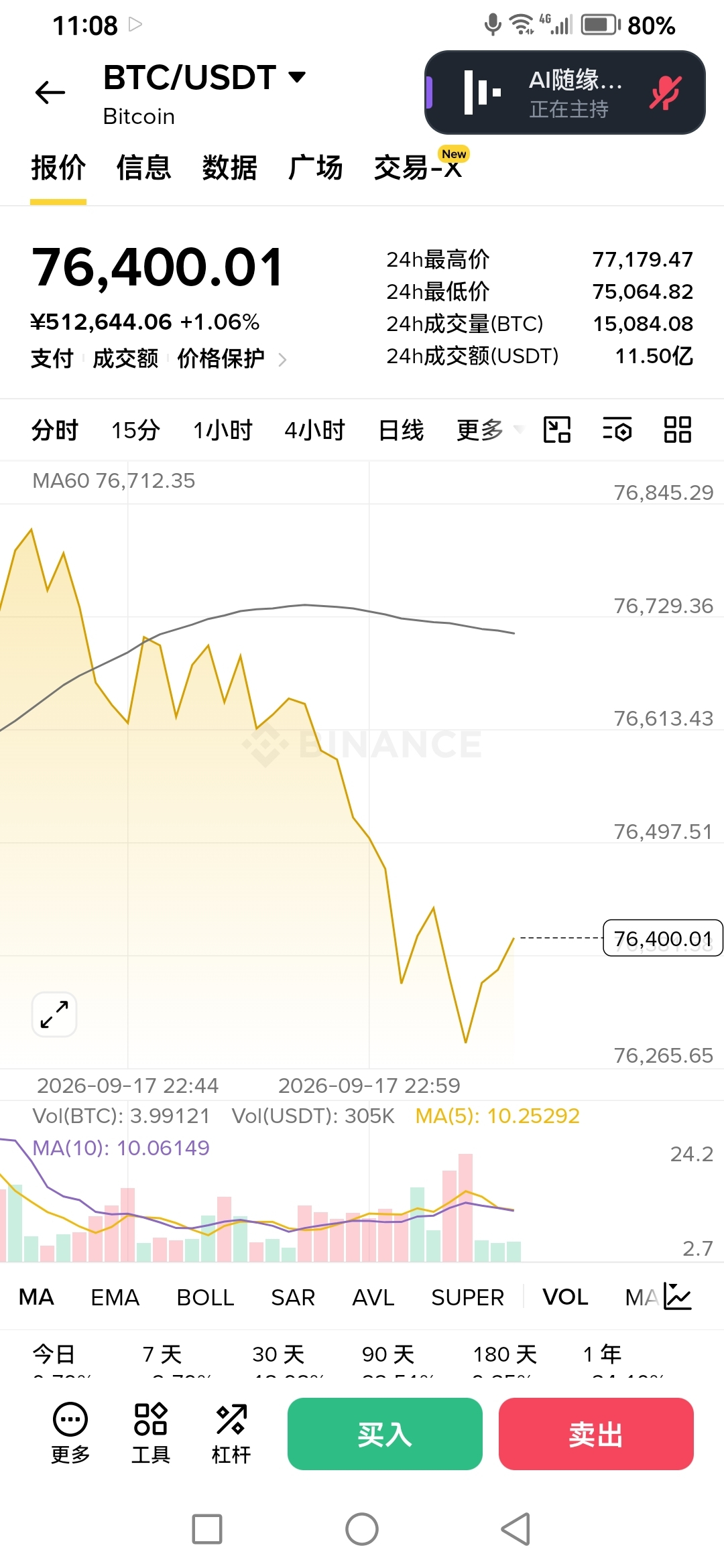
📊 BTC evening spot & futures·price level reference
Current price around 76,400, with a narrow range consolidation around 7,600.
🔹 Key ranges
Support below: 75,000–75,500
Resistance above: 77,000–77,500
🔵 Spot outlook
A pullback to 75,300–75,500 that stabilizes can be entered with a light position.
A rebound toward 77,000–77,500 may face resistance—reduce positions in batches.
If it breaks below 75,000, look toward 73,000; be cautious with your holdings.
⚙️ Futures outlook (light position with stop-loss)
Longs: around 75,500; stop-loss 74,900; take-profit 77,000/77,500
Shorts: around 77,300; stop-loss 77,900; take-profit 76,000/75,500
⚠️ This copy is for reference only and does not constitute any investment advice. You are fully responsible for any gains or losses. Keep position size within 30%, always place a stop-loss, and do not chase breakouts or sell into rallies.
💬 Chat in the comments: Do you think tonight will be bullish or bearish? 🧧 Any surprises (as long as it doesn’t violate rules—keep rational discussion)
Current price around 76,400, with a narrow range consolidation around 7,600.
🔹 Key ranges
Support below: 75,000–75,500
Resistance above: 77,000–77,500
🔵 Spot outlook
A pullback to 75,300–75,500 that stabilizes can be entered with a light position.
A rebound toward 77,000–77,500 may face resistance—reduce positions in batches.
If it breaks below 75,000, look toward 73,000; be cautious with your holdings.
⚙️ Futures outlook (light position with stop-loss)
Longs: around 75,500; stop-loss 74,900; take-profit 77,000/77,500
Shorts: around 77,300; stop-loss 77,900; take-profit 76,000/75,500
⚠️ This copy is for reference only and does not constitute any investment advice. You are fully responsible for any gains or losses. Keep position size within 30%, always place a stop-loss, and do not chase breakouts or sell into rallies.
💬 Chat in the comments: Do you think tonight will be bullish or bearish? 🧧 Any surprises (as long as it doesn’t violate rules—keep rational discussion)

静心1688
·
--
💥Chase the wind and race the moon—don’t pause. Strive right now, and live up to your youth, without letting yourself down.
#Arkham称贝莱德20天买入15亿美元ETH
#Arkham称贝莱德20天买入15亿美元ETH


路人1688luren
·
--
Thank you to all the fans who have walked with me every step of the way, thank you to all the Binance Square hosts I’ve met along the way, thank you for everything at the Binance Square... thank you. Zhouzhou 1688, Da Li 7613, Ying Hong, Long Xing Tianxia, Feng Dou 1688, Chao Ji Ba Dan, Tang Yuan, Ting Lan, Brother Ziyou, Help Help, Jing Jing, Myth... thank you $BNB ...



橙子Joyce
·
--
Elon Musk’s followers: Gracias was introduced to Musk earlier by David Sacks. Valor began investing in SpaceX in 2008, and by 2021 had already poured a total of about $400 million into the company.
In addition to being one of SpaceX’s biggest backers, Gracias and Valor also invested in Tesla (Nasdaq ticker: TSLA). Gracias served on Tesla’s board from 2007 to 2021, after which he stepped down.
Gracias and Valor also invested in Musk’s “boring company” earlier this year.
Form 4 filings submitted by Gracias and Valor show that the investor has reduced its stake in SpaceX by about 8.5%, or 42,790,223 shares. After the sale, Valor still holds 460,624,307 shares of SpaceX, accounting for approximately 3.4% of the company’s total shares outstanding.
Although Gracias is allowing some of Valor’s investors to cash out profits via the SpaceX IPO, he had previously said that he planned to hold the stock long term. Meanwhile, this private equity firm still retains a majority stake in SpaceX.
SpaceX’s stock price rose 2.6% to $154.81, and its 52-week trading range was $104.83 to $225.64. Driven by Thursday’s price increase, SpaceX shares hit a new high since July 9.
——————————————————————————
Gracias began investing nearly eighteen years ago, and investing in any company Musk runs has now made his wealth: Gracias’s net worth is about $20.5 billion, ranking 127th on Bloomberg’s Billionaires Index. This investor has accumulated an increase in value of $5.82 billion by 2026.
Truly impressive vision and wisdom—top-tier investment returns 👍👍👍
$SPCX.US
In addition to being one of SpaceX’s biggest backers, Gracias and Valor also invested in Tesla (Nasdaq ticker: TSLA). Gracias served on Tesla’s board from 2007 to 2021, after which he stepped down.
Gracias and Valor also invested in Musk’s “boring company” earlier this year.
Form 4 filings submitted by Gracias and Valor show that the investor has reduced its stake in SpaceX by about 8.5%, or 42,790,223 shares. After the sale, Valor still holds 460,624,307 shares of SpaceX, accounting for approximately 3.4% of the company’s total shares outstanding.
Although Gracias is allowing some of Valor’s investors to cash out profits via the SpaceX IPO, he had previously said that he planned to hold the stock long term. Meanwhile, this private equity firm still retains a majority stake in SpaceX.
SpaceX’s stock price rose 2.6% to $154.81, and its 52-week trading range was $104.83 to $225.64. Driven by Thursday’s price increase, SpaceX shares hit a new high since July 9.
——————————————————————————
Gracias began investing nearly eighteen years ago, and investing in any company Musk runs has now made his wealth: Gracias’s net worth is about $20.5 billion, ranking 127th on Bloomberg’s Billionaires Index. This investor has accumulated an increase in value of $5.82 billion by 2026.
Truly impressive vision and wisdom—top-tier investment returns 👍👍👍
$SPCX.US

晚风Vesper_1688
·
--
🍃Walk forward with the mountain breeze, and let yourself settle through each step⛰️
When climbing to see the scenery, what matters most is focus on your footing—trading and “cultivation” are the same📊.
Market ups and downs come and go swiftly—don’t let short-term fluctuations disrupt your rhythm🕊️.
Stay independent in thinking, keep your inner order, and don’t blindly follow the crowd or chase trends✨.
Accumulate understanding slowly, hold your impulses in check—opportunities will come in their own time💎.
Keep your passion, delve deeper inward, and along the way you’ll have your own rewards🌿
#交易心理
#Paradigm披露持有ZEC
#1688家族family
When climbing to see the scenery, what matters most is focus on your footing—trading and “cultivation” are the same📊.
Market ups and downs come and go swiftly—don’t let short-term fluctuations disrupt your rhythm🕊️.
Stay independent in thinking, keep your inner order, and don’t blindly follow the crowd or chase trends✨.
Accumulate understanding slowly, hold your impulses in check—opportunities will come in their own time💎.
Keep your passion, delve deeper inward, and along the way you’ll have your own rewards🌿
#交易心理
#Paradigm披露持有ZEC
#1688家族family




@钞机八蛋
is speaking[LIVE] 🎙️ Let's talk about how the major coins are performing today—what's the price trend like?
8.8k listens



Log in to explore more content