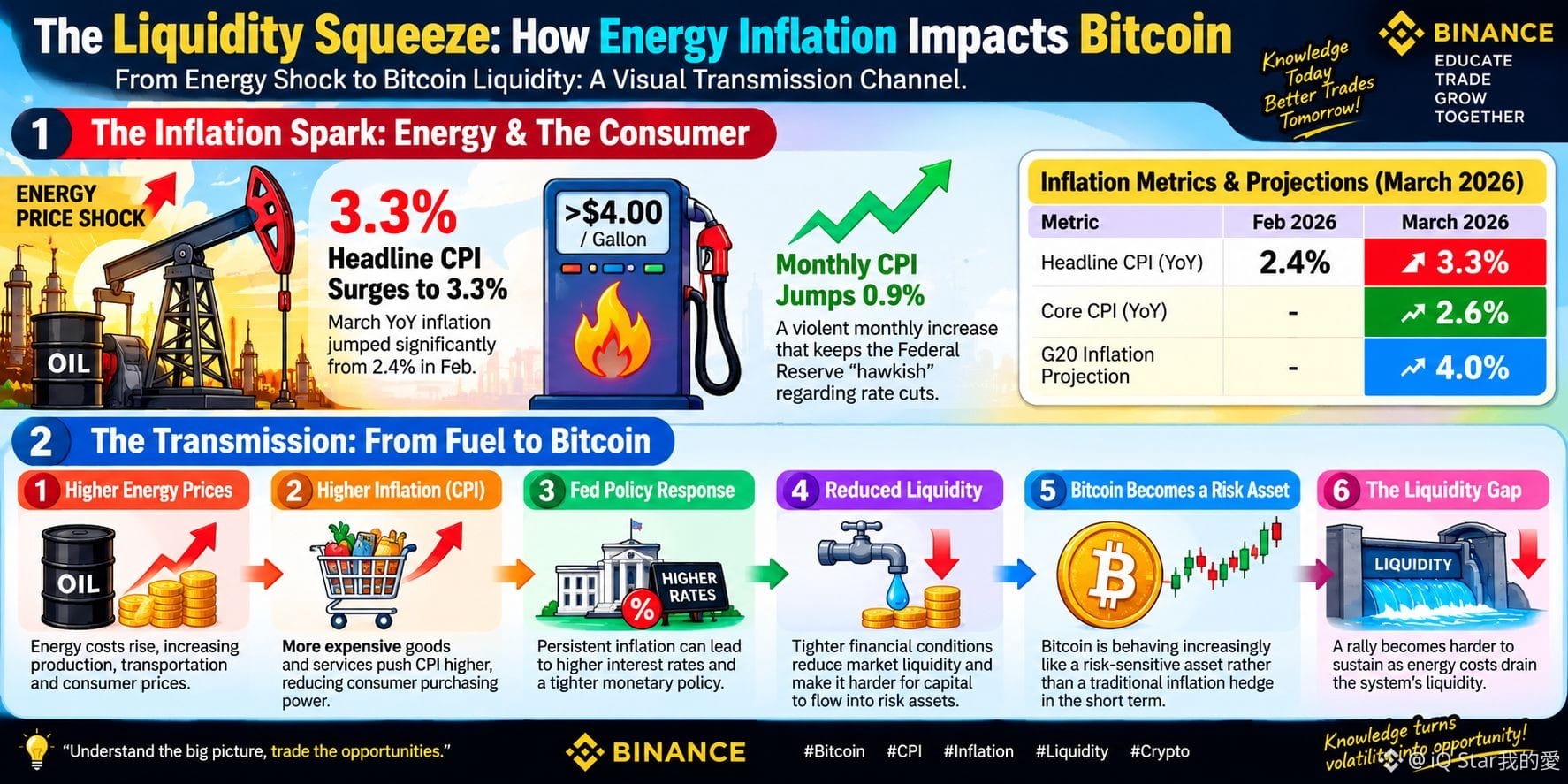

🔥 THE LIQUIDITY SQUEEZE: HOW ENERGY INFLATION CAN IMPACT BITCOIN
Most traders watch CPI and immediately ask:
“BTC pump or dump?”
But the deeper question is:
👉 Where does inflation actually come from, and how does it reach Bitcoin?
⛽ ENERGY → INFLATION
When energy prices rise, transportation, production and everyday goods can become more expensive.
That can push inflation higher and keep pressure on consumers.
📈 INFLATION → FED
If inflation remains persistent, markets may expect the Federal Reserve to keep monetary policy tighter for longer.
And this is where crypto traders should pay attention.
💧 TIGHTER POLICY → LESS LIQUIDITY
Higher borrowing costs can reduce available liquidity and weaken risk appetite.
Bitcoin is increasingly treated as a risk-sensitive asset, so changes in liquidity and macro expectations can create major volatility.
🔗 THE TRANSMISSION CHANNEL
⛽ Energy shock
⬇️
📈 Inflation pressure
⬇️
🏦 Fed policy expectations
⬇️
💵 Rates & yields
⬇️
💧 Liquidity
⬇️
📊 Risk appetite
⬇️
₿ Bitcoin & Crypto
⚠️ But remember:
Higher inflation does NOT automatically mean BTC will dump.
Markets care about expectations, positioning, liquidity and the size of the surprise — not just one headline number.
🧠 My takeaway:
Don’t look at CPI as an isolated number.
Look for the transmission channel behind it.
Because sometimes the most important crypto signal isn't Bitcoin's chart…
It's what is happening to liquidity before Bitcoin reacts. 👀
🔥 Do you watch ENERGY → CPI → FED → LIQUIDITY, or only BTC price action?
#Bitcoin #BTC #cpi #Inflation #liquidity #crypto #Binance
Most traders watch CPI and immediately ask:
“BTC pump or dump?”
But the deeper question is:
👉 Where does inflation actually come from, and how does it reach Bitcoin?
⛽ ENERGY → INFLATION
When energy prices rise, transportation, production and everyday goods can become more expensive.
That can push inflation higher and keep pressure on consumers.
📈 INFLATION → FED
If inflation remains persistent, markets may expect the Federal Reserve to keep monetary policy tighter for longer.
And this is where crypto traders should pay attention.
💧 TIGHTER POLICY → LESS LIQUIDITY
Higher borrowing costs can reduce available liquidity and weaken risk appetite.
Bitcoin is increasingly treated as a risk-sensitive asset, so changes in liquidity and macro expectations can create major volatility.
🔗 THE TRANSMISSION CHANNEL
⛽ Energy shock
⬇️
📈 Inflation pressure
⬇️
🏦 Fed policy expectations
⬇️
💵 Rates & yields
⬇️
💧 Liquidity
⬇️
📊 Risk appetite
⬇️
₿ Bitcoin & Crypto
⚠️ But remember:
Higher inflation does NOT automatically mean BTC will dump.
Markets care about expectations, positioning, liquidity and the size of the surprise — not just one headline number.
🧠 My takeaway:
Don’t look at CPI as an isolated number.
Look for the transmission channel behind it.
Because sometimes the most important crypto signal isn't Bitcoin's chart…
It's what is happening to liquidity before Bitcoin reacts. 👀
🔥 Do you watch ENERGY → CPI → FED → LIQUIDITY, or only BTC price action?
#Bitcoin #BTC #cpi #Inflation #liquidity #crypto #Binance