

As more and more trading platforms expand globally and adopt zero fees, CoinUp believes this is not a race over features, but rather that the underlying logic of trading platforms is changing.
Over the past year, the global digital asset trading industry has been undergoing a clear change.
An increasing number of trading platforms are pushing beyond the traditional boundaries of crypto assets, extending their business into FX, U.S. stocks, indices, commodities, and other derivatives; meanwhile, zero-fee trading is gradually evolving from short-term activity in select trading pairs into a new direction for industry competition.
To CoinUp founder Queenie Li, these changes are not surprising.
Since its inception, CoinUp has launched multi-asset products such as forex and stocks. “One account, trade global assets” is the long-term vision Queenie set when founding CoinUp.
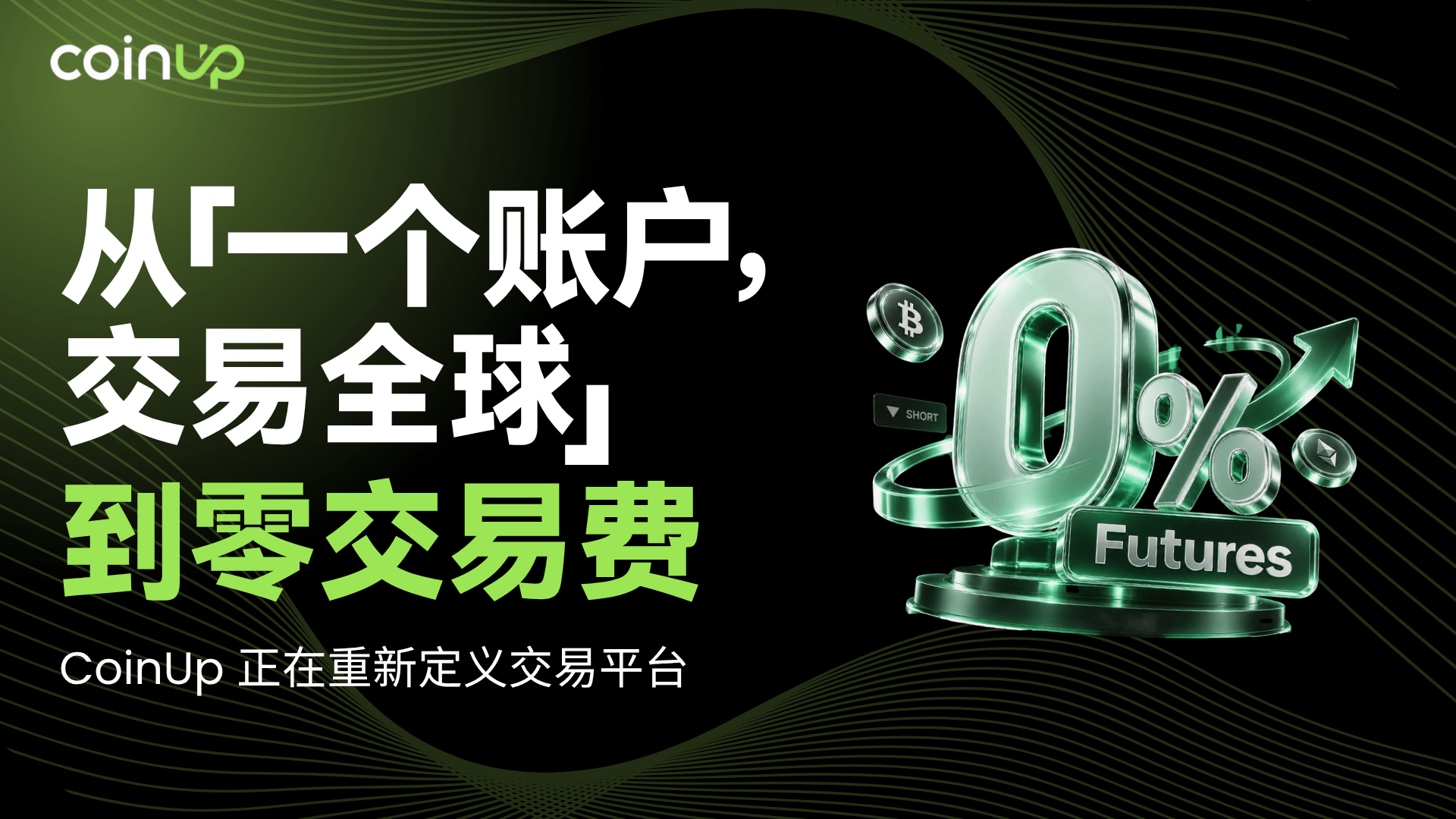
Today, as more and more platforms move in the same direction, CoinUp is pushing forward the second part of this vision—not only allowing users to access more assets through one account, but also enabling them to complete every trade at a lower cost.
What the industry is copying isn’t a product, but a direction that has already been validated
From forex and US stocks to a broader range of derivatives, global trading platforms are shifting from being places to trade a single asset to becoming comprehensive platforms that cover multiple markets, multiple assets, and multiple scenarios.
This means that in the future, users won’t frequently switch accounts and platforms based on asset categories. Whether it’s digital assets, global stocks, indices, or other market opportunities, what users expect is a more unified, simple, and efficient gateway.
CoinUp summarizes this trend as:
One Account, Trade the World.
Queenie Li said, “Some things may not attract much attention when done earlier. But when more and more platforms start doing the same thing, that direction gets validated. We thought very early on about why users need to constantly switch between different platforms and accounts to trade different assets. From the first day CoinUp was founded, we wanted to connect users to a broader range of global assets through one account.”
CoinUp does not view latecomers as simply copying its理念.
In Queenie’s view, when an industry widely adopts a product direction, the first thing it proves is that it responds to real user needs. “A good product direction is never afraid of being copied. Because in the end, it’s users across the whole industry who benefit. Features can be followed, expressions can be mimicked, but why a company chooses this path—and whether it’s willing to walk it long-term—can’t be replicated through a single launch or campaign.”
More assets, lower costs
If “one account, trade the world” solves the boundary between assets, then zero fees solve the boundary of costs between users and the market.
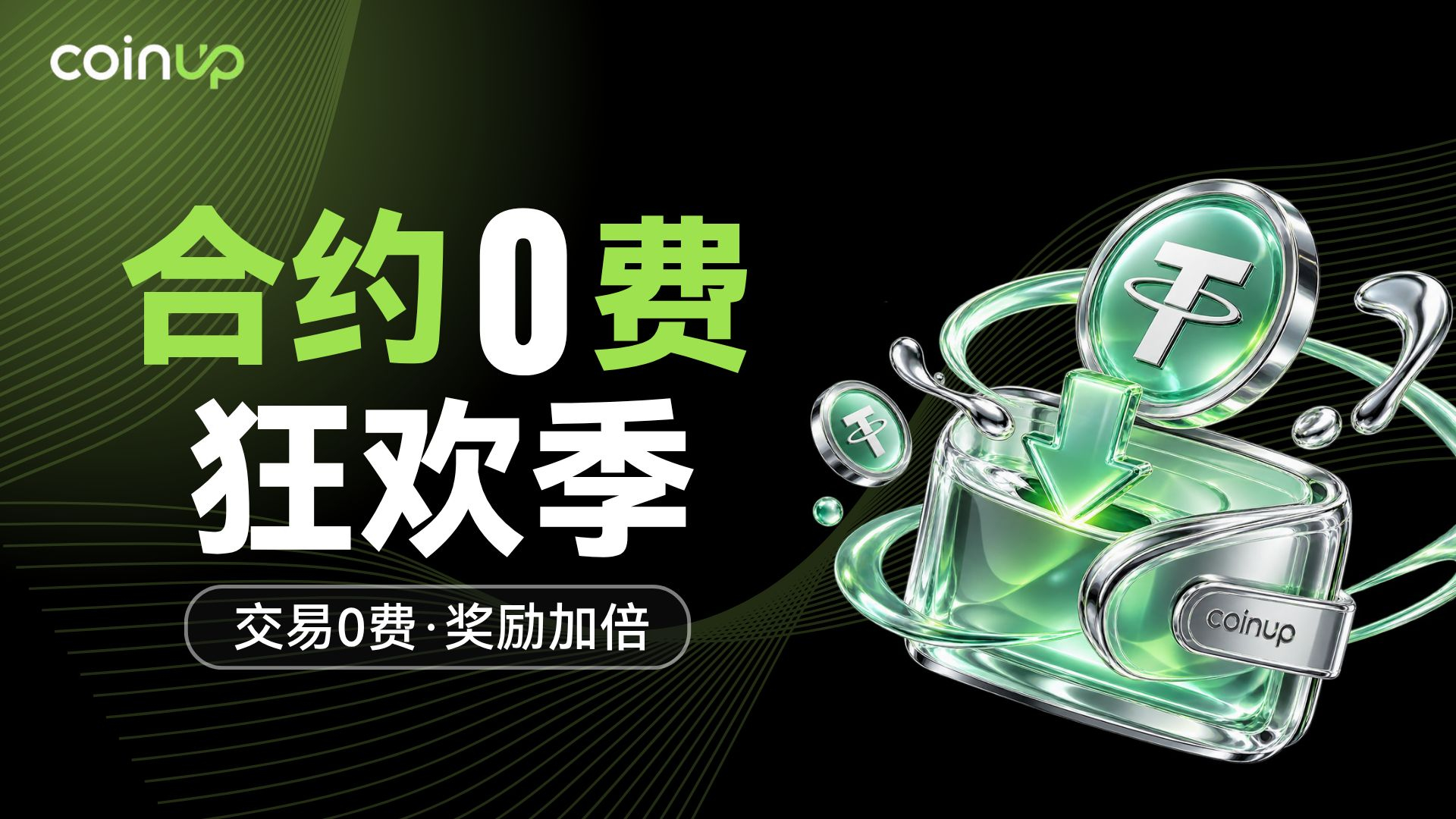
In September 2026, CoinUp will temporarily reduce spot trading fees to 0%, and at the same time reduce the Maker fees of contracts that meet the activity requirements to 0%. In the future, CoinUp will evaluate extending the 0-fee model step by step to more business scenarios based on the market structure of different products, liquidity conditions, technical costs, and partnership models.
This is not CoinUp’s temporary response to industry trends, but a natural extension of its long-term product logic:
Enable users to trade more assets while reducing unnecessary costs each time they participate in the market.
Queenie Li said, “When we started pushing for a zero-fee rate, we also saw more platforms following suit recently. Honestly, I’m happy. If more and more platforms are willing to lower their fees, it means the industry is shifting from thinking about how much it can charge to thinking about how much value it should leave for users. This is a good change.”
But CoinUp also emphasizes that zero fees must not remain only at the marketing level.
Fees are only part of trading costs. Market depth, the bid-ask spread, execution slippage, system stability, order execution quality, and fund security also determine users’ actual trading experience.
Therefore, CoinUp’s understanding of zero fees is not simply changing a number to 0. While reducing explicit costs, it also raises the bar for the trading infrastructure behind the scenes.
Fees can be brought to zero, but liquidity, system capabilities, and platform responsibilities can’t be cut back.
More assets, lower costs, and a simpler trading experience
From “one account, trade the world” to “making trading costs lower and lower,” CoinUp’s product direction has always revolved around the same goal: reducing the boundaries between different assets, different markets, and different products, so that users can get a simpler, more efficient trading experience through one account at a lower cost.
As more and more platforms begin to expand access to global assets and follow the zero-fee model, CoinUp believes this not only validates that the industry is moving in the right direction, but also means competition among next-generation trading platforms is only just beginning.
As CoinUp founder Queenie Li said, “From ‘one account, trade the world’ to ‘making trading costs lower and lower,’ what CoinUp wants to do has always been simple: more assets, lower costs, and a simpler trading experience.”